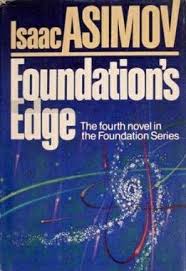
Foundation’s Edge (#4), Isaac Asimov – Book Review

29 years after writing the original trilogy, Isaac Asimov continues Foundation’s generation-spanning space epic with Foundation’s Edge.

The Foundation book series has always been a little strange. Every one of them has felt a bit like an accidental sequel to the last. The first book was a series of short stories, the second book threw the original concept in the trash, and the third book took the ideas from the first two and developed them into a spy thriller. 

Combine all that with an author coming into his own and every one of these books feels completely distinct. I’m happy to report that the fourth book in the series continues the pattern of genre-bending ideas and thrilling twists at a galactic scale. 

Read my discussion of the first three Foundation books here: How Asimov Saved The Foundation Books

Plot

Over a century after book 3, Foundation’s Edge tells the story of Golan Trevize, a council member in the First Foundation, as he investigates the invisible powers pulling The Foundation along the track to becoming a galactic empire. In parallel, Stor Gendibal, a leader of the psychic-led Second Foundation, uncovers a terrifying truth about the Seldon Plan.

For the first half, the story is a political thriller. At each twist and turn, Asimov makes sure to keep the audience fully informed as to what each action did, what it was aiming to do, and how each of the minor characters changes the calculation of the book.

After a series of political maneuvers, speculations, and schemes, Golan Trevize is sent off in search of ‘Gaia’, humanity’s legendary origin planet. At this point, the book’s genre suddenly changes. In a single chapter, we move from political thriller to treasure hunt. Adventure and mystery keep the story moving and the stakes climbing ever upward, ending in a satisfying conclusion.

Asimov’s Writing

Isaac Asimov learned a lot about writing in the nearly thirty-year gap between the third and fourth books. For the first time in the Foundation series, Foundation’s Edge tells a single, continuous story. Multiple POVs, yes, but it begins at the beginning and ends at the end. No century-long time jumps and no being introduced to an entirely new cast of characters halfway through the story. In this book, we have the time to get to know the characters and truly understand their motivations.

For a good bit of the story, I was confident it was setting up a new trilogy. The first half was paced much slower, deeply exploring the political intrigue while reminding the readers of the events of the past three books. By the two-thirds mark, there were a lot of starts without a lot of resolutions. I was pleasantly surprised when the final third of the book jumped into high-gear, delivering a tense and action-packed finale that closed every thread and reached the grand-scale the Foundation series is known for.

The Conclusion

After the first three books, the Foundation series felt like it was over. The goal of galactic empire was centuries away, but all the major factions had reached a balance, and the ending felt inevitable. With this story, Asimov re-contextualized past stories and painted the inevitable conclusion as a defeat rather than a victory, he introduced adventure and mystery to a completely mapped galaxy and layered new complexities on an already complicated universe in a way that breathed new life into the series.

Much like Asimov’s first and third books, Foundation’s Edge is a conclusion. But this time, the story also feels like the beginning of something new.

That Time A Space Simulation Turned Into a Spy Hunt

Readers of my blog know I used to simulate star-trek style spaceships. It was my entry-point to the world of writing, storytelling, theater, and tech all at once. A part of the reason I studied computer science was to make sense of the one part of the simulator I didn’t understand. My first written stories were simulations written to fill a story vacuum. As a flight director, I was lucky enough to not only write the stories, but perform them.

I told hundreds of stories in my five years simulating starships. Mostly I stuck to my biggest hits. Occasionally we’d test a new story and fiddle with it to make things more exciting. But this flight wasn’t like that. It was supposed to be a nice, normal mission. Instead it ended up being my most memorable flight in a half-decade of incredible stories.

Setting the Scene

The nine crew members each donned their uniform, a felt poncho modified with starship colors and branding. It was a birthday party, every kid was in second or third grade. A bit young, but me and my team had dealt with worse.

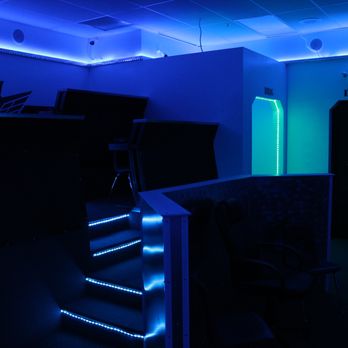
One side a school, one side a spaceship.

To reach the ship, they needed to pass through the ‘teleporter’, an old photography dark room door, the revolving kind. They’d step in two at a time. I’d remind them not to touch the side lest they be lost to space, then spin the door 180 degrees.

Pitch black for half a second, then the bridge of a starship. Even when you knew the trick, it still felt like magic. The UCS Everest was a large vessel, suited to handle parties of 10-15. There was a main viewscreen at the front and tiered seating at the back. A staff member would ask the arriving crew their job position, then direct them to their seat.

Once everyone was seated, I would teleport in behind them and the epic boarding music would fade away. Safety instructions were always boring, but from the very first second I could tell this crew was different. Eyes wandered, kids whispered. I talk quick, but this crew had no interest in any of it.

When the safety briefing was done, I had a single instruction for my staff. “Get through the training as fast as you can.”

We had a set of junior controls for young crews. Instead of everyone having a distinct job, they were all prompted to do the same activities together and drive the ship as a single unit. For groups younger than 4th grade, it was really the only way to keep them from being overwhelmed. Unfortunately, the most recent windows update had broken the juniors controls, so all we had were the advanced systems.

The Flight

The crew was both overwhelmed and not particularly invested in the story of the mission. They were supposed to fly to an endangered planet and help evacuate the citizens. For crews like this, we like to put a ‘doctor’ on the bridge to help them out. Whenever I came on over the speakers as the main engineer and told them they needed to ‘undock’ or ‘set course’, the doctor secretly made sure the task got done.

In this case, the doctor was basically flying the ship on their own.

Fifteen minutes into the flight, I could tell things weren’t working. I was quietly telling my staff to get ready to ‘board the ship’ as various alien intruders and wacky characters, but while that was being prepared, I needed the story to continue.

The Breakthrough

There was a political situation surrounding the endangered planet. I was on the speakers as a Texan ship captain warning them of the dangers. None of it was clicking, the whole mission was feeling like a bust. Then I said the words that changed the course of the mission. “The mayor of that planet is a crafty fella– he’s got people everywhere. Keep an eye out, you may have a spy on board.”

On the cameras, I could see kids’ heads popping up and glancing around. Their security officer, just eight years old, jumped out of his seat with a toy phaser in hand. There was still conversation being picked up by the microphones, but they weren’t talking about a party. They were talking about the spy.

Not yet realizing what had happened, I had the ‘ship doctor’ get back to the bridge to help them navigate the upcoming asteroids.

The second he teleported in, every kid in the room was out of their seat and yelling at the top of their lungs. They all made different accusations, but there was only one message: The Doctor was a spy.

My first reaction was frustration. Everyone had left their computers, which meant no one was driving the ship, which meant the mission was frozen in place. But these kids had never cared about the mission in the first place. As I watched the doctor get forced into the brig at phaser-point, I saw what I had been looking for since the start. A crew that cared about the mission. Not the space theater or the advance controls or the working together. They only cared about hunting for spies.

If the flight had been a field trip arranged by a school, I would have paused here. The crew would have gone back to their seats and we would have discussed what their priorities needed to be. But this was a birthday party, and when you’re flying a birthday party, it’s best to reserve the lectures for the really bad behavior.

A small brig for 6 suspects

So the mission changed. I ordered a volunteer dressed as a security guard to go up and help the kids interrogate the doctor. But their blind hunger for spies was worse than I thought. The security guard ended up in the brig right next to the doctor.

I was down to two volunteers. The next one I sent up with no costume at all and specifically told the kids that this person was not a part of the story. Just a staff member there to guide their experience. They reluctantly agreed not to stuff her into the brig, but there were plenty of murmurs that she was ‘secretly a spy’ anyways.

Now that I knew what kind of story we were telling, I knew what kind of tools we should use. We planted a device in a tunnel under their seats and set off the alarms until they found it. We played crazy ‘hacking’ noises over the speakers and flicked the lights from red-alert to green-alert to a bunch of other colors while they flipped switches on a panel. Whenever there was downtime, I didn’t even have to fill in the blanks, the crew would sprint right back to the brig and resume their interrogations of the prisoners.

Then came the masterstroke. An away mission to the lower decks. It’s a funny thing, kids love getting onto the starship, but once they’re on the ship, all they want to do is leave. There was a second starship right across the hall. We redirected that ship’s camera feed to the main view-screen. I told my last volunteer to go in there and stand around.

When the kids saw the footage of a person in a uniform doing nothing, they went wild. Never had they seen a more guilty figure in their lives. The staff member led them on the away mission and they caught the ‘spy’ with ease. They were thrilled for an excuse to use the phasers.

On their way back to the ship, the crew bumped into two unfortunate staff members who were returning from a lunch break. They were dragged to the brig like everyone else.

The Finish

With the end of the mission closing in, I decided it was time for a trial. We gave each student a seat and made them all a part of the jury. One by one we brought out the suspects. I wish I could tell you they were thorough in their questioning. I wish I could say they even listened to what each prospective spy had to say. But they didn’t. It was closer to a witch hunt than any form of judicial process.

At the end, they decided it was the doctor who was the spy. Of course it was, he was the first suspicious figure on the bridge and the only one they all remembered capturing. I told them they were right and that they had successfully completed the mission.

They cheered and ran off with their parents to eat cake. Great reviews all around, although I’m guessing that dying planet from the start of the mission would have a few complaints.

When we finished restoring the bridge from the child hurricane that had ripped through, I sat back and took a breath. One of the other staff members walked over to me with wide eyes. “That was amazing! I’ve never seen a mission like that before. You should write it down and fly it more often!”

I smiled and shook my head. We had improvised 2 and a half hours of nonsense. A playful nothing to distract a bunch of ten-year-olds. It was none of the magic that had drawn me to the program in the first place, and used none of the tools that made the simulator cool. Just one long string of chaos, and we were lucky the kids had liked it.

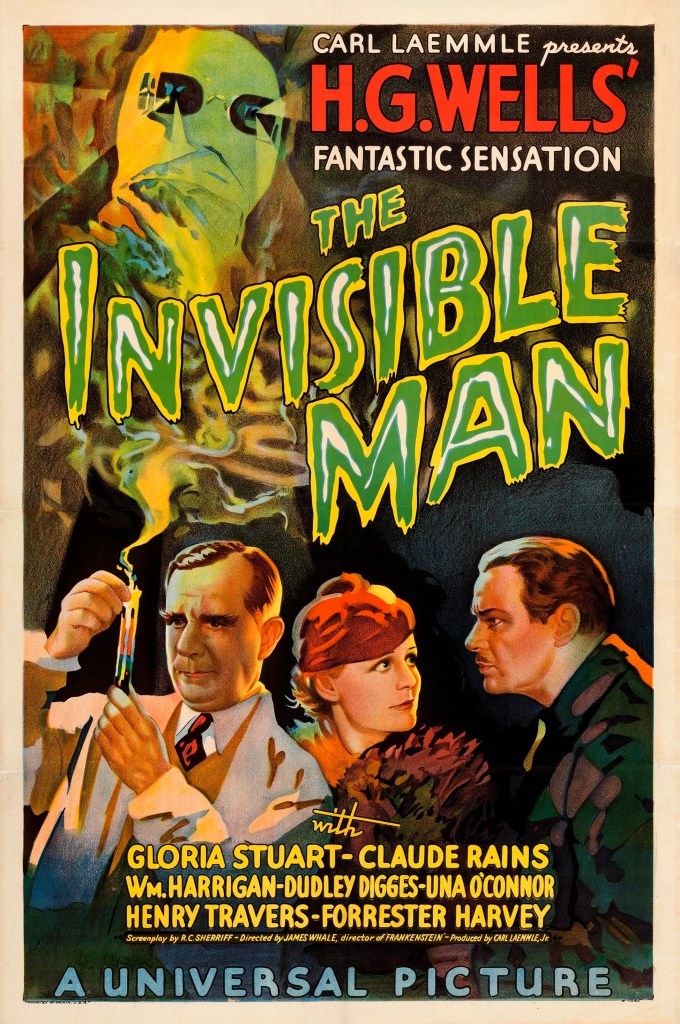
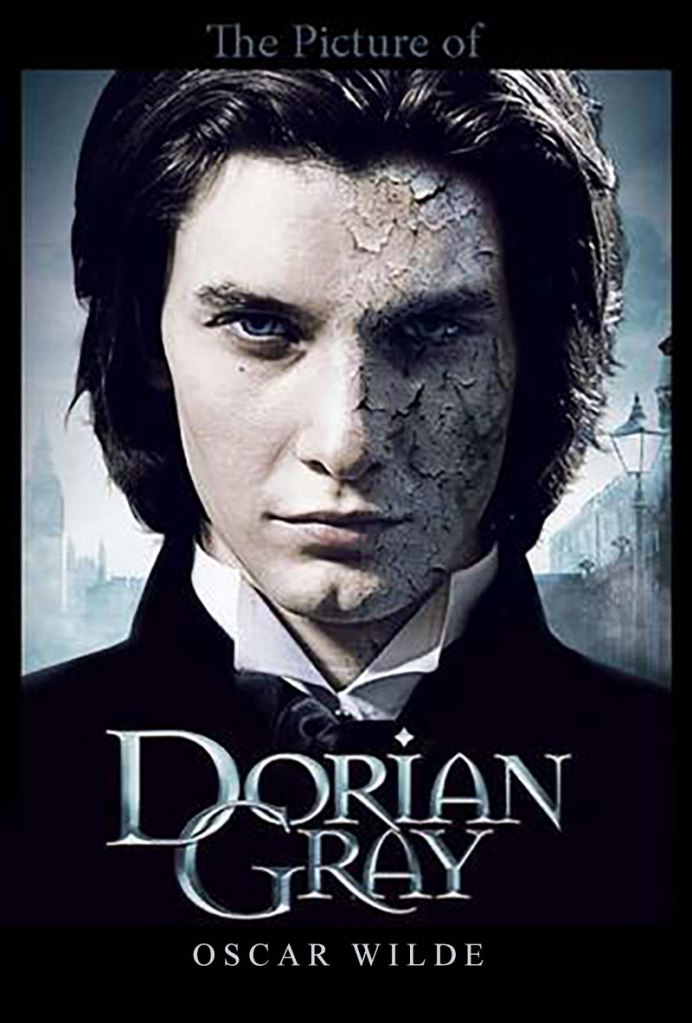
The Invisible Man and The Picture of Dorian Gray: Two Masters Explore Consequence

Intro

I love stumbling across paired stories. Those rare and curious times when two different writers take on the same concept around the same time. There are plenty of Hollywood examples. Armageddon and Deep Impact. White House Down and Olympus Has Fallen. The Illusionist and The Prestige. It feels like two philosophers each making their own argument in the public forum and by reading their story, you see the full journey to their conclusion.

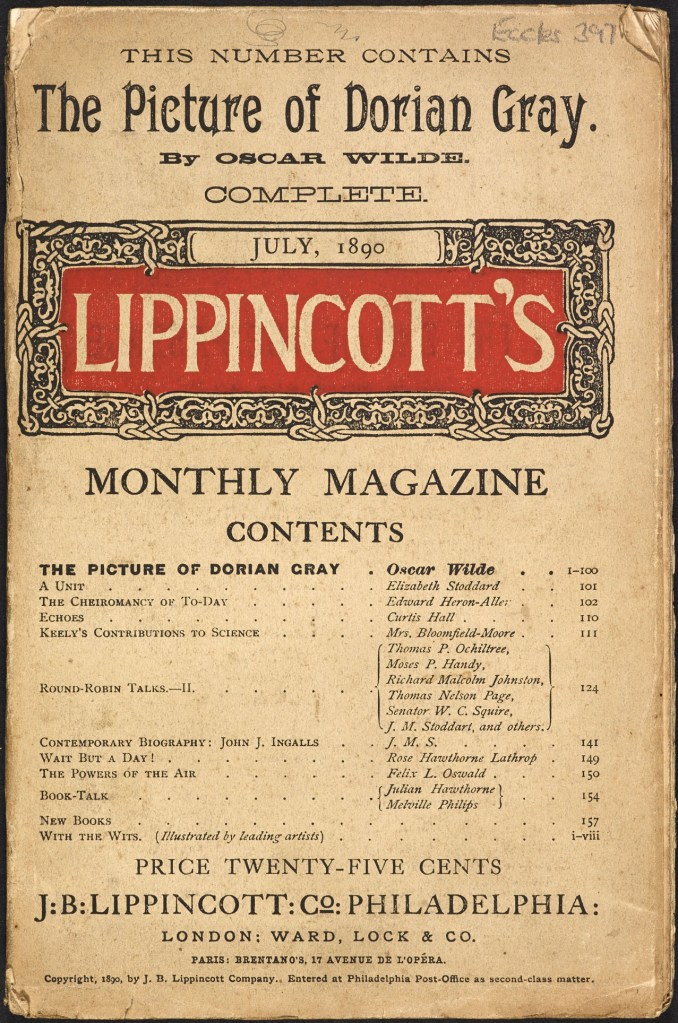
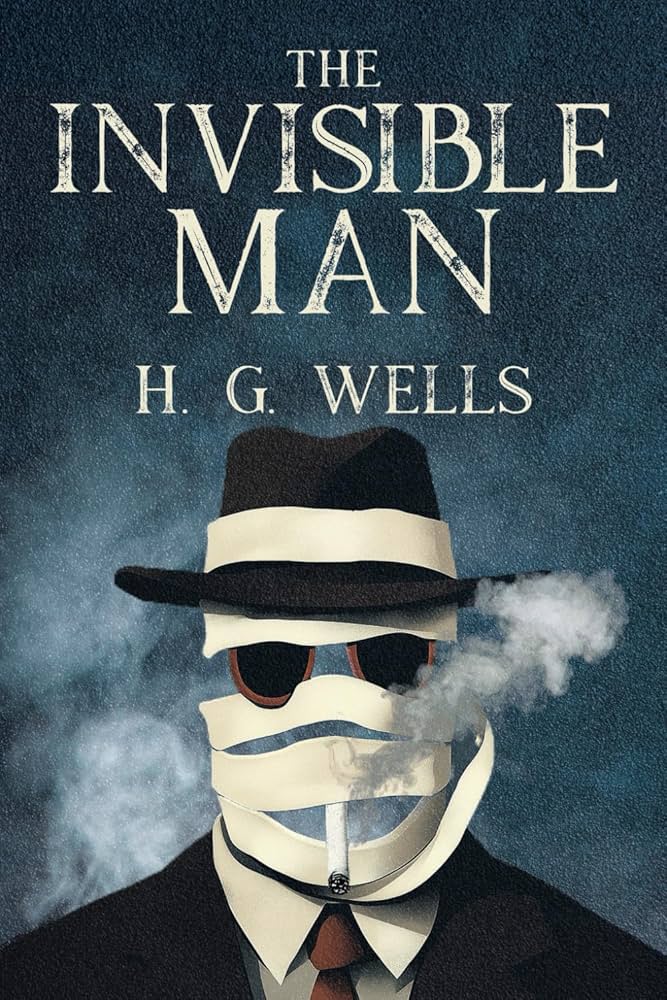
In the 1890s, two of the greatest authors of their time wrote two of their greatest books. First was The Picture of Dorian Gray. Originally published in Lippincott’s Monthly Magazine in 1890 and expanded into a novel in 1891, it stands as Oscar Wild’s only novel in a career writing plays and poetry. Then in 1897, two years into HG Wells half-century long science fiction career, he released The Invisible Man.

Both stories have been told and adapted and shared millions of times over the years, both stories have outlived their creator. And while the two stories on their face appear completely different, both try to answer the same question: What would a person become if they could act without consequence?

To me, these two books are my favorite example of paired works. An opportunity to see a sci-fi writer and a playwright approach the same philosophical concept. A chance to observe two masters each bring their own unique perspectives and reach vastly different conclusions.

Two villainous leads

When a skilled storyteller knows what kind of story they want to write, even if they don’t know the details, the nature of the story trims down the possibilities. If you want to tell a story of someone reconnecting with a community, it means they had a community to begin with. If you’re writing a revenge power fantasy, it usually helps for the main character to at one time in the past be a uniquely skilled fighter. I like to call it ‘novel-writing algebra’.

In the case of a theme like ‘no consequences’, both storytellers realized they had to start from the same place. To truly explore the space, each story’s protagonist had to be more villain than hero.

The Picture of Dorian Gray tells the story of eponymous Dorian Gray, a young man that values his appearance and youth above all other things. After realizing all his cruelties appear on his portrait rather than being reflected onto his person, he embraces his worst tendencies. Hurting those who love him, extorting, murdering, everything he can think of in one long hedonism treadmill.

The Invisible Man’s protagonist is just as reprehensible, but in his own way. Jack Griffin, for what it’s worth, earns his invisibility. He discovers the means to turn living tissue invisible and uses it to burgle, rob, and threaten. But it wasn’t the invisibility that made him that way. He robbed his father even while his skin was still opaque. Throughout the book he is teasing and cruel to the people he is closest to. The kind of man no person would want to associate with in real life.

A pair of cruel characters for a pair of moral lessons. How else could you teach it? If you start with a good character using their protection for a good cause, you end up with The Invisible Woman saving the world in a comic book.

Both authors realized that in order to explore the concept of consequence fully, they needed a bad actor to exploit the situation.

Freedom from Consequence

At the question of ‘What does a bad person do without consequences?’, our two authors diverge.

HG Wells goes down the obvious path. Mayhem, havoc, and immediate self-serving cruelty. In every action, The Invisible Man acts as untouchable as he feels. HIs dealings with others are impatient and demanding. As the story goes on, his ambition grows. His vision expands from short-term robberies to an ‘epoch of the invisible man’ by means of violent threat.

A bully. That’s all Griffin is. The second he gets an ounce of power, he stretches it to its utmost with no plans for the future. At the outset, this feels like the only answer. A person without fear of reprisal tries to force the world into their vision of things.

But Oscar Wilde’s take is vastly different.

Dorian Gray isn’t an ambitious man, he’s petty. Looks matter more than character. Charm more than soul. Over the course of a lifetime, consequences seem to evade him. When a man comes to avenge his sister, he realizes that Dorian Gray couldn’t possibly be the man from 20 years ago, after all he hasn’t aged a day.

When Dorian is given the freedom to do as he’d like, he doesn’t shape the world, he plays with it. People and institutions become toys to be tinkered with, broken, and tossed away. Even when hiding a body he handles the whole situation with a cold psychopathy. The dead man isn’t a person, it’s a thing. Dorian accumulates wealth and connections all through the world and his capacity to do expands, but the answer to ‘what will he do’ seems to come down to a single answer: whatever he feels like.

Although Griffin is supposed to be the more intelligent of the two characters, Dorian without a doubt makes better use of his power. He feels more real too, like one of thousands of kids born and raised into wealth under a system built to protect and empower them. A lifetime with no fear gives him a detachment from his actions. Everything is a game to be played and moved on from.

When the hammer comes down

Both authors reach similar conclusions at the end of their stories. Even if a person sees no immediate consequences to their actions, there are always consequences.

The Invisible Man gives the easy answer. If a person behaves cruelly for a long time the world will eventually hunt that person down and deliver the consequences nature tried to protect them from. Jack Griffin’s final moments are spent being beaten by a mob. Victim not of a single action, but the sum of all his behaviors.

I don’t know how much I believe it. There are plenty of stories of people getting away with their crimes, even in a court of law. Even tyrants die of old age from time to time.

Oscar Wilde gives a different vision of ‘consequence’, and one that is clear from the beginning of the book. With every sin Dorian Gray commits, his portrait changes. A cruel smile at the edge of his lips, bloodstains, scars. The portrait isn’t just a magical painting, it is a reflection of Dorian’s soul, and for me, the better answer to the question of consequence.

Even if the world never retaliates. Every evil action distorts a person’s truest self. A murder doesn’t just stain the hands, it stains the heart. By the end of Dorian Gray’s life, the portrait doesn’t even look human. Terrible deeds have reshaped the man so far as to cut out his humanity entirely.

Conclusion

It’s impossible to move through life without seeing the occasional villain. I think that’s what makes the theme of ‘consequence free action’ resonate. Injustice is a part of life. Maybe what that makes these stories palatable is knowing the author will deliver some kind of justice by the end.

To me, The Invisible Man has the feel of a comforting moral tale for the upstanding in society. Eventually evil will be held accountable, even if it takes awhile.

But The Picture of Dorian Gray gives an answer that feels truer to life. Justice is not exact. Sometimes the worst of the worst escape their consequences and the good suffer in their wake. The only thing that can truly be said of the person that acts with no fear of reprisal is that they will eventually lose their personhood entirely and by the end of their life become unrecognizable to the world around them.

Something Changes When Story Moves From A Book To A Game

I didn’t start my writing journey with books. It wasn’t short stories or fan-fiction either. My original medium of storytelling was a bit more improvised. 

Star Trek Simulations.

It sounds a little silly, but for the first five years of my storytelling journey, I was a game master. Crews of birthday parties and corporate events would show up, I would give them a mission, put them on their ship, and send them on their flight. Whenever they spoke to the computer or the main engineer or an alien, it was usually me. When the ship took damage and smoke rolled in near the security terminal, I was flipping the switches.

It’s where I cut my teeth. It’s where I learned how to make the big moments of a story pop. And when my time flying starships came to an end and I made the move to telling stories in books, I discovered how unprepared I was.

Telling a story in a book is one thing. Telling a story in a game is something entirely different.

First and Third Person POV

Realistically, it isn’t just a split between games and books. It’s a split between interactive media and non-interactive media. When a reader reads a book, they expect to be told a story. When a player starts a game, they expect to be the story.

In a book, the main character is the main character. In a game, even if there is a main character, the real protagonist isn’t inside the game, it’s the person holding the controls. For a game to feel engaging, it needs to engage not just with the moving avatar on the screen, but with the human being that’s driving the decisions.

Much like in books, games have two main pov styles. First-person and third-person. Note these are different from where the camera is. Those familiar with books and movies will probably understand gaming’s third-person approach to storytelling. There’s a character on screen with a history, traits, and a connection to the world. 

A game like God of War tells the story of Kratos trying to raise his son in a cruel world controlled by the gods. When things happen, they happen to Kratos and Kratos reacts to them. He changes as the story goes on. This makes sense. This is close to traditional storytelling.

For games, first-person perspective storytelling is a complete 180.

A book uses first person to connect more deeply with the protagonist. We’re closer to the main character than ever. We can see their thoughts and how they decide how to act in the world. Games do the opposite. In the first-person perspective, the main character is washed away, made into nothing but a vessel for the player to control. It’s an effort to place the player directly into the story. Now when bad things happen, they don’t just happen to the character, they happen to the person playing. 

In DOOM, the players inhabit a character only known as Doomslayer as they defeat demon hordes. In Legend of Zelda, the players play Link, a character who never speaks and simply reacts to the world. Even though Link is shown as a real person in the game, he has no distinct attributes, only the ones a player projects onto him.

The Gameplay is the Story

When I first began simulating starships, I found the moments that were most story intense were the least engaging for participants. They didn’t care about two other characters arguing between one another to decide the fate of a planet. They didn’t care about the lore that set up the story. 

In a game, cutscenes are skipped. There’s a reason for this: The main character doesn’t need development, after all, the player is the true main character. And if the main character doesn’t need development, then the only kind of story events that matter are the ones that change the gameplay.

In games, a story is what happens to the main character and what they do in response. If something changes in the world, it has to be at least in part triggered by the player’s actions. And when something happens in the story, it can’t just have emotional weight, it has to mean something for the gameplay.

I used to play a typing game. You were in a cage descending into the depths and sharks would emerge from the darkness with words written on their belly. I’d type the words and the sharks would go away. It was fun, but the story wasn’t exactly engaging. In fact, the setting could have been replaced by a hundred other settings and I wouldn’t have even noticed.

This is the trouble with splitting story from gameplay. If halfway down, the operator radios in to tell me they’ve been in love with me for years, it doesn’t mean anything. The operator isn’t real, the love isn’t real. But if they radio in to tell me all our shark research has allowed us to slow the shark’s attacks, that does mean something. It changes how the game plays, so I become invested in that element of the story.

It’s hard to accept. The story of a game is only as good as how it affects the gameplay. This is where the phrase ‘ludonarrative dissonance’ comes from. If the gameplay and the story aren’t telling the same experience, the player disconnects from the half they don’t care about.

In the world of starship simulation, cutscenes between characters became a no-go. If I had something important to share, it needed to be delivered directly to the crew, and it had to change how they approached the mission.

Interactive Storytelling Workarounds

There’s a certain selfishness to a player’s approach to the story. They only care about what affects them. So how do you tell a story about complicated characters and nuanced situations in a way that makes the player pay attention?

I’ve found three ways:

Optional stories, passive stories, and mysteries.

Optional stories are exactly what they sound like. If 50% of players don’t want the lore, don’t force it down their throats. Sidequests are great, but some people are in a hurry. You leave the B-tier material in the game, but as optional content. Games are a bit like a walk down a buffet line. Everyone gets an entree, most people get the sides, and some people pick up a dessert at the end. In books, everybody gets the same experience. In interactive media, we don’t have the same luxury. It’s up to us to meet each player where they are instead of demanding they enjoy things they don’t like.

The idea behind passive storytelling is finding a way to sneak details into the experience without bogging down the gameplay. Gameplay is king. But if we can find a way to deliver a few lines of dialog without interrupting anything, then there’s no harm in it. This is how God of War told a character driven story, they’d give the player a level to traverse and the characters would talk amongst one another on the way. It’s like playing a podcast while working out. The player’s unrelenting drive to do things is fed, but the context of the story sneaks in with it.

Mystery is exactly what it sounds like. Players enter an area, make observations, and form their own conclusions about the situation. If anything, I think mysteries actually are better suited to interactive media than books. My most successful Star Trek story was one where the crew was coming to save a trapped squadron. When they arrived, they’d discover the squadron was gone. After a brief investigation, they’d discover a wormhole leading to who-knows-where. Without telling the crew a single aspect of the story, they figured it all out, and within a minute or two, they’d inevitably enter the wormhole with no plan on how to get home.

Conclusion

Games come with entirely different expectations. A reader expects a story. A player expects an experience. This post didn’t even discuss handling player freedom, needless to say that’s a rabbit hole for another day.

I had to make some adjustments when I switched from interactive media to direct storytelling. I imagine a lot of D&D Dungeon Masters go through a similar experience. They realize the main character can’t just be a vessel anymore, they need personality, background, and a particular view on the world. Every character can’t just talk to the protagonist anymore, they need to be living, breathing parts of the world with their own motivations.

Both mediums are difficult. Both mediums highlight different strengths. For games, accomplishment is the greatest payoff. For books, it’s usually something a little more philosophical.

If you get a chance, consider writing a story for a game someday. Nothing captures the difference in formats quite as much as watching your audience glaze over the moment you force them into a cutscene.

Logan Sidwell is a sci-fi and fantasy writer from Utah. He started as a writer and director in Ed-Tech, he now strives to marry his background in Computer Science and his years of storytelling to create fun, compelling ideas that explore new ground in technological and fantastical settings.


Check out my debut novel: The Human Countermove