Oh, I’m A Creative

Seven years writing, and I’ve only just realized that I’m in the arts.

The Professional

I began my writing career in a very peculiar place. I wrote star-trek style simulations for students. The stories were fit to purpose. We identified a target curriculum, then produced a story that drew in those elements to challenge a student’s understanding of the material. “Oh no, one of the six volcanoes in this area is going to explode! Collect evidence and determine which volcano is active so we can evacuate the local area.”

It wasn’t art, it was instructive. The creative elements were a delivery system for the educational applications. Sure, a graphics team created 3D videos and voice actors performed the dialog, but all that stuff felt more like a factory than an art studio. In a day, I’d spend an hour writing stories, and another seven discussing logistics, scheduling actors, receiving story feedback, providing graphical feedback, and reviewing classroom use. The team’s biggest concern wasn’t quality, but profitability.

The Playwright

The first thing I did when I left my job was write a stage play. Whenever I talked about the project, I called it ‘a piece of candy’. It was a silly story about a group of young adults who stole a priceless painting with no plan on how to sell it. It was a farce, it couldn’t possibly be art! That was how I justified it to myself. After the staged reading, I left the script to rot. To me, it wasn’t art, it was a fun way to entertain people.

The Genre Writer

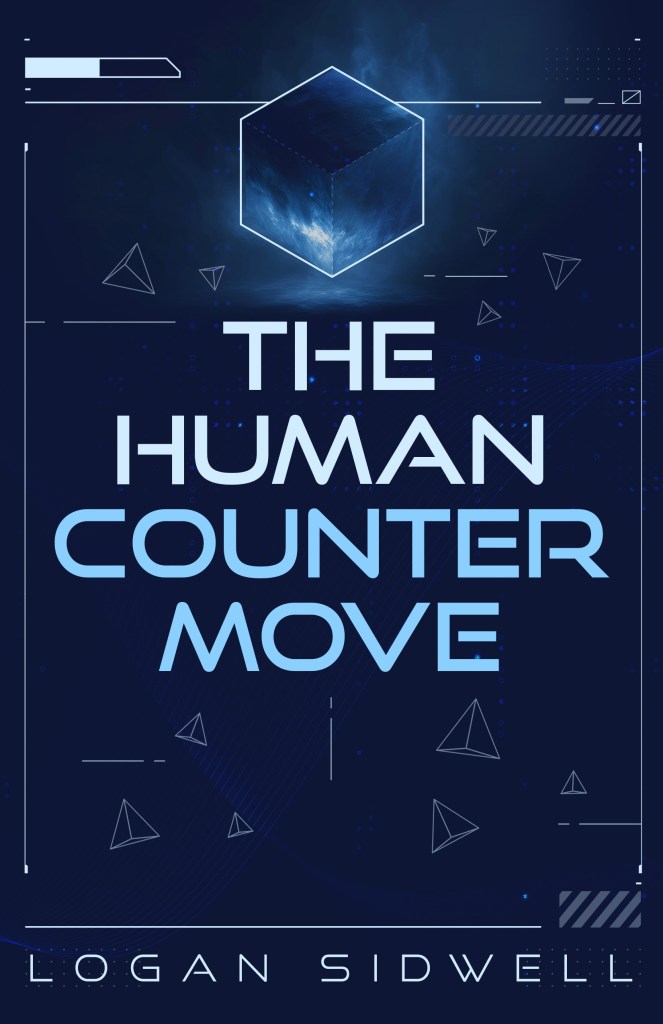
A year ago I published my first book, The Human Countermove. You’d think physically selling the product of my own creative labor would be enough for me to recognize myself as an artist. It wasn’t. 

First, my novel was a science fiction, a genre piece, not art. It was inspired by my love of chess, how could something with a gaming origin be artistic? If the story resonated with audiences, it just meant I was doing my job. It  was the mechanical process of pulling the levers of human emotion. 

Breaking A Mental Block

It could be that I associated ‘art’ with awards, and I associated awards with the elites, and when I imagined my writing, I didn’t see myself as writing for elites. I even attended an event called ‘arts in the park’ and didn’t put it together.

Regardless, it was something benign that finally shattered the glass.

I filed my taxes.

In past years, I’ve always been able to list my job as ‘Software Engineer’. It was a useful box to put myself in. I was a coder with a fiction writing hobby.

This year that wasn’t an option. At the top of my 1040, I was forced to mark the option labelled ‘self-employed’. One line down, those damn taxmen forced me to identify myself as what I am. A novelist. I was a novelist.

A couple weeks later I was talking to one of my engineering friends. He asked me about my latest novel, the fool. As I described it, I made two realizations. One, it was super weird. And two, the message was core to the material. Market appeal hadn’t even occurred to me. I was writing the story because I wanted to tell it, because I wanted to see it in the world. I couldn’t escape the label anymore. I was making art.

Looking back, I had been making art from the start. My novel wasn’t just a sci-fi dystopia, it was a discussion about our relationship with technology and the modern world’s instinct to strip fulfillment from our lives. My ‘piece of candy’ stageplay explored the way a single painting could mean seven things to seven people. Even my old starship ed-tech stuff explored themes of overconsumption, greed, and good and evil.

Regardless of how I felt about the quality of my work, everything I had done was creative and contributed to society’s conversation of life and philosophy.

Capitalism Ruins Everything

As I look back on my avoidance of the ’artistic’ label, there’s one particular mental block that was harder to overcome than the rest. Every time I finished writing a story, I had to sell it.

If you ever ask an author how to sell a book, they’ll always tell you the same thing, “Push your writer brain out of the room and bring in the business brain”. In order to survive, I had to sell my work, and in order to sell my work, I had to reduce it to its most basic components. Content Type: Book, Genre: Dystopian Sci-fi, Audience: Fans of Chess, etc. etc.

When I write, I write from the heart. The day my writer brain finishes his writing, the business brain cuts the mental umbilical cord and sees the work through the eyes of a capitalist. Stories become content. Content becomes products. I wasn’t a writer, I was a content creator. I wasn’t a novelist, I just wrote books.

It’s only in the last few months that I’ve realized what I’ve been doing the whole time. The reason I pick the stories I pick is not because of their market appeal, it’s because I resonate with the message. I dabble and practice and experiment, not to produce a more appealing product, but to tell better stories.

Conclusion

If you’re in the creative field, you’re an artist. It’s easy to gatekeep. The capitalist world is eager to tell you that you aren’t artistic until you can make money from your work. The inherent danger in that attitude is that you reduce your work to its success financially, and what makes a bestseller is different from what makes a resonant story.

The topic of profitability is a regular guest at my writer’s group. I suspect the same is true of every writer’s group in the country. By limiting ourselves to a particular view of success, by refusing to allow ourselves the label of ‘artist’, we cut off what may be our most personal and most meaningful works.

Every writer I’ve ever met has been, to some degree, trying to express themselves through their storytelling. They are all artists. No one goes into it for the money. So how do we keep getting tricked into dropping the label and defining ourselves by the singularly reductive metric of ‘total sales’?

New Writers Are Learning With AI Training Wheels

I’ve been a part of my local writing chapter for a little over 5 years. It wasn’t long after I started that ChatGPT was released into the world. Being the tech person I am, I fiddled with it. I learned how to use it for work, then shared what I learned with my fellow writers. At the time, it was a novelty. There was a sense of looming doom whenever we discussed it, but that looming doom was in the distant future.

Boy the distant future came up quick.

An AI Priest

I don’t use AI in my writing. I don’t use it in my editing. Unfortunately, as a young person that wants to be able to maintain a career ten years from now, I am forced to regularly experiment with the new AI models and learn how they work. The knowledge that experimentation has given me made me the tech expert in every writer’s room. That expertise turned me into something I didn’t expect, a priest of sorts.

Last month, during one of my chapter’s write-ins, someone came up to me to discuss their own experiments with AI. They spoke in a hushed voice, slid the work to me like it was contraband, then asked my opinion on what it all meant. I felt like I was a priest in a confessional, giving absolution to the sinner. “No, you don’t have to be ashamed of a test.”, “Yes, your AI story is disqualified from the contest”, “I wouldn’t trust an AI on opinions of taste, but that’s just me.”

In the writing world, there’s a deep shame associated with using AI. The community, without saying it out loud, has quietly endorsed a system of exile for the AI writer. I understand the instinct. I learned how to write without AI, all the best writers in my chapter learned without AI. How could anyone using AI become a ‘real’ writer?

After five or six confessionals, I realized something. It wasn’t the experienced writers that were dabbling with AI. It was the rookies.

The Next Generation of Writers

Do you remember when you first started writing?

I remember it was really hard. My mind was brimming with ideas, but when my fingers reached the keyboard, I had to push my wondrous scenes through the meat grinder of the page. Everything got all messed up, it was never as beautiful as I envisioned, and sometimes the product was incomprehensible. I ended up shoving an entire novel through that meatgrinder, now I hide that novel away. Things only started working when I brought in a professional to guide me.

In games, they call it a difficulty curve. When the game is really hard, they call it a difficulty cliff. Learning to write well is a steep, steep mountain. Most of us that scaled that mountain have forgotten what it was like.

My step-father picked up writing last year. He had never written a story before that. He’s a very tech-savvy guy, so rather than climb the cliffs of storytelling, he wrote his stories using a tool. Novelmaker. In one week, the AI wrote six books.

You might recoil reading that number. Six books in one week. I would have too, except that I knew he’d never try to publish them. It wasn’t about the money, it wasn’t about the fame, it was an expression of his creativity. He wanted to see his ideas play out on the page.

He took a break after the sixth book. Since then he’s spoken to me about writing more, and about writing better. He’s taken an interest in the craft and he’s started to see the weaknesses of AI writing. In time, he might even write a few stories of his own. I think it’s wonderful.

Last year, I presented on AI again to my writing group. I warned them that five or six years from now, new writers would learn to write not by trying and failing, but by using AI to generate their first stories. My estimate was wrong. It wasn’t five or six years, it was twelve months.

Half the new writers in my writing group have dabbled with AI. Some have asked for ChatGPT’s opinion on their work. Some have generated entire stories using it. I’m not talking about seventeen year olds that were raised on AI, either. These are adults entering the writing space using AI from the get-go.

The difficulty cliff in writing is too steep for newcomers. AI has softened the experience. On the one hand, it means there’s a glut of terrible writing. On the other hand, it means more writers are discovering their voice than ever before.

Gatekeeping Will Kill Communities

Every person is entitled to their opinion, especially on a topic as controversial as AI. It’s a values-based decision, and each of us has their own set of values. Some people think using AI for anything at all means you’ve violated some unspoken code of conduct. Some people think generating a book that’s a paraphrased copy of a different book is good business. The truth has to lie somewhere in between.

It’s okay for each person to draw personal boundaries. Personally, I’d never use AI to generate or edit my works. I think we get into trouble when we start drawing lines for others. New writers don’t ask for feedback on a one-page story that’s horribly written anymore. They show up with a ten-page story that’s bloated with filler words and ChatGPT cliches. It won’t be long before all prospective writers begin their journey using AI. As a community, we can’t just show those people the door.

That doesn’t mean we start allowing AI-generated stories to be submitted to our anthologies. It doesn’t mean we don’t point out that a story was AI-assisted. It just means we must continue to be welcoming to newcomers, no matter how they got into the art. When it becomes hard to empathize, I imagine a teen posting a forum: All the stories I’ve ever written were created with AI, I don’t feel like I’m a real writer. How do I get better?

Compassion and patience are the answers. From what I’ve seen as an accidental Writer-Priest, AI writing is like training wheels. Once a rookie learns to pedal, they’ll be eager to go without.

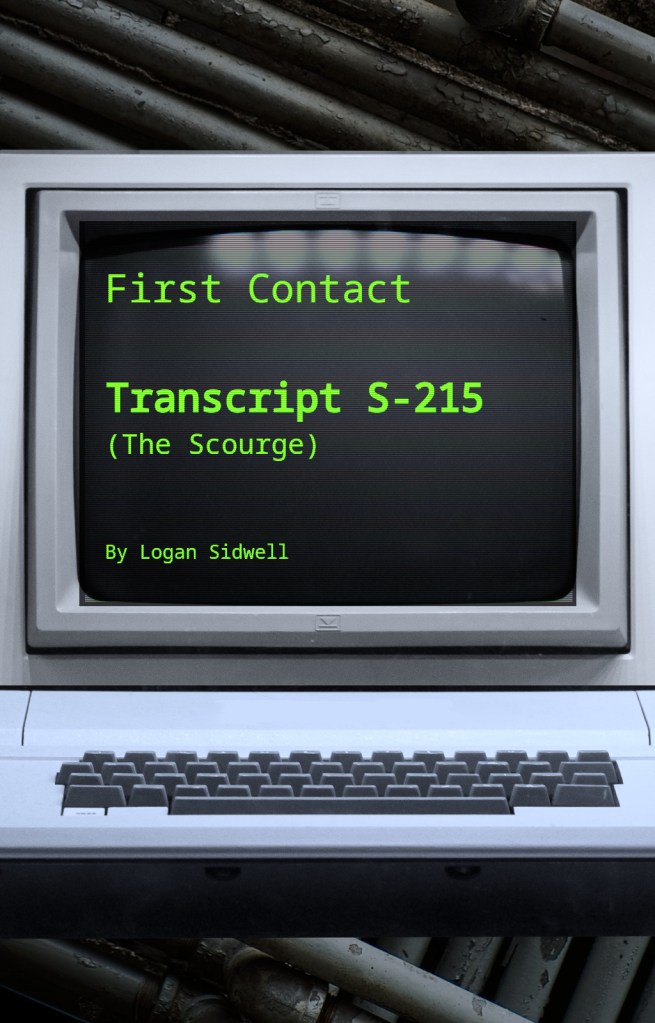
First Contact Transcript, Species-215

First Contact, Species-215 (Colloquially known as The Scourge)

Notes have been added to provide expert context.

S-215 Transcript #1 (First Contact):

BEEP BEEP

BEEP BEEP BEEP

BEEP BEEP BEEP BEEP BEEP

*Fibonacci sequence continued until 13.*

Earth Station B, operator 6, Mark Simmons responds: 

Clear. Identify.

FRIEND*

*Message received in direct english

*Word in S-215 lexicon carries second meaning of TOOL

Hello friend. Location?

*S215 responds with coordinates of Ross 248, located approximately ten light-years from Earth.

You are Rumbigeals?

*Rumbigeals (S11) are the known residents of Ross 248 and were originally contacts twenty-three years prior to S215.

NOT RUMBIGEALS. FRIEND.

What is your species name?

*Pause in responses lasts thirty-one minutes.

MOURNERS. WE ARE THE MOURNERS. YOU ARE HUMANS.

Hello mourners, humanity welcomes you.

WE ARE GLEEFUL TO MEET YOU.

Your english is excellent. What is your business?

*First contact conversation ends here. Operator Mark Simmons noted the high lingual capacity of this alien species and speculated that they had analyzed humanity’s early interplanetary broadcasts.

S-11 Transcript #18,216 (Initiated approximately five hours later):

MS: Good meetings Rumbigeals, which operator am I speaking to?

Operator two of fifteen.

*Mark Simmons notes that fifteen is the total number of operators, not the number currently on shift. This is against protocol.

MS: Zorle! This is Mark. How are the new spawnlings?

Challenging but rewarding. Thank you for inquiring.

MS: Good, that’s how they’re supposed to be! Just a moment.

*It is here that Mark Simmons is joined by Earth Station B’s director. The two discuss Zorle’s unusually curt responses for nine minutes, forty-three seconds.

Mark? Are you there Mark?

MS: I’m here Zorle. Just wanted to check on you. Is everything okay?

I am good Mark. We are good.

MS: I’m glad.

Thank you for checking in. I have to go.

MS: Have you heard of a species called the mourners?

No.

MS: Okay. Thanks anyway.

*Six minutes pass

Wait. Yes. I know the mourners.

*Mark Simmons notes that all his messages from here on were subject to approval from the station director.

MS: What do you know about them?

Nomads. Travellers. Rovers. Wayfarers. Peaceful drifters. Not a problem.

MS: They sound like a nice group of people.

If you are lucky they will pass through your system and trade with your species.

MS: Yeah, I’ll cross my fingers. Be well, Zorle.

*Be well in Rumbigean is considered a permanent form of goodbye.

I wait for our next hello Mark.

*On completion of this conversation, Earth ceased communication to S-9. No messages were ever again received from the Rumbigeals.

S-215 Transcript #2:

*All messages to S-215 from this point forward were prepared, reviewed, and submitted from within Earth Station A’s situation room. Mark Simmons was brought in to type the messages and to retain communicative continuity.

Hello. Mourners are you there?

WE ARE HERE MARK. WE ARE CLOSER NOW.

Closer to Earth, you mean?

YES, WE ARE CLOSER. WE HAVE MUCH TO SHARE.

How much closer are you?

*Coordinates list unoccupied solar system Lalande 21185, approximately 8.31 lightyears from Earth.

*Chief of Security Lorne Richards types the next message.

How fast are you able to travel?

*No response after thirty minutes. The keyboard is returned to Mark Simmons.

Can you tell us anything about what you intend to share with us?

WE CANNOT RUIN THE SURPRISE.

Is it information?

IT IS A NEW WAY TO LIVE.

*Additional messages were forwarded to S-215, but no response was recieved.

Final notes:

Approximately 48 hours after this conversation, Earth’s governmental bodies approved an additional $12.9 trillion dollars in starship development and $4.5 trillion in weapons research. 9 additional species ceased all communication in the coming months. For further information, review documents on The Scourge, The Abandonment of Earth’s Southwestern Hemisphere, and Policies Regarding Encounters with Half-Dead.

The Amazing Digital Circus Mixes Marketing and Story

Sometimes I watch a little more Youtube than I should. My algorithm consists mostly of video essays on the economy, tournament footage, and random gaming clips. Well one day I was whiling the hours away watching a bit of nonsense, and the algorithm recommended the pilot to a new cartoon series. The Amazing Digital Circus. I did a cursory search and discovered this random pilot is the start of a mega-successful series with a massive fanbase, all based on an old sci-fi horror called I Have No Mouth and I Must Scream.

This week the finale was released and I binged the entire back half of the series in one night. It’s a fun and tense series for teens and young adults that was well worth the watch. But the thing that caught my eye was how Glitch Productions blurred the line between new episodes, new merch, and marketing.

Plot

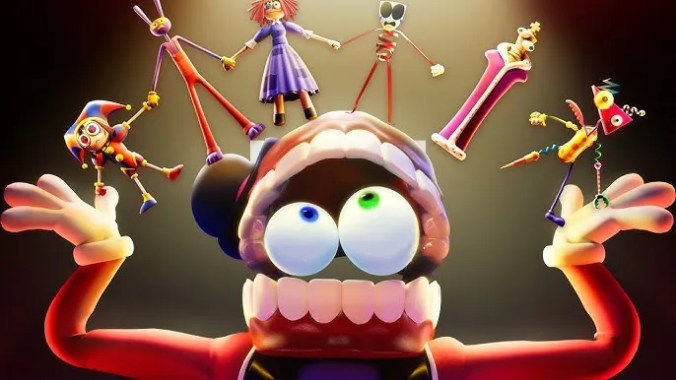
The Amazing Digital Circus tells the story of a group of unfortunates trapped inside an old 1990’s videogame. No one remembers their name, and everyone has taken on the form of an avatar appropriate for the circus atmosphere of the game. Kinger is a king chess piece, Jax is a prankster rabbit, and the protagonist Pomni is a sad little jester with very expressive eyes.

Running the world is an AI named Caine. Caine has godlike power in the simulation and a primary mission of keeping his trapped human guests engaged with his various adventures. If you’re familiar with the original Harlan Ellison story there may be some alarms going off in your head here. Thankfully instead of behaving like the malevolent AM of the original story, Caine brings an energy that’s a mix of circus barker and the Genie from Disney’s Aladdin (best captured during his show-stopping song in the eight episode).

Caine’s adventures inevitably go off the tracks in a dangerous and psychologically tormenting direction, and the plot of the show focuses on its human cast’s efforts to endure Caine’s accidental tortures while seeking a way out of their digital prison. It might sound like a horrific story, but the cartoony characters, comedic tone, and wacky settings take most of the edge off the physical horror, leaving only the existential.

An Exploration of Psychological Conditions

Since death is off the table, the worst-case scenario for our band of plucky characters is called ‘abstraction’. Years spent trapped in a simulation take their toll. If a character loses their grip on reality too much, they ‘abstract’, which means turning into a horrible monster that Caine makes sure to store permanently in the basement.

Keeping each other sane and healthy becomes the day-to-day focus of our characters. Each character has to fight their own inner-demons. To add insult to injury, the avatars in the game are specifically designed as physical representation of each person’s psychological struggles. Gangle carries a collection of masks and can only express the emotion on the mask she wears. Zooble’s body is an assortment of components she can mix and match, representing her own body dysmorphia. Ragatha is a raggedy ann doll that’s desperate for other’s approval. As the series goes on, we see each character’s deal with their own psychological turmoil. As you can imagine, there’s a heavy theme of self-acceptance that runs through the story.

Marketing Blurring Into Story

The entire series of The Amazing Digital Circus (TADS) was released directly to Youtube, rather than through some streaming service. From an accessibility standpoint, this allowed the show to reach a massive teen and young adult audience. From a financial standpoint, this meant Glitch Productions had to get creative.

If you’ve already seen every episode of TADS, you’ve actually only seen about 75% of the content related to the story. When a company advertises their upcoming episode, it’s a cut up of clips from the episode. Not here. Every preview TADS is entirely unique content. The AI Caine speaks directly to the audience, and often reveals elements of his character that weren’t visible inside the story.

One particularly meta moment comes when Caine advertises the series by practicing knife throwing on poor Pomni. Then in one of the later episodes, Pomni is blinked out of existence while eating a sandwich, and when she returns, she has a bunch of knives sticking into her jester avatar. The commercials are literally canon to the series.

But it doesn’t just extend to previews. Merchandising is a key element of funding TADS, so one of Caine’s favorite gimmicks in the youtube shorts is to punish his players by taking their avatars and turning them into the plushies that are sold online and forcing them to sing songs or engage in various harrowing challenges. After watching the whole series, the best thing to do is go to Glitch Production’s Youtube channel and watch all the advertisements. They even hid some key lore related to one of the ‘abstracted’ characters that isn’t present in the main series while advertising pins and plushies.

Conclusion

The story is a great modernizing of a sci-fi classic with modern, psychological sensibility. But the greatest innovation of this series comes in the marketing. Glitch Productions didn’t just make a great story, it produced an online experience. The voice actors are regularly invited to play games with one another online, they’re brought out to cons, the fanbase is constantly speculating on tiny aspects of the lore, they even got the finale into theaters (with a sing-a-long of Caine’s song that you can see online).

We’re getting to a place in the modern age where tv advertising and big posters aren’t the way to get butts in seats. Rather than following the cinema model, Glitch Productions followed the model set by the game series Five Nights at Freddy’s. Make a ton of content, add enough deep lore to get the fanbase buzzing, and produce tiers of content. The end result is that no matter what kind of fan you are, you’ll always leave satiated.

The Monkey Wrench Gang Taps Into A Timeless Rage

My favorite books are the ones written from a totally unique perspective. For me, there is no greater joy than seeing the world through the eyes of someone I’ve never even met. What matters little to me matters lots to them. What I don’t see, they stared at their entire life. What I hate, they love.

The Monkey Wrench Gang by Edward Abbey is one of those books. It’s fifty years old, but its rage makes it feel like it was written yesterday. Edward Abbey is a self-described anarchist. A warrior against the industrial world. And the way he shares his views is downright infectious.

Eco Warriors in Southern Utah

The Monkey Wrench Gang tells the story of four people who don’t fit into society. Hayduke is a Vietnam veteran with a hatred for authority. Seldon Seen Smith is a polygamist whose hometown was drowned by the creation of Lake Powell. Doc Sarvis is a healer and a skilled billboard toppler. Lastly, Bonnie Abbzug is a dancer from the Bronx. When these four anti-establishment individuals discover their shared worldview, they set to work dismantling the machines and symbols of industry all over Southern Utah.

Sabotaging freeway constructions, shoving tractors off cliffs, even destroying a bridge or two are well within this group’s capability. Every act is described in thorough detail. The book follows the group as they move from job to job, each act of rebellion more ambitious than the last. We see the quiet moments as they probe each other’s philosophies, the loud moments when their work inevitably runs afoul of law enforcement, and the scary moments when life and death are in the balance.

The writing has a country edge to it. The dialog can swing blunt and vulgar, and some of the behaviors of the characters can be downright classless. But at the same time, it’s authentic. These aren’t perfect people, they have vices and flaws and pasts that torment them. When a helicopter comes flying over and Hayduke warns the team not to look up, it’s not because he studied helicopters in a book, it’s because he had to hide from them in the war.

There are so many stories these days about people with perfect lives and simple pasts. They use clean language and avoid offensive action. One mistake often defines who they are. We want to be able to sympathize with our characters. They need to appeal broadly.

These characters aren’t like that. They’re flawed, they’re often broken, and when they engage with the world, it’s with an edge sharpened by years of living outside of civilized society.

Rage and Anarchy

Edward Abbey’s vision of the world is seeped in rage. The characters aren’t mad at a single broken part of a mostly working system, but at a humanity that can’t seem to stop themselves. When Hayduke and Doc look out at a new bridge across the Utah Desert, they don’t see a great new way to travel, they see modern industry bulldozing over what used to belong to all of us.

And it’s not high-minded either. When Bonnie sees a bridge that brings more traffic to a certain canyon, she’s pissed her canyon is being taken away. When “Seldom Seen” Smith looks at Lake Powell, he sees the town he used to live in and the canyons and secrets he used to know buried by a new recreational fishing area.

The world they remembered was taken from them.

It’s my favorite aspect of this book. I’m pretty young, by the time I was born Utah was full-speed on industrialization. Two years ago, the view from my home was a big flat desert. Now it’s three layers of houses. My only memory of Utah is now. This book captures the state when it was untamed.

A lot of books today like to talk about anger. Characters go on big diatribes about ‘getting back what was taken’. In most cases, I find that talk empty. Not here. When Hayduke sees a tractor, gets out his car, and drives it into a ravine just to stall industrialization for a day or two, I feel that in my soul.

The Right Book A Half Century Later

Don’t read this book for a great ending, read it for the adventure, read it to see the world through an anarchist’s eyes, read it to feel a rage that’s not acceptable in polite society. We live in such a censored age, a lot of the words I want to use to describe this book and the actions taken in it have to be left out of the review.

I picked this book up because three of the most interesting people I had ever met all recommended it. Now I understand why. In a lot of ways, it feels like the perfect timing. Utah sits at the center of a new war against data centers. The rage I felt in Hayduke’s heart as he watched the government lay down miles and miles of freeway is the same rage that pulses in my own as I read about the new mega-structures they want to build in Box Elder. It’s the pain of seeing the world we grew up in ripped away and turned into something we don’t understand.

The Monkey Wrench Gang taps into emotions most books can’t reach. It’s fifty years old, but it feels like it was written yesterday.

How A Writer Reads Their Client’s Mind

I used to write for an ed-tech company. We produced these magic schoolbus-like simulations where students in a computer lab used their curriculum to solve various crises and dilemmas. From time to time, organizations would commission us to create custom experiences. I got to write for 4H, Hill Air Force Base, US Synthetic, and a couple others.

The one I remember best was for Colorado State’s Veterinary College. We called the mission ‘Do No Harm’. It started with a sick sheep. The crew would shrink down, fly in, and over the course of a thirty minute adventure, cure the sheep of its ills.

But it was one particular meeting that still sticks with me. My team had finished the product and we were demoing it to the head of the program. We walked him through the whole experience. When it was over, he had an odd look in his eye. He scratched his chin, leaned into the camera, then asked how it was I had managed to read his mind. We laughed, but he was serious. He had no notes on the simulation, no items to change, it was ready to ship.

I didn’t tell him, but I had read his mind. It happened on our very first call. He didn’t spell it out or anything, but the program director told me everything I needed to know.

The Strategy Interview

When I jumped into that first ‘get to know you’ call, my primary concern wasn’t the story I’d tell, it was understanding my client’s goals and strategy. He regaled me with his vision of a thrilling adventure fighting off parasites with spaceship weapons. When he was finished, I asked him a couple big questions.

Where will this experience take place?
Who is the audience?
What are your goals?

Every question was open-ended by design. The more the client gave, the better the result.

His early responses told me the tone of the project. It was meant for middle-grade students, so I tuned the dialog to be a little more mature. It would be flown in a single computer lab as a part of a tour, so I book-ended the experience with tour shoutouts. His goal was for students to be excited about the work of veterinary medicine, so I made sure the experience was loving towards animals and ended on an upbeat note.

The most important element of the strategy interview was that I didn’t try to project my own idea onto the project until I understood the client’s goals. His answer shaped the foundation of the project. If I came in with my own pitch, prepackaged and ready-to-go, the idea wouldn’t fit. The age-range would be wrong or the tone would be too dark or the story wouldn’t emphasize the medical aspects.

The big-picture answers set the frame of the project.

The Personal Interview

Once I had an understanding of the shape and texture of the story, I shifted to more personal questions.

What made my client love veterinary medicine?
What moments were they most excited to see in the program?
Which animal did they want to treat?
What kind of challenges did my client encounter in the day-to-day of veterinary medicine?

These were the answers that gave the story authenticity. My client’s focus was farmwork, so putting an elephant or a giraffe onto the operating table would have been a big miss. 

As they told me more about their own experiences and their love of their work, I pivoted my plans. My client didn’t know it, but they wanted to see their lived experiences reflected back at them in the art. When they told me about curing a horse’s case of colic, I made sure to include it. When their eyes lit up telling me about the four compartments of a sheep’s stomach, you better believe those four compartments had to be scanned during the mission.

By the time we were done, the story wasn’t just a story, it was an interpretation of the client’s passion for his work. The personal interview gave the simulation those moments of delight and specificity that connected the client to the product.

Writing as a Product

We writers like to look at our works as art, and art alone. When we imagine ten million people reading our masterpiece, it’s all about the message being conveyed, or the emotions being evoked, or the characters that sweep them away.

This is the biggest difference between clients and writers. A client asks for a story in service of a purpose. The story, with all its themes, characters, twists-and-turns, is at the end of the day, a product. If you talk to the big executives at Amazon and Netflix, they don’t even call tv shows stories, they call them ‘content’. And if content fails to further a client’s goals, then it’s a bad product.

If your goal is to read your client’s mind and pluck an image from their brain, start by seeing the story from their point of view. Look at it like a product. What is that product doing? How will it serve the client’s goals? Starting with the right restrictions and expectations will save weeks down the road.

Once the restrictions are set, you can bring in the artist to turn the story into delight and wonder.

Learning From The Business Side

I used to see my books exclusively through the lens of the artist. Then I self-published. A week in and I found myself neck-deep in entrepreneurism.

My first misstep was the title. Everyone said the title wasn’t good enough. I didn’t understand why. I was the artist, and it was an interesting title, Mind’s Bane.

It was only when I looked at the title through the lens of a businessman that I realized my mistake. Mind’s Bane was a very interesting title for a dark fantasy book. Unfortunately, I was trying to sell a dystopian sci-fi. It was a title that failed to connect my book to its audience, a fundamentally commercial problem.

So I kicked the artist out of the room and found a more appropriate name. One that captured the concepts of sci-fi, dystopia, strategy, and ai. The Human Countermove.

Every conference I go to has a bunch of presentations on ‘how to make a good protagonist’ or ‘how to keep up the pacing of the story’. I used to think limiting your art that way was a mistake. I wanted the story to tell itself.

As I write my third and fourth books, I’ve come to understand the wisdom of those presentations. For an audience to enjoy a story, they have to like the protagonist. For them to stay engaged, the story needs good pacing. It’s good business, and it makes better art.

When we as writers and artists speak to our clients, it’s easy to see ourselves as the expert in the room. But everyone has their own set of skills to bring to the table. The client understands their goals and strategy. We understand how to produce the art.

There’s no telepathy in commissions. It’s all about understanding. When my client saw the simulation we had created, he loved it because it was the product he had been looking for. From the business side, it served his goals. From the art side, it resonated with his life experiences. All I needed was a couple conversations.

When Time Slows Down: Enjoying Conventions

My friend and I attended FanX this year. It was our first time. There were rooms filled with cosplayers, a massive vendor hall, and tons of celebrities (my favorite was Henry Winkler, who stood in front of his signing table shaking hands and hugging visitors). But at some point, wandering around staring at people and spending money got tiresome, so we attended a presentation. Something Star Wars related, he’s a big fan of the franchise.

When we sat down, he was on the edge of his seat. Sat up, attentive, and eager to learn. I was slouched in my chair. About ten minutes into the presentation his stance slackened. By half an hour he was holding his head up with his hands.

Then I pieced together what was happening.

This was his first conference. He had come expecting a content dense presentation, an action-packed lecture stuffed to the brim with anecdotes and stories from the extended universe. What he got was plodding, a gently paced lecture suited for resting rather than for learning. My friend was operating at a different time scale. The wrong time scale.

I couldn’t blame him, when I attended my first writer’s conference I had to make the same adjustment. When we’re young, schools are our conferences. Conferences where every minute is tracked and recorded, where learning is expected, and where education has no choice but to run at a breakneck pace. Your average presenter isn’t like that. They take their time, lose track of their thoughts, answer audience questions, and take the scenic route.There’s no test at the end of the lesson and the presenters aren’t trained educators. 

I didn’t recognize it until that moment with my friend at the Star Wars presentation, but time at conferences is slower. And to have a good time, you have to slow down with it.`

Appreciating the Present

My expectations for my first Writer’s Conference were way too high, and way too self-centered. I was hunting for the ‘most’ educational classes, searching for subjects that would maximize my education. Truth is, if your entire goal is to sponge up information on a subject, five hours on youtube watching carefully edited videos will deliver way more reliably than a conference. That’s not what conferences are for.

Conferences are for being present. They’re for stopping, looking around, and finding yourself surrounded by like-minded people from a million different backgrounds. They’re for conversation with your peers, sharing your experiences and learning from others. The poorly-kept secret of conferences is that the best event of every conference takes place after it ends, Bar Con. Having a couple drinks and conversation with someone you’ve never met with a similar interest often teaches you more than any presentation could ever hope to. 

This isn’t to say I don’t attend classes, nor do I ignore the content of the lectures, it’s a major consideration, but it isn’t the only consideration. Going down the calendar of a conference, I search for presentations from people I look up to, friends I’m there to support, or experts far above my level. And every one of these presentations gives me something different. 

From those who are a few years ahead of me in my career, I pick up advice for my immediate future. From friends, I take tips on how to give engaging presentations of my own. And from experts, I discover just how much I still don’t know. Even if the content of the presentation isn’t tuned to my skill-level or interests, the person giving the presentation still brings their own perspective to the world, and that new angle is always worth seeing.


In short, being present at a conference means seeing the people around you and hearing what they have to say. We spend so much of our lives focussed on ourselves, there’s something healing in listening to others.

Maximize Your Enjoyment, Not Your Day

I don’t fill my schedule. There may be classes from 10am to 7pm, but chances are I’ll only attend 2/3rds of those. The second you find yourself rushing from class to class, you’re missing the point of the conference. Often after a class, I find myself in a conversation with a peer, or maybe run into someone sitting on a couch in the hotel hallway, and that conversation will last as long as a class. Sometimes a group of us leave the event to get a long lunch. We’ve left the conference, but it’s those moments of spontaneity that stand out in my memory.

When I’m tired, I take a nap. When I’m hungry, I get lunch. When I’m tired of seeing hundreds of people, I find somewhere quiet and work on a project of my own.

Slowing down means being aware of yourself. No one’s getting grades for their attendance. You could spend the whole event sitting on a couch chatting with anybody passing by and you’re still enjoying the conference. Just because there’s a schedule doesn’t mean you need to shape yourself around it.

It Takes Practice

I’ve found a lot of people don’t enjoy their first conference. By the end, they’re underwhelmed by the lecture content, overwhelmed by the crowds, or just plain lost. Inaccurate expectations and self-imposed pressures make a conference something it isn’t.

Then they attend a second time. There’s a few more familiar faces, they skip a couple classes, and they go to bar con. By their third conference, they love it.

I think my friend would enjoy FanX a lot more the second time around. We’d show up in costume, learn technique from the other cosplayers, spend a while chatting with friends, and when we attend a presentation, slouch a little in our chairs.

Foundation’s Edge (#4), Isaac Asimov – Book Review

29 years after writing the original trilogy, Isaac Asimov continues Foundation’s generation-spanning space epic with Foundation’s Edge.

The Foundation book series has always been a little strange. Every one of them has felt a bit like an accidental sequel to the last. The first book was a series of short stories, the second book threw the original concept in the trash, and the third book took the ideas from the first two and developed them into a spy thriller. 

Combine all that with an author coming into his own and every one of these books feels completely distinct. I’m happy to report that the fourth book in the series continues the pattern of genre-bending ideas and thrilling twists at a galactic scale. 

Read my discussion of the first three Foundation books here: How Asimov Saved The Foundation Books

Plot

Over a century after book 3, Foundation’s Edge tells the story of Golan Trevize, a council member in the First Foundation, as he investigates the invisible powers pulling The Foundation along the track to becoming a galactic empire. In parallel, Stor Gendibal, a leader of the psychic-led Second Foundation, uncovers a terrifying truth about the Seldon Plan.

For the first half, the story is a political thriller. At each twist and turn, Asimov makes sure to keep the audience fully informed as to what each action did, what it was aiming to do, and how each of the minor characters changes the calculation of the book.

After a series of political maneuvers, speculations, and schemes, Golan Trevize is sent off in search of ‘Gaia’, humanity’s legendary origin planet. At this point, the book’s genre suddenly changes. In a single chapter, we move from political thriller to treasure hunt. Adventure and mystery keep the story moving and the stakes climbing ever upward, ending in a satisfying conclusion.

Asimov’s Writing

Isaac Asimov learned a lot about writing in the nearly thirty-year gap between the third and fourth books. For the first time in the Foundation series, Foundation’s Edge tells a single, continuous story. Multiple POVs, yes, but it begins at the beginning and ends at the end. No century-long time jumps and no being introduced to an entirely new cast of characters halfway through the story. In this book, we have the time to get to know the characters and truly understand their motivations.

For a good bit of the story, I was confident it was setting up a new trilogy. The first half was paced much slower, deeply exploring the political intrigue while reminding the readers of the events of the past three books. By the two-thirds mark, there were a lot of starts without a lot of resolutions. I was pleasantly surprised when the final third of the book jumped into high-gear, delivering a tense and action-packed finale that closed every thread and reached the grand-scale the Foundation series is known for.

The Conclusion

After the first three books, the Foundation series felt like it was over. The goal of galactic empire was centuries away, but all the major factions had reached a balance, and the ending felt inevitable. With this story, Asimov re-contextualized past stories and painted the inevitable conclusion as a defeat rather than a victory, he introduced adventure and mystery to a completely mapped galaxy and layered new complexities on an already complicated universe in a way that breathed new life into the series.

Much like Asimov’s first and third books, Foundation’s Edge is a conclusion. But this time, the story also feels like the beginning of something new.

That Time A Space Simulation Turned Into a Spy Hunt

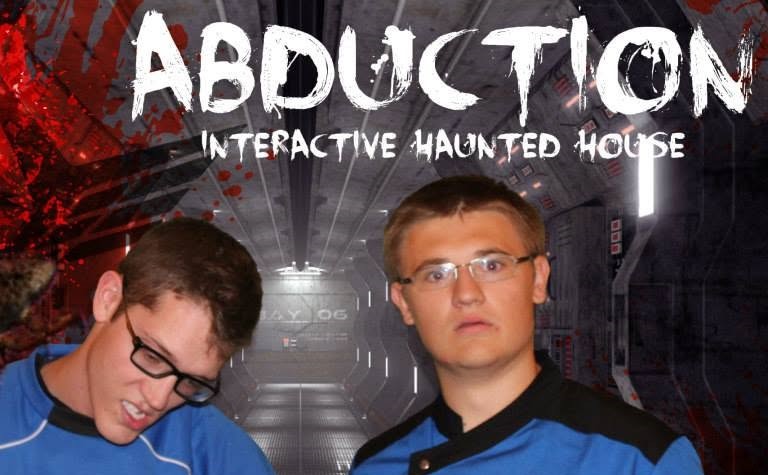
Readers of my blog know I used to simulate star-trek style spaceships. It was my entry-point to the world of writing, storytelling, theater, and tech all at once. A part of the reason I studied computer science was to make sense of the one part of the simulator I didn’t understand. My first written stories were simulations written to fill a story vacuum. As a flight director, I was lucky enough to not only write the stories, but perform them.

I told hundreds of stories in my five years simulating starships. Mostly I stuck to my biggest hits. Occasionally we’d test a new story and fiddle with it to make things more exciting. But this flight wasn’t like that. It was supposed to be a nice, normal mission. Instead it ended up being my most memorable flight in a half-decade of incredible stories.

Setting the Scene

The nine crew members each donned their uniform, a felt poncho modified with starship colors and branding. It was a birthday party, every kid was in second or third grade. A bit young, but me and my team had dealt with worse.

One side a school, one side a spaceship.

To reach the ship, they needed to pass through the ‘teleporter’, an old photography dark room door, the revolving kind. They’d step in two at a time. I’d remind them not to touch the side lest they be lost to space, then spin the door 180 degrees.

Pitch black for half a second, then the bridge of a starship. Even when you knew the trick, it still felt like magic. The UCS Everest was a large vessel, suited to handle parties of 10-15. There was a main viewscreen at the front and tiered seating at the back. A staff member would ask the arriving crew their job position, then direct them to their seat.

Once everyone was seated, I would teleport in behind them and the epic boarding music would fade away. Safety instructions were always boring, but from the very first second I could tell this crew was different. Eyes wandered, kids whispered. I talk quick, but this crew had no interest in any of it.

When the safety briefing was done, I had a single instruction for my staff. “Get through the training as fast as you can.”

We had a set of junior controls for young crews. Instead of everyone having a distinct job, they were all prompted to do the same activities together and drive the ship as a single unit. For groups younger than 4th grade, it was really the only way to keep them from being overwhelmed. Unfortunately, the most recent windows update had broken the juniors controls, so all we had were the advanced systems.

The Flight

The crew was both overwhelmed and not particularly invested in the story of the mission. They were supposed to fly to an endangered planet and help evacuate the citizens. For crews like this, we like to put a ‘doctor’ on the bridge to help them out. Whenever I came on over the speakers as the main engineer and told them they needed to ‘undock’ or ‘set course’, the doctor secretly made sure the task got done.

In this case, the doctor was basically flying the ship on their own.

Fifteen minutes into the flight, I could tell things weren’t working. I was quietly telling my staff to get ready to ‘board the ship’ as various alien intruders and wacky characters, but while that was being prepared, I needed the story to continue.

The Breakthrough

There was a political situation surrounding the endangered planet. I was on the speakers as a Texan ship captain warning them of the dangers. None of it was clicking, the whole mission was feeling like a bust. Then I said the words that changed the course of the mission. “The mayor of that planet is a crafty fella– he’s got people everywhere. Keep an eye out, you may have a spy on board.”

On the cameras, I could see kids’ heads popping up and glancing around. Their security officer, just eight years old, jumped out of his seat with a toy phaser in hand. There was still conversation being picked up by the microphones, but they weren’t talking about a party. They were talking about the spy.

Not yet realizing what had happened, I had the ‘ship doctor’ get back to the bridge to help them navigate the upcoming asteroids.

The second he teleported in, every kid in the room was out of their seat and yelling at the top of their lungs. They all made different accusations, but there was only one message: The Doctor was a spy.

My first reaction was frustration. Everyone had left their computers, which meant no one was driving the ship, which meant the mission was frozen in place. But these kids had never cared about the mission in the first place. As I watched the doctor get forced into the brig at phaser-point, I saw what I had been looking for since the start. A crew that cared about the mission. Not the space theater or the advance controls or the working together. They only cared about hunting for spies.

If the flight had been a field trip arranged by a school, I would have paused here. The crew would have gone back to their seats and we would have discussed what their priorities needed to be. But this was a birthday party, and when you’re flying a birthday party, it’s best to reserve the lectures for the really bad behavior.

A small brig for 6 suspects

So the mission changed. I ordered a volunteer dressed as a security guard to go up and help the kids interrogate the doctor. But their blind hunger for spies was worse than I thought. The security guard ended up in the brig right next to the doctor.

I was down to two volunteers. The next one I sent up with no costume at all and specifically told the kids that this person was not a part of the story. Just a staff member there to guide their experience. They reluctantly agreed not to stuff her into the brig, but there were plenty of murmurs that she was ‘secretly a spy’ anyways.

Now that I knew what kind of story we were telling, I knew what kind of tools we should use. We planted a device in a tunnel under their seats and set off the alarms until they found it. We played crazy ‘hacking’ noises over the speakers and flicked the lights from red-alert to green-alert to a bunch of other colors while they flipped switches on a panel. Whenever there was downtime, I didn’t even have to fill in the blanks, the crew would sprint right back to the brig and resume their interrogations of the prisoners.

Then came the masterstroke. An away mission to the lower decks. It’s a funny thing, kids love getting onto the starship, but once they’re on the ship, all they want to do is leave. There was a second starship right across the hall. We redirected that ship’s camera feed to the main view-screen. I told my last volunteer to go in there and stand around.

When the kids saw the footage of a person in a uniform doing nothing, they went wild. Never had they seen a more guilty figure in their lives. The staff member led them on the away mission and they caught the ‘spy’ with ease. They were thrilled for an excuse to use the phasers.

On their way back to the ship, the crew bumped into two unfortunate staff members who were returning from a lunch break. They were dragged to the brig like everyone else.

The Finish

With the end of the mission closing in, I decided it was time for a trial. We gave each student a seat and made them all a part of the jury. One by one we brought out the suspects. I wish I could tell you they were thorough in their questioning. I wish I could say they even listened to what each prospective spy had to say. But they didn’t. It was closer to a witch hunt than any form of judicial process.

At the end, they decided it was the doctor who was the spy. Of course it was, he was the first suspicious figure on the bridge and the only one they all remembered capturing. I told them they were right and that they had successfully completed the mission.

They cheered and ran off with their parents to eat cake. Great reviews all around, although I’m guessing that dying planet from the start of the mission would have a few complaints.

When we finished restoring the bridge from the child hurricane that had ripped through, I sat back and took a breath. One of the other staff members walked over to me with wide eyes. “That was amazing! I’ve never seen a mission like that before. You should write it down and fly it more often!”

I smiled and shook my head. We had improvised 2 and a half hours of nonsense. A playful nothing to distract a bunch of ten-year-olds. It was none of the magic that had drawn me to the program in the first place, and used none of the tools that made the simulator cool. Just one long string of chaos, and we were lucky the kids had liked it.

The Invisible Man and The Picture of Dorian Gray: Two Masters Explore Consequence

Intro

I love stumbling across paired stories. Those rare and curious times when two different writers take on the same concept around the same time. There are plenty of Hollywood examples. Armageddon and Deep Impact. White House Down and Olympus Has Fallen. The Illusionist and The Prestige. It feels like two philosophers each making their own argument in the public forum and by reading their story, you see the full journey to their conclusion.

In the 1890s, two of the greatest authors of their time wrote two of their greatest books. First was The Picture of Dorian Gray. Originally published in Lippincott’s Monthly Magazine in 1890 and expanded into a novel in 1891, it stands as Oscar Wild’s only novel in a career writing plays and poetry. Then in 1897, two years into HG Wells half-century long science fiction career, he released The Invisible Man.

Both stories have been told and adapted and shared millions of times over the years, both stories have outlived their creator. And while the two stories on their face appear completely different, both try to answer the same question: What would a person become if they could act without consequence?

To me, these two books are my favorite example of paired works. An opportunity to see a sci-fi writer and a playwright approach the same philosophical concept. A chance to observe two masters each bring their own unique perspectives and reach vastly different conclusions.

Two villainous leads

When a skilled storyteller knows what kind of story they want to write, even if they don’t know the details, the nature of the story trims down the possibilities. If you want to tell a story of someone reconnecting with a community, it means they had a community to begin with. If you’re writing a revenge power fantasy, it usually helps for the main character to at one time in the past be a uniquely skilled fighter. I like to call it ‘novel-writing algebra’.

In the case of a theme like ‘no consequences’, both storytellers realized they had to start from the same place. To truly explore the space, each story’s protagonist had to be more villain than hero.

The Picture of Dorian Gray tells the story of eponymous Dorian Gray, a young man that values his appearance and youth above all other things. After realizing all his cruelties appear on his portrait rather than being reflected onto his person, he embraces his worst tendencies. Hurting those who love him, extorting, murdering, everything he can think of in one long hedonism treadmill.

The Invisible Man’s protagonist is just as reprehensible, but in his own way. Jack Griffin, for what it’s worth, earns his invisibility. He discovers the means to turn living tissue invisible and uses it to burgle, rob, and threaten. But it wasn’t the invisibility that made him that way. He robbed his father even while his skin was still opaque. Throughout the book he is teasing and cruel to the people he is closest to. The kind of man no person would want to associate with in real life.

A pair of cruel characters for a pair of moral lessons. How else could you teach it? If you start with a good character using their protection for a good cause, you end up with The Invisible Woman saving the world in a comic book.

Both authors realized that in order to explore the concept of consequence fully, they needed a bad actor to exploit the situation.

Freedom from Consequence

At the question of ‘What does a bad person do without consequences?’, our two authors diverge.

HG Wells goes down the obvious path. Mayhem, havoc, and immediate self-serving cruelty. In every action, The Invisible Man acts as untouchable as he feels. HIs dealings with others are impatient and demanding. As the story goes on, his ambition grows. His vision expands from short-term robberies to an ‘epoch of the invisible man’ by means of violent threat.

A bully. That’s all Griffin is. The second he gets an ounce of power, he stretches it to its utmost with no plans for the future. At the outset, this feels like the only answer. A person without fear of reprisal tries to force the world into their vision of things.

But Oscar Wilde’s take is vastly different.

Dorian Gray isn’t an ambitious man, he’s petty. Looks matter more than character. Charm more than soul. Over the course of a lifetime, consequences seem to evade him. When a man comes to avenge his sister, he realizes that Dorian Gray couldn’t possibly be the man from 20 years ago, after all he hasn’t aged a day.

When Dorian is given the freedom to do as he’d like, he doesn’t shape the world, he plays with it. People and institutions become toys to be tinkered with, broken, and tossed away. Even when hiding a body he handles the whole situation with a cold psychopathy. The dead man isn’t a person, it’s a thing. Dorian accumulates wealth and connections all through the world and his capacity to do expands, but the answer to ‘what will he do’ seems to come down to a single answer: whatever he feels like.

Although Griffin is supposed to be the more intelligent of the two characters, Dorian without a doubt makes better use of his power. He feels more real too, like one of thousands of kids born and raised into wealth under a system built to protect and empower them. A lifetime with no fear gives him a detachment from his actions. Everything is a game to be played and moved on from.

When the hammer comes down

Both authors reach similar conclusions at the end of their stories. Even if a person sees no immediate consequences to their actions, there are always consequences.

The Invisible Man gives the easy answer. If a person behaves cruelly for a long time the world will eventually hunt that person down and deliver the consequences nature tried to protect them from. Jack Griffin’s final moments are spent being beaten by a mob. Victim not of a single action, but the sum of all his behaviors.

I don’t know how much I believe it. There are plenty of stories of people getting away with their crimes, even in a court of law. Even tyrants die of old age from time to time.

Oscar Wilde gives a different vision of ‘consequence’, and one that is clear from the beginning of the book. With every sin Dorian Gray commits, his portrait changes. A cruel smile at the edge of his lips, bloodstains, scars. The portrait isn’t just a magical painting, it is a reflection of Dorian’s soul, and for me, the better answer to the question of consequence.

Even if the world never retaliates. Every evil action distorts a person’s truest self. A murder doesn’t just stain the hands, it stains the heart. By the end of Dorian Gray’s life, the portrait doesn’t even look human. Terrible deeds have reshaped the man so far as to cut out his humanity entirely.

Conclusion

It’s impossible to move through life without seeing the occasional villain. I think that’s what makes the theme of ‘consequence free action’ resonate. Injustice is a part of life. Maybe what that makes these stories palatable is knowing the author will deliver some kind of justice by the end.

To me, The Invisible Man has the feel of a comforting moral tale for the upstanding in society. Eventually evil will be held accountable, even if it takes awhile.

But The Picture of Dorian Gray gives an answer that feels truer to life. Justice is not exact. Sometimes the worst of the worst escape their consequences and the good suffer in their wake. The only thing that can truly be said of the person that acts with no fear of reprisal is that they will eventually lose their personhood entirely and by the end of their life become unrecognizable to the world around them.