The further I’ve gotten into writing, the more complex my idea of ‘a book’ has become. The theme informs the plot and the plot informs the voice and the voice informs the theme in one big circle. It’s all craft and philosophy. But when I think back to my childhood and to the first books I ever read, none of that really mattered to me.
Books used to be about excitement. What if a kid was raised by ghosts? What if there were Greek demigod kids in modern times who lived at a summer camp with superpowers? When I saw a book cover depicting a kid flying through the air and reaching for a piece of magic candy, I could imagine myself inside The Candy Wars. Or fighting a Hydra in Percy Jackson. Or wandering between the gravestones on a misty night in The Graveyard Book.
A cover and a hook don’t speak to the themes of a piece and they don’t inform about the eventual quality of the story, but they do determine who is willing to read the book. An appealing book gets more readers than an artful book. The challenge to modern writers is to make art, but package that art up in a good looking product.
Two Paths Into Storytelling
An author friend of mine and I sell books together at local farmer’s markets. We’ve stood next to one another for hours, listening to the same book pitches again and again. One thing we’ve realized is that our pitches are fundamentally different from one another.
When I make a pitch, it’s all about the ‘big ideas’ of the book. I give a quick summary of my main character, “a washed up strategy game grandmaster”, a description of the setting, “in a nation run by AI”, and the key idea that makes the story interesting, “it’s about what it takes for a person to out-think a machine’. The pitch is very high-minded, it’s meant to get the reader thinking (The Human Countermove can be found here).
But when my friend pitches his middle-grade historical fantasy, he has a completely different focus. He describes the opening scenes of his book, ‘Dracula kills these two kid’s parents’, he tells the listener where the story is going, ‘They’re turned into vampires when Dracula’s wife feels sorry’, and he describes the character arc, ‘They have to learn to use their powers in order to survive in a vampire-filled world’.
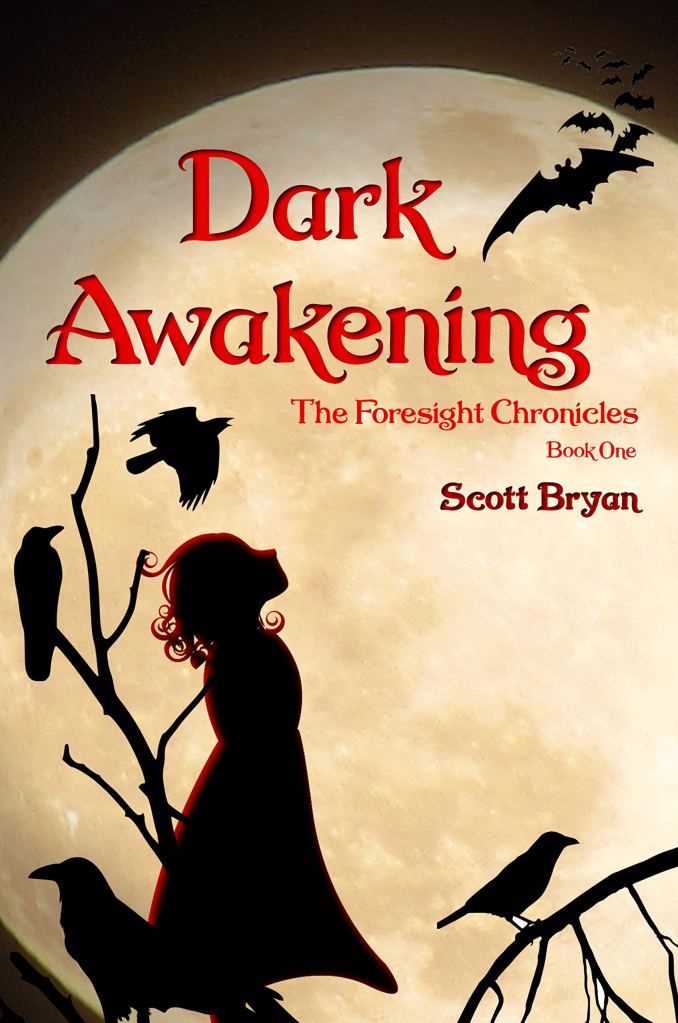
Once he gets going, he keeps going. His enthusiasm is infectious. People buy the book partially because they think to themselves, “He is so excited about this story, how could it be anything less than thrilling?”. It’s the complete opposite of my approach of, “If the themes of my story interest you, you should buy it.”
I’ve found this same appeal vs theme dichotomy in a lot of the writing community. Half of us start writing because we love ‘the big ideas’ of our stories that make it resonate with our readers, the other half write because we love telling fun and exciting stories worth losing yourself in.
Both approaches are right, and both are wrong. When you focus on what makes a book resonate, you’re focusing on the long-term impact of the story, but you miss out on all the fun along the way. It’s hard to convince an audience to read an entire book if the only promise you can give them is that the ending will be really good.
On the other hand, by focusing on the ‘appeal’ and the ‘fun’ of a story, you guarantee your audience can connect to the story quickly and get their imagination running. But if it’s not leading anywhere, the story can feel like empty calories.
What Makes a Book an Appealing Product?
I used to wonder why there were so many beginning writing classes at conferences. How many times can you really study ‘How to Make a Good Protagonist’? Viewing storytelling from a product perspective, the basics are actually the fundamentals. Fun characters, quick starts, good worldbuilding, and good pacing are the price of admission. If you fail at the start, you fail to retain your audience, and if you fail to retain your audience, there’s no one there to listen no matter how good your story ends.
Hook and Cover: I believe half of selling books to new readers is making a good hook and a good cover. The cover tells the audience the genre, the character, the setting, and the vibe of the piece. A good hook must inform the audience on why your book will be a fun read in less than a minute.
Character: There must be an appeal to your characters beyond being deep. Maintaining a good relationship between reader and protagonist is the heart of good storytelling. When writers talk about voice, it’s often really about painting a picture of the world through the eyes of the protagonist. For a piece to be appealing, the protagonist has to be worth cheering for, and their vision of the world should be worth seeing.
Opening and Pacing: A good story should be good from the very first page. The audience should be drawn in within the first few words, and they should know where the story is generally going by the end of the first chapter. If the reader is lost or unsure, they’ll put the book down and never read it again. Every time the story loses pacing, it risks killing the reader’s momentum. Masters of storytelling know that every second counts, and if the plot isn’t moving forward on a particular page, there better be a deeply compelling reason for it.
Worldbuilding: Worldbuilding has always been one of my weaknesses. This is because worldbuilding sits at the very heart of appeal. Exciting worlds give the reader an invitation into not only the story, but the surrounding setting. It’s the fun and games that keep the reader engaged even when they aren’t reading.
A Good Book Should Make You Smile Thinking About It
I have four books in varying states of completion. Some are at the end of the first draft, others are published. Occasionally I find myself thinking about my books. The thought of editing some of them fills me with dread. But there’s one in particular that, whenever I revisit it, I find myself smiling. Within moments, my entire cast of characters come strolling into my imagination. Every one of them are distinct, like each was painted by a totally different painter. Then, a moment later, the entire world comes rolling in with them, like color splashed onto a blank canvas. It’s exciting, I want to keep thinking about that book and I want to keep living in that world.
It’s only recently that I realized what I had made: An appealing product.
Ever since making this realization, I’ve been reviewing my other projects for their appeal. If I don’t like my main character a third of the way in, is the story really up to quality? If everyone talks the same and has a similar perspective on the meaning of life, is the cast really compelling? If the plot slows to a crawl for two chapters, how can I say with a straight face that the story is exciting?
For a long time, I viewed stories as worth telling because their message was good and their themes were resonant. But that’s not a good reason for the average reader to commit to a book. They can’t slog through 250 pages on faith. For a story to be worth telling, it should be worth telling, it should be worth getting excited about, and it should be that way from the very first word.

