Deltarune Shatters The Boundary Between Game and Player

The game opens on a dreamlike scene. Ethereal mists float through the background. Scan lines run from left to right across the screen like an old CRT television. A dialog box gives you a simple instruction:

NAME YOUR VESSEL.
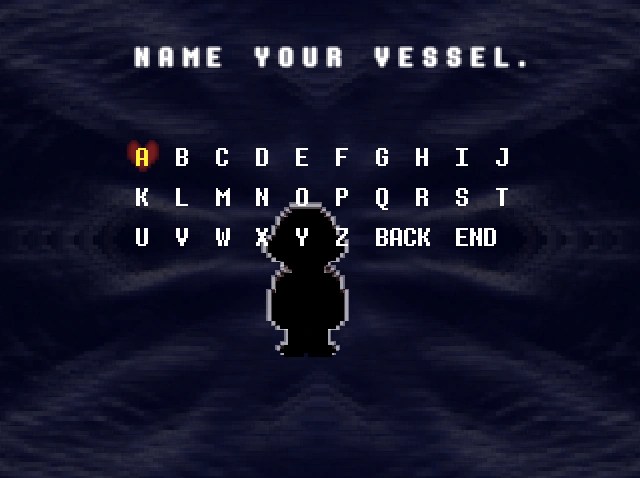
For a game inspired by Japanese RPGs from the 1990’s, this is normal. You give your character a silly name and press enter. The dialog box reopens and asks for a second piece of information.

YOUR OWN NAME.

When you see that question, you hesitate. You already gave the game your alias, you don’t have a second one. You consider, then type your real name into the console. The submit button has a weightiness to it. It feels personal, as if you broke off a piece of yourself and sent it in the game.

As far as Deltarune is concerned, you did.

An Homage to RPG Games of The Past

In the late 90’s, an RPG game referred to a very specific kind of product. The world was shown from the top-down, your team was composed of various heroes, they had small pixel forms and a higher-detail form for combat. Your party would fight monsters to gain experience and level up, eventually culminating in a big battle to save the world.
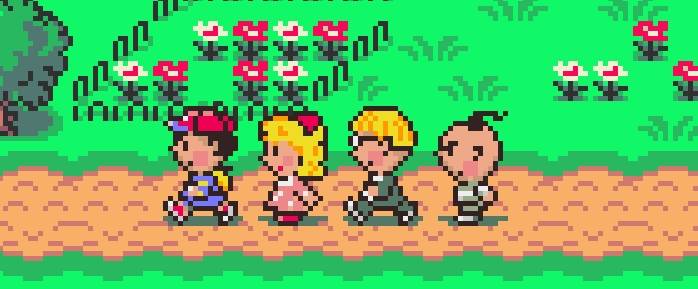
EarthBound and EarthBound Beginnings Now on Nintendo Switch Online

On its surface, Deltarune, created by Toby Fox, is a loving tribute to the genre. Underneath, it’s a meta-narrative commentary that forces the player to re-evaluate their relationship with games. But for a good piece of meta-commentary to work, there must be a fun game to build from.

Deltarune tells the story of Kris, a human in a town filled with friendly monsters. After getting into trouble at school, Kris and his bully Susie fall into a portal to a dark and frightening world. While there, they discover an ancient prophecy and a threat to the whole world. In chapter 1, Kris and Susie must learn to overcome their differences to save this world and find their way home.

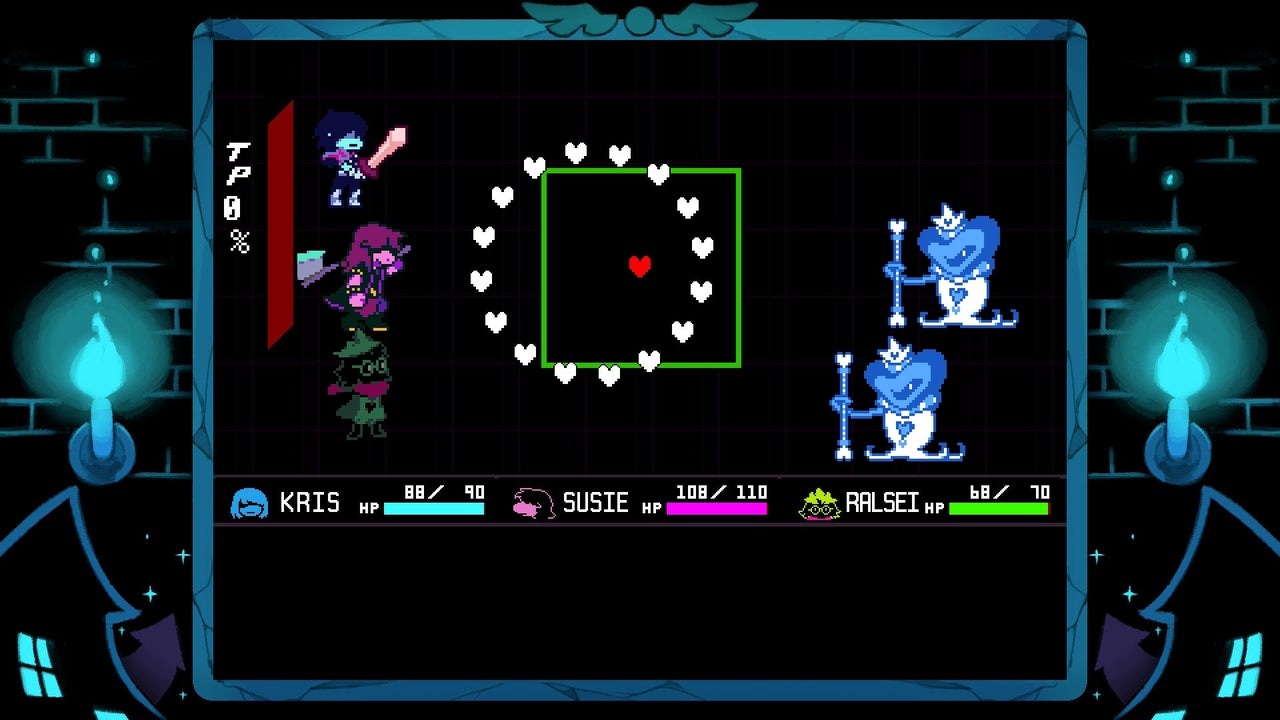
The power of friendship is key to the story of Deltarune. In combat, players are presented with two options for battle. FIGHT, and ACT. FIGHT does what you think it does. ACT provides players a non-violent way to disarm and befriend monsters instead of killing them. Early on, players must work around Susie’s instinct to kill enemies in order to give the world its best possible ending. The game often advertises itself as ‘The RPG where no one has to die’.
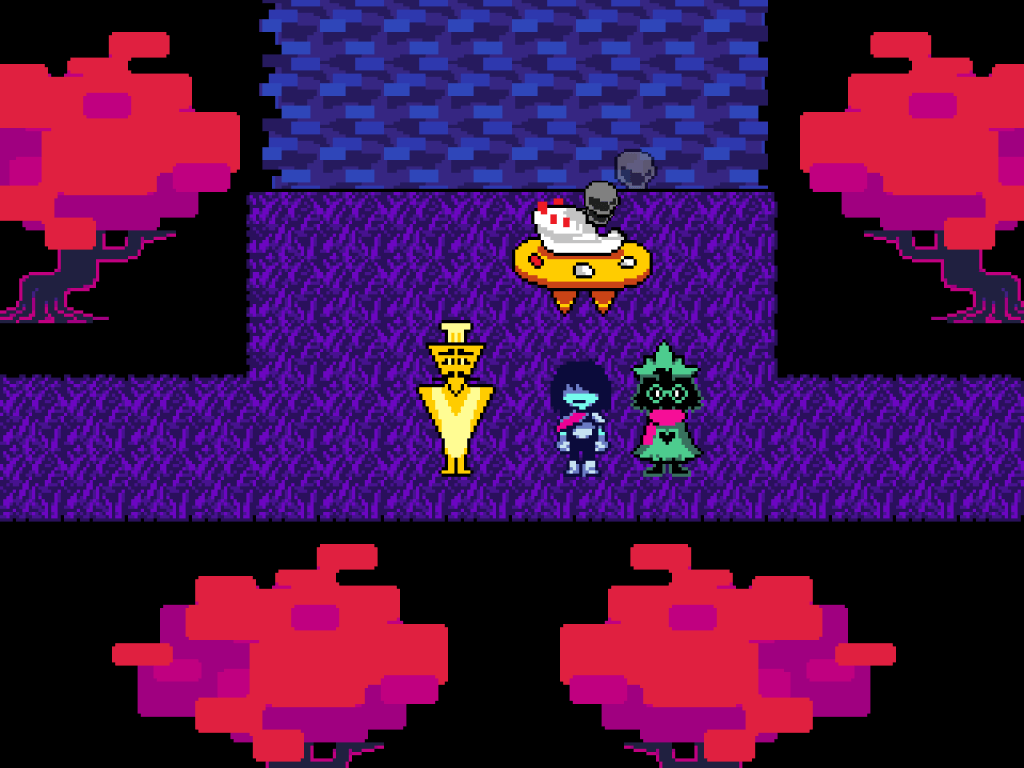
Deltarune is the stand-out example in the games industry of a passionate auteur artist making exactly what they want. In dialog, the creator Toby Fox is able to seamlessly jump from wacky, comedic scenes to emotional betrayals and high-stakes conversations about destiny. The low-cost of the graphics and relatively simple gameplay gives the team room to experiment in ways you wouldn’t usually see in games.

Toby Fox is deeply in-tune with both the RPG genre he is imitating, and with the online culture of his fans. He knows when he can break the rules of his world. In chapter 3, we are introduced to a villain with a television for a head named Tenna (as in anTenna). The introduction uses a crappy, early-days CGI aesthetic that technically violates the retro aesthetic of the world. But it’s surprising and fun and breaks the usual routine. A handsome chap in chapter 5 is, without warning, given a high-resolution anime style introduction. These kinds of strange and wacky moments are par for the course in Deltarune.

You Are a Character

If Deltarune were a normal game, I would tell you that you play as Kris, the human protagonist. But Deltarune isn’t a normal game, so I must rephrase. In Deltarune, you, the player, the person sitting in front of the monitor, control Kris. Technically speaking, you are a little pixelated heart sitting inside of Kris’ chest. Whenever there’s a decision to make, the heart makes the choice. Whenever there’s danger or combat, the heart has to dodge the damage. This is an arrangement Kris isn’t altogether happy about.
Chapter 1 Enemies - Deltarune Guide - IGN

This differentiation might sound pedantic, but the situation is best understood by a scene at the end of Chapter 1. It’s almost midnight, there’s no one around. Kris climbs out of his bed, rips his heart from his chest, and tosses it in a bird cage. If it were up to Kris, he’d be rid of you forever.

Placing the player in the game has a strange effect on the narrative. When monsters are killed, it isn’t Kris that’s responsible, it’s you. During a high-stakes dialog with one of the more conflicted boss characters, you aren’t trying to make the choice that gets you the best gear, you’re trying to make the choice that best reflects your personal values. You can’t disassociate. The characters feel so much more real, as do the consequences of your actions.

This is where the second layer of Deltarune’s story reveals itself. Any good RPG doesn’t just have a single ending. Usually there’s two or three endings, with one being considered the ‘good’ ending. If you’re a good person in Deltarun, the game rewards you. The world becomes brighter and the monsters you befriended along the way end up helping you. But that’s just the good ending. A dedicated player wants to see every ending, and that means intentionally making bad decisions.

The Weird Route

Underneath the joyful storylines and fun characters of Deltarune is a darker and more personal story. They call it The Weird Route. It’s a route intended only for the overly-curious and naturally cruel. Players must be willing to kill their enemies. Players must be willing to manipulate NPCs, engage in coercive behaviors, and even push another character into losing their sense of self and doing whatever you say.

It speaks to the game design that I physically and emotionally cannot bring myself to go down The Weird Route. This isn’t the first time Toby Fox has done something like this. Deltarune is a spiritual sequel to a game called Undertale. 

In Undertale, The Evil Route required the player to grind EXP by killing every monster in every area of the game. The more you kill, the emptier the world becomes. By the end of The Evil Route, you are the villain, and the rest of the world is doing everything it can to stop you. The Evil Route is a reflection of how players played RPGS. Kill monsters, grind EXP, crush the final boss.

But in Deltarune, Toby Fox appears to be making a different kind of point. He seems to be speaking directly to the player and saying: No, your curiosity and hunger for control over the outcome of the game does not justify the actions required to see all there is to see.

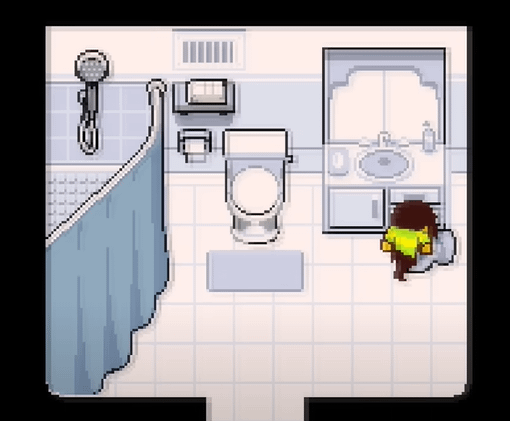
This is best exemplified in one of the most unforgettable moments of The Weird Route. After a particularly heinous scene of emotional manipulation, Kris walks into a private bathroom, rips you out of his chest, throws you in a trash can, and kicks the trash can into a dented mess. A metaphorical interpretation might be that Kris hates himself for the actions he finds himself taking. But I think the scene is more literal than that. There’s a reason the file is saved with your name. Toby doesn’t want you to disassociate from your actions, he wants you to take ownership of them.
Kris isn't the only one being stuck as a puppet, but they may be the most  miserable puppet I've seen... : r/Deltarune

An Unavoidably Personal Journey

When I look back on my playthroughs of Deltarune and Undertale, there are plenty of memories of silly characters and funny scenes, but none of that is what sticks with me. Instead, I remember the moments when the game gave me complete agency. I accidentally killed a character at the start of the game without realizing there was another way. I chose to benefit myself at the cost of another. Regret aches in my chest.

Deltarune and Undertale have an extraordinary ability to break through the fourth wall and emotionally drag you into the game without breaking your suspension of disbelief. They are an experience unlike any other. It’s the kind of bold, wacky, experimental thing that could have only been created by an auteur director with a particular vision and a taste for the zany.
One Year Since My Debut and A New Anthology

Twelve months ago, I published my first novel. Since then, I have gotten a crash-course on the business of being an author, my productivity as a writer has doubled, and my novel The Human Countermove was honored by The Utah Book Awards and included on a shortlist alongside works by Brandon Sanderson and Bryan Young.

There’s a tradition in engineering. When a student finishes their four-year degree and starts their first job, they start as junior engineers. The idea behind it is that the bachelor’s program gives workers the necessary background to do the job, but to actually be skilled, you have to spend a year making mistakes.

I like to think that the day my book was published was my first day on the job site of being an author.

Utah Book Awards

Let’s start by ripping the band-aid off. I was not chosen as one of the three finalists for the Speculative Fiction category of the Utah Book Awards 2026. But I did make the top five.

I’ve had a bunch of friends and family reach out to make sure I was okay, and most of them were shocked to find I was chipper and already hard at work on my next project. As I stated in my previous post, having my debut novel be included in a top five shortlist of speculative fiction at the state level exceeded every expectation I had. This whole process has felt like a Cinderella story. New doors have opened, my writing is accelerating, and most importantly, I’m more confident than ever that the books I’m writing are worth reading.

Project Updates

In 2025, I completed Project APHELION. This year, it’s looking like I will have both Project RELENTLESS and Project PRINTHEAD ready and querying by January. My productivity has skyrocketed, and there are two reasons why. First, my health has improved, and second, I bought a FreeWrite Alpha and wow that thing is good at keeping me from getting distracted.

Outside of my big projects, there are another hundred stories in my head waiting to be told. I feel as though I understand the process of novel writing better than ever, and completing novels no longer feels like an impossible feat. With a little more discipline, I could probably finish three books per year, but I think I’d rather make the first two even better.

In between my novels, I have a handful of short stories going out for submission. One I’m particularly proud of is called A Message From Our Sponsors, it’s my very first horror piece.

A New Anthology

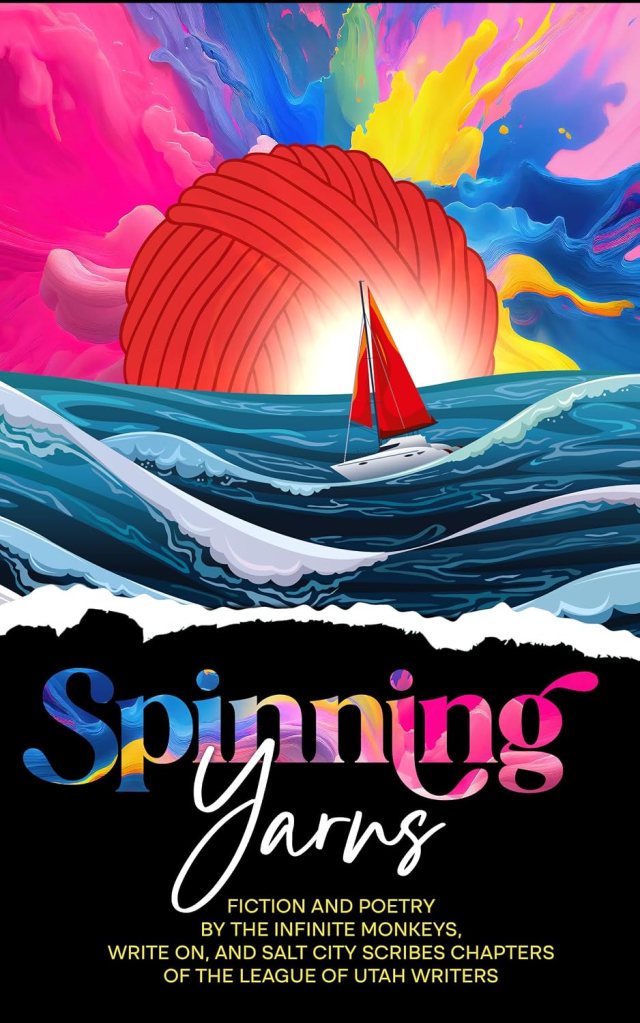
Another of my short stories has been published! This anthology is called Spinning Yarns and represents the works of the writers from my local Utah writing community. This year’s theme called on every story to be upbeat, fun, or adventurous. My work is called Going Platinum and tells the story of Sean, a hopeful musician who tries to stack the deck in his favor by bringing handfuls of good luck charms to his concert. It’s a sequel to another story of mine from Twisted Tales. Sean has a fun and very particular view of how the universe works that I like to revisit from time-to-time. Who knows, maybe Sean will get a whole novella one day.

Until Next Time!

For those of you who read my blog, thank you so much. It’s grown a lot in the past few months, and I’ve really enjoyed the process of sharing my thoughts on the page. Hopefully by this time next year, I’ll have another novel for sale!

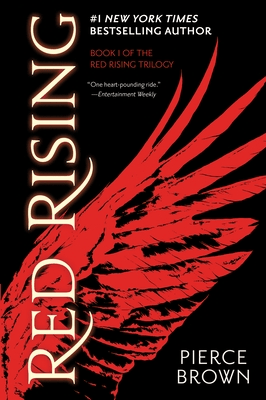
The Red Rising Series is Raw Power Politics

Darrow is a Red in a world where the worst thing you can be is a Red. He works as a miner several miles beneath the surface of Mars with the rest of his family. They all dream of one day terraforming the surface and living up in the sun. But Mars was terraformed centuries ago, and the squalor, poverty, and pain the Red clans suffer only aids in growing the wealth of The Golds.

The Red Rising series by Pierce Brown isn’t here to pick through moral ambiguity. The Society is a military dictatorship that divides the population into colors according to the role they serve. It’s evil. Everyone who wasn’t born a Gold lives in service of the Golds. Some colors live more comfortably, while others toil their life away. The need for change is clear, the only question is: How will Darrow rise from nothing to break The Society’s shackles?

Book 1: A Rated-R Hunger Games

After a lot of pain and tragedy, Darrow finds himself on the surface and working for a radical group called The Sons of Ares. Outright rebellion is doomed to fail, so The Sons focus on infiltration. Darrow is carved into the shape of a Gold sent to The Institute. In The Society’s strict military system, The Institute is a brutal testing ground where the best up-and-coming talents are scouted for future fleet commands. The perfect opportunity for a secret Red to ascend.

The Institute is less of a school, and more of a year-long, ultra-violent game of capture the flag. Twelve tribes bearing the names of the twelve gods of the Roman Pantheon battle one another for control. The first Red Rising book focuses on Darrow’s exploits as a member of the violent and temperamental Mars tribe. It reads like an adult version of The Hunger Games. The mutilation, betrayal, espionage, and murder rise into rated-R territory, which also gives the story room to explore more mature themes.

I struggled with The Hunger Games, I think it’s because the participants were children and usually involuntary draftees. Red Rising solves this problem by ensuring every student in The Institute’s great game is wealthy, ambitious, and a little bit horrible. From minute one, Darrow is surrounded by backstabbing, violence-prone ‘allies’ with a long family tree of cruelty. When he is forced into drastic action, it’s hard to blame him.

Even the idealists in this story are far from objectively good. Mustang is the leader of house Minerva and the ambitious daughter of a governor. She serves as the romantic interest and the conscience of the Golds. Through the horrors of The Institute, Mustang grapples with the concept of abandoning the colors and embracing democracy, though it’s more of a thought exercise for her.

By the end of the book, Darrow is established as a towering figure of ability, and a knack for not only excelling, but breaking Gold systems.

Book 2: Playing The Game of Power

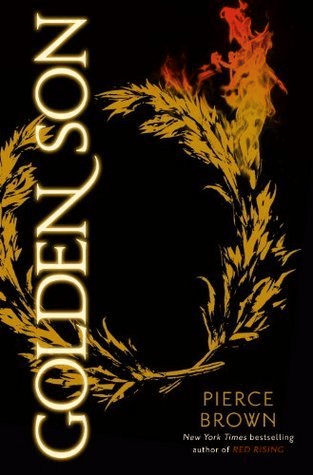
In Golden Son, Darrow accepts a position with one of the most powerful figures in the solar system. Governor Nero au Augustus. The simulations and tests of the first book come to a rapid end as Darrow enters the brutal world of interstellar power politics.

The transition proves difficult. Enemies made in The Institute pursue Darrow with lethal intent. He finds himself on the outs with his governor and facing a contract termination that is all but guaranteed to result in his death.

Golden Son is a non-stop rollercoaster ride of court intrigue, feuding families, and outright warfare. Underneath it all lies the tension between Darrow’s long-term goals and his short-term actions. Governor Augustus is no Democrat, his vision for the future of The Society is to stand on the top of the pile. To serve him risks putting a new monster in charge.

Like in the first book, we see brutal betrayals and heroic deeds all around. Each time Darrow recruits a new ally, the friction grows between his true self and the self he shows to others. Each kindness he offers to a member of a lower color costs him dearly in the political sphere.

Golden Son is like a scaled up version of Red Rising. The violence is grander, the betrayals are more sudden, and the stakes are always life-and-death. One big difference is that the Golds are much more empathetic this time around. We see that many of them are simply doing the best they can from within the system they grew up in.

Book 3: Honest War

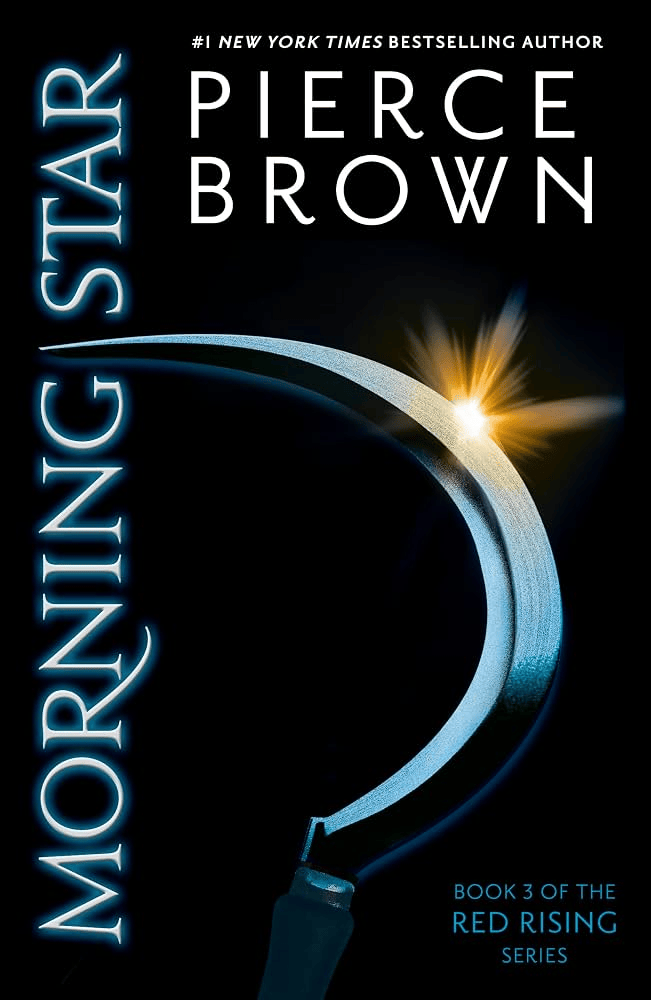
The final book in the trilogy, Morning Star, starts with a hard reset. Darrow’s Gold identity is peeled away and he is forced to start anew. There are no beautiful feasts and high-end parties this time around. Without any political influence or status, Darrow’s enemies don’t hold back. Golds eager to enforce The Society punish entire innocent populations in their endless hunt for Darrow and The Sons of Ares.

Although the story is filled with epic battles and tense sequences, Darrow’s true war is for the hearts and minds of the people. The Sons of Ares mindless rage has to be redirected towards productive action. The working classes are fed a near-deified vision of Darrow to inspire a general uprising. The Obsidians, a group of zealous and fanatic fighters, have to be broken free from The Gold’s implanted beliefs. Finally, The Golds themselves, who liked to speak of their disgust for the military dictatorship for recreation, are forced to ask themselves if they are willing to help tear down their own system.

Book 3 was a continuation of everything that worked in Books 1 and 2. Lots of cool space battles. Lots of narrow escapes. Plenty of intrigue in the ranks. The trilogy ends in a fulfilling conclusion that makes the journey worth it.

Conclusion

Red Rising depicts an evil society set in its ways. By the end of the first chapter of the first book, you’ll already know who is good and who is evil. The moments when the book shines most were when it pitted Golds against their own system, or forced radicals to recalibrate from violence to revolution.

If you’re looking for a science fiction that is non-stop action, tension, and political thriller, the Red Rising series delivers in spades.