Today’s me is different from yesterday’s me. Noon’s me is a far flung thing from morning’s me. We’re all shaped by a million little variables. Did I sleep well? Did I drink coffee? Am I sore? Am I hungry?
Each variable nudges my personality in a different direction. But at my core, I’m essentially the same person.
The further back I look, the less recognizable my core becomes. Being a teen changed me, being a young adult changed me, leaving college and entering the workforce certainly changed me. But those changes weren’t intentional. They were all externally driven. I was reacting to new environments.
When I compare the me of today against the me of fifteen years ago, there are four changes that stand out. Each was intentional, each took practice, and each redefined who I am.
Step up to the challenge
I used to be a volunteer for a non-profit that simulated star-trek missions. Being a volunteer was easy. A director told you what costume to put on, which kind of phaser to hold, and what you were supposed to say to the crew. I liked the work and I liked the feeling of contributing.
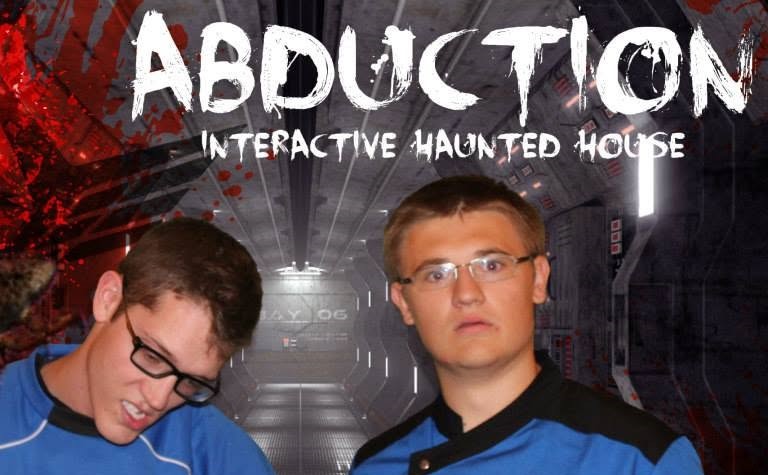
When I turned sixteen, there was an opportunity to climb from volunteer to Flight Director. For the first time in my life, I’d be paid for my work. Instead of taking orders, I’d be giving them. Instead of being part of the show, I’d be running it. From my young teen perspective, becoming a flight director represented the peak of my career.
I shadowed a dozen flight directors in preparation. I took in their methods and storytelling techniques. Each approached flight directing with their own philosophy, their own priorities, and their own wisdom.
But study only takes you so far. To really know how to direct a flight requires doing it yourself. Before officially being hired, I had to run a test flight with a real crew.
The thought scared the daylights out of me.
I put it off. I studied and shadowed and volunteered week after week. An anxiety grew in my guts. One day, after a full shift of volunteer work, I went home and cried. I couldn’t run away from my opportunity any longer. Either I was going to step up and learn to fly a ship properly, or I wasn’t. My body begged me to give up and run away. The thought of sending a polite resignation to the program director was comfortable and alluring. A quick farewell to my dream and I’d feel good again.
But my mind insisted otherwise. It demanded that before I send my resignation, I write down my reasons why. There was only one. I was afraid. It was sobering. I was ready to give up my dream because I was a little scared.
The next day, I visited the program director and scheduled my test flight.
Fear of trying something new is natural. The best way to overcome it is by facing the challenge head on. From that day forward, I set out a policy for myself. If I was afraid of doing something simply because I hadn’t done it before, I was obligated to do it.
I extend that attitude into my writing, too. I like to write a lot of different stuff, but from time to time, I come across a project that feels beyond me. Maybe the story is in an unfamiliar genre or the concept is too ambitious. But once I feel that fear inside me, I make room in my schedule and work through it.
It’s okay to put thoughts down
There was a time when I used to be an existentialist. I was desperate to find ‘the meaning of life’. I studied heaps of philosophy. My theory was that if I learned enough and wrote enough, eventually there would be an answer.
Turns out if you spend most of your time thinking on existential questions, you’re not gonna be a super happy person. Even when I was trying not to think of philosophy, the questions bubbled back into my brain and I felt obligated to ponder. Maybe if I chipped away long enough, eventually the answer would come to me.
It didn’t. The solution that improved my life turned out to be a hundred times easier.
Put the question down.
It was a simple technique. I’d imagine my obsession as a piece of paper in my hands, then I’d put that piece of paper down on a table. This wasn’t a method to run away from my worries. I wasn’t stuffing the paper in a box or ripping it to pieces, I was putting it aside for later.
What I really learned was a tool for control over my own thoughts. The existentialism faded in a month or two, and the technique turned out to be useful in plenty of other places. After a full day of engineering work, I had the tools to store my thoughts for tomorrow. When relationship troubles hounded my head and sent me into a tizzy, I could table them until they became relevant again.
Sometimes our minds feel wild and irrepressible. They throw thoughts at us and demand we consider them. But the mind can be tamed. Ever since getting control of my thoughts, I’ve been able to focus on my interests without being distracted by depressing existentialities like the meaning of life.
See the good first
Cynicism is a terrible ailment. It takes the beauty of the world and warps it through a funhouse mirror until all you can see are flaws, mistakes, and malicious intentions. I was a cynic for a long time. I called it ‘being analytical’. What I didn’t see was the way ‘being analytical’ was stripping the joy from my day-to-day life.
Funnily enough, I wasn’t trying to cure myself of cynicism.
When I first entered the writing sphere, I realized something about myself. Each time I watched a big-budget movie, or read a well-received book, or saw a local play, I never liked them. There would always be a flaw that ruined the piece. I’d watch a two hour movie of wondrous scenes and exciting plots, but then there’d be ‘that one scene’ where the tension dropped, and suddenly the whole movie was ruined.
This was a problem for me. I was just starting my journey to become a writer, which meant most pieces I read and most pieces I wrote were going to have flaws. If I didn’t want to be a jerk, I needed to find a way to celebrate the good.
So I invented a new policy. Each time I finished seeing a play or watching a movie or reading a book, I’d list every element of the experience that I enjoyed. Did I like a certain scene? Was there an actor that did an exceptional job? Did the plot draw me in?
After I listed all the positives, I’d allow myself to review the negatives as a treat. The funny thing was, when I listed all the negatives, they were never as long as the list of positives. When I weighed the two sides against each other, I’d find that on the whole, I found the experience to be quite good.
It was never my intention to stop being a cynic. If you asked me back then, I would have said being a cynic kept me sharp. But almost by accident, over the course of a few months of weighing the ‘good’ and the ‘bad’ of various shows and books, I was finding I enjoyed every piece of art I experienced.
It was transformational.
I extended my little game beyond art. Suddenly that trip to the local diner was a little brighter than before. Friends who used to be deeply-flawed people were suddenly good and well-intended people.
I even took a tally of my life as a whole. By the end of the tally, I found myself smiling because there were so many reasons to be happy.
Put people first
People used to be a means to an end. When I interacted with them, I was respectful, but hurried. They were the obstacle to my goals. Worrying about their lives seemed like a distraction better suited for their family and close friends.
I learned my lesson on this the hard way. Think Ebeneezer Scrooge in Christmas Carol.
After some hard times, I realized the joy of life was sharing it with others. And the only way to share life with others was to value the people around you.
My exercise here was simple: Whenever I had a task that required dealing with someone, the task was secondary, the person was primary. Let’s say I was at my job visiting IT to get my computer reset. It already took 5 minutes to walk down, so I might as well make some chat with the team at the desk. I’d ask about their life, how they were feeling, opinions on movies, whatever. No matter what, I wanted the person I was chatting with to know that they mattered more than the errand.
The more I took an interest in other’s lives, the more they took an interest in mine. A conversation or two and I’d have a new friend. Even in high stress situations I didn’t have to worry, my priority was the person on the other side of the table. The task would eventually sort itself out.
Over a couple years of practice, my little change in priorities has reshaped my world. People used to be competition and obstacles. Now they were the reason to go out and get the task done. Errands became a delight, conversations reached deeper depths, and the more I talked, the more I found people working through the same challenges and the same issues as myself.
Conclusion
Each time I changed who I was, that change was in reaction to external circumstances. I think that’s natural. It’s hard to voluntarily change yourself if you feel your life is already working. The world naturally comes along every once in a while and punches us all in the face. The important thing is what we do afterwards.
When I got scared of trying something new, I could have retreated. When I was overwhelmed by existentialism, I could have embraced nihilism. When I struggled with people, I could have started avoiding them.
I’m really glad the first of my changes was a willingness to take on challenges. Changing yourself is a big challenge. It requires acknowledging that the way you interact with the world is flawed, and that you need to explicitly adjust your behavior in ways that don’t feel natural.
But the great thing is, when you change your behavior in the right way, you can feel it. In time, and with enough practice, what was unnatural becomes the most natural thing in the world.

