The Four Changes That Reshaped Me As a Person

Today’s me is different from yesterday’s me. Noon’s me is a far flung thing from morning’s me. We’re all shaped by a million little variables. Did I sleep well? Did I drink coffee? Am I sore? Am I hungry?

Each variable nudges my personality in a different direction. But at my core, I’m essentially the same person.

The further back I look, the less recognizable my core becomes. Being a teen changed me, being a young adult changed me, leaving college and entering the workforce certainly changed me. But those changes weren’t intentional. They were all externally driven. I was reacting to new environments.

When I compare the me of today against the me of fifteen years ago, there are four changes that stand out. Each was intentional, each took practice, and each redefined who I am.

Step up to the challenge

I used to be a volunteer for a non-profit that simulated star-trek missions. Being a volunteer was easy. A director told you what costume to put on, which kind of phaser to hold, and what you were supposed to say to the crew. I liked the work and I liked the feeling of contributing.
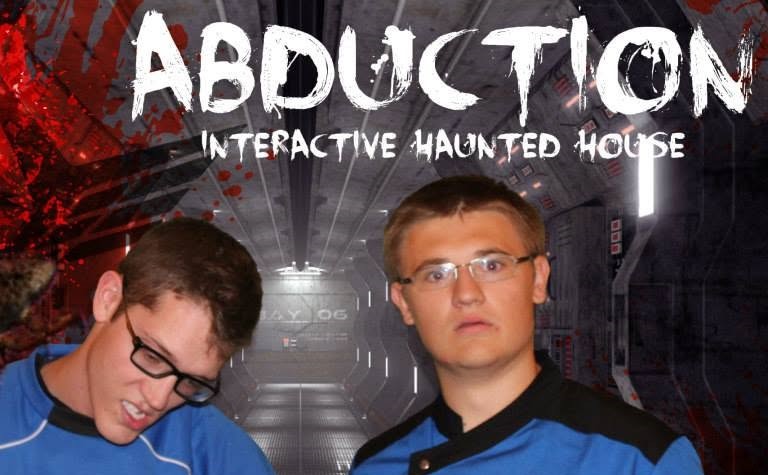
When I turned sixteen, there was an opportunity to climb from volunteer to Flight Director. For the first time in my life, I’d be paid for my work. Instead of taking orders, I’d be giving them. Instead of being part of the show, I’d be running it. From my young teen perspective, becoming a flight director represented the peak of my career.

I shadowed a dozen flight directors in preparation. I took in their methods and storytelling techniques. Each approached flight directing with their own philosophy, their own priorities, and their own wisdom.

But study only takes you so far. To really know how to direct a flight requires doing it yourself. Before officially being hired, I had to run a test flight with a real crew.

The thought scared the daylights out of me.

I put it off. I studied and shadowed and volunteered week after week. An anxiety grew in my guts. One day, after a full shift of volunteer work, I went home and cried. I couldn’t run away from my opportunity any longer. Either I was going to step up and learn to fly a ship properly, or I wasn’t. My body begged me to give up and run away. The thought of sending a polite resignation to the program director was comfortable and alluring. A quick farewell to my dream and I’d feel good again.

But my mind insisted otherwise. It demanded that before I send my resignation, I write down my reasons why. There was only one. I was afraid. It was sobering. I was ready to give up my dream because I was a little scared.

The next day, I visited the program director and scheduled my test flight.

Fear of trying something new is natural. The best way to overcome it is by facing the challenge head on. From that day forward, I set out a policy for myself. If I was afraid of doing something simply because I hadn’t done it before, I was obligated to do it.

I extend that attitude into my writing, too. I like to write a lot of different stuff, but from time to time, I come across a project that feels beyond me. Maybe the story is in an unfamiliar genre or the concept is too ambitious. But once I feel that fear inside me, I make room in my schedule and work through it.

It’s okay to put thoughts down

There was a time when I used to be an existentialist. I was desperate to find ‘the meaning of life’. I studied heaps of philosophy. My theory was that if I learned enough and wrote enough, eventually there would be an answer.

Turns out if you spend most of your time thinking on existential questions, you’re not gonna be a super happy person. Even when I was trying not to think of philosophy, the questions bubbled back into my brain and I felt obligated to ponder. Maybe if I chipped away long enough, eventually the answer would come to me.

It didn’t. The solution that improved my life turned out to be a hundred times easier.

Put the question down.

It was a simple technique. I’d imagine my obsession as a piece of paper in my hands, then I’d put that piece of paper down on a table. This wasn’t a method to run away from my worries. I wasn’t stuffing the paper in a box or ripping it to pieces, I was putting it aside for later.

What I really learned was a tool for control over my own thoughts. The existentialism faded in a month or two, and the technique turned out to be useful in plenty of other places. After a full day of engineering work, I had the tools to store my thoughts for tomorrow. When relationship troubles hounded my head and sent me into a tizzy, I could table them until they became relevant again.

Sometimes our minds feel wild and irrepressible. They throw thoughts at us and demand we consider them. But the mind can be tamed. Ever since getting control of my thoughts, I’ve been able to focus on my interests without being distracted by depressing existentialities like the meaning of life.

See the good first

Cynicism is a terrible ailment. It takes the beauty of the world and warps it through a funhouse mirror until all you can see are flaws, mistakes, and malicious intentions. I was a cynic for a long time. I called it ‘being analytical’. What I didn’t see was the way ‘being analytical’ was stripping the joy from my day-to-day life.

Funnily enough, I wasn’t trying to cure myself of cynicism.

When I first entered the writing sphere, I realized something about myself. Each time I watched a big-budget movie, or read a well-received book, or saw a local play, I never liked them. There would always be a flaw that ruined the piece. I’d watch a two hour movie of wondrous scenes and exciting plots, but then there’d be ‘that one scene’ where the tension dropped, and suddenly the whole movie was ruined.

This was a problem for me. I was just starting my journey to become a writer, which meant most pieces I read and most pieces I wrote were going to have flaws. If I didn’t want to be a jerk, I needed to find a way to celebrate the good.

So I invented a new policy. Each time I finished seeing a play or watching a movie or reading a book, I’d list every element of the experience that I enjoyed. Did I like a certain scene? Was there an actor that did an exceptional job? Did the plot draw me in?

After I listed all the positives, I’d allow myself to review the negatives as a treat. The funny thing was, when I listed all the negatives, they were never as long as the list of positives. When I weighed the two sides against each other, I’d find that on the whole, I found the experience to be quite good.

It was never my intention to stop being a cynic. If you asked me back then, I would have said being a cynic kept me sharp. But almost by accident, over the course of a few months of weighing the ‘good’ and the ‘bad’ of various shows and books, I was finding I enjoyed every piece of art I experienced.

It was transformational.

I extended my little game beyond art. Suddenly that trip to the local diner was a little brighter than before. Friends who used to be deeply-flawed people were suddenly good and well-intended people.

I even took a tally of my life as a whole. By the end of the tally, I found myself smiling because there were so many reasons to be happy.

Put people first

People used to be a means to an end. When I interacted with them, I was respectful, but hurried. They were the obstacle to my goals. Worrying about their lives seemed like a distraction better suited for their family and close friends.

I learned my lesson on this the hard way. Think Ebeneezer Scrooge in Christmas Carol.

After some hard times, I realized the joy of life was sharing it with others. And the only way to share life with others was to value the people around you.

My exercise here was simple: Whenever I had a task that required dealing with someone, the task was secondary, the person was primary. Let’s say I was at my job visiting IT to get my computer reset. It already took 5 minutes to walk down, so I might as well make some chat with the team at the desk. I’d ask about their life, how they were feeling, opinions on movies, whatever. No matter what, I wanted the person I was chatting with to know that they mattered more than the errand.

The more I took an interest in other’s lives, the more they took an interest in mine. A conversation or two and I’d have a new friend. Even in high stress situations I didn’t have to worry, my priority was the person on the other side of the table. The task would eventually sort itself out.

Over a couple years of practice, my little change in priorities has reshaped my world. People used to be competition and obstacles. Now they were the reason to go out and get the task done. Errands became a delight, conversations reached deeper depths, and the more I talked, the more I found people working through the same challenges and the same issues as myself.

Conclusion

Each time I changed who I was, that change was in reaction to external circumstances. I think that’s natural. It’s hard to voluntarily change yourself if you feel your life is already working. The world naturally comes along every once in a while and punches us all in the face. The important thing is what we do afterwards.

When I got scared of trying something new, I could have retreated. When I was overwhelmed by existentialism, I could have embraced nihilism. When I struggled with people, I could have started avoiding them.

I’m really glad the first of my changes was a willingness to take on challenges. Changing yourself is a big challenge. It requires acknowledging that the way you interact with the world is flawed, and that you need to explicitly adjust your behavior in ways that don’t feel natural.

But the great thing is, when you change your behavior in the right way, you can feel it. In time, and with enough practice, what was unnatural becomes the most natural thing in the world.
My Book Has Been Honored! (And Thoughts on Ambition)

I don’t enjoy competition. Paradoxically, I do enjoy competing. When you’re competing, you push yourself and push yourself and watch as your skills improve. It’s the stuff that comes after the skill building that sucks. A competition pits you against your friends and peers. Instead of celebrating successes, you become adversaries, rooting for one another’s failure. It’s unnecessary conflict, and it’s the reason I don’t submit my writing to local competitions.

Back in February, a friend of mine convinced me to take a moon shot. The Utah Book Awards. It was such a large competition that I wouldn’t recognize the names of the majority of my opponents. And what were the chances I’d be chosen, anyway?

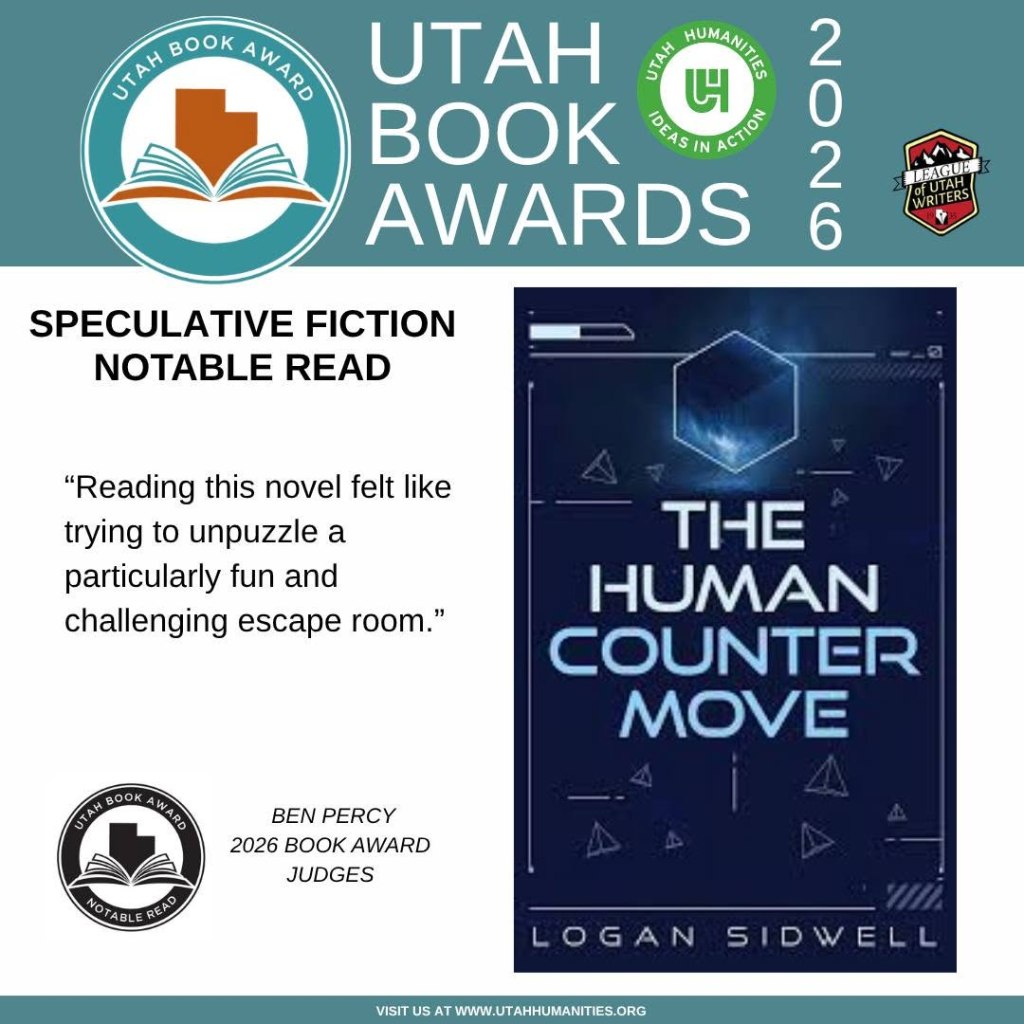
It’s my first ever writing honor. The Human Countermove has been selected as one of Utah’s Five Notable Reads in Speculative Fiction for 2026 and is in competition to win the grand prize. I was wrong about not knowing my competitors, too. My work is up against some of the biggest names in Utah. Brandon Sanderson, Bryan Young, CK Turner, and Robyn Dabney.

A Healthy Ambition

When I heard the news, I got so excited I forgot to reply to the email. It’s been torture keeping this secret to myself. But ever since the announcement was made, I’ve been thinking a lot about the future.

I used to struggle with ambition. I was a high-performing student and a high-performing employee. If there was a grade to earn or a task to be done, I insisted on being the one to do it. But after years of striving, I realized something. My work didn’t satisfy. When I look back, the cause is clear. I wasn’t just ambitious, I was insatiable. I wanted an indefinable ‘more’ for more’s sake, and nothing less than more would do. Some might call it FOMO. At one point, a boss of mine was projecting my future earnings. He told me my salary would cap at more than double the rate I was being paid. When he asked if it was enough, I couldn’t answer him. How could I? A salary cap was anathema to my ‘more, more, more’ philosophy.

That period of my life has thankfully passed. These days, I find myself content. There’s plenty of happiness in the little moments. When I’m eating a bowl of oatmeal in a sunbeam, I’m at peace. When I’m on a walk around the park, I’m happy. ‘More’ doesn’t come into it. The present satisfies me just fine.

That said, a part of me loves the journey of self-growth. You could call it ambition if you wanted. Sometimes I think it’s just our in-built desire to make use of the precious time we’ve been given. If I’m of sound mind and strong body, then what’s there to do but work hard and contribute to the common good?

So I’m ambitious again. Not for myself, not for ‘more’, but to keep busy and contribute to the world. I still find those moments of contentment, but I also find joy in the pride of a job well done and a day’s work writing to the best of my ability.

Climbing The Writing Ladder

When you release a book, it’s hard to tell if it’s any good. It took me four months to gain any confidence in mine. The biggest signal of the book’s quality was that half of my friends and most of my extended family had read it from cover-to-cover. When they came to talk to me about it, they were excited, engaged, and eager to discuss. One of my best friends has now read The Human Countermove three times. I’m told that’s a rarity.

Since publishing, I’ve written a couple more unreleased books and submitted a few short stories for local anthologies. But every once in a while, I write a story that crackles. It feels fresh in a way totally unlike my past writing, and I start to wonder. Should I be saving those ‘crackling’ stories for a more competitive contest? This award has confirmed my suspicions.

I’ve always imagined the skill of writing as a pyramid. The better you get, the higher you climb on the pyramids tiers and the better your peers become. I organize the pyramid in the same manner as sports teams and performing clubs. City -> County -> State -> Region -> National -> International.

I use this system not to compare myself to others, but because I want to improve as a writer. The best way to grow is to surround yourself with people at, or slightly above your own skill level. What better way is there to learn than to lose against a more practiced peer?

Room to Grow

My old approach to short story submissions was scattered. I’d submit to a few local contests a year based on word of mouth. I’m now pivoting to a higher competition level. My targets are the contests with hundreds of submitters and long histories. I’m pushing my writing to its limit. Art is always subjective, but technique can be sharpened to a point.

I’m experimenting, too. Every story I write is pulled from a different era of the novel writing movement. Often I don’t even know if the story will make sense until it’s on the page.

For me, ambition in writing isn’t about accolades, it’s about testing new ideas on the page and offering those experiments to the contest judges for honest feedback. I don’t have a goal in mind, I’m sharpening my craft because I enjoy the process of sharpening.

The Present

Whenever a friend reads about my award, they send me a text along the lines of, “YOU’RE UP AGAINST BRANDON SANDERSON??!?”

In a faux-macho voice, I respond, “Dude’s washed. I’m sending him home.”

It’s all in jest. For me, being included on a list with people as talented as Brandon Sanderson, or Bryan Young, an author I know personally and hugely respect, is a bigger achievement than I could have imagined receiving at this stage of my career. I’m treating it like a step forward into something new.

Thank you to all my readers for following my journey so far. There’s a long way to go, and so much more for me to learn. I promise you now that I’m nowhere near done learning, and nowhere near done writing.

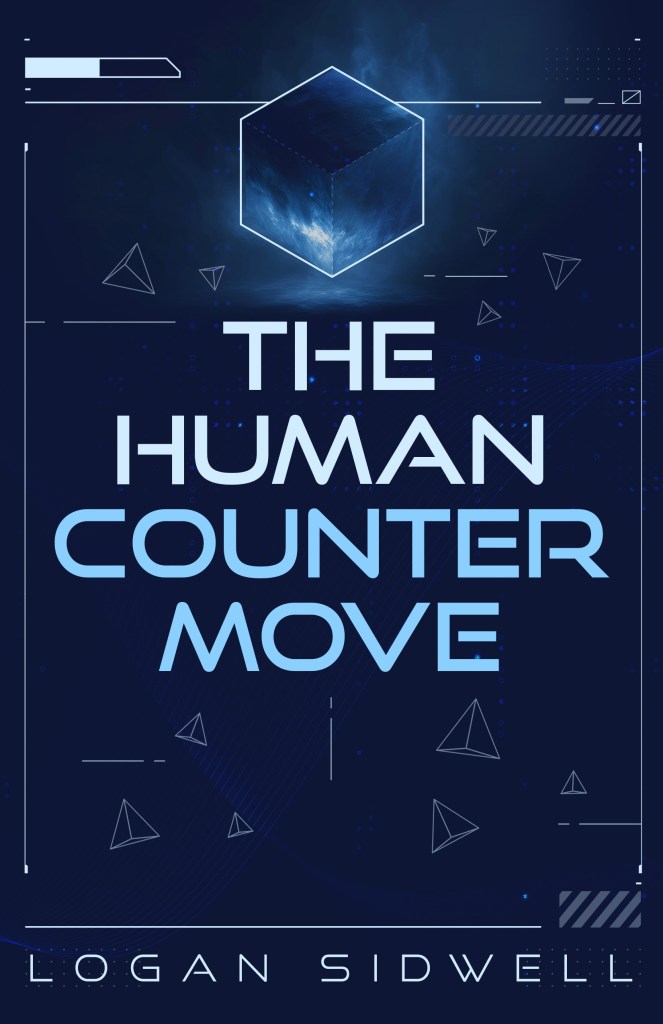
In a nation ruled by AI Minds, productivity is everything, even play.

Once a legend in the world of strategy games, Zouk Solinsen is just another burnout in a society obsessed with efficiency. But when the Minds announce a high-stakes tournament, with a seat on the ruling council as the prize, Zouk is drawn back into the fray, determined to reshape the future.

With help from the enigmatic Torrez Institute, Zouk racks up early victories against the Minds. But when Maya Torrez reveals the cost of her support, a violent coup against the Minds, he rejects it and strikes out alone.

Now, with no allies, dwindling resources, and a nation on the brink, Zouk faces the biggest game of his life, and a final, impossible choice: reform the system from within, or burn it all down.

The Human Countermove

Oh, I’m A Creative

Seven years writing, and I’ve only just realized that I’m in the arts.

The Professional

I began my writing career in a very peculiar place. I wrote star-trek style simulations for students. The stories were fit to purpose. We identified a target curriculum, then produced a story that drew in those elements to challenge a student’s understanding of the material. “Oh no, one of the six volcanoes in this area is going to explode! Collect evidence and determine which volcano is active so we can evacuate the local area.”

It wasn’t art, it was instructive. The creative elements were a delivery system for the educational applications. Sure, a graphics team created 3D videos and voice actors performed the dialog, but all that stuff felt more like a factory than an art studio. In a day, I’d spend an hour writing stories, and another seven discussing logistics, scheduling actors, receiving story feedback, providing graphical feedback, and reviewing classroom use. The team’s biggest concern wasn’t quality, but profitability.

The Playwright

The first thing I did when I left my job was write a stage play. Whenever I talked about the project, I called it ‘a piece of candy’. It was a silly story about a group of young adults who stole a priceless painting with no plan on how to sell it. It was a farce, it couldn’t possibly be art! That was how I justified it to myself. After the staged reading, I left the script to rot. To me, it wasn’t art, it was a fun way to entertain people.

The Genre Writer

A year ago I published my first book, The Human Countermove. You’d think physically selling the product of my own creative labor would be enough for me to recognize myself as an artist. It wasn’t. 

First, my novel was a science fiction, a genre piece, not art. It was inspired by my love of chess, how could something with a gaming origin be artistic? If the story resonated with audiences, it just meant I was doing my job. It  was the mechanical process of pulling the levers of human emotion. 

Breaking A Mental Block

It could be that I associated ‘art’ with awards, and I associated awards with the elites, and when I imagined my writing, I didn’t see myself as writing for elites. I even attended an event called ‘arts in the park’ and didn’t put it together.

Regardless, it was something benign that finally shattered the glass.

I filed my taxes.

In past years, I’ve always been able to list my job as ‘Software Engineer’. It was a useful box to put myself in. I was a coder with a fiction writing hobby.

This year that wasn’t an option. At the top of my 1040, I was forced to mark the option labelled ‘self-employed’. One line down, those damn taxmen forced me to identify myself as what I am. A novelist. I was a novelist.

A couple weeks later I was talking to one of my engineering friends. He asked me about my latest novel, the fool. As I described it, I made two realizations. One, it was super weird. And two, the message was core to the material. Market appeal hadn’t even occurred to me. I was writing the story because I wanted to tell it, because I wanted to see it in the world. I couldn’t escape the label anymore. I was making art.

Looking back, I had been making art from the start. My novel wasn’t just a sci-fi dystopia, it was a discussion about our relationship with technology and the modern world’s instinct to strip fulfillment from our lives. My ‘piece of candy’ stageplay explored the way a single painting could mean seven things to seven people. Even my old starship ed-tech stuff explored themes of overconsumption, greed, and good and evil.

Regardless of how I felt about the quality of my work, everything I had done was creative and contributed to society’s conversation of life and philosophy.

Capitalism Ruins Everything

As I look back on my avoidance of the ’artistic’ label, there’s one particular mental block that was harder to overcome than the rest. Every time I finished writing a story, I had to sell it.

If you ever ask an author how to sell a book, they’ll always tell you the same thing, “Push your writer brain out of the room and bring in the business brain”. In order to survive, I had to sell my work, and in order to sell my work, I had to reduce it to its most basic components. Content Type: Book, Genre: Dystopian Sci-fi, Audience: Fans of Chess, etc. etc.

When I write, I write from the heart. The day my writer brain finishes his writing, the business brain cuts the mental umbilical cord and sees the work through the eyes of a capitalist. Stories become content. Content becomes products. I wasn’t a writer, I was a content creator. I wasn’t a novelist, I just wrote books.

It’s only in the last few months that I’ve realized what I’ve been doing the whole time. The reason I pick the stories I pick is not because of their market appeal, it’s because I resonate with the message. I dabble and practice and experiment, not to produce a more appealing product, but to tell better stories.

Conclusion

If you’re in the creative field, you’re an artist. It’s easy to gatekeep. The capitalist world is eager to tell you that you aren’t artistic until you can make money from your work. The inherent danger in that attitude is that you reduce your work to its success financially, and what makes a bestseller is different from what makes a resonant story.

The topic of profitability is a regular guest at my writer’s group. I suspect the same is true of every writer’s group in the country. By limiting ourselves to a particular view of success, by refusing to allow ourselves the label of ‘artist’, we cut off what may be our most personal and most meaningful works.

Every writer I’ve ever met has been, to some degree, trying to express themselves through their storytelling. They are all artists. No one goes into it for the money. So how do we keep getting tricked into dropping the label and defining ourselves by the singularly reductive metric of ‘total sales’?

When Time Slows Down: Enjoying Conventions

My friend and I attended FanX this year. It was our first time. There were rooms filled with cosplayers, a massive vendor hall, and tons of celebrities (my favorite was Henry Winkler, who stood in front of his signing table shaking hands and hugging visitors). But at some point, wandering around staring at people and spending money got tiresome, so we attended a presentation. Something Star Wars related, he’s a big fan of the franchise.

When we sat down, he was on the edge of his seat. Sat up, attentive, and eager to learn. I was slouched in my chair. About ten minutes into the presentation his stance slackened. By half an hour he was holding his head up with his hands.

Then I pieced together what was happening.

This was his first conference. He had come expecting a content dense presentation, an action-packed lecture stuffed to the brim with anecdotes and stories from the extended universe. What he got was plodding, a gently paced lecture suited for resting rather than for learning. My friend was operating at a different time scale. The wrong time scale.

I couldn’t blame him, when I attended my first writer’s conference I had to make the same adjustment. When we’re young, schools are our conferences. Conferences where every minute is tracked and recorded, where learning is expected, and where education has no choice but to run at a breakneck pace. Your average presenter isn’t like that. They take their time, lose track of their thoughts, answer audience questions, and take the scenic route.There’s no test at the end of the lesson and the presenters aren’t trained educators. 

I didn’t recognize it until that moment with my friend at the Star Wars presentation, but time at conferences is slower. And to have a good time, you have to slow down with it.`

Appreciating the Present

My expectations for my first Writer’s Conference were way too high, and way too self-centered. I was hunting for the ‘most’ educational classes, searching for subjects that would maximize my education. Truth is, if your entire goal is to sponge up information on a subject, five hours on youtube watching carefully edited videos will deliver way more reliably than a conference. That’s not what conferences are for.

Conferences are for being present. They’re for stopping, looking around, and finding yourself surrounded by like-minded people from a million different backgrounds. They’re for conversation with your peers, sharing your experiences and learning from others. The poorly-kept secret of conferences is that the best event of every conference takes place after it ends, Bar Con. Having a couple drinks and conversation with someone you’ve never met with a similar interest often teaches you more than any presentation could ever hope to. 

This isn’t to say I don’t attend classes, nor do I ignore the content of the lectures, it’s a major consideration, but it isn’t the only consideration. Going down the calendar of a conference, I search for presentations from people I look up to, friends I’m there to support, or experts far above my level. And every one of these presentations gives me something different. 

From those who are a few years ahead of me in my career, I pick up advice for my immediate future. From friends, I take tips on how to give engaging presentations of my own. And from experts, I discover just how much I still don’t know. Even if the content of the presentation isn’t tuned to my skill-level or interests, the person giving the presentation still brings their own perspective to the world, and that new angle is always worth seeing.


In short, being present at a conference means seeing the people around you and hearing what they have to say. We spend so much of our lives focussed on ourselves, there’s something healing in listening to others.

Maximize Your Enjoyment, Not Your Day

I don’t fill my schedule. There may be classes from 10am to 7pm, but chances are I’ll only attend 2/3rds of those. The second you find yourself rushing from class to class, you’re missing the point of the conference. Often after a class, I find myself in a conversation with a peer, or maybe run into someone sitting on a couch in the hotel hallway, and that conversation will last as long as a class. Sometimes a group of us leave the event to get a long lunch. We’ve left the conference, but it’s those moments of spontaneity that stand out in my memory.

When I’m tired, I take a nap. When I’m hungry, I get lunch. When I’m tired of seeing hundreds of people, I find somewhere quiet and work on a project of my own.

Slowing down means being aware of yourself. No one’s getting grades for their attendance. You could spend the whole event sitting on a couch chatting with anybody passing by and you’re still enjoying the conference. Just because there’s a schedule doesn’t mean you need to shape yourself around it.

It Takes Practice

I’ve found a lot of people don’t enjoy their first conference. By the end, they’re underwhelmed by the lecture content, overwhelmed by the crowds, or just plain lost. Inaccurate expectations and self-imposed pressures make a conference something it isn’t.

Then they attend a second time. There’s a few more familiar faces, they skip a couple classes, and they go to bar con. By their third conference, they love it.

I think my friend would enjoy FanX a lot more the second time around. We’d show up in costume, learn technique from the other cosplayers, spend a while chatting with friends, and when we attend a presentation, slouch a little in our chairs.

My First Book was Terrible

In April of 2020 I wrote my first book. By May, I was done. I was pulling 5,000 word days, scrawling ideas on a whiteboard, I’d think of a plot in the morning and write it in the afternoon. It took 6 weeks. At the time, it was thrilling, I was telling myself I was gonna be a published novelist by my mid-20s. I was already shopping which publisher I wanted to use. For half a year, I had a tab open to the Pegasus publishing open submission page, because this book needed to get out into the world.

Right after it was edited.

My first book was a complicated thing. It tried to walk the thin line of a story about people summoning demons, revenge, power politics, and a bunch of witchcraft. And those were supposed to be the good guys. In retrospect, I think the book has good bones, but I didn’t have the skills to tell it.

The first sign something was wrong was when I started editing. Every chapter needed work, every paragraph had to be rewritten. I was basically rebuilding the book from scratch, but when I looked at the second draft, the quality still wasn’t there.

The nail in the coffin was when I shared it with my Mom. This is a kind lady who always finds the positive in things, and she was eager to read it! In preparation for her notes, I told myself she’s gonna say a lot of nice things, but I’d need to keep an ear open for opportunities to improve.

When she got back to me, she only had one note. “There wasn’t a lot of emotion in the book”.

That may not sound that bad, but notes on creative endeavors are weird. If you get a bunch of small, nit-picky notes on moments and characters, it’s a good thing. It’s a sign your reader followed the story and was invested in it. A note telling you your story has no emotion means your reader had no investment. A death sentence for the work.

In the year since, I’ve spoken to other writers about their experiences. Turns out what I had done was a common occurrence. The first book is terrible. We call it the practice book, and I had written one doozy of a practice book.

Lesson 1: Don’t write in a vacuum

I was focussed on the end-goal. Get a book published, present at a conference, win awards. But it takes years to learn the fundamentals of good storytelling. Churning a book out doesn’t make you a better writer, it highlights what you’re already doing. Strengths and weaknesses. If I had been attending writer’s groups, if I had had an editor, if I had posted samples online, they might have caught my errors before I was finished.

They might have told me my first book shouldn’t have 7 POVs. They might have told me books are meant to live in the minds of the characters, not simply describe the sequence of events. They could have told me foreshadowing isn’t just a writer being clever, it’s essential for helping the reading process the events of the book.

Lesson 2: Keep it simple

The plot of my book was compared to Shakespeare’s Hamlet, but not in a good way. Complex, deep characters being handled by a novice with the brush. The only story I had ever written was a hike through a Lovecraftian Jungle, the complexities of Hamlet were a bit more than I could handle. It should have been 100,000 words minimum. I had tried to do it in 52,000. 

It’s advice I’ve heard from film makers, game designers, novelists, and artists. The four-book epic can wait. Start with a story you know you can do well.

Lesson 3: Learn from others

I had a lot of hubris on my first go-around. Ambition is a great thing, but the story I was writing was unlike any other story I had ever read, which meant I was inventing it whole-cloth. If I had searched a little harder, read more deeply, analyzed a few more stories, I might have found a framework from which I could build out my story.

When I pitched my story to an editor, they said, oh it’s kind of like a Jurassic Park for demons. I wish I had heard that feedback before writing the book, because it clarified a lot of what I was trying to do. Some of the story beats in Jurassic Park would fit comfortably into my story and fixed a lot of the awkwardness with the characters. It even clarified what the theme of the story was, capturing demonic beasts was a whole lot like keeping Dinosaurs in a park, something that can only end in disaster, no matter how well-intentioned the characters were.

What I mean to say here is that I could have studied Jurassic Park for good story beats. I could have watched Constantine for a lesson on how to deal with angels and demons. I could have watched The Witch to really elevate the evil aspects. I could have taken notes from the best to better understand my own work.

Conclusion

It’s been five years since I wrote my first book. My second book took a little over a year, and my third book looks like it’ll take a little less than that. I talk to writers as much as I can. I keep my books simple. I read more these days. I put every lesson to practice.

I hope anyone reading this won’t be chased away from writing their first novel. It’s gonna be trouble, but thinking it’s gonna be great is a rite of passage. Write it anyway! Take some big swings! What’s the worst that could happen? For me, I’m just glad that such a painful lesson only took a couple of months to learn.

The fastest way to write your first good book is to write your bad book quickly.

This essay is also available in video form:

My Thirty Seconds in an Action movie

I wrote this up about a week after it happened. April 2023.


Highway at rush hour. Five lanes packed with cars trundling home at sixty miles-per-hour. The vehicle in front of me slowed a little. I was incensed, did this driver not realize they were inconveniencing my day? But their speed dropped and dropped, all the way down to zero. I gripped my steering wheel helplessly, the other lanes speeding past, their wake shaking my little Nisan Versa.

There was movement in the stopped vehicle ahead of me. A man fumbling around in the driver’s seat. I leaned forward and squinted the sun out of my eyes. An emergency? A medical incident? A man finally sick of the same two hour commute every evening? He leaned out of sight. The driver’s side window rattled as if it had been struck. Something was wrong. For half a second, the silhouette of a leg craned back behind the driver’s seat. I wasn’t sure what to make of it. Then the driver’s leg shot forward and pieces of glass sprinkled onto the pavement.

It had all happened in seconds. I didn’t even have a chance to consider moving my vehicle, the other lanes were moving too quick, plus I was enraptured by the action in the car ahead. Through the driver’s side window, a foot receded back into the car, and I was left blind. As I waited, and watched, my ears heard something strange. An oscillating thrum coming from the sky, loud enough to be heard over the traffic, and it was getting louder.

The driver threw himself out the broken window. He was nearly bald, wore a tan windbreaker, and moved fast as lighting. Hardly a second after I saw his feet hit the ground, he turned back to his car and reached for something in the back seat. It was a canvas duffle bag, whose contents will forever remain a mystery. I’d love to tell you that he looked my way, that he considered my car as a viable transport alternative, but the truth is he only shot a brief, furtive look at the sky, at that heavy thrum overhead, then ran for the highway’s concrete wall.

He vanished over the side and I never saw him again.

The whole thing took barely twenty seconds, and I didn’t know what to think. An opening appeared in the next lane, I swerved into it and drove off.

It took about a minute for me to realize I should call 911, long enough for that stranger and his duffle bag to be far in the rear-view mirror. The dispatcher answered flatly, and I blundered my way through an explanation of what happened. I’m pretty sure I repeated myself a few times in the explanation, but dispatcher listened to it all politely. When I finished speaking, she responded, “Yes, well… That’s a very bad man. We’ve remotely disabled his car” She paused, her tone reminded me of a parent trying to teach a child that a stove was hot, “Try to stay away from him. Is that it?” Her nonchalant response left me uncertain. Did she just not care? Was it actually not a big deal? Finally, I spoke.

”That’s all. Thank you” After a moment’s silence, she hung up.

That steady thrum in the sky was a helicopter, I realized that the moment I pulled into the other lane. It was only during the long, quiet drive home that I put together the rest. The fact that there was a helicopter meant the police were well aware of the situation, it also explained the dispatcher’s ambivalence. She had probably heard a hundred calls just like mine. Then there was the broken window. The police must have locked the doors when they disabled the car, and when that stranger realized he was trapped, he was forced to create an escape.

In retrospect, I consider myself lucky. Partially because I wasn’t hurt, but mostly because I had been gifted a front-row seat an authentically cinematic moment in real life. My Thirty seconds in an action movie.