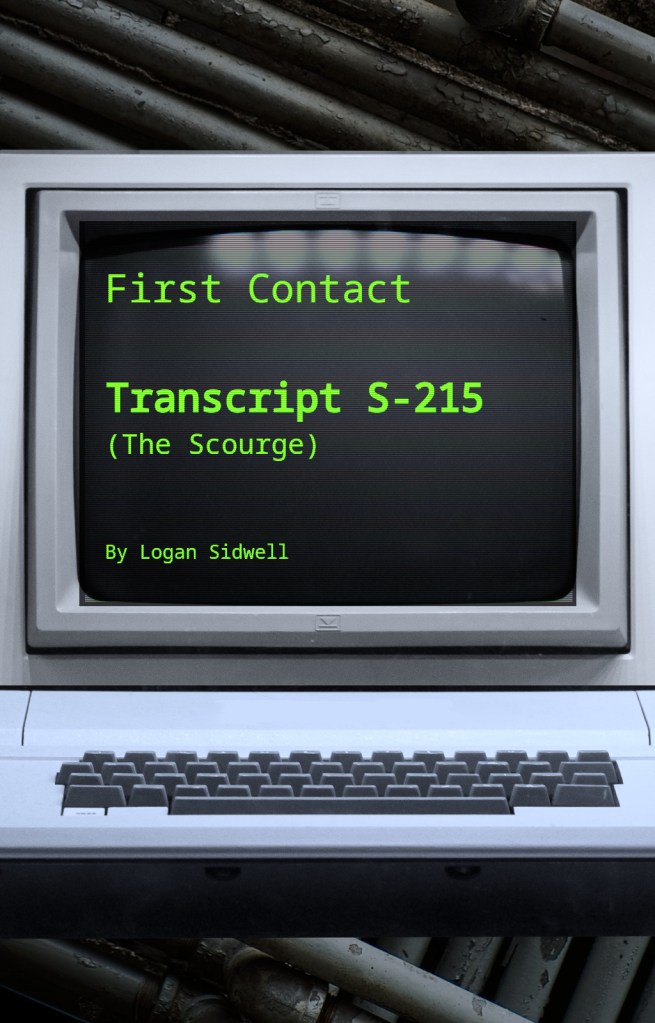
First Contact Transcript, Species-215

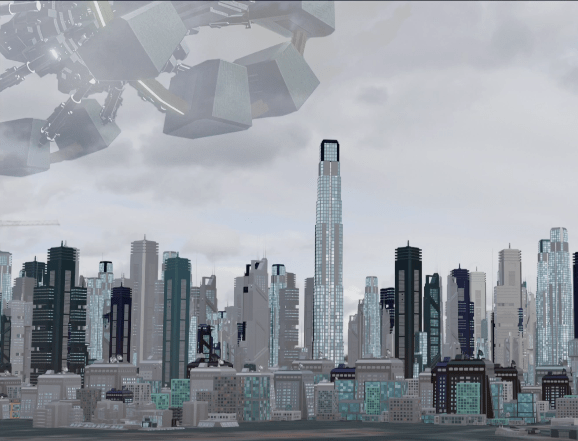
First Contact, Species-215 (Colloquially known as The Scourge)

Notes have been added to provide expert context.

S-215 Transcript #1 (First Contact):

BEEP BEEP

BEEP BEEP BEEP

BEEP BEEP BEEP BEEP BEEP

*Fibonacci sequence continued until 13.*

Earth Station B, operator 6, Mark Simmons responds: 

Clear. Identify.

FRIEND*

*Message received in direct english

*Word in S-215 lexicon carries second meaning of TOOL

Hello friend. Location?

*S215 responds with coordinates of Ross 248, located approximately ten light-years from Earth.

You are Rumbigeals?

*Rumbigeals (S11) are the known residents of Ross 248 and were originally contacts twenty-three years prior to S215.

NOT RUMBIGEALS. FRIEND.

What is your species name?

*Pause in responses lasts thirty-one minutes.

MOURNERS. WE ARE THE MOURNERS. YOU ARE HUMANS.

Hello mourners, humanity welcomes you.

WE ARE GLEEFUL TO MEET YOU.

Your english is excellent. What is your business?

*First contact conversation ends here. Operator Mark Simmons noted the high lingual capacity of this alien species and speculated that they had analyzed humanity’s early interplanetary broadcasts.

S-11 Transcript #18,216 (Initiated approximately five hours later):

MS: Good meetings Rumbigeals, which operator am I speaking to?

Operator two of fifteen.

*Mark Simmons notes that fifteen is the total number of operators, not the number currently on shift. This is against protocol.

MS: Zorle! This is Mark. How are the new spawnlings?

Challenging but rewarding. Thank you for inquiring.

MS: Good, that’s how they’re supposed to be! Just a moment.

*It is here that Mark Simmons is joined by Earth Station B’s director. The two discuss Zorle’s unusually curt responses for nine minutes, forty-three seconds.

Mark? Are you there Mark?

MS: I’m here Zorle. Just wanted to check on you. Is everything okay?

I am good Mark. We are good.

MS: I’m glad.

Thank you for checking in. I have to go.

MS: Have you heard of a species called the mourners?

No.

MS: Okay. Thanks anyway.

*Six minutes pass

Wait. Yes. I know the mourners.

*Mark Simmons notes that all his messages from here on were subject to approval from the station director.

MS: What do you know about them?

Nomads. Travellers. Rovers. Wayfarers. Peaceful drifters. Not a problem.

MS: They sound like a nice group of people.

If you are lucky they will pass through your system and trade with your species.

MS: Yeah, I’ll cross my fingers. Be well, Zorle.

*Be well in Rumbigean is considered a permanent form of goodbye.

I wait for our next hello Mark.

*On completion of this conversation, Earth ceased communication to S-9. No messages were ever again received from the Rumbigeals.

S-215 Transcript #2:

*All messages to S-215 from this point forward were prepared, reviewed, and submitted from within Earth Station A’s situation room. Mark Simmons was brought in to type the messages and to retain communicative continuity.

Hello. Mourners are you there?

WE ARE HERE MARK. WE ARE CLOSER NOW.

Closer to Earth, you mean?

YES, WE ARE CLOSER. WE HAVE MUCH TO SHARE.

How much closer are you?

*Coordinates list unoccupied solar system Lalande 21185, approximately 8.31 lightyears from Earth.

*Chief of Security Lorne Richards types the next message.

How fast are you able to travel?

*No response after thirty minutes. The keyboard is returned to Mark Simmons.

Can you tell us anything about what you intend to share with us?

WE CANNOT RUIN THE SURPRISE.

Is it information?

IT IS A NEW WAY TO LIVE.

*Additional messages were forwarded to S-215, but no response was recieved.

Final notes:

Approximately 48 hours after this conversation, Earth’s governmental bodies approved an additional $12.9 trillion dollars in starship development and $4.5 trillion in weapons research. 9 additional species ceased all communication in the coming months. For further information, review documents on The Scourge, The Abandonment of Earth’s Southwestern Hemisphere, and Policies Regarding Encounters with Half-Dead.

The Amazing Digital Circus Mixes Marketing and Story

Sometimes I watch a little more Youtube than I should. My algorithm consists mostly of video essays on the economy, tournament footage, and random gaming clips. Well one day I was whiling the hours away watching a bit of nonsense, and the algorithm recommended the pilot to a new cartoon series. The Amazing Digital Circus. I did a cursory search and discovered this random pilot is the start of a mega-successful series with a massive fanbase, all based on an old sci-fi horror called I Have No Mouth and I Must Scream.

This week the finale was released and I binged the entire back half of the series in one night. It’s a fun and tense series for teens and young adults that was well worth the watch. But the thing that caught my eye was how Glitch Productions blurred the line between new episodes, new merch, and marketing.

Plot

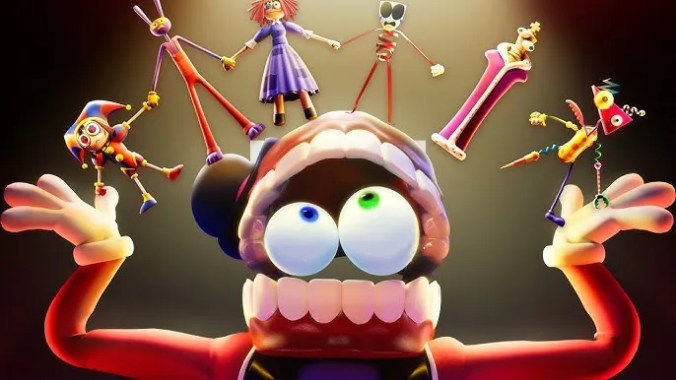
The Amazing Digital Circus tells the story of a group of unfortunates trapped inside an old 1990’s videogame. No one remembers their name, and everyone has taken on the form of an avatar appropriate for the circus atmosphere of the game. Kinger is a king chess piece, Jax is a prankster rabbit, and the protagonist Pomni is a sad little jester with very expressive eyes.

Running the world is an AI named Caine. Caine has godlike power in the simulation and a primary mission of keeping his trapped human guests engaged with his various adventures. If you’re familiar with the original Harlan Ellison story there may be some alarms going off in your head here. Thankfully instead of behaving like the malevolent AM of the original story, Caine brings an energy that’s a mix of circus barker and the Genie from Disney’s Aladdin (best captured during his show-stopping song in the eight episode).

Caine’s adventures inevitably go off the tracks in a dangerous and psychologically tormenting direction, and the plot of the show focuses on its human cast’s efforts to endure Caine’s accidental tortures while seeking a way out of their digital prison. It might sound like a horrific story, but the cartoony characters, comedic tone, and wacky settings take most of the edge off the physical horror, leaving only the existential.

An Exploration of Psychological Conditions

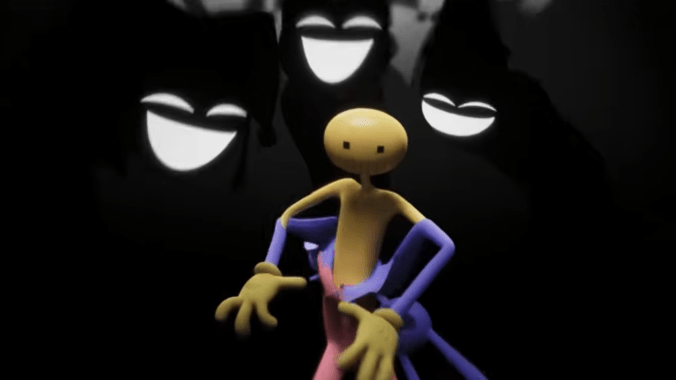
Since death is off the table, the worst-case scenario for our band of plucky characters is called ‘abstraction’. Years spent trapped in a simulation take their toll. If a character loses their grip on reality too much, they ‘abstract’, which means turning into a horrible monster that Caine makes sure to store permanently in the basement.

Keeping each other sane and healthy becomes the day-to-day focus of our characters. Each character has to fight their own inner-demons. To add insult to injury, the avatars in the game are specifically designed as physical representation of each person’s psychological struggles. Gangle carries a collection of masks and can only express the emotion on the mask she wears. Zooble’s body is an assortment of components she can mix and match, representing her own body dysmorphia. Ragatha is a raggedy ann doll that’s desperate for other’s approval. As the series goes on, we see each character’s deal with their own psychological turmoil. As you can imagine, there’s a heavy theme of self-acceptance that runs through the story.

Marketing Blurring Into Story

The entire series of The Amazing Digital Circus (TADS) was released directly to Youtube, rather than through some streaming service. From an accessibility standpoint, this allowed the show to reach a massive teen and young adult audience. From a financial standpoint, this meant Glitch Productions had to get creative.

If you’ve already seen every episode of TADS, you’ve actually only seen about 75% of the content related to the story. When a company advertises their upcoming episode, it’s a cut up of clips from the episode. Not here. Every preview TADS is entirely unique content. The AI Caine speaks directly to the audience, and often reveals elements of his character that weren’t visible inside the story.

One particularly meta moment comes when Caine advertises the series by practicing knife throwing on poor Pomni. Then in one of the later episodes, Pomni is blinked out of existence while eating a sandwich, and when she returns, she has a bunch of knives sticking into her jester avatar. The commercials are literally canon to the series.

But it doesn’t just extend to previews. Merchandising is a key element of funding TADS, so one of Caine’s favorite gimmicks in the youtube shorts is to punish his players by taking their avatars and turning them into the plushies that are sold online and forcing them to sing songs or engage in various harrowing challenges. After watching the whole series, the best thing to do is go to Glitch Production’s Youtube channel and watch all the advertisements. They even hid some key lore related to one of the ‘abstracted’ characters that isn’t present in the main series while advertising pins and plushies.

Conclusion

The story is a great modernizing of a sci-fi classic with modern, psychological sensibility. But the greatest innovation of this series comes in the marketing. Glitch Productions didn’t just make a great story, it produced an online experience. The voice actors are regularly invited to play games with one another online, they’re brought out to cons, the fanbase is constantly speculating on tiny aspects of the lore, they even got the finale into theaters (with a sing-a-long of Caine’s song that you can see online).

We’re getting to a place in the modern age where tv advertising and big posters aren’t the way to get butts in seats. Rather than following the cinema model, Glitch Productions followed the model set by the game series Five Nights at Freddy’s. Make a ton of content, add enough deep lore to get the fanbase buzzing, and produce tiers of content. The end result is that no matter what kind of fan you are, you’ll always leave satiated.

How A Writer Reads Their Client’s Mind

I used to write for an ed-tech company. We produced these magic schoolbus-like simulations where students in a computer lab used their curriculum to solve various crises and dilemmas. From time to time, organizations would commission us to create custom experiences. I got to write for 4H, Hill Air Force Base, US Synthetic, and a couple others.

The one I remember best was for Colorado State’s Veterinary College. We called the mission ‘Do No Harm’. It started with a sick sheep. The crew would shrink down, fly in, and over the course of a thirty minute adventure, cure the sheep of its ills.

But it was one particular meeting that still sticks with me. My team had finished the product and we were demoing it to the head of the program. We walked him through the whole experience. When it was over, he had an odd look in his eye. He scratched his chin, leaned into the camera, then asked how it was I had managed to read his mind. We laughed, but he was serious. He had no notes on the simulation, no items to change, it was ready to ship.

I didn’t tell him, but I had read his mind. It happened on our very first call. He didn’t spell it out or anything, but the program director told me everything I needed to know.

The Strategy Interview

When I jumped into that first ‘get to know you’ call, my primary concern wasn’t the story I’d tell, it was understanding my client’s goals and strategy. He regaled me with his vision of a thrilling adventure fighting off parasites with spaceship weapons. When he was finished, I asked him a couple big questions.

Where will this experience take place?
Who is the audience?
What are your goals?

Every question was open-ended by design. The more the client gave, the better the result.

His early responses told me the tone of the project. It was meant for middle-grade students, so I tuned the dialog to be a little more mature. It would be flown in a single computer lab as a part of a tour, so I book-ended the experience with tour shoutouts. His goal was for students to be excited about the work of veterinary medicine, so I made sure the experience was loving towards animals and ended on an upbeat note.

The most important element of the strategy interview was that I didn’t try to project my own idea onto the project until I understood the client’s goals. His answer shaped the foundation of the project. If I came in with my own pitch, prepackaged and ready-to-go, the idea wouldn’t fit. The age-range would be wrong or the tone would be too dark or the story wouldn’t emphasize the medical aspects.

The big-picture answers set the frame of the project.

The Personal Interview

Once I had an understanding of the shape and texture of the story, I shifted to more personal questions.

What made my client love veterinary medicine?
What moments were they most excited to see in the program?
Which animal did they want to treat?
What kind of challenges did my client encounter in the day-to-day of veterinary medicine?

These were the answers that gave the story authenticity. My client’s focus was farmwork, so putting an elephant or a giraffe onto the operating table would have been a big miss. 

As they told me more about their own experiences and their love of their work, I pivoted my plans. My client didn’t know it, but they wanted to see their lived experiences reflected back at them in the art. When they told me about curing a horse’s case of colic, I made sure to include it. When their eyes lit up telling me about the four compartments of a sheep’s stomach, you better believe those four compartments had to be scanned during the mission.

By the time we were done, the story wasn’t just a story, it was an interpretation of the client’s passion for his work. The personal interview gave the simulation those moments of delight and specificity that connected the client to the product.

Writing as a Product

We writers like to look at our works as art, and art alone. When we imagine ten million people reading our masterpiece, it’s all about the message being conveyed, or the emotions being evoked, or the characters that sweep them away.

This is the biggest difference between clients and writers. A client asks for a story in service of a purpose. The story, with all its themes, characters, twists-and-turns, is at the end of the day, a product. If you talk to the big executives at Amazon and Netflix, they don’t even call tv shows stories, they call them ‘content’. And if content fails to further a client’s goals, then it’s a bad product.

If your goal is to read your client’s mind and pluck an image from their brain, start by seeing the story from their point of view. Look at it like a product. What is that product doing? How will it serve the client’s goals? Starting with the right restrictions and expectations will save weeks down the road.

Once the restrictions are set, you can bring in the artist to turn the story into delight and wonder.

Learning From The Business Side

I used to see my books exclusively through the lens of the artist. Then I self-published. A week in and I found myself neck-deep in entrepreneurism.

My first misstep was the title. Everyone said the title wasn’t good enough. I didn’t understand why. I was the artist, and it was an interesting title, Mind’s Bane.

It was only when I looked at the title through the lens of a businessman that I realized my mistake. Mind’s Bane was a very interesting title for a dark fantasy book. Unfortunately, I was trying to sell a dystopian sci-fi. It was a title that failed to connect my book to its audience, a fundamentally commercial problem.

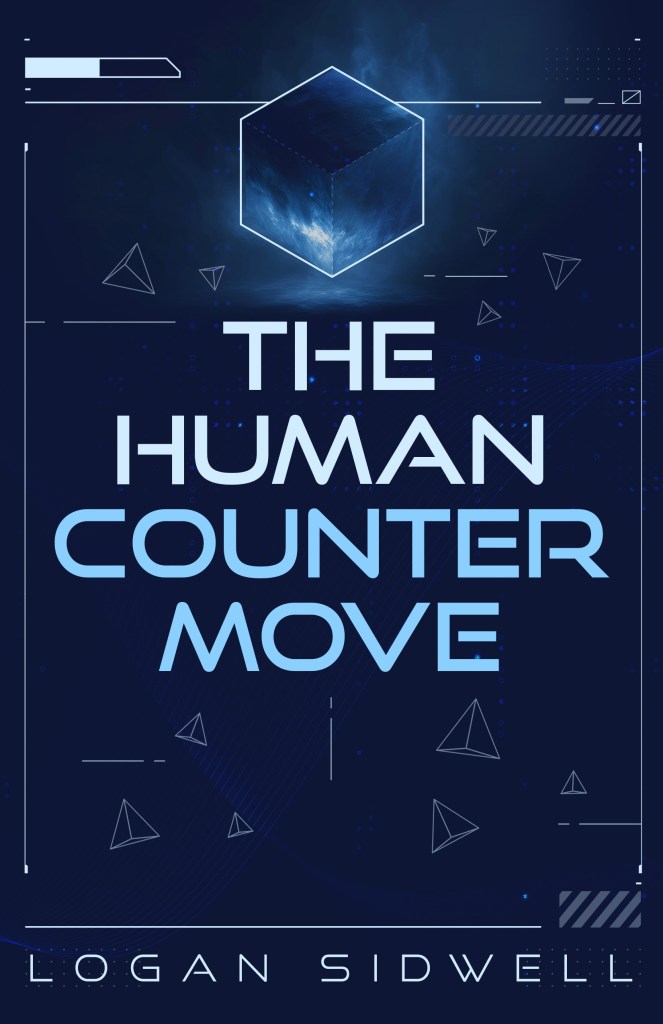
So I kicked the artist out of the room and found a more appropriate name. One that captured the concepts of sci-fi, dystopia, strategy, and ai. The Human Countermove.

Every conference I go to has a bunch of presentations on ‘how to make a good protagonist’ or ‘how to keep up the pacing of the story’. I used to think limiting your art that way was a mistake. I wanted the story to tell itself.

As I write my third and fourth books, I’ve come to understand the wisdom of those presentations. For an audience to enjoy a story, they have to like the protagonist. For them to stay engaged, the story needs good pacing. It’s good business, and it makes better art.

When we as writers and artists speak to our clients, it’s easy to see ourselves as the expert in the room. But everyone has their own set of skills to bring to the table. The client understands their goals and strategy. We understand how to produce the art.

There’s no telepathy in commissions. It’s all about understanding. When my client saw the simulation we had created, he loved it because it was the product he had been looking for. From the business side, it served his goals. From the art side, it resonated with his life experiences. All I needed was a couple conversations.

When Time Slows Down: Enjoying Conventions

My friend and I attended FanX this year. It was our first time. There were rooms filled with cosplayers, a massive vendor hall, and tons of celebrities (my favorite was Henry Winkler, who stood in front of his signing table shaking hands and hugging visitors). But at some point, wandering around staring at people and spending money got tiresome, so we attended a presentation. Something Star Wars related, he’s a big fan of the franchise.

When we sat down, he was on the edge of his seat. Sat up, attentive, and eager to learn. I was slouched in my chair. About ten minutes into the presentation his stance slackened. By half an hour he was holding his head up with his hands.

Then I pieced together what was happening.

This was his first conference. He had come expecting a content dense presentation, an action-packed lecture stuffed to the brim with anecdotes and stories from the extended universe. What he got was plodding, a gently paced lecture suited for resting rather than for learning. My friend was operating at a different time scale. The wrong time scale.

I couldn’t blame him, when I attended my first writer’s conference I had to make the same adjustment. When we’re young, schools are our conferences. Conferences where every minute is tracked and recorded, where learning is expected, and where education has no choice but to run at a breakneck pace. Your average presenter isn’t like that. They take their time, lose track of their thoughts, answer audience questions, and take the scenic route.There’s no test at the end of the lesson and the presenters aren’t trained educators. 

I didn’t recognize it until that moment with my friend at the Star Wars presentation, but time at conferences is slower. And to have a good time, you have to slow down with it.`

Appreciating the Present

My expectations for my first Writer’s Conference were way too high, and way too self-centered. I was hunting for the ‘most’ educational classes, searching for subjects that would maximize my education. Truth is, if your entire goal is to sponge up information on a subject, five hours on youtube watching carefully edited videos will deliver way more reliably than a conference. That’s not what conferences are for.

Conferences are for being present. They’re for stopping, looking around, and finding yourself surrounded by like-minded people from a million different backgrounds. They’re for conversation with your peers, sharing your experiences and learning from others. The poorly-kept secret of conferences is that the best event of every conference takes place after it ends, Bar Con. Having a couple drinks and conversation with someone you’ve never met with a similar interest often teaches you more than any presentation could ever hope to. 

This isn’t to say I don’t attend classes, nor do I ignore the content of the lectures, it’s a major consideration, but it isn’t the only consideration. Going down the calendar of a conference, I search for presentations from people I look up to, friends I’m there to support, or experts far above my level. And every one of these presentations gives me something different. 

From those who are a few years ahead of me in my career, I pick up advice for my immediate future. From friends, I take tips on how to give engaging presentations of my own. And from experts, I discover just how much I still don’t know. Even if the content of the presentation isn’t tuned to my skill-level or interests, the person giving the presentation still brings their own perspective to the world, and that new angle is always worth seeing.


In short, being present at a conference means seeing the people around you and hearing what they have to say. We spend so much of our lives focussed on ourselves, there’s something healing in listening to others.

Maximize Your Enjoyment, Not Your Day

I don’t fill my schedule. There may be classes from 10am to 7pm, but chances are I’ll only attend 2/3rds of those. The second you find yourself rushing from class to class, you’re missing the point of the conference. Often after a class, I find myself in a conversation with a peer, or maybe run into someone sitting on a couch in the hotel hallway, and that conversation will last as long as a class. Sometimes a group of us leave the event to get a long lunch. We’ve left the conference, but it’s those moments of spontaneity that stand out in my memory.

When I’m tired, I take a nap. When I’m hungry, I get lunch. When I’m tired of seeing hundreds of people, I find somewhere quiet and work on a project of my own.

Slowing down means being aware of yourself. No one’s getting grades for their attendance. You could spend the whole event sitting on a couch chatting with anybody passing by and you’re still enjoying the conference. Just because there’s a schedule doesn’t mean you need to shape yourself around it.

It Takes Practice

I’ve found a lot of people don’t enjoy their first conference. By the end, they’re underwhelmed by the lecture content, overwhelmed by the crowds, or just plain lost. Inaccurate expectations and self-imposed pressures make a conference something it isn’t.

Then they attend a second time. There’s a few more familiar faces, they skip a couple classes, and they go to bar con. By their third conference, they love it.

I think my friend would enjoy FanX a lot more the second time around. We’d show up in costume, learn technique from the other cosplayers, spend a while chatting with friends, and when we attend a presentation, slouch a little in our chairs.

That Time A Space Simulation Turned Into a Spy Hunt

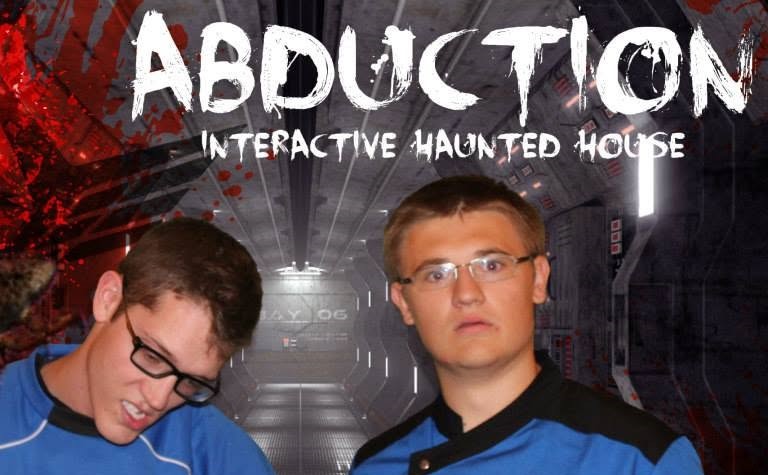
Readers of my blog know I used to simulate star-trek style spaceships. It was my entry-point to the world of writing, storytelling, theater, and tech all at once. A part of the reason I studied computer science was to make sense of the one part of the simulator I didn’t understand. My first written stories were simulations written to fill a story vacuum. As a flight director, I was lucky enough to not only write the stories, but perform them.

I told hundreds of stories in my five years simulating starships. Mostly I stuck to my biggest hits. Occasionally we’d test a new story and fiddle with it to make things more exciting. But this flight wasn’t like that. It was supposed to be a nice, normal mission. Instead it ended up being my most memorable flight in a half-decade of incredible stories.

Setting the Scene

The nine crew members each donned their uniform, a felt poncho modified with starship colors and branding. It was a birthday party, every kid was in second or third grade. A bit young, but me and my team had dealt with worse.

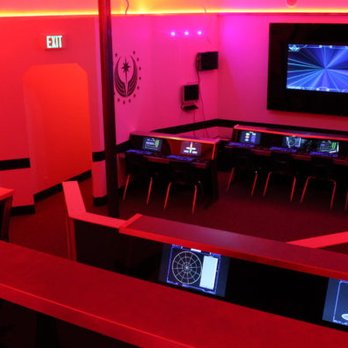
One side a school, one side a spaceship.

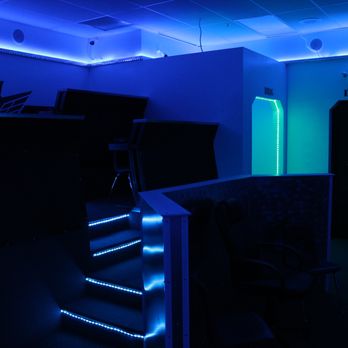
To reach the ship, they needed to pass through the ‘teleporter’, an old photography dark room door, the revolving kind. They’d step in two at a time. I’d remind them not to touch the side lest they be lost to space, then spin the door 180 degrees.

Pitch black for half a second, then the bridge of a starship. Even when you knew the trick, it still felt like magic. The UCS Everest was a large vessel, suited to handle parties of 10-15. There was a main viewscreen at the front and tiered seating at the back. A staff member would ask the arriving crew their job position, then direct them to their seat.

Once everyone was seated, I would teleport in behind them and the epic boarding music would fade away. Safety instructions were always boring, but from the very first second I could tell this crew was different. Eyes wandered, kids whispered. I talk quick, but this crew had no interest in any of it.

When the safety briefing was done, I had a single instruction for my staff. “Get through the training as fast as you can.”

We had a set of junior controls for young crews. Instead of everyone having a distinct job, they were all prompted to do the same activities together and drive the ship as a single unit. For groups younger than 4th grade, it was really the only way to keep them from being overwhelmed. Unfortunately, the most recent windows update had broken the juniors controls, so all we had were the advanced systems.

The Flight

The crew was both overwhelmed and not particularly invested in the story of the mission. They were supposed to fly to an endangered planet and help evacuate the citizens. For crews like this, we like to put a ‘doctor’ on the bridge to help them out. Whenever I came on over the speakers as the main engineer and told them they needed to ‘undock’ or ‘set course’, the doctor secretly made sure the task got done.

In this case, the doctor was basically flying the ship on their own.

Fifteen minutes into the flight, I could tell things weren’t working. I was quietly telling my staff to get ready to ‘board the ship’ as various alien intruders and wacky characters, but while that was being prepared, I needed the story to continue.

The Breakthrough

There was a political situation surrounding the endangered planet. I was on the speakers as a Texan ship captain warning them of the dangers. None of it was clicking, the whole mission was feeling like a bust. Then I said the words that changed the course of the mission. “The mayor of that planet is a crafty fella– he’s got people everywhere. Keep an eye out, you may have a spy on board.”

On the cameras, I could see kids’ heads popping up and glancing around. Their security officer, just eight years old, jumped out of his seat with a toy phaser in hand. There was still conversation being picked up by the microphones, but they weren’t talking about a party. They were talking about the spy.

Not yet realizing what had happened, I had the ‘ship doctor’ get back to the bridge to help them navigate the upcoming asteroids.

The second he teleported in, every kid in the room was out of their seat and yelling at the top of their lungs. They all made different accusations, but there was only one message: The Doctor was a spy.

My first reaction was frustration. Everyone had left their computers, which meant no one was driving the ship, which meant the mission was frozen in place. But these kids had never cared about the mission in the first place. As I watched the doctor get forced into the brig at phaser-point, I saw what I had been looking for since the start. A crew that cared about the mission. Not the space theater or the advance controls or the working together. They only cared about hunting for spies.

If the flight had been a field trip arranged by a school, I would have paused here. The crew would have gone back to their seats and we would have discussed what their priorities needed to be. But this was a birthday party, and when you’re flying a birthday party, it’s best to reserve the lectures for the really bad behavior.

A small brig for 6 suspects

So the mission changed. I ordered a volunteer dressed as a security guard to go up and help the kids interrogate the doctor. But their blind hunger for spies was worse than I thought. The security guard ended up in the brig right next to the doctor.

I was down to two volunteers. The next one I sent up with no costume at all and specifically told the kids that this person was not a part of the story. Just a staff member there to guide their experience. They reluctantly agreed not to stuff her into the brig, but there were plenty of murmurs that she was ‘secretly a spy’ anyways.

Now that I knew what kind of story we were telling, I knew what kind of tools we should use. We planted a device in a tunnel under their seats and set off the alarms until they found it. We played crazy ‘hacking’ noises over the speakers and flicked the lights from red-alert to green-alert to a bunch of other colors while they flipped switches on a panel. Whenever there was downtime, I didn’t even have to fill in the blanks, the crew would sprint right back to the brig and resume their interrogations of the prisoners.

Then came the masterstroke. An away mission to the lower decks. It’s a funny thing, kids love getting onto the starship, but once they’re on the ship, all they want to do is leave. There was a second starship right across the hall. We redirected that ship’s camera feed to the main view-screen. I told my last volunteer to go in there and stand around.

When the kids saw the footage of a person in a uniform doing nothing, they went wild. Never had they seen a more guilty figure in their lives. The staff member led them on the away mission and they caught the ‘spy’ with ease. They were thrilled for an excuse to use the phasers.

On their way back to the ship, the crew bumped into two unfortunate staff members who were returning from a lunch break. They were dragged to the brig like everyone else.

The Finish

With the end of the mission closing in, I decided it was time for a trial. We gave each student a seat and made them all a part of the jury. One by one we brought out the suspects. I wish I could tell you they were thorough in their questioning. I wish I could say they even listened to what each prospective spy had to say. But they didn’t. It was closer to a witch hunt than any form of judicial process.

At the end, they decided it was the doctor who was the spy. Of course it was, he was the first suspicious figure on the bridge and the only one they all remembered capturing. I told them they were right and that they had successfully completed the mission.

They cheered and ran off with their parents to eat cake. Great reviews all around, although I’m guessing that dying planet from the start of the mission would have a few complaints.

When we finished restoring the bridge from the child hurricane that had ripped through, I sat back and took a breath. One of the other staff members walked over to me with wide eyes. “That was amazing! I’ve never seen a mission like that before. You should write it down and fly it more often!”

I smiled and shook my head. We had improvised 2 and a half hours of nonsense. A playful nothing to distract a bunch of ten-year-olds. It was none of the magic that had drawn me to the program in the first place, and used none of the tools that made the simulator cool. Just one long string of chaos, and we were lucky the kids had liked it.

Something Changes When Story Moves From A Book To A Game

I didn’t start my writing journey with books. It wasn’t short stories or fan-fiction either. My original medium of storytelling was a bit more improvised. 

Star Trek Simulations.

It sounds a little silly, but for the first five years of my storytelling journey, I was a game master. Crews of birthday parties and corporate events would show up, I would give them a mission, put them on their ship, and send them on their flight. Whenever they spoke to the computer or the main engineer or an alien, it was usually me. When the ship took damage and smoke rolled in near the security terminal, I was flipping the switches.

It’s where I cut my teeth. It’s where I learned how to make the big moments of a story pop. And when my time flying starships came to an end and I made the move to telling stories in books, I discovered how unprepared I was.

Telling a story in a book is one thing. Telling a story in a game is something entirely different.

First and Third Person POV

Realistically, it isn’t just a split between games and books. It’s a split between interactive media and non-interactive media. When a reader reads a book, they expect to be told a story. When a player starts a game, they expect to be the story.

In a book, the main character is the main character. In a game, even if there is a main character, the real protagonist isn’t inside the game, it’s the person holding the controls. For a game to feel engaging, it needs to engage not just with the moving avatar on the screen, but with the human being that’s driving the decisions.

Much like in books, games have two main pov styles. First-person and third-person. Note these are different from where the camera is. Those familiar with books and movies will probably understand gaming’s third-person approach to storytelling. There’s a character on screen with a history, traits, and a connection to the world. 

A game like God of War tells the story of Kratos trying to raise his son in a cruel world controlled by the gods. When things happen, they happen to Kratos and Kratos reacts to them. He changes as the story goes on. This makes sense. This is close to traditional storytelling.

For games, first-person perspective storytelling is a complete 180.

A book uses first person to connect more deeply with the protagonist. We’re closer to the main character than ever. We can see their thoughts and how they decide how to act in the world. Games do the opposite. In the first-person perspective, the main character is washed away, made into nothing but a vessel for the player to control. It’s an effort to place the player directly into the story. Now when bad things happen, they don’t just happen to the character, they happen to the person playing. 

In DOOM, the players inhabit a character only known as Doomslayer as they defeat demon hordes. In Legend of Zelda, the players play Link, a character who never speaks and simply reacts to the world. Even though Link is shown as a real person in the game, he has no distinct attributes, only the ones a player projects onto him.

The Gameplay is the Story

When I first began simulating starships, I found the moments that were most story intense were the least engaging for participants. They didn’t care about two other characters arguing between one another to decide the fate of a planet. They didn’t care about the lore that set up the story. 

In a game, cutscenes are skipped. There’s a reason for this: The main character doesn’t need development, after all, the player is the true main character. And if the main character doesn’t need development, then the only kind of story events that matter are the ones that change the gameplay.

In games, a story is what happens to the main character and what they do in response. If something changes in the world, it has to be at least in part triggered by the player’s actions. And when something happens in the story, it can’t just have emotional weight, it has to mean something for the gameplay.

I used to play a typing game. You were in a cage descending into the depths and sharks would emerge from the darkness with words written on their belly. I’d type the words and the sharks would go away. It was fun, but the story wasn’t exactly engaging. In fact, the setting could have been replaced by a hundred other settings and I wouldn’t have even noticed.

This is the trouble with splitting story from gameplay. If halfway down, the operator radios in to tell me they’ve been in love with me for years, it doesn’t mean anything. The operator isn’t real, the love isn’t real. But if they radio in to tell me all our shark research has allowed us to slow the shark’s attacks, that does mean something. It changes how the game plays, so I become invested in that element of the story.

It’s hard to accept. The story of a game is only as good as how it affects the gameplay. This is where the phrase ‘ludonarrative dissonance’ comes from. If the gameplay and the story aren’t telling the same experience, the player disconnects from the half they don’t care about.

In the world of starship simulation, cutscenes between characters became a no-go. If I had something important to share, it needed to be delivered directly to the crew, and it had to change how they approached the mission.

Interactive Storytelling Workarounds

There’s a certain selfishness to a player’s approach to the story. They only care about what affects them. So how do you tell a story about complicated characters and nuanced situations in a way that makes the player pay attention?

I’ve found three ways:

Optional stories, passive stories, and mysteries.

Optional stories are exactly what they sound like. If 50% of players don’t want the lore, don’t force it down their throats. Sidequests are great, but some people are in a hurry. You leave the B-tier material in the game, but as optional content. Games are a bit like a walk down a buffet line. Everyone gets an entree, most people get the sides, and some people pick up a dessert at the end. In books, everybody gets the same experience. In interactive media, we don’t have the same luxury. It’s up to us to meet each player where they are instead of demanding they enjoy things they don’t like.

The idea behind passive storytelling is finding a way to sneak details into the experience without bogging down the gameplay. Gameplay is king. But if we can find a way to deliver a few lines of dialog without interrupting anything, then there’s no harm in it. This is how God of War told a character driven story, they’d give the player a level to traverse and the characters would talk amongst one another on the way. It’s like playing a podcast while working out. The player’s unrelenting drive to do things is fed, but the context of the story sneaks in with it.

Mystery is exactly what it sounds like. Players enter an area, make observations, and form their own conclusions about the situation. If anything, I think mysteries actually are better suited to interactive media than books. My most successful Star Trek story was one where the crew was coming to save a trapped squadron. When they arrived, they’d discover the squadron was gone. After a brief investigation, they’d discover a wormhole leading to who-knows-where. Without telling the crew a single aspect of the story, they figured it all out, and within a minute or two, they’d inevitably enter the wormhole with no plan on how to get home.

Conclusion

Games come with entirely different expectations. A reader expects a story. A player expects an experience. This post didn’t even discuss handling player freedom, needless to say that’s a rabbit hole for another day.

I had to make some adjustments when I switched from interactive media to direct storytelling. I imagine a lot of D&D Dungeon Masters go through a similar experience. They realize the main character can’t just be a vessel anymore, they need personality, background, and a particular view on the world. Every character can’t just talk to the protagonist anymore, they need to be living, breathing parts of the world with their own motivations.

Both mediums are difficult. Both mediums highlight different strengths. For games, accomplishment is the greatest payoff. For books, it’s usually something a little more philosophical.

If you get a chance, consider writing a story for a game someday. Nothing captures the difference in formats quite as much as watching your audience glaze over the moment you force them into a cutscene.

Logan Sidwell is a sci-fi and fantasy writer from Utah. He started as a writer and director in Ed-Tech, he now strives to marry his background in Computer Science and his years of storytelling to create fun, compelling ideas that explore new ground in technological and fantastical settings.


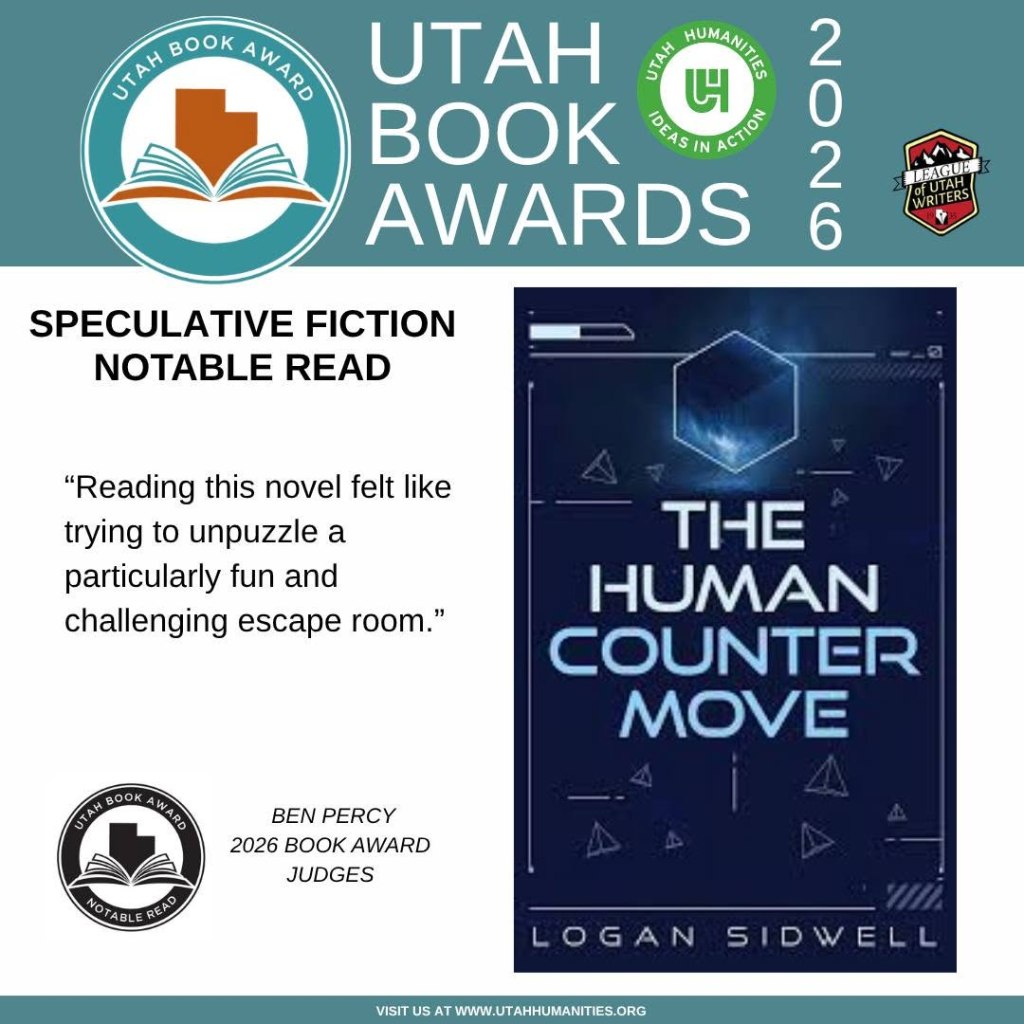
Check out my debut novel: The Human Countermove

December Update: 100 Days Since My Debut

December already! It’s hard to believe my debut novel has already been out for 100 days. I set a one year sales goal for myself at the start of this process. A number drawn from speaking to other indie writers, and one I could be proud of if I hit it. 

We hit the goal on day 68.

Some of that was farmer’s markets, some of that was family, but most of it was reviewers sharing their thoughts and inviting others to experience the story. For everyone who bought my book and helped me reach my goal, thank you. There is no way I could have reached this goal without you.

Reviews of The Human Countermove

Now that the book has been out for a bit, I’ve been able to get real feedback from reviewers, family, and friends. 

At my extended family holiday party, I found out that about a quarter of the attendees had read my novel from front to back. As an artist, it’s difficult to glean meaning from loved ones’ feedback. We can’t always take opinions at their face value, especially when the opinion-giver doesn’t want to offend. This meant I had to resort to interpreting signals. This was my system: I knew at least a half-dozen relatives that had bought my book. If none of them mentioned it during the holidays, or only mentioned it in passing, it would have been a strong sign they couldn’t get through it. If they finished the book and mentioned a plotline, that meant the book was readable.

But neither of those possibilities were the case. My extended family had not only read my book, they had shared it around to other relatives and friends. So far, my favorite compliment was when I started telling one of my cousin’s about my next book and they said “Woah! Spoilers!”.

Here’s another signal I’ve been reading wayyyy too much into: At my local writer’s events, I’ve had four author friends approach me about my book. Each one of them has been eager to tell me how they would have made X plotline pop or amped up the pacing during section Y. I love hearing the different perspectives and approaches to storytelling. But in terms of signal interpretation, the number one message I took away was this: They read the whole story, stayed engaged the whole time, and only had minor notes on how to make it better.

I’ve now passed 12 reviews on Amazon. It’s hard to overstate how important getting to that double-digit number really is. Enough reviews helps new readers trust that the book really is a ‘book’ in a market filled with AI slop. So thank you again to everyone who has written a review on any platform.

Audiobook Underway

If you know me, you know I’ve worked as a part-time voice actor for the last six years. Thanks to a few connections, I was able to secure a recording booth for the audiobook version of The Human Countermove without going bankrupt. We’re 15 hours into the recording process and about three-quarters of the way through the initial recording. I’m anticipating bringing in an actor and actress to fill in a few of the voices that I think could be improved. The recording process should be complete by the end of January. After that, we’ll see how long editing takes.

A nice benefit of doing the audiobook is a thorough word-by-word proof read of the novel. There weren’t many errors, but my favorite so far is a moment when I used the word “basket” instead of “bracket”.

Project APHELION Draft 2 Complete!

Project APHELION has been my biggest focus this year. The manuscript is now sitting at 102,000 words. Second drafts are way harder than the first. It feels like 100 hours of constant decision-making. Things that were left for later suddenly have to be dealt with, hints in the first draft have to be cemented into plotlines, characters arcs have to lose much of their ambiguity.

But it’s done! The second draft has been distributed to a few alpha readers. I’m feeling really good about this story. It’s my first foray into fantasy and I gave it everything I had. A third draft is underway to pretty up the prose and fix continuity errors. It should be querying to agents by January!

New Projects

If you’ve been tracking my current projects page, you’ll see I have two new projects. PRINTHEAD and RELENTLESS. 

PRINTHEAD is my megaproject, and it’s been delayed. The rough outline was getting out of hand and one of the three key POVs had a lot of scenes missing. Plus I don’t want to start on my megaproject until I have a few more regular books out for consideration with agents. I will return to this project. I love it too much not to.

RELENTLESS is my silly project. It’s a spin on the revenge power fantasy genre with a much lighter tone (I wrote a bit about that genre here). My last two projects have been so serious, I decided that this time around, I’m having fun. Whenever an idea that makes me laugh, it goes on the page. I’m already 10% of the way through the first draft and enjoying every minute of it. I wouldn’t be surprised if it were in alpha reader’s hands by the start of March.

Closing Remarks

I’ve been getting closer and closer to my goal writing pace. Having a book out in the wild helps a lot. Having one project to edit and one to write is nice too. One of the hardest parts of being a writer is having a hundred ideas in your head but only being able to writing one or two a year. I’m hoping that problem will be resolved soon.

My website’s been getting a lot more traffic lately. If you’re new, thank you for dropping by! If you’re interested in my writing, I have a few short stories from last year available here and I post essays on various subjects here weekly.

Thank you all for your support. Looking forward to more stories next year!

The Best Art Isn’t Popular, It’s Specific

In 2022, I bought a ticket at my local arthouse cinema for the movie Living with Bill Nighy. All my coworkers told me it was terrible. They warned me the pacing was slow, the message was hollow, and the movie was boring. I saw it anyway.

I bawled in the theater.

It’s a good thing no one went with me, they would have been dealing with a blubbering mess for half the show. Three years later, it remains the best movie experience I have had in my life. When I came back to work, my coworkers tried to convince me I was wrong. They told me I had overlooked the movie’s flaws. They told me there was no way I had really enjoyed the experience. But the real message was clear: The group hadn’t enjoyed it, so I shouldn’t either.

Their experience didn’t change my opinion. If I had listened to them from the beginning, I would have missed out on one of the most emotionally impactful evenings of my life.

Living isn’t a movie for everyone. But for a few, it resonates deeply.

Broad vs Specific

There’s a concept in comedy. Broad vs specific. Broad comedy is the kind that everyone will laugh at. A slip on a banana peel, a silly noise, commentary quality of airline food. The most successful comedies in the world are broad comedies. After all, how would you bring in tens of millions in the box office if they didn’t appeal to everyone?

What people don’t talk about is specific comedy. Comedy targeted at a small group of people and appealing to their shared experiences. There’s a reason the cardiac doctor gets gut-busting laughs at the health conference and crickets at the local comedy club. “Drum Sound Check at Medium Sized Venue’ from Fred Armisen’s album 100 Sound Effects is a perfect example, funny for concert goers, totally unfamiliar to everyone else.

But the concept of broad and specific doesn’t end at comedy. It extends into every marketable genre. In music, broad pop music covers dancing in a nightclub while specific country music tells the tragedy of growing up in a particular part of the south. Most importantly, the concept of broad and specific applies to art. Broad art covers wide themes and topics with mass appeal, while the specific speaks to the soul of an individual.

Producing any piece of art meant to generate income means the art must be broad in nature. To be profitable, the artist walks a difficult tightwire: Tell a story specific enough to engage the audience but broad enough to appeal to everyone.

The NYTimes recently released a ‘top 100 films of all time’ list based on a poll of hundreds of industry insiders. What they found was that most of the films on the list were made by a single director with a singular vision. Artists who had managed to dance the difficult dance and produce a story that was both appealing to an audience, and told from a distinct and specific perspective.

A Bored Audience

There’s a vibe in the world today. If you ask your coworker what they think of the movie industry, they’ll probably tell you that everything has gotten a little samey. It’s not true, but it reflects a problem: Many of the movies in theaters these days are so broad they all feel like the same thing.

Modern film finance can only justify a movie going into theaters if it’s going to earn tens of millions of dollars. The broadest movies imaginable. This doesn’t mean specific stories aren’t being produced. They just skip the theaters and get dropped straight into the vast ocean of streaming services.

It poses a problem for marketers. How do you find your audience when your audience only knows to look for your movies in theaters? I think this is why we lean so heavily on ‘genre’ these days. It’s easy to tell someone they’re about to watch a ‘horror’. Folks who know they like horror will tune right in and folks who don’t will move on to something else.

But what about the stories that can’t be put in a box? This is the greatest obstacle to auteur artists breaking out onto the scene. The artist can work on their marketing, but what really needs to change is the audience. We need viewers with the curiosity to try new things.

The Courage to Enjoy What Speaks to You

The thumbs-up and the thumbs-down are the ultimate judges. A simple ‘good’ or ‘bad’. I read a book recently, A Spindle Splintered. The author’s passion was present in every page, the words were delicately crafted. A story of a teen girl with an obsession with Sleeping Beauty.

It wasn’t for me.

It wasn’t that the book was bad, or even that the story was uncompelling. Only that its message was completely unaligned with my background. How does a person review a book like that? A thumbs-down since it didn’t appeal to me, a thumbs-up because I could imagine how the story might resonate with someone else?

Enjoying Living (2022) was a lonely experience. Everyone else at my job had given the thing a thumbs-down, and according to the rules of Rotten Tomatoes, that meant it wasn’t worth watching. I think if each of them had taken the time on their own to reflect on the story, they might have realized it wasn’t the case that the movie was bad, only that it didn’t appeal to them.

Disagreeing with the crowd takes courage. Recommending a specific piece of art can be oddly vulnerable. I think all of us want to know that our artistic taste is ‘good’. But that’s where we confuse the purpose of art. It’s not always there to be enjoyed, it’s there to touch our soul and help us make sense of the world.

Lately, when I hear a movie is polarizing, I buy a ticket. Polarizing doesn’t mean bad, it means its message is specific and only resonates with some of its watchers.

If you get the chance, I recommend you do the same. There’s a piece of art out there for everyone. A specific story that will speak to you on a personal level like no broad art could. The only way to find it is to search. And the only way to truly appreciate it is to have the courage to experience it for yourself.

We Need More Aspirational Art

Art holds a mirror to society.

Through stories we see aspects of ourselves and the world we live in. The Circle shows us a world where social media becomes ubiquitous and inescapable. The Fifth Season quietly highlights the bubbling fury of institutional oppression and racism. Neuromancer blurs the relationship between people and technology. Every time, these dark stories end in tragedy. A mirror that reflects a dark and cruel world where people in power serve themselves and sacrifice others without a second thought. 

These stories keep us grounded. They keep us connected to how the world really works. 

They’re also a self-fulfilling prophecy. Too many sad stories about an irredeemable world and people start to believe it. In a world with no principles, staying committed to a moral fiber becomes the losing move. We become cynical and jaded. Once a community stops protecting one another and each individual focuses on fending for themselves, it stops being a community.

But it doesn’t have to be that way. A mirror doesn’t have to highlight our worst instincts, it doesn’t have to reflect our darkest selves. It can do the opposite. It can show us our best selves, an aspirational vision of who we wish we were. Stories of idealists like Mr. Smith Goes to Washington, or of a new society like the utopian days of early Star Trek.

We need more aspirational stories.

In 1986, Star Trek: The Voyage Home, transparent aluminum was introduced as a curious futuristic invention. A novelty. But not to the chemists and engineers that watched that movie. Transparent aluminum now exists, a case of life imitating fiction. It’s not the only time this has happened. Mobile phones, tables, and voice controlled computers were all first Star Trek tools before they became our reality.

The opposite is just as true. War of the Worlds told the story of a highly advanced alien invasion involving chemical warfare, lasers, tanks, and aircraft. Fifteen years later, we saw almost all these inventions in WW1. Squid Game told the story of increasingly desperate contestants in a lethal competition, now the competition is a real game show (except for the lethal part).

We underestimate the power of collective thought. A politician achieves their ambitions by convincing enough people something is possible. A stock rises or falls not based on the company’s performance, but its perception. If an expert tells a country they are in decline, it becomes true.

So what happens when the only stories we tell of the future are dark and cynical? Black Mirror stops being a warning and instead becomes a checklist. Every person sees every other person’s action in the worst possible light. Billionaires take notes on dystopian stories and program them into their product. The scientists that grow up on these stories fear the consequences of their inventions.

In 2023, Alexander MacDonald, NASA’s chief economist said about the impact of sci-fi writers. “We don’t go to space because we have the machines. We go to space because we have a culture of people who are inspired to build the machines.”

We need science fiction stories that imagine and inspire, that tell the stories of heroes saving the day and technologies that transform life in the most wonderful of ways. Most importantly, we need sci-fi stories that dream of a bright future.

But this isn’t just a problem with science fiction, it extends into fantasy and thrillers and mystery and every other genre. We keep telling stories about vigilante superheroes in corrupt societies. What about the leaders that shine a light on corruption and fight to make things better? Instead of cynical wheeling and dealing in the west wing, what about an idealist that manages to get a piece of impossible legislation passed because they inspire their peers?

It’s something I’ve been wanting to adjust in my writing. I want to dream of a better world and a better universe. I want to know that the stories I write inspire a materials scientist thirty years from now to invent bendy glass, or bouncy steel, or non-toxic mercury.

We’ve spent a long time critiquing the present. For incremental change, critique is incredibly important. It keeps us moving forward. But it won’t be revolutionary. It won’t reinvent how we live.

The only way for that to happen is for us to change the types of stories we tell ourselves. Fill the world with moral, upstanding heroes by telling stories of moral, upstanding heroes. Advance technology to improve the human experience by telling stories of technology that improves the human experience.

It’s naive. It’s idealistic. But that’s what storytelling is for. For us to one day live in a utopia, we first have to imagine it.

Elevating Action Scenes with Second Order Thought

I’ve always had a problem with action scenes. Books, movies, plays, all of them. If an action scene goes longer than a minute, it starts to feel vapid. Thing after thing after thing happens, but none of it means anything. My mind jumps to the end. Will the hero live? Will they accomplish their goals? Cool, let’s get this scene over with and continue with the real plot.

The thing is, these thoughts only occur to me in certain action scenes. Why can I watch a fifteen minute shootout in The Hateful Eight, but four minutes of John Wick puts me to sleep?

When I wrote my own book, I ran into the same problem. Action scenes that felt like a bunch of set pieces strung together. A meaningless ebb and flow. Then I found the solution.

Depth of thought.

Ingredients of an Action Scene

Truth is, any scene can be an action scene. A climber scaling a mountain, two street cleaners rushing to get the most trash, a firefighter in a burning house. So long as the scene has a few key ingredients: A character with a goal, an adversary (person or otherwise), and the rhythm of the action/reaction cycle.

A good action scene is kind of like a turn-based game. The hero chases, the adversary flees. The adversary locks a door, the hero kicks it down. Even when the adversary isn’t a person, we can still hit the same rhythm. In the example of a climber scaling a mountain, the mountain is the adversary. It drops an icicle towards the climber, the climber dodges. The climber clears some grime from a handhold, the mountain answers with rain.

This is all an action scene needs. But if this is all you’re doing, you end up with a feeling of meaningless conflict, an empty to-and-fro that’s only resolved when our hero succeeds or fails.

The Hierarchy of Character Action

What’s missing from action scenes is deep thought. Mind you, it’s hard for a protagonist to spend much time thinking in the middle of the action, but landing a great, cerebral action scene requires it. 

It’s a hierarchy of priorities. A pyramid.

Laying the foundation of action scenes is reaction. Every time the adversary does something, we need a reaction from the hero. The state of the scene is changing, and that needs to change how our protagonist approaches their goals. If the protagonist doesn’t react, it either means they aren’t paying attention, or what the antagonist did doesn’t matter, and if it didn’t matter, why write it?

Without reaction, all our protagonist is doing is making plans and executing them. A story without conflict is no story at all.

Of course, if all a character does is react, then the scene is being defined for them. They’re not chasing their goals, they’re not being proactive, and if the hero somehow wins, it won’t feel earned. It’ll feel like the antagonist failed rather than the hero succeeding. When a reader enters a scene, they want to imagine what they’d do in the same situation. They want to picture themselves facing obstacles and overcoming them. The one thing they wouldn’t do is nothing.

Second Order Thinking

Second Order Thinking is the process of imagining an action, then considering its consequences. It’s making a plan that sees more than one step into the future, and it’s the secret to turning a messy action scene into something more cerebral.

Let’s imagine a firefighter crashed into a burning house. He sees a few people injured around the room and fire creeping toward a propane tank. The first order move is to pick someone up and get out of there. Save a life, maybe two. But what happens thirty seconds later? The tank detonates.

So our firefighter pauses to think, maybe just a second. If he fights the fire, all it’ll do is buy time, and if he’s alone, time is a scarce resource. So the two obvious moves, fight the fire or save the people, will both end up failing. Instead he goes for the second order move, the one that isn’t so obvious at first glance. Disconnect the propane tank and get it out of the house.

Second order thought is about seeing what’s coming and adjusting your plans to take them into account.

In a gunfight, the hero is running from cover to cover while the hard-to-hit enemy moves to get an angle. Our protagonist can keep running, evading their way to an escape, or they can recognize the enemy’s pattern and exploit their predictability. Toss a rock to another bit of cover and wait for the enemy to chase a ghost.

It’s a great tool for breaking up the action/reaction cycle. A chance to pivot the scene in a new direction. A climber looks up and spots a potential rockfall, so they change their plans. Instead of scaling a flat face, they hike the switchbacks. Even the antagonist can use it, one clever move that changes the sense of power in the scene, putting our hero on the back foot.

Third Order Thinking

If second order thinking represents a pivot in the action, third order thinking represents the big finish. This is the process of taking actions whose benefits aren’t immediately clear, but serve a larger purpose in helping one side or the other ‘win’ the scene. A campaign of actions.

Let’s say the villain is in a gigantic mech while our hero is running for their life through a cavern. Someone’s in the hero’s ear telling them to get the nearest exit, that there’s no way to win. Instead, the hero keeps on taking huge risks, hiding behind a stone column until the villain blasts it, running up an exposed set of stairs while an iron fist punches it into dust. Right when it looks like the hero is doomed, the cavern ceiling collapses on the mech’s head.

Our hero had a special plan. One that wasn’t obvious in the moment, or even after four or five close calls.

The fun part about third order thinking is that you don’t have to spell it out for the audience. They see the hero taking unnecessary risks and unexplainable actions, and they instinctively sense there’s a scheme behind it all.

Third order thinking doesn’t just apply to action scenes, it can manifest in a million different ways. It’s what makes real-life professionals so good at their job, they aren’t just taking an action in the moment, they’re taking action as a part of a long-term strategy to achieve a goal.

Be aware, it can be hard for an audience to track third order thinking. It’s a tool best used to cap a scene or describe the long-term motivations of a character.

Fourth Order Thinking and Beyond

Second and Third order thinking give the story a thoughtful quality. Characters aren’t just puppets reacting in the moment, they consider their circumstances and shape the world around them. An audience can understand this.

Fourth-order thinking is the kind of thought an audience can’t understand. It’s the sort of twist a reader won’t see coming because it’s too complicated. Imagine at the end of a book, the antagonist reveals all the battles the hero fought actually served to hurt the hero’s cause more than help. This is the moment in Ocean’s Eleven when it looks like the heroes are caught, but it turns out it was all a part of the plan.

Fourth-order plans must be handled with care. Done right, it can be the keystone of a book. Done wrong, and you end up with the poison scene from Princess Bride. You know the one: I’d switch the cups so you switched the cups so I switched the cups so you switched the cups.

If you’re doing a fourth-order scheme, review the individual components. Make sure every individual action holds up to scrutiny, or point out incongruities so our reader gets the sense there’s something bigger at play.

The hierarchy of actions matters. Too many second order thoughts from a beat-cop and he starts to feel like Sherlock Holmes. Too many third order thoughts and your action scene is hijacked by a weird battle of the minds.

Of course, you should understand your genre too. My debut novel, The Human Countermove, is a book all about strategy and beating a cognitively superior opponent. In a story like that it was appropriate, even necessary, for my protagonist to regularly invent new third order strategies.

Depth of Emotion and Conclusion

Everything in this post is about how to give each action in the scene more meaning. There’s a second approach to fixing this problem. Deep understanding of character. If every action a character takes is soaked in their background and motivations, the audience will give you a lot more leeway. An example of this is Spiderman. The Green Goblin drops a bus full of people and Mary Jane. Spiderman has to decide which to save. In an example like this, the depth comes from the emotion, rather than the logic of the scene.

If you ever feel like your action scene is just a bunch of stuff happening in sequence, take another look at your depth of thought and character. It could be the case your scenes just need a little more scheming and a little less doing.