The Four Changes That Reshaped Me As a Person

Today’s me is different from yesterday’s me. Noon’s me is a far flung thing from morning’s me. We’re all shaped by a million little variables. Did I sleep well? Did I drink coffee? Am I sore? Am I hungry?

Each variable nudges my personality in a different direction. But at my core, I’m essentially the same person.

The further back I look, the less recognizable my core becomes. Being a teen changed me, being a young adult changed me, leaving college and entering the workforce certainly changed me. But those changes weren’t intentional. They were all externally driven. I was reacting to new environments.

When I compare the me of today against the me of fifteen years ago, there are four changes that stand out. Each was intentional, each took practice, and each redefined who I am.

Step up to the challenge

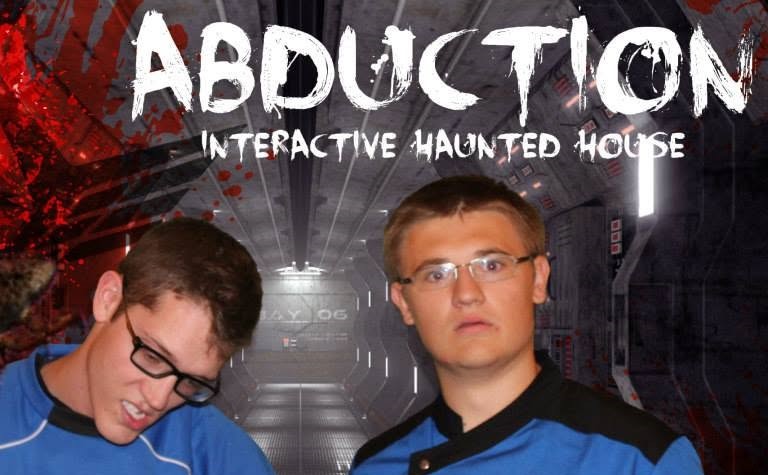
I used to be a volunteer for a non-profit that simulated star-trek missions. Being a volunteer was easy. A director told you what costume to put on, which kind of phaser to hold, and what you were supposed to say to the crew. I liked the work and I liked the feeling of contributing.

When I turned sixteen, there was an opportunity to climb from volunteer to Flight Director. For the first time in my life, I’d be paid for my work. Instead of taking orders, I’d be giving them. Instead of being part of the show, I’d be running it. From my young teen perspective, becoming a flight director represented the peak of my career.

I shadowed a dozen flight directors in preparation. I took in their methods and storytelling techniques. Each approached flight directing with their own philosophy, their own priorities, and their own wisdom.

But study only takes you so far. To really know how to direct a flight requires doing it yourself. Before officially being hired, I had to run a test flight with a real crew.

The thought scared the daylights out of me.

I put it off. I studied and shadowed and volunteered week after week. An anxiety grew in my guts. One day, after a full shift of volunteer work, I went home and cried. I couldn’t run away from my opportunity any longer. Either I was going to step up and learn to fly a ship properly, or I wasn’t. My body begged me to give up and run away. The thought of sending a polite resignation to the program director was comfortable and alluring. A quick farewell to my dream and I’d feel good again.

But my mind insisted otherwise. It demanded that before I send my resignation, I write down my reasons why. There was only one. I was afraid. It was sobering. I was ready to give up my dream because I was a little scared.

The next day, I visited the program director and scheduled my test flight.

Fear of trying something new is natural. The best way to overcome it is by facing the challenge head on. From that day forward, I set out a policy for myself. If I was afraid of doing something simply because I hadn’t done it before, I was obligated to do it.

I extend that attitude into my writing, too. I like to write a lot of different stuff, but from time to time, I come across a project that feels beyond me. Maybe the story is in an unfamiliar genre or the concept is too ambitious. But once I feel that fear inside me, I make room in my schedule and work through it.

It’s okay to put thoughts down

There was a time when I used to be an existentialist. I was desperate to find ‘the meaning of life’. I studied heaps of philosophy. My theory was that if I learned enough and wrote enough, eventually there would be an answer.

Turns out if you spend most of your time thinking on existential questions, you’re not gonna be a super happy person. Even when I was trying not to think of philosophy, the questions bubbled back into my brain and I felt obligated to ponder. Maybe if I chipped away long enough, eventually the answer would come to me.

It didn’t. The solution that improved my life turned out to be a hundred times easier.

Put the question down.

It was a simple technique. I’d imagine my obsession as a piece of paper in my hands, then I’d put that piece of paper down on a table. This wasn’t a method to run away from my worries. I wasn’t stuffing the paper in a box or ripping it to pieces, I was putting it aside for later.

What I really learned was a tool for control over my own thoughts. The existentialism faded in a month or two, and the technique turned out to be useful in plenty of other places. After a full day of engineering work, I had the tools to store my thoughts for tomorrow. When relationship troubles hounded my head and sent me into a tizzy, I could table them until they became relevant again.

Sometimes our minds feel wild and irrepressible. They throw thoughts at us and demand we consider them. But the mind can be tamed. Ever since getting control of my thoughts, I’ve been able to focus on my interests without being distracted by depressing existentialities like the meaning of life.

See the good first

Cynicism is a terrible ailment. It takes the beauty of the world and warps it through a funhouse mirror until all you can see are flaws, mistakes, and malicious intentions. I was a cynic for a long time. I called it ‘being analytical’. What I didn’t see was the way ‘being analytical’ was stripping the joy from my day-to-day life.

Funnily enough, I wasn’t trying to cure myself of cynicism.

When I first entered the writing sphere, I realized something about myself. Each time I watched a big-budget movie, or read a well-received book, or saw a local play, I never liked them. There would always be a flaw that ruined the piece. I’d watch a two hour movie of wondrous scenes and exciting plots, but then there’d be ‘that one scene’ where the tension dropped, and suddenly the whole movie was ruined.

This was a problem for me. I was just starting my journey to become a writer, which meant most pieces I read and most pieces I wrote were going to have flaws. If I didn’t want to be a jerk, I needed to find a way to celebrate the good.

So I invented a new policy. Each time I finished seeing a play or watching a movie or reading a book, I’d list every element of the experience that I enjoyed. Did I like a certain scene? Was there an actor that did an exceptional job? Did the plot draw me in?

After I listed all the positives, I’d allow myself to review the negatives as a treat. The funny thing was, when I listed all the negatives, they were never as long as the list of positives. When I weighed the two sides against each other, I’d find that on the whole, I found the experience to be quite good.

It was never my intention to stop being a cynic. If you asked me back then, I would have said being a cynic kept me sharp. But almost by accident, over the course of a few months of weighing the ‘good’ and the ‘bad’ of various shows and books, I was finding I enjoyed every piece of art I experienced.

It was transformational.

I extended my little game beyond art. Suddenly that trip to the local diner was a little brighter than before. Friends who used to be deeply-flawed people were suddenly good and well-intended people.

I even took a tally of my life as a whole. By the end of the tally, I found myself smiling because there were so many reasons to be happy.

Put people first

People used to be a means to an end. When I interacted with them, I was respectful, but hurried. They were the obstacle to my goals. Worrying about their lives seemed like a distraction better suited for their family and close friends.

I learned my lesson on this the hard way. Think Ebeneezer Scrooge in Christmas Carol.

After some hard times, I realized the joy of life was sharing it with others. And the only way to share life with others was to value the people around you.

My exercise here was simple: Whenever I had a task that required dealing with someone, the task was secondary, the person was primary. Let’s say I was at my job visiting IT to get my computer reset. It already took 5 minutes to walk down, so I might as well make some chat with the team at the desk. I’d ask about their life, how they were feeling, opinions on movies, whatever. No matter what, I wanted the person I was chatting with to know that they mattered more than the errand.

The more I took an interest in other’s lives, the more they took an interest in mine. A conversation or two and I’d have a new friend. Even in high stress situations I didn’t have to worry, my priority was the person on the other side of the table. The task would eventually sort itself out.

Over a couple years of practice, my little change in priorities has reshaped my world. People used to be competition and obstacles. Now they were the reason to go out and get the task done. Errands became a delight, conversations reached deeper depths, and the more I talked, the more I found people working through the same challenges and the same issues as myself.

Conclusion

Each time I changed who I was, that change was in reaction to external circumstances. I think that’s natural. It’s hard to voluntarily change yourself if you feel your life is already working. The world naturally comes along every once in a while and punches us all in the face. The important thing is what we do afterwards.

When I got scared of trying something new, I could have retreated. When I was overwhelmed by existentialism, I could have embraced nihilism. When I struggled with people, I could have started avoiding them.

I’m really glad the first of my changes was a willingness to take on challenges. Changing yourself is a big challenge. It requires acknowledging that the way you interact with the world is flawed, and that you need to explicitly adjust your behavior in ways that don’t feel natural.

But the great thing is, when you change your behavior in the right way, you can feel it. In time, and with enough practice, what was unnatural becomes the most natural thing in the world.
My Book Has Been Honored! (And Thoughts on Ambition)

I don’t enjoy competition. Paradoxically, I do enjoy competing. When you’re competing, you push yourself and push yourself and watch as your skills improve. It’s the stuff that comes after the skill building that sucks. A competition pits you against your friends and peers. Instead of celebrating successes, you become adversaries, rooting for one another’s failure. It’s unnecessary conflict, and it’s the reason I don’t submit my writing to local competitions.

Back in February, a friend of mine convinced me to take a moon shot. The Utah Book Awards. It was such a large competition that I wouldn’t recognize the names of the majority of my opponents. And what were the chances I’d be chosen, anyway?

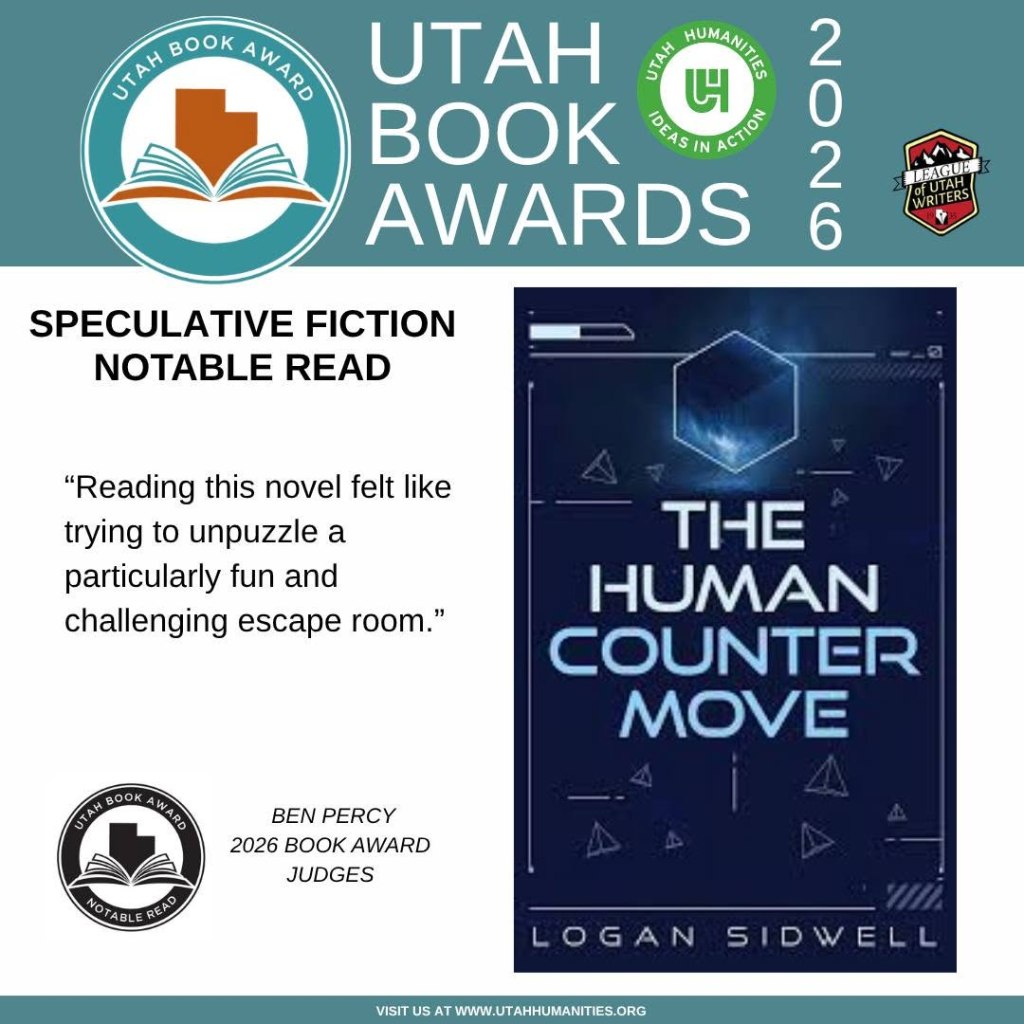
It’s my first ever writing honor. The Human Countermove has been selected as one of Utah’s Five Notable Reads in Speculative Fiction for 2026 and is in competition to win the grand prize. I was wrong about not knowing my competitors, too. My work is up against some of the biggest names in Utah. Brandon Sanderson, Bryan Young, CK Turner, and Robyn Dabney.

A Healthy Ambition

When I heard the news, I got so excited I forgot to reply to the email. It’s been torture keeping this secret to myself. But ever since the announcement was made, I’ve been thinking a lot about the future.

I used to struggle with ambition. I was a high-performing student and a high-performing employee. If there was a grade to earn or a task to be done, I insisted on being the one to do it. But after years of striving, I realized something. My work didn’t satisfy. When I look back, the cause is clear. I wasn’t just ambitious, I was insatiable. I wanted an indefinable ‘more’ for more’s sake, and nothing less than more would do. Some might call it FOMO. At one point, a boss of mine was projecting my future earnings. He told me my salary would cap at more than double the rate I was being paid. When he asked if it was enough, I couldn’t answer him. How could I? A salary cap was anathema to my ‘more, more, more’ philosophy.

That period of my life has thankfully passed. These days, I find myself content. There’s plenty of happiness in the little moments. When I’m eating a bowl of oatmeal in a sunbeam, I’m at peace. When I’m on a walk around the park, I’m happy. ‘More’ doesn’t come into it. The present satisfies me just fine.

That said, a part of me loves the journey of self-growth. You could call it ambition if you wanted. Sometimes I think it’s just our in-built desire to make use of the precious time we’ve been given. If I’m of sound mind and strong body, then what’s there to do but work hard and contribute to the common good?

So I’m ambitious again. Not for myself, not for ‘more’, but to keep busy and contribute to the world. I still find those moments of contentment, but I also find joy in the pride of a job well done and a day’s work writing to the best of my ability.

Climbing The Writing Ladder

When you release a book, it’s hard to tell if it’s any good. It took me four months to gain any confidence in mine. The biggest signal of the book’s quality was that half of my friends and most of my extended family had read it from cover-to-cover. When they came to talk to me about it, they were excited, engaged, and eager to discuss. One of my best friends has now read The Human Countermove three times. I’m told that’s a rarity.

Since publishing, I’ve written a couple more unreleased books and submitted a few short stories for local anthologies. But every once in a while, I write a story that crackles. It feels fresh in a way totally unlike my past writing, and I start to wonder. Should I be saving those ‘crackling’ stories for a more competitive contest? This award has confirmed my suspicions.

I’ve always imagined the skill of writing as a pyramid. The better you get, the higher you climb on the pyramids tiers and the better your peers become. I organize the pyramid in the same manner as sports teams and performing clubs. City -> County -> State -> Region -> National -> International.

I use this system not to compare myself to others, but because I want to improve as a writer. The best way to grow is to surround yourself with people at, or slightly above your own skill level. What better way is there to learn than to lose against a more practiced peer?

Room to Grow

My old approach to short story submissions was scattered. I’d submit to a few local contests a year based on word of mouth. I’m now pivoting to a higher competition level. My targets are the contests with hundreds of submitters and long histories. I’m pushing my writing to its limit. Art is always subjective, but technique can be sharpened to a point.

I’m experimenting, too. Every story I write is pulled from a different era of the novel writing movement. Often I don’t even know if the story will make sense until it’s on the page.

For me, ambition in writing isn’t about accolades, it’s about testing new ideas on the page and offering those experiments to the contest judges for honest feedback. I don’t have a goal in mind, I’m sharpening my craft because I enjoy the process of sharpening.

The Present

Whenever a friend reads about my award, they send me a text along the lines of, “YOU’RE UP AGAINST BRANDON SANDERSON??!?”

In a faux-macho voice, I respond, “Dude’s washed. I’m sending him home.”

It’s all in jest. For me, being included on a list with people as talented as Brandon Sanderson, or Bryan Young, an author I know personally and hugely respect, is a bigger achievement than I could have imagined receiving at this stage of my career. I’m treating it like a step forward into something new.

Thank you to all my readers for following my journey so far. There’s a long way to go, and so much more for me to learn. I promise you now that I’m nowhere near done learning, and nowhere near done writing.

In a nation ruled by AI Minds, productivity is everything, even play.

Once a legend in the world of strategy games, Zouk Solinsen is just another burnout in a society obsessed with efficiency. But when the Minds announce a high-stakes tournament, with a seat on the ruling council as the prize, Zouk is drawn back into the fray, determined to reshape the future.

With help from the enigmatic Torrez Institute, Zouk racks up early victories against the Minds. But when Maya Torrez reveals the cost of her support, a violent coup against the Minds, he rejects it and strikes out alone.

Now, with no allies, dwindling resources, and a nation on the brink, Zouk faces the biggest game of his life, and a final, impossible choice: reform the system from within, or burn it all down.

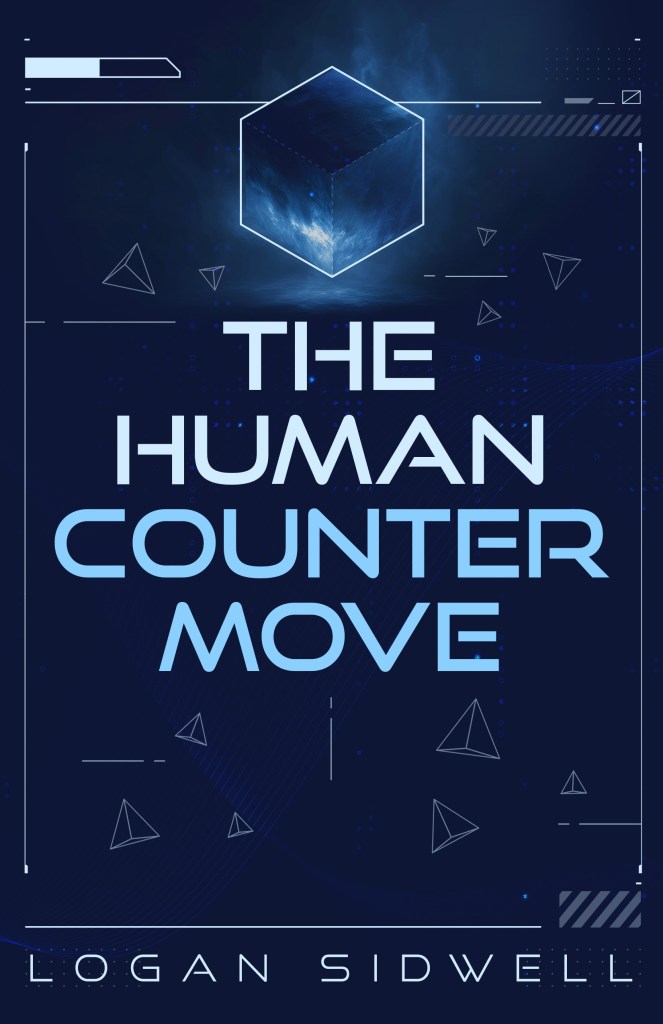
The Human Countermove

Oh, I’m A Creative

Seven years writing, and I’ve only just realized that I’m in the arts.

The Professional

I began my writing career in a very peculiar place. I wrote star-trek style simulations for students. The stories were fit to purpose. We identified a target curriculum, then produced a story that drew in those elements to challenge a student’s understanding of the material. “Oh no, one of the six volcanoes in this area is going to explode! Collect evidence and determine which volcano is active so we can evacuate the local area.”

It wasn’t art, it was instructive. The creative elements were a delivery system for the educational applications. Sure, a graphics team created 3D videos and voice actors performed the dialog, but all that stuff felt more like a factory than an art studio. In a day, I’d spend an hour writing stories, and another seven discussing logistics, scheduling actors, receiving story feedback, providing graphical feedback, and reviewing classroom use. The team’s biggest concern wasn’t quality, but profitability.

The Playwright

The first thing I did when I left my job was write a stage play. Whenever I talked about the project, I called it ‘a piece of candy’. It was a silly story about a group of young adults who stole a priceless painting with no plan on how to sell it. It was a farce, it couldn’t possibly be art! That was how I justified it to myself. After the staged reading, I left the script to rot. To me, it wasn’t art, it was a fun way to entertain people.

The Genre Writer

A year ago I published my first book, The Human Countermove. You’d think physically selling the product of my own creative labor would be enough for me to recognize myself as an artist. It wasn’t. 

First, my novel was a science fiction, a genre piece, not art. It was inspired by my love of chess, how could something with a gaming origin be artistic? If the story resonated with audiences, it just meant I was doing my job. It  was the mechanical process of pulling the levers of human emotion. 

Breaking A Mental Block

It could be that I associated ‘art’ with awards, and I associated awards with the elites, and when I imagined my writing, I didn’t see myself as writing for elites. I even attended an event called ‘arts in the park’ and didn’t put it together.

Regardless, it was something benign that finally shattered the glass.

I filed my taxes.

In past years, I’ve always been able to list my job as ‘Software Engineer’. It was a useful box to put myself in. I was a coder with a fiction writing hobby.

This year that wasn’t an option. At the top of my 1040, I was forced to mark the option labelled ‘self-employed’. One line down, those damn taxmen forced me to identify myself as what I am. A novelist. I was a novelist.

A couple weeks later I was talking to one of my engineering friends. He asked me about my latest novel, the fool. As I described it, I made two realizations. One, it was super weird. And two, the message was core to the material. Market appeal hadn’t even occurred to me. I was writing the story because I wanted to tell it, because I wanted to see it in the world. I couldn’t escape the label anymore. I was making art.

Looking back, I had been making art from the start. My novel wasn’t just a sci-fi dystopia, it was a discussion about our relationship with technology and the modern world’s instinct to strip fulfillment from our lives. My ‘piece of candy’ stageplay explored the way a single painting could mean seven things to seven people. Even my old starship ed-tech stuff explored themes of overconsumption, greed, and good and evil.

Regardless of how I felt about the quality of my work, everything I had done was creative and contributed to society’s conversation of life and philosophy.

Capitalism Ruins Everything

As I look back on my avoidance of the ’artistic’ label, there’s one particular mental block that was harder to overcome than the rest. Every time I finished writing a story, I had to sell it.

If you ever ask an author how to sell a book, they’ll always tell you the same thing, “Push your writer brain out of the room and bring in the business brain”. In order to survive, I had to sell my work, and in order to sell my work, I had to reduce it to its most basic components. Content Type: Book, Genre: Dystopian Sci-fi, Audience: Fans of Chess, etc. etc.

When I write, I write from the heart. The day my writer brain finishes his writing, the business brain cuts the mental umbilical cord and sees the work through the eyes of a capitalist. Stories become content. Content becomes products. I wasn’t a writer, I was a content creator. I wasn’t a novelist, I just wrote books.

It’s only in the last few months that I’ve realized what I’ve been doing the whole time. The reason I pick the stories I pick is not because of their market appeal, it’s because I resonate with the message. I dabble and practice and experiment, not to produce a more appealing product, but to tell better stories.

Conclusion

If you’re in the creative field, you’re an artist. It’s easy to gatekeep. The capitalist world is eager to tell you that you aren’t artistic until you can make money from your work. The inherent danger in that attitude is that you reduce your work to its success financially, and what makes a bestseller is different from what makes a resonant story.

The topic of profitability is a regular guest at my writer’s group. I suspect the same is true of every writer’s group in the country. By limiting ourselves to a particular view of success, by refusing to allow ourselves the label of ‘artist’, we cut off what may be our most personal and most meaningful works.

Every writer I’ve ever met has been, to some degree, trying to express themselves through their storytelling. They are all artists. No one goes into it for the money. So how do we keep getting tricked into dropping the label and defining ourselves by the singularly reductive metric of ‘total sales’?

New Writers Are Learning With AI Training Wheels

I’ve been a part of my local writing chapter for a little over 5 years. It wasn’t long after I started that ChatGPT was released into the world. Being the tech person I am, I fiddled with it. I learned how to use it for work, then shared what I learned with my fellow writers. At the time, it was a novelty. There was a sense of looming doom whenever we discussed it, but that looming doom was in the distant future.

Boy the distant future came up quick.

An AI Priest

I don’t use AI in my writing. I don’t use it in my editing. Unfortunately, as a young person that wants to be able to maintain a career ten years from now, I am forced to regularly experiment with the new AI models and learn how they work. The knowledge that experimentation has given me made me the tech expert in every writer’s room. That expertise turned me into something I didn’t expect, a priest of sorts.

Last month, during one of my chapter’s write-ins, someone came up to me to discuss their own experiments with AI. They spoke in a hushed voice, slid the work to me like it was contraband, then asked my opinion on what it all meant. I felt like I was a priest in a confessional, giving absolution to the sinner. “No, you don’t have to be ashamed of a test.”, “Yes, your AI story is disqualified from the contest”, “I wouldn’t trust an AI on opinions of taste, but that’s just me.”

In the writing world, there’s a deep shame associated with using AI. The community, without saying it out loud, has quietly endorsed a system of exile for the AI writer. I understand the instinct. I learned how to write without AI, all the best writers in my chapter learned without AI. How could anyone using AI become a ‘real’ writer?

After five or six confessionals, I realized something. It wasn’t the experienced writers that were dabbling with AI. It was the rookies.

The Next Generation of Writers

Do you remember when you first started writing?

I remember it was really hard. My mind was brimming with ideas, but when my fingers reached the keyboard, I had to push my wondrous scenes through the meat grinder of the page. Everything got all messed up, it was never as beautiful as I envisioned, and sometimes the product was incomprehensible. I ended up shoving an entire novel through that meatgrinder, now I hide that novel away. Things only started working when I brought in a professional to guide me.

In games, they call it a difficulty curve. When the game is really hard, they call it a difficulty cliff. Learning to write well is a steep, steep mountain. Most of us that scaled that mountain have forgotten what it was like.

My step-father picked up writing last year. He had never written a story before that. He’s a very tech-savvy guy, so rather than climb the cliffs of storytelling, he wrote his stories using a tool. Novelmaker. In one week, the AI wrote six books.

You might recoil reading that number. Six books in one week. I would have too, except that I knew he’d never try to publish them. It wasn’t about the money, it wasn’t about the fame, it was an expression of his creativity. He wanted to see his ideas play out on the page.

He took a break after the sixth book. Since then he’s spoken to me about writing more, and about writing better. He’s taken an interest in the craft and he’s started to see the weaknesses of AI writing. In time, he might even write a few stories of his own. I think it’s wonderful.

Last year, I presented on AI again to my writing group. I warned them that five or six years from now, new writers would learn to write not by trying and failing, but by using AI to generate their first stories. My estimate was wrong. It wasn’t five or six years, it was twelve months.

Half the new writers in my writing group have dabbled with AI. Some have asked for ChatGPT’s opinion on their work. Some have generated entire stories using it. I’m not talking about seventeen year olds that were raised on AI, either. These are adults entering the writing space using AI from the get-go.

The difficulty cliff in writing is too steep for newcomers. AI has softened the experience. On the one hand, it means there’s a glut of terrible writing. On the other hand, it means more writers are discovering their voice than ever before.

Gatekeeping Will Kill Communities

Every person is entitled to their opinion, especially on a topic as controversial as AI. It’s a values-based decision, and each of us has their own set of values. Some people think using AI for anything at all means you’ve violated some unspoken code of conduct. Some people think generating a book that’s a paraphrased copy of a different book is good business. The truth has to lie somewhere in between.

It’s okay for each person to draw personal boundaries. Personally, I’d never use AI to generate or edit my works. I think we get into trouble when we start drawing lines for others. New writers don’t ask for feedback on a one-page story that’s horribly written anymore. They show up with a ten-page story that’s bloated with filler words and ChatGPT cliches. It won’t be long before all prospective writers begin their journey using AI. As a community, we can’t just show those people the door.

That doesn’t mean we start allowing AI-generated stories to be submitted to our anthologies. It doesn’t mean we don’t point out that a story was AI-assisted. It just means we must continue to be welcoming to newcomers, no matter how they got into the art. When it becomes hard to empathize, I imagine a teen posting a forum: All the stories I’ve ever written were created with AI, I don’t feel like I’m a real writer. How do I get better?

Compassion and patience are the answers. From what I’ve seen as an accidental Writer-Priest, AI writing is like training wheels. Once a rookie learns to pedal, they’ll be eager to go without.

How A Writer Reads Their Client’s Mind

I used to write for an ed-tech company. We produced these magic schoolbus-like simulations where students in a computer lab used their curriculum to solve various crises and dilemmas. From time to time, organizations would commission us to create custom experiences. I got to write for 4H, Hill Air Force Base, US Synthetic, and a couple others.

The one I remember best was for Colorado State’s Veterinary College. We called the mission ‘Do No Harm’. It started with a sick sheep. The crew would shrink down, fly in, and over the course of a thirty minute adventure, cure the sheep of its ills.

But it was one particular meeting that still sticks with me. My team had finished the product and we were demoing it to the head of the program. We walked him through the whole experience. When it was over, he had an odd look in his eye. He scratched his chin, leaned into the camera, then asked how it was I had managed to read his mind. We laughed, but he was serious. He had no notes on the simulation, no items to change, it was ready to ship.

I didn’t tell him, but I had read his mind. It happened on our very first call. He didn’t spell it out or anything, but the program director told me everything I needed to know.

The Strategy Interview

When I jumped into that first ‘get to know you’ call, my primary concern wasn’t the story I’d tell, it was understanding my client’s goals and strategy. He regaled me with his vision of a thrilling adventure fighting off parasites with spaceship weapons. When he was finished, I asked him a couple big questions.

Where will this experience take place?
Who is the audience?
What are your goals?

Every question was open-ended by design. The more the client gave, the better the result.

His early responses told me the tone of the project. It was meant for middle-grade students, so I tuned the dialog to be a little more mature. It would be flown in a single computer lab as a part of a tour, so I book-ended the experience with tour shoutouts. His goal was for students to be excited about the work of veterinary medicine, so I made sure the experience was loving towards animals and ended on an upbeat note.

The most important element of the strategy interview was that I didn’t try to project my own idea onto the project until I understood the client’s goals. His answer shaped the foundation of the project. If I came in with my own pitch, prepackaged and ready-to-go, the idea wouldn’t fit. The age-range would be wrong or the tone would be too dark or the story wouldn’t emphasize the medical aspects.

The big-picture answers set the frame of the project.

The Personal Interview

Once I had an understanding of the shape and texture of the story, I shifted to more personal questions.

What made my client love veterinary medicine?
What moments were they most excited to see in the program?
Which animal did they want to treat?
What kind of challenges did my client encounter in the day-to-day of veterinary medicine?

These were the answers that gave the story authenticity. My client’s focus was farmwork, so putting an elephant or a giraffe onto the operating table would have been a big miss. 

As they told me more about their own experiences and their love of their work, I pivoted my plans. My client didn’t know it, but they wanted to see their lived experiences reflected back at them in the art. When they told me about curing a horse’s case of colic, I made sure to include it. When their eyes lit up telling me about the four compartments of a sheep’s stomach, you better believe those four compartments had to be scanned during the mission.

By the time we were done, the story wasn’t just a story, it was an interpretation of the client’s passion for his work. The personal interview gave the simulation those moments of delight and specificity that connected the client to the product.

Writing as a Product

We writers like to look at our works as art, and art alone. When we imagine ten million people reading our masterpiece, it’s all about the message being conveyed, or the emotions being evoked, or the characters that sweep them away.

This is the biggest difference between clients and writers. A client asks for a story in service of a purpose. The story, with all its themes, characters, twists-and-turns, is at the end of the day, a product. If you talk to the big executives at Amazon and Netflix, they don’t even call tv shows stories, they call them ‘content’. And if content fails to further a client’s goals, then it’s a bad product.

If your goal is to read your client’s mind and pluck an image from their brain, start by seeing the story from their point of view. Look at it like a product. What is that product doing? How will it serve the client’s goals? Starting with the right restrictions and expectations will save weeks down the road.

Once the restrictions are set, you can bring in the artist to turn the story into delight and wonder.

Learning From The Business Side

I used to see my books exclusively through the lens of the artist. Then I self-published. A week in and I found myself neck-deep in entrepreneurism.

My first misstep was the title. Everyone said the title wasn’t good enough. I didn’t understand why. I was the artist, and it was an interesting title, Mind’s Bane.

It was only when I looked at the title through the lens of a businessman that I realized my mistake. Mind’s Bane was a very interesting title for a dark fantasy book. Unfortunately, I was trying to sell a dystopian sci-fi. It was a title that failed to connect my book to its audience, a fundamentally commercial problem.

So I kicked the artist out of the room and found a more appropriate name. One that captured the concepts of sci-fi, dystopia, strategy, and ai. The Human Countermove.

Every conference I go to has a bunch of presentations on ‘how to make a good protagonist’ or ‘how to keep up the pacing of the story’. I used to think limiting your art that way was a mistake. I wanted the story to tell itself.

As I write my third and fourth books, I’ve come to understand the wisdom of those presentations. For an audience to enjoy a story, they have to like the protagonist. For them to stay engaged, the story needs good pacing. It’s good business, and it makes better art.

When we as writers and artists speak to our clients, it’s easy to see ourselves as the expert in the room. But everyone has their own set of skills to bring to the table. The client understands their goals and strategy. We understand how to produce the art.

There’s no telepathy in commissions. It’s all about understanding. When my client saw the simulation we had created, he loved it because it was the product he had been looking for. From the business side, it served his goals. From the art side, it resonated with his life experiences. All I needed was a couple conversations.

December Update: 100 Days Since My Debut

December already! It’s hard to believe my debut novel has already been out for 100 days. I set a one year sales goal for myself at the start of this process. A number drawn from speaking to other indie writers, and one I could be proud of if I hit it. 

We hit the goal on day 68.

Some of that was farmer’s markets, some of that was family, but most of it was reviewers sharing their thoughts and inviting others to experience the story. For everyone who bought my book and helped me reach my goal, thank you. There is no way I could have reached this goal without you.

Reviews of The Human Countermove

Now that the book has been out for a bit, I’ve been able to get real feedback from reviewers, family, and friends. 

At my extended family holiday party, I found out that about a quarter of the attendees had read my novel from front to back. As an artist, it’s difficult to glean meaning from loved ones’ feedback. We can’t always take opinions at their face value, especially when the opinion-giver doesn’t want to offend. This meant I had to resort to interpreting signals. This was my system: I knew at least a half-dozen relatives that had bought my book. If none of them mentioned it during the holidays, or only mentioned it in passing, it would have been a strong sign they couldn’t get through it. If they finished the book and mentioned a plotline, that meant the book was readable.

But neither of those possibilities were the case. My extended family had not only read my book, they had shared it around to other relatives and friends. So far, my favorite compliment was when I started telling one of my cousin’s about my next book and they said “Woah! Spoilers!”.

Here’s another signal I’ve been reading wayyyy too much into: At my local writer’s events, I’ve had four author friends approach me about my book. Each one of them has been eager to tell me how they would have made X plotline pop or amped up the pacing during section Y. I love hearing the different perspectives and approaches to storytelling. But in terms of signal interpretation, the number one message I took away was this: They read the whole story, stayed engaged the whole time, and only had minor notes on how to make it better.

I’ve now passed 12 reviews on Amazon. It’s hard to overstate how important getting to that double-digit number really is. Enough reviews helps new readers trust that the book really is a ‘book’ in a market filled with AI slop. So thank you again to everyone who has written a review on any platform.

Audiobook Underway

If you know me, you know I’ve worked as a part-time voice actor for the last six years. Thanks to a few connections, I was able to secure a recording booth for the audiobook version of The Human Countermove without going bankrupt. We’re 15 hours into the recording process and about three-quarters of the way through the initial recording. I’m anticipating bringing in an actor and actress to fill in a few of the voices that I think could be improved. The recording process should be complete by the end of January. After that, we’ll see how long editing takes.

A nice benefit of doing the audiobook is a thorough word-by-word proof read of the novel. There weren’t many errors, but my favorite so far is a moment when I used the word “basket” instead of “bracket”.

Project APHELION Draft 2 Complete!

Project APHELION has been my biggest focus this year. The manuscript is now sitting at 102,000 words. Second drafts are way harder than the first. It feels like 100 hours of constant decision-making. Things that were left for later suddenly have to be dealt with, hints in the first draft have to be cemented into plotlines, characters arcs have to lose much of their ambiguity.

But it’s done! The second draft has been distributed to a few alpha readers. I’m feeling really good about this story. It’s my first foray into fantasy and I gave it everything I had. A third draft is underway to pretty up the prose and fix continuity errors. It should be querying to agents by January!

New Projects

If you’ve been tracking my current projects page, you’ll see I have two new projects. PRINTHEAD and RELENTLESS. 

PRINTHEAD is my megaproject, and it’s been delayed. The rough outline was getting out of hand and one of the three key POVs had a lot of scenes missing. Plus I don’t want to start on my megaproject until I have a few more regular books out for consideration with agents. I will return to this project. I love it too much not to.

RELENTLESS is my silly project. It’s a spin on the revenge power fantasy genre with a much lighter tone (I wrote a bit about that genre here). My last two projects have been so serious, I decided that this time around, I’m having fun. Whenever an idea that makes me laugh, it goes on the page. I’m already 10% of the way through the first draft and enjoying every minute of it. I wouldn’t be surprised if it were in alpha reader’s hands by the start of March.

Closing Remarks

I’ve been getting closer and closer to my goal writing pace. Having a book out in the wild helps a lot. Having one project to edit and one to write is nice too. One of the hardest parts of being a writer is having a hundred ideas in your head but only being able to writing one or two a year. I’m hoping that problem will be resolved soon.

My website’s been getting a lot more traffic lately. If you’re new, thank you for dropping by! If you’re interested in my writing, I have a few short stories from last year available here and I post essays on various subjects here weekly.

Thank you all for your support. Looking forward to more stories next year!

Elevating Action Scenes with Second Order Thought

I’ve always had a problem with action scenes. Books, movies, plays, all of them. If an action scene goes longer than a minute, it starts to feel vapid. Thing after thing after thing happens, but none of it means anything. My mind jumps to the end. Will the hero live? Will they accomplish their goals? Cool, let’s get this scene over with and continue with the real plot.

The thing is, these thoughts only occur to me in certain action scenes. Why can I watch a fifteen minute shootout in The Hateful Eight, but four minutes of John Wick puts me to sleep?

When I wrote my own book, I ran into the same problem. Action scenes that felt like a bunch of set pieces strung together. A meaningless ebb and flow. Then I found the solution.

Depth of thought.

Ingredients of an Action Scene

Truth is, any scene can be an action scene. A climber scaling a mountain, two street cleaners rushing to get the most trash, a firefighter in a burning house. So long as the scene has a few key ingredients: A character with a goal, an adversary (person or otherwise), and the rhythm of the action/reaction cycle.

A good action scene is kind of like a turn-based game. The hero chases, the adversary flees. The adversary locks a door, the hero kicks it down. Even when the adversary isn’t a person, we can still hit the same rhythm. In the example of a climber scaling a mountain, the mountain is the adversary. It drops an icicle towards the climber, the climber dodges. The climber clears some grime from a handhold, the mountain answers with rain.

This is all an action scene needs. But if this is all you’re doing, you end up with a feeling of meaningless conflict, an empty to-and-fro that’s only resolved when our hero succeeds or fails.

The Hierarchy of Character Action

What’s missing from action scenes is deep thought. Mind you, it’s hard for a protagonist to spend much time thinking in the middle of the action, but landing a great, cerebral action scene requires it. 

It’s a hierarchy of priorities. A pyramid.

Laying the foundation of action scenes is reaction. Every time the adversary does something, we need a reaction from the hero. The state of the scene is changing, and that needs to change how our protagonist approaches their goals. If the protagonist doesn’t react, it either means they aren’t paying attention, or what the antagonist did doesn’t matter, and if it didn’t matter, why write it?

Without reaction, all our protagonist is doing is making plans and executing them. A story without conflict is no story at all.

Of course, if all a character does is react, then the scene is being defined for them. They’re not chasing their goals, they’re not being proactive, and if the hero somehow wins, it won’t feel earned. It’ll feel like the antagonist failed rather than the hero succeeding. When a reader enters a scene, they want to imagine what they’d do in the same situation. They want to picture themselves facing obstacles and overcoming them. The one thing they wouldn’t do is nothing.

Second Order Thinking

Second Order Thinking is the process of imagining an action, then considering its consequences. It’s making a plan that sees more than one step into the future, and it’s the secret to turning a messy action scene into something more cerebral.

Let’s imagine a firefighter crashed into a burning house. He sees a few people injured around the room and fire creeping toward a propane tank. The first order move is to pick someone up and get out of there. Save a life, maybe two. But what happens thirty seconds later? The tank detonates.

So our firefighter pauses to think, maybe just a second. If he fights the fire, all it’ll do is buy time, and if he’s alone, time is a scarce resource. So the two obvious moves, fight the fire or save the people, will both end up failing. Instead he goes for the second order move, the one that isn’t so obvious at first glance. Disconnect the propane tank and get it out of the house.

Second order thought is about seeing what’s coming and adjusting your plans to take them into account.

In a gunfight, the hero is running from cover to cover while the hard-to-hit enemy moves to get an angle. Our protagonist can keep running, evading their way to an escape, or they can recognize the enemy’s pattern and exploit their predictability. Toss a rock to another bit of cover and wait for the enemy to chase a ghost.

It’s a great tool for breaking up the action/reaction cycle. A chance to pivot the scene in a new direction. A climber looks up and spots a potential rockfall, so they change their plans. Instead of scaling a flat face, they hike the switchbacks. Even the antagonist can use it, one clever move that changes the sense of power in the scene, putting our hero on the back foot.

Third Order Thinking

If second order thinking represents a pivot in the action, third order thinking represents the big finish. This is the process of taking actions whose benefits aren’t immediately clear, but serve a larger purpose in helping one side or the other ‘win’ the scene. A campaign of actions.

Let’s say the villain is in a gigantic mech while our hero is running for their life through a cavern. Someone’s in the hero’s ear telling them to get the nearest exit, that there’s no way to win. Instead, the hero keeps on taking huge risks, hiding behind a stone column until the villain blasts it, running up an exposed set of stairs while an iron fist punches it into dust. Right when it looks like the hero is doomed, the cavern ceiling collapses on the mech’s head.

Our hero had a special plan. One that wasn’t obvious in the moment, or even after four or five close calls.

The fun part about third order thinking is that you don’t have to spell it out for the audience. They see the hero taking unnecessary risks and unexplainable actions, and they instinctively sense there’s a scheme behind it all.

Third order thinking doesn’t just apply to action scenes, it can manifest in a million different ways. It’s what makes real-life professionals so good at their job, they aren’t just taking an action in the moment, they’re taking action as a part of a long-term strategy to achieve a goal.

Be aware, it can be hard for an audience to track third order thinking. It’s a tool best used to cap a scene or describe the long-term motivations of a character.

Fourth Order Thinking and Beyond

Second and Third order thinking give the story a thoughtful quality. Characters aren’t just puppets reacting in the moment, they consider their circumstances and shape the world around them. An audience can understand this.

Fourth-order thinking is the kind of thought an audience can’t understand. It’s the sort of twist a reader won’t see coming because it’s too complicated. Imagine at the end of a book, the antagonist reveals all the battles the hero fought actually served to hurt the hero’s cause more than help. This is the moment in Ocean’s Eleven when it looks like the heroes are caught, but it turns out it was all a part of the plan.

Fourth-order plans must be handled with care. Done right, it can be the keystone of a book. Done wrong, and you end up with the poison scene from Princess Bride. You know the one: I’d switch the cups so you switched the cups so I switched the cups so you switched the cups.

If you’re doing a fourth-order scheme, review the individual components. Make sure every individual action holds up to scrutiny, or point out incongruities so our reader gets the sense there’s something bigger at play.

The hierarchy of actions matters. Too many second order thoughts from a beat-cop and he starts to feel like Sherlock Holmes. Too many third order thoughts and your action scene is hijacked by a weird battle of the minds.

Of course, you should understand your genre too. My debut novel, The Human Countermove, is a book all about strategy and beating a cognitively superior opponent. In a story like that it was appropriate, even necessary, for my protagonist to regularly invent new third order strategies.

Depth of Emotion and Conclusion

Everything in this post is about how to give each action in the scene more meaning. There’s a second approach to fixing this problem. Deep understanding of character. If every action a character takes is soaked in their background and motivations, the audience will give you a lot more leeway. An example of this is Spiderman. The Green Goblin drops a bus full of people and Mary Jane. Spiderman has to decide which to save. In an example like this, the depth comes from the emotion, rather than the logic of the scene.

If you ever feel like your action scene is just a bunch of stuff happening in sequence, take another look at your depth of thought and character. It could be the case your scenes just need a little more scheming and a little less doing.

Is My Cerebral Science Fiction Secretly a Romance?

I wrote a book about a strategy game grandmaster challenging the AI Minds of his society for the fate of the future. It’s got politics, subterfuge, high-minded strategy, and danger. But I think at the heart of it all is a story about connection. A romance. Which is odd, because I don’t write romance.

Spoilers ahead.

A friend of mine pointed this out to me while they were reading my book. In the first chapter, you’re introduced to my main character, Zouk Solinsen, an isolated guy in the back half of his career navigating a cold and disconnected world. We’re then introduced to a young woman named Jamie. A rival in the strategy gaming space, and his opponent in the first round. They’re about the same age, opposite genders, and their conversation has a light, almost flirty back-and-forth before the game.

But it’s a red herring.

The target of this book’s romance isn’t Jamie. One of the romances isn’t even human.

Every good story has a certain element of romance. Whether it’s a pair of characters who hate each other and eventually learn to understand each other, or a collection of disjointed and quirky individuals finding the joy of becoming a cohesive group, what makes a romance is the journey from ambivalence and hatred to appreciation and love. Oftentimes, you don’t even need the kissy-kissy.

There are two ‘romances’ in The Human Countermove. The first is conventional. A small, personal story about Zouk and his wife Kira, whose relationship is on the rocks. Zouk is an outgoing person with a strong skill for communication, while Kira prefers her privacy. For her, a nice day is one spent in her office running data analytics and drinking hot cocoa.

In the time since they got married, life got complicated. Zouk had his career ups and downs, while Kira built quiet, steady work in the government. Zouk wants Kira to change, he wants her to love crowds and events and to be with him for all of it. She tries her best, but it’s not who she is.

But when he needs her, she’s there. Not usually with a well-placed word, but with her most sincere self. When Zouk is trying to make sense of a broken political system, she’s willing to put in weeks of work to help him. And she seems to relish every minute of it.

It’s all this that reminds Zouk why he fell in love with her. He remembers her passion, her care, the way she’s fought to stay in love with him. It’s a Him problem. He’s been asking her to change, when he’s the one that needs to start reaching out. He meets her where she is, accepts her for who she is, and is able to start loving again. They’re able to be that supportive, loving couple they had been chasing from the start.

But there’s a second romance in this story. One at a much larger scale.

A romance between Zouk Solinsen and The Minds.

Zouk is playing a series of strategy games in order to join The Minds’ council. Impossible games that take everything he has in order to win. But winning doesn’t suddenly put Zouk into power, it puts him in a partnership. A shared power structure with The Minds. And anyone forming a partnership knows the only way to make things in a partnership work is to ‘love’ the other party.

There’s an on-again, off-again relationship between Zouk and The Minds throughout the book. Near the beginning, The Mind of Communications and Influence is casual with Zouk. They’re fast friends and get along better than you’d think. The possibility of Zouk winning all the games becomes real. Folks listen when he speaks. The general consensus seems to be that he will be the fourth member of the council.

Then the hard times come. Zouk breaks ties to an organization when he discovers their plot to overthrow the government. And the break-up isn’t easy. A controversial game, a mutiny in the military, riots, and a frame job implicate Zouk in everything.

There’s nothing less romantic than a deposition. One of his wins is thrown out and The Mind of Strategy and Warfare ends his hopes of joining the council on a painful defeat. Whatever partnership The Minds were considering is dead.

If this were a traditional sci-fi dystopian story, this is the part where Zouk leads a resistance and burns it all down. But I wrote a romance. And in a romance, the protagonist doesn’t give up.

Zouk and Kira’s rekindled relationship is a lesson in accepting people as they are. A lesson that leads to a realization. The world talks to The Minds in the same way they talk to politicians. High-minded intellectualism, hopes and ideals, persuasion. But that’s not how The Minds think, that’s not who they are. They’re more like Kira. Evaluating good and bad ideas through raw numbers.

Society has been pushed to their limit. Every aspect is measured and maximized. But by seeing the world through The Minds’ eyes, Zouk and Kira uncover the fatal flaw, the mistake in the calculations, the first fix to a better world. Zouk knows his chance to join the council is dead. But he makes his case anyway. He makes it because he wants a better world, because he thinks The Minds help get them there.

And that act of good will and understanding changes everything.

This is why I say this book is a romance. It’s not traditional, but it hits all the beats. The meet-cute, the impossible relationship, the break-up, and at last the heartfelt reunion. A story whose roots are built in love and empathy rather than rage and destruction. I had no idea I was doing it when I wrote it, and only realized what I had made when it was out in the wild.

Maybe this is just what happens to stories that set out with a theme of connection and understanding. You go in planning on making a sci-fi thriller and end with an AI and a human holding hands in the rain.

The Human Countermove is available for purchase on Amazon!

I Built my Book Around a Board Game

Board games are usually designed to be played by a group of people. The mechanics are built so that each person has high agency over their own moves and can pursue their own strategy to win. When someone takes ten minutes to make a move, it’s because the player has so many considerations, there’s a real need to think. 

If a person can barely track their own moves in a game, how could a reader track an entire game inside a book?

Despite being well aware of the challenges, I put a board game in my first book. In fact, I built the story around it.

LINE. Leadership in Near Emulation. I designed it from scratch. I was able to design a game that was compelling to read about and one that was fun to watch. From the moment I started, I gave myself one important instruction: Keep it simple.

If I ask a reader to track a hand of cards, or all the powerups affecting one of my protagonist’s heroes, I’ll lose them. The only people who understand all the subtleties of a game of Settlers of Catan are the people who played it, and even then, no one knows the entire story. Too many mechanics, too many unknowns, too many surprises. For a reader, an environment like this is hard to track and it doesn’t feel fair to the protagonist.

In LINE, there are only two pieces. Squadrons and walls. The squadrons move from tile to tile and fire on the enemy, while the walls do exactly what walls always do. Simple. At a glance, a casual viewer can glean the entire status of the game. “The enemy army flooded across the map”, or “Every squadron was hunkered down, hiding inside the base and waiting for the ambush.”

Like any good action scene, I avoided over-choreographing the movements on the board. We don’t need to know every intricate detail, we just need to get a feel for the moment, and the challenges facing the protagonist.

On a real board, an attack would translate to a bunch of dice being rolled or a computer running dozens of Random Number rolls. But a reader doesn’t need to know any of that, they just need to know the outcome and what it means for our hero. “The enemy’s walls crumbled under weapons fire. Finally, our battle of attrition was coming to an end.”

As in most board games, some turns completely transform the game, or even hand the victory to one player or the other. But other turns are quiet, an incremental step forward, a plodding move building up to the battle’s climax. When turns like this arise, I use the timeskip. Just like we don’t need to see every piece, we don’t need to see every moment. What I’m really giving the reader isn’t the livestream of the game, it’s a recap with live commentary from the protagonist. All the exciting bits, all the cerebral moments, none of the fluff.

“On Turn 8, a few walls repelled enemy aggression. By turn 24, I had completed ‘The Fallen Star” and set to work preparing an attack.”

But what really defines competition isn’t what happens on the board, it’s who our protagonist is facing. The adversary.

A board game in a book can be exciting on its own. But after a game or two, it gets stale. The audience has seen everything the mechanics have to offer. What really makes a game, or any sport exciting, is the human element.

Every player has their own flavor, their own approach to playing that gives the game a fresh feel. That feeling is informed by the player’s motivations, their intent, and their background. From the way the opponent moves a piece, we can derive how much experience they have with the game. From the way they rock in their chair, we can sense mental distress. It’s these reactions that help us contextualize the game’s importance without having to say it out loud.

Even the protagonist shows these attributes. When they make a mistake, sometimes it’s a ‘clench your fists’ moment, and sometimes it’s a ‘rip your hair out and scold yourself for throwing everything away’ blunder. Since we’re in their head, we know the reason behind their reaction. The whole book has been building to a single game, and now it’s all over because our hero got distracted by a bird for half a second.

But not everything in the story can be a board game. The game may be the most important thing in the protagonist’s life, they still need a reason to play it. The more drama around the game, the better. The harder the opponent, the better.

For my book, I chose the hardest opponents possible. AI Minds. With each game, it’s not just a difficult match, it’s an impossible one. In games like this, the buildup is as exciting as the game. How can Zouk win? What strategy could he possibly use to beat something that plays more games in a week than he does in a lifetime?

The prep matters. It’s like scaling a mountain. If someone casually scales the whole thing on the first try, how difficult was it in the first place? But if we see that person map out their entire approach, do practice runs, and scrape grass from the cracks. We get a much better understanding of the difficulty at hand. If the climber has been practicing jumping from one rock  to the other for months, we’ll be thinking about that challenge the whole way up the wall.

After writing a couple LINE games into my story, I still felt the stakes could be bigger. If these games really are determining the future of Ion, they should be played in a stadium. Even better, they should be played with real people on the field. Every game matters to the protagonist, but a few field games are a great way to turn the dial all the way to MAX.

Zouk’s coach helps him work on strategy, finding the right approach and memorizing hundreds of moves. But more importantly, building the game up in the reader’s head. When Zouk thinks he’s found a blindspot in The Mind of Strategy and Warfare’s Algorithm, he spends the entire game getting his units into that blindspot. The tension builds. We may not know all the little nuances of Zouk’s play, we may be skipping five or six turns ahead at a time, but we know what’s coming. We know everything depends on one moment. Will War notice their blindspot, or will Zouk pull off a historic victory?

The Human Countermove is now available for purchase!

The Chess Players that Inspired my Novel

I didn’t realize it when I was writing it, but my sci-fi novel is a sports book. There’s a bunch of politics and AI to keep things interesting. But narratively, the book is closer to Moneyball than it is to Star Trek. It’s a funny realization, but an important one. The characters in a story should feel authentic, pieces of them should be drawn from real life, from the emotions and nuances of competition.

In the last few years, I’ve been a casual viewer of a lot of Chess content. Game recaps, lectures, tournaments, all the popular stuff. Along the way, I found a few players and personalities that drew my attention and inspired me to write.

Here are a few of the most significant.

Hikaru Nakamura

A story of achievement is great. A person from one particular background rising above their peers and climbing all to the peak of performance is cool, but it usually doesn’t inspire me. I think it’s because it feels inevitable. If we create a competition with 250 players, somebody’s gotta be the best, right?

For me, the story that draws me in isn’t one of instant success, it’s the story of failure, and the strength to rise again.

In 2015, Hikaru Nakamura was the second best player in Chess. In 2019, he had dropped down to 21st. It may seem small, but that gap was enormous and the product of 3 years of decline.

It’s a mental game. Getting so close to the top, it’s easy to coast. A person can lose their motivation, their drive for competing. Life gets complicated, new priorities arise, old priorities sink. You can even forget why you started in the first place. After 3 years of decline, it can feel inevitable, like the natural lifespan of a career coming to an end. Why bother getting back into shape when the game is already over?

But Hikaru Nakamura didn’t give up. He started streaming. He built a better relationship with the game, and eventually, he found a new reason to compete.

Today, Hikaru Nakamura is back at #2, and his chances of winning the Candidates Tournament are higher than they ever were a decade ago.

I think I find a comeback story so inspiring for two reasons. One, they’re rare. Two, they teach us life doesn’t always turn out the same way for everyone. We can turn things around, rewrite our fate, outperform even our own preconceptions.

In my novel:

Zouk Solinsen is a washed-up strategy game grandmaster. He forgot what made him love the game, he got caught up in other things, teaching students and paying the bills, and he lost his self confidence.

But unique times and unique challenges give Zouk a second chance. A chance to love the game again, a chance to sharpen his strengths and become better than ever. There’s nothing better than a comeback story.

Yasser Seirawan and Garry Kasparov

Back when I was studying chess (I’m not very good), I looked up a lot of lectures on Youtube. My favorites are from Yasser Seirawan. The man approaches teaching with a childlike wonder for the game, an excitement to share his knowledge with anyone who wants to learn.

Yasser Seirawan has been an extraordinary player in the chess scene for 30 years. He was the second for Victor Korchnoi in 1981, meaning he was the chief advisor for the challenger for the world champion title, and all of that before Garry Kasparov was even on the scene.

He’s a player that has faced generations of players. He has seen the absolute best that Chess has to offer and shares it with his students. When he describes how the game transformed with the advent of computers, it isn’t theory, he witnessed it. What better mentor could there be?

And then there’s Garry Kasparov.

In my previous post I discussed at length the significance of Kasparov vs Deep Blue in inspiring my story, now I want to briefly discuss another of the man’s aspects. Politics.

In 1984, just after Kasparov had won two consecutive games against the world champion, FIDE abruptly ended the match, citing ‘player health’. They cheated Garry Kasparov out of a world championship title, and he didn’t take it lying down. The thing is, Kasparov defeating Karpov wasn’t just about Chess. It was about the future of the Soviet Union, and the game was being watched by the whole world.

Since then, the man has led protests, been arrested, and even been forced out of Russia. Every day he shows the boldness and courage most of us wish we had.

In my novel:

Yolniv is Zouk’s mentor. In the face of nearly unbeatable opponents, his decades of experience as both a player and teacher help Zouk discover the right strategies and refine them to a point. He never fears sharing his mind, and as the plot heats up, ancient history comes back to bite him.

Danny Rensch

For a post about famous chess players, Danny Rensch might be a surprise. He’s an International Masters player, sure, but he’s primarily known as the Chief Chess Officer at Chess.com.

And there’s a very particular reason he’s on my list.

Danny Rensch dances on a very thin tight-wire. Every day, the man is both the face of his company, and a key decision maker behind the scenes.

To some extent, all the biggest leaders today have to walk this tight-wire. They show confidence at the investor meetings, then go to their offices and make the hard choices. It’s a funny duality, but I find it more pronounced in Danny Rensch.

When Chess.com hosts a major tournament, he’s there. Casting games, plugging products, hosting the livestream. He’s an entertainer for hours on end. Most entertainers spend their whole career developing the skill to keep people engaged, Danny only gets to do that for half the time.

For the other half, he has to deal with the ugly side of the business. When there’s a controversy in the chess scene, he’s in the room deciding how to handle it. When there’s a clash between two players, he’s mediating the reconciliation. When a tournament needs bigger names and better sponsors, it’s all on him.

He plays both entertainer and decisionmaker. He’s done it for years, and it’s really extraordinary to watch.

In My Book:

The Mind of Communication and Influence (AKA Influence), is the voice of the Minds to the general population. Day to day, Influence is a news man, a face on tv reporting to the people of Iom. But he’s also one of the three Minds. The weight of the executive rests on his shoulders. It’s easy to get the wrong impression of Influence. Either he seems shallow and entertaining, or duplicitous in the separation between his speech and his action. But there’s more than meets the eye to Influence.

Final Thoughts

There are plenty more characters in my novel, some undeniably inspired by other chess players and competitors more broadly. A Magnus Carlsen-based is definitely hiding in my book somewhere. Anna Cramling might be too.

With competition comes real people. Success for one means failure for another. Everyone who competes does so sincerely, and it’s rare to get that kind of truth from a person these days. Virtues and flaws are put on display because anything less than giving it your all dooms you to defeat, and all that honesty makes for a great character.

The Human Countermove is now available for purchase! Click the image to be taken to the amazon page.

Postscript: Although certain figures in The Human Countermove draw inspiration from real chess players, the story is a work of fiction. The characters and their choices are not reflections or critiques of any actual individuals.