Dungeon Crawler Carl is Creating New Readers

It keeps happening. I’m making small-talk with a stranger. They ask what I do for work. I tell them I’m a novelist and the conversation drifts into books. I can already tell what’s coming, I can feel it. I don’t know how or why, but every conversation I have about books eventually goes the same way.

“Have you read Dungeon Crawler Carl?”

I’ve heard the same question from software engineers, road workers, scientists, and bartenders. We discuss the book for a few minutes, then I try to pivot the conversation. I ask them what else they’ve been reading. They always respond the same way, “Actually outside of this one, I haven’t read a book in years.”

The sales numbers can’t be argued. Dungeon Crawler Carl is the next big thing. But it’s more than that. This book is reaching a group of people who quit reading, or never started in the first place. Audiences written-off as non-readers are suddenly in play.

If you’ve been to a Barnes & Noble lately, then you know what I’m talking about. There are hundreds of genres in Barnes & Noble. It’s a competitive space. Even the mighty Science Fiction is tucked into a handful of shelves in a corner.

Dungeon Crawler Carl gets a bookshelf all to itself. The series is displayed front-and-center, only a few steps from the front doors.

The Plot

Dungeon Crawler Carl by Matt Dinneman tells the story of Carl, a coast-guard veteran from Seattle whose life is falling apart. On a cold and lonely night, an alien mining operation brings the world to an abrupt end, and every building on Earth is swallowed up by the ground.
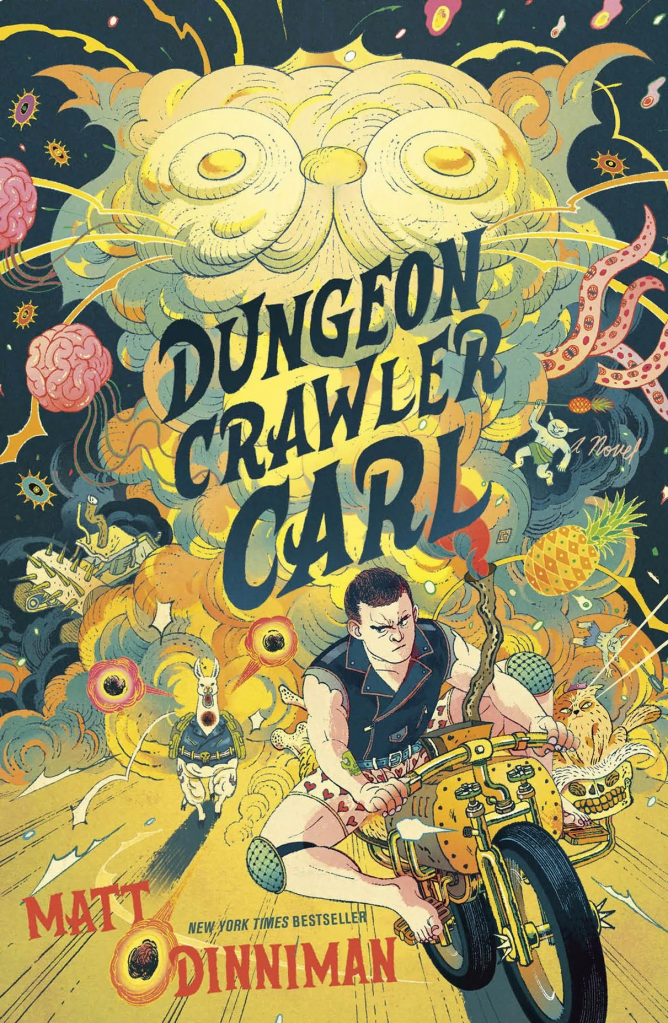
Carl is one of the few million survivors, as he was outside trying to catch his ex-girlfriend’s cat when the apocalypse arrived. An alien voice presents Carl and the rest of the survivors a way to save humanity: An 18-floor death game filled with monsters, traps, superpowers, and technology beyond imagination. The whole presentation feels like a game show. With no other options, Carl accepts the offer and enters the deadly game.

The first book in the series depicts a few early floors from the alien death game. It’s a strange place, where ultra-advanced technology meets nightmarish abominations. The world down in the dungeon behaves with videogame logic. Defeating monsters rewards loot and abilities. Boss monsters wait at the heart of each region.

Carl’s adventures are told with a light and comedic tone. Every monster and piece of gear is tagged with humorous flavor text that ensures the dark and deadly setting reads more fun than scary. The tone invites the reader to enjoy the ride, rather than worrying about realism and the constant life-or-death stakes.

Carl’s team helps to keep the tone light. That Persian showcat Carl saved at the start? She is granted the power of speech, along with a few magical spells. While Carl fights to survive, Princess Donut prioritizes elegance and aesthetics. This turns out to be an asset once the story weaves in audience participation and high-stakes talk-show interviews.

The Rise of The LitRPG

Dungeon Crawler Carl comes from a new sub-genre called LitRPG (Literary Role-Playing Game). It’s a relatively new expansion of the speculative fiction genre inspired by the mechanics of tabletop board games and videogames. In LitRPG’s, the explicit rules and coded behaviors of videogames are woven into the story in such a way that the character in the story is aware of those systems and intentionally makes decisions with them in mind.

When Carl defeats a goblin to earn a pair of magic boots, a text-box appears above the boots to explain exactly what kind of protection they offer and what magical effect wearing them will have. When Princess Donut casts Magic Missile, her mana supply is drained by 5 units. Bosses have health bars, pre-programmed characters have indicators above their head showing their allegiance, and there’s an admin in the background running balance patches on the game.

The genre of LitRPG is expanding rapidly, in no small part due to the success of Dungeon Crawler Carl. These are stories where the ambiguous behaviors of the real-world are removed and readers can mentally ‘play-along’ with the characters they read about. If you know Carl has a skill called ‘explosives expert’ and he finds a cart of explosives, it’s safe to assume the village of hostile goblins down the hall are in serious danger.

LitRPG is the return of the action-adventure genre for a new generation of readers. Not many modern readers have a lot of experience with war; so stories of guns, explosives, and sneaking into conflict zones no longer resonate. Instead, LitRPG’s draw on the tropes and expectations of the videogame and boardgame mediums. Defeating a boss awards treasure, gaining experience means levelling up, and performing extraordinary feats awards big achievements.

Growth of The Book Market

It’s hard to oversell the significance of Dungeon Crawler Carl on the modern reading scene. Because of this book, new readers with new sensibilities have flooded the market. This is particularly true of male readers, a group which has been reading less and less over the last two decades. The LitRPG genre appeals to a generation raised on videogames and online streaming.

This is a book that speaks to a crowd previous novels couldn’t reach. It’s silly, it’s fun,  and it emphasizes comedic adventure over deep themes and heart-wrenching character arcs. It’s exactly the kind of fun new readers need.

I am thrilled Dungeon Crawler Carl exists in the marketplace. It is a joy to read and its existence is opening the door to a whole new genre of books for a brand new audience. Give it a few more years and I suspect there will be a new LitRPG shelf at Barnes & Noble.

Like my posts? Subscribe to my blog:
Books Must Be Appealing

The further I’ve gotten into writing, the more complex my idea of ‘a book’ has become. The theme informs the plot and the plot informs the voice and the voice informs the theme in one big circle. It’s all craft and philosophy. But when I think back to my childhood and to the first books I ever read, none of that really mattered to me.

Books used to be about excitement. What if a kid was raised by ghosts? What if there were Greek demigod kids in modern times who lived at a summer camp with superpowers? When I saw a book cover depicting a kid flying through the air and reaching for a piece of magic candy, I could imagine myself inside The Candy Wars. Or fighting a Hydra in Percy Jackson. Or wandering between the gravestones on a misty night in The Graveyard Book.

A cover and a hook don’t speak to the themes of a piece and they don’t inform about the eventual quality of the story, but they do determine who is willing to read the book. An appealing book gets more readers than an artful book. The challenge to modern writers is to make art, but package that art up in a good looking product.

Two Paths Into Storytelling

An author friend of mine and I sell books together at local farmer’s markets. We’ve stood next to one another for hours, listening to the same book pitches again and again. One thing we’ve realized is that our pitches are fundamentally different from one another.

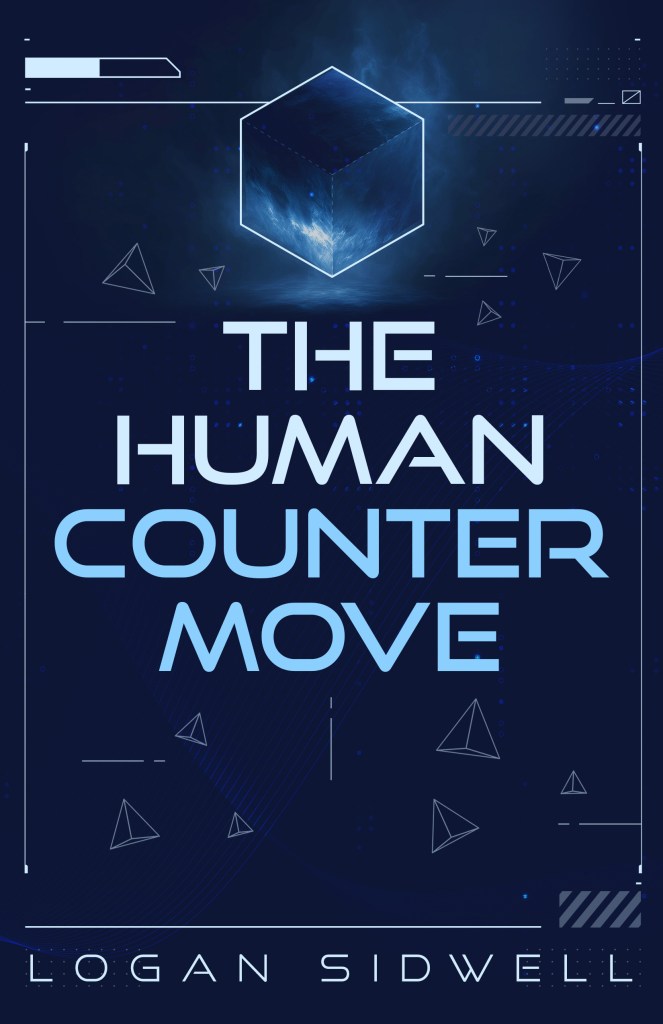
When I make a pitch, it’s all about the ‘big ideas’ of the book. I give a quick summary of my main character, “a washed up strategy game grandmaster”, a description of the setting, “in a nation run by AI”, and the key idea that makes the story interesting, “it’s about what it takes for a person to out-think a machine’. The pitch is very high-minded, it’s meant to get the reader thinking (The Human Countermove can be found here).

But when my friend pitches his middle-grade historical fantasy, he has a completely different focus. He describes the opening scenes of his book, ‘Dracula kills these two kid’s parents’, he tells the listener where the story is going, ‘They’re turned into vampires when Dracula’s wife feels sorry’, and he describes the character arc, ‘They have to learn to use their powers in order to survive in a vampire-filled world’.

Once he gets going, he keeps going. His enthusiasm is infectious. People buy the book partially because they think to themselves, “He is so excited about this story, how could it be anything less than thrilling?”. It’s the complete opposite of my approach of, “If the themes of my story interest you, you should buy it.”

I’ve found this same appeal vs theme dichotomy in a lot of the writing community. Half of us start writing because we love ‘the big ideas’ of our stories that make it resonate with our readers, the other half write because we love telling fun and exciting stories worth losing yourself in.

Both approaches are right, and both are wrong. When you focus on what makes a book resonate, you’re focusing on the long-term impact of the story, but you miss out on all the fun along the way. It’s hard to convince an audience to read an entire book if the only promise you can give them is that the ending will be really good.

On the other hand, by focusing on the ‘appeal’ and the ‘fun’ of a story, you guarantee your audience can connect to the story quickly and get their imagination running. But if it’s not leading anywhere, the story can feel like empty calories.

What Makes a Book an Appealing Product?

I used to wonder why there were so many beginning writing classes at conferences. How many times can you really study ‘How to Make a Good Protagonist’? Viewing storytelling from a product perspective, the basics are actually the fundamentals. Fun characters, quick starts, good worldbuilding, and good pacing are the price of admission. If you fail at the start, you fail to retain your audience, and if you fail to retain your audience, there’s no one there to listen no matter how good your story ends.

Hook and Cover: I believe half of selling books to new readers is making a good hook and a good cover. The cover tells the audience the genre, the character, the setting, and the vibe of the piece. A good hook must inform the audience on why your book will be a fun read in less than a minute.

Character: There must be an appeal to your characters beyond being deep. Maintaining a good relationship between reader and protagonist is the heart of good storytelling. When writers talk about voice, it’s often really about painting a picture of the world through the eyes of the protagonist. For a piece to be appealing, the protagonist has to be worth cheering for, and their vision of the world should be worth seeing.

Opening and Pacing: A good story should be good from the very first page. The audience should be drawn in within the first few words, and they should know where the story is generally going by the end of the first chapter. If the reader is lost or unsure, they’ll put the book down and never read it again. Every time the story loses pacing, it risks killing the reader’s momentum. Masters of storytelling know that every second counts, and if the plot isn’t moving forward on a particular page, there better be a deeply compelling reason for it.

Worldbuilding: Worldbuilding has always been one of my weaknesses. This is because worldbuilding sits at the very heart of appeal. Exciting worlds give the reader an invitation into not only the story, but the surrounding setting. It’s the fun and games that keep the reader engaged even when they aren’t reading.

A Good Book Should Make You Smile Thinking About It

I have four books in varying states of completion. Some are at the end of the first draft, others are published. Occasionally I find myself thinking about my books. The thought of editing some of them fills me with dread. But there’s one in particular that, whenever I revisit it, I find myself smiling. Within moments, my entire cast of characters come strolling into my imagination. Every one of them are distinct, like each was painted by a totally different painter. Then, a moment later, the entire world comes rolling in with them, like color splashed onto a blank canvas. It’s exciting, I want to keep thinking about that book and I want to keep living in that world.

It’s only recently that I realized what I had made: An appealing product.

Ever since making this realization, I’ve been reviewing my other projects for their appeal. If I don’t like my main character a third of the way in, is the story really up to quality? If everyone talks the same and has a similar perspective on the meaning of life, is the cast really compelling? If the plot slows to a crawl for two chapters, how can I say with a straight face that the story is exciting?

For a long time, I viewed stories as worth telling because their message was good and their themes were resonant. But that’s not a good reason for the average reader to commit to a book. They can’t slog through 250 pages on faith. For a story to be worth telling, it should be worth telling, it should be worth getting excited about, and it should be that way from the very first word.

One Year Since My Debut and A New Anthology

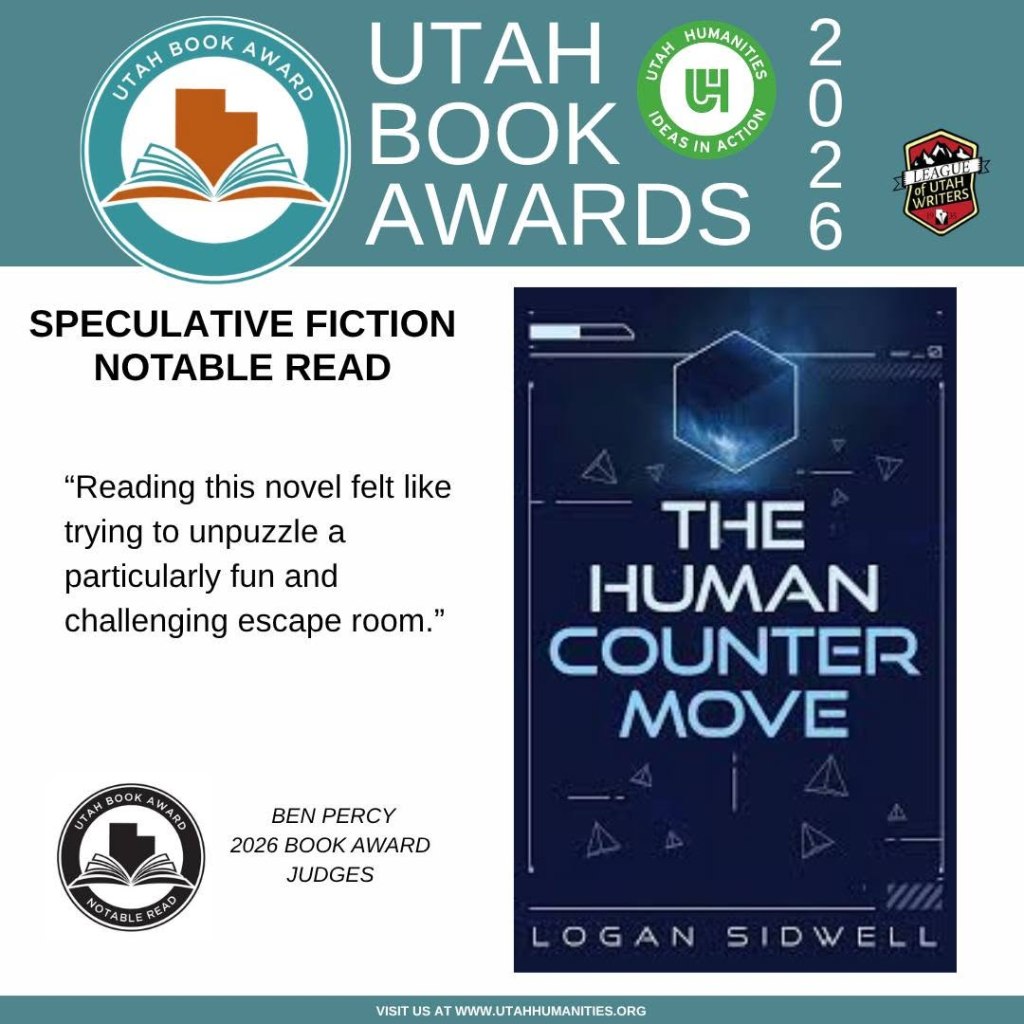
Twelve months ago, I published my first novel. Since then, I have gotten a crash-course on the business of being an author, my productivity as a writer has doubled, and my novel The Human Countermove was honored by The Utah Book Awards and included on a shortlist alongside works by Brandon Sanderson and Bryan Young.

There’s a tradition in engineering. When a student finishes their four-year degree and starts their first job, they start as junior engineers. The idea behind it is that the bachelor’s program gives workers the necessary background to do the job, but to actually be skilled, you have to spend a year making mistakes.

I like to think that the day my book was published was my first day on the job site of being an author.

Utah Book Awards

Let’s start by ripping the band-aid off. I was not chosen as one of the three finalists for the Speculative Fiction category of the Utah Book Awards 2026. But I did make the top five.

I’ve had a bunch of friends and family reach out to make sure I was okay, and most of them were shocked to find I was chipper and already hard at work on my next project. As I stated in my previous post, having my debut novel be included in a top five shortlist of speculative fiction at the state level exceeded every expectation I had. This whole process has felt like a Cinderella story. New doors have opened, my writing is accelerating, and most importantly, I’m more confident than ever that the books I’m writing are worth reading.

Project Updates

In 2025, I completed Project APHELION. This year, it’s looking like I will have both Project RELENTLESS and Project PRINTHEAD ready and querying by January. My productivity has skyrocketed, and there are two reasons why. First, my health has improved, and second, I bought a FreeWrite Alpha and wow that thing is good at keeping me from getting distracted.

Outside of my big projects, there are another hundred stories in my head waiting to be told. I feel as though I understand the process of novel writing better than ever, and completing novels no longer feels like an impossible feat. With a little more discipline, I could probably finish three books per year, but I think I’d rather make the first two even better.

In between my novels, I have a handful of short stories going out for submission. One I’m particularly proud of is called A Message From Our Sponsors, it’s my very first horror piece.

A New Anthology

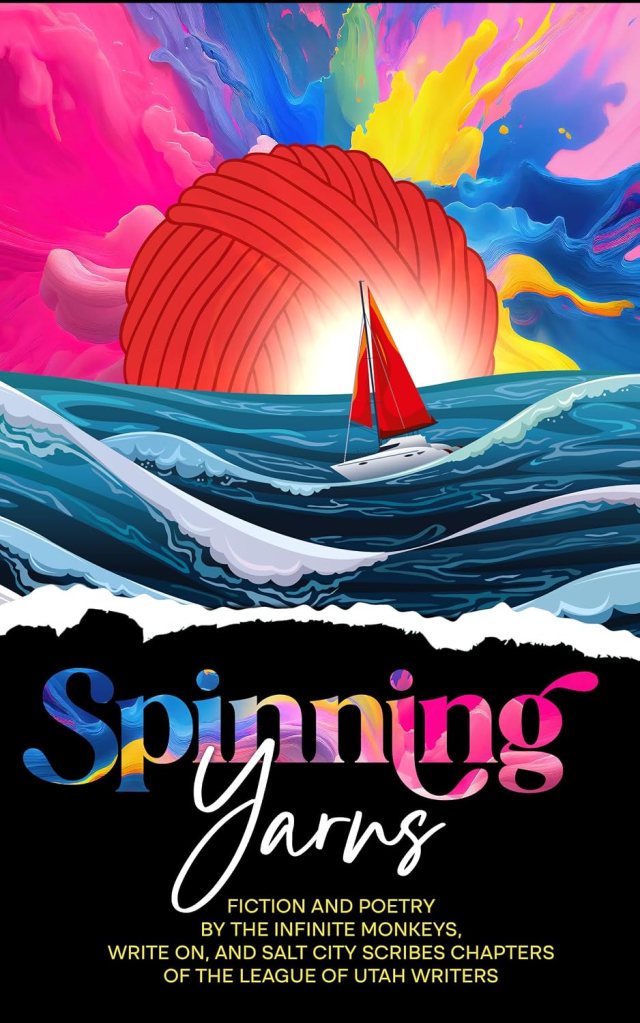
Another of my short stories has been published! This anthology is called Spinning Yarns and represents the works of the writers from my local Utah writing community. This year’s theme called on every story to be upbeat, fun, or adventurous. My work is called Going Platinum and tells the story of Sean, a hopeful musician who tries to stack the deck in his favor by bringing handfuls of good luck charms to his concert. It’s a sequel to another story of mine from Twisted Tales. Sean has a fun and very particular view of how the universe works that I like to revisit from time-to-time. Who knows, maybe Sean will get a whole novella one day.

Until Next Time!

For those of you who read my blog, thank you so much. It’s grown a lot in the past few months, and I’ve really enjoyed the process of sharing my thoughts on the page. Hopefully by this time next year, I’ll have another novel for sale!

My Book Has Been Honored! (And Thoughts on Ambition)

I don’t enjoy competition. Paradoxically, I do enjoy competing. When you’re competing, you push yourself and push yourself and watch as your skills improve. It’s the stuff that comes after the skill building that sucks. A competition pits you against your friends and peers. Instead of celebrating successes, you become adversaries, rooting for one another’s failure. It’s unnecessary conflict, and it’s the reason I don’t submit my writing to local competitions.

Back in February, a friend of mine convinced me to take a moon shot. The Utah Book Awards. It was such a large competition that I wouldn’t recognize the names of the majority of my opponents. And what were the chances I’d be chosen, anyway?

It’s my first ever writing honor. The Human Countermove has been selected as one of Utah’s Five Notable Reads in Speculative Fiction for 2026 and is in competition to win the grand prize. I was wrong about not knowing my competitors, too. My work is up against some of the biggest names in Utah. Brandon Sanderson, Bryan Young, CK Turner, and Robyn Dabney.

A Healthy Ambition

When I heard the news, I got so excited I forgot to reply to the email. It’s been torture keeping this secret to myself. But ever since the announcement was made, I’ve been thinking a lot about the future.

I used to struggle with ambition. I was a high-performing student and a high-performing employee. If there was a grade to earn or a task to be done, I insisted on being the one to do it. But after years of striving, I realized something. My work didn’t satisfy. When I look back, the cause is clear. I wasn’t just ambitious, I was insatiable. I wanted an indefinable ‘more’ for more’s sake, and nothing less than more would do. Some might call it FOMO. At one point, a boss of mine was projecting my future earnings. He told me my salary would cap at more than double the rate I was being paid. When he asked if it was enough, I couldn’t answer him. How could I? A salary cap was anathema to my ‘more, more, more’ philosophy.

That period of my life has thankfully passed. These days, I find myself content. There’s plenty of happiness in the little moments. When I’m eating a bowl of oatmeal in a sunbeam, I’m at peace. When I’m on a walk around the park, I’m happy. ‘More’ doesn’t come into it. The present satisfies me just fine.

That said, a part of me loves the journey of self-growth. You could call it ambition if you wanted. Sometimes I think it’s just our in-built desire to make use of the precious time we’ve been given. If I’m of sound mind and strong body, then what’s there to do but work hard and contribute to the common good?

So I’m ambitious again. Not for myself, not for ‘more’, but to keep busy and contribute to the world. I still find those moments of contentment, but I also find joy in the pride of a job well done and a day’s work writing to the best of my ability.

Climbing The Writing Ladder

When you release a book, it’s hard to tell if it’s any good. It took me four months to gain any confidence in mine. The biggest signal of the book’s quality was that half of my friends and most of my extended family had read it from cover-to-cover. When they came to talk to me about it, they were excited, engaged, and eager to discuss. One of my best friends has now read The Human Countermove three times. I’m told that’s a rarity.

Since publishing, I’ve written a couple more unreleased books and submitted a few short stories for local anthologies. But every once in a while, I write a story that crackles. It feels fresh in a way totally unlike my past writing, and I start to wonder. Should I be saving those ‘crackling’ stories for a more competitive contest? This award has confirmed my suspicions.

I’ve always imagined the skill of writing as a pyramid. The better you get, the higher you climb on the pyramids tiers and the better your peers become. I organize the pyramid in the same manner as sports teams and performing clubs. City -> County -> State -> Region -> National -> International.

I use this system not to compare myself to others, but because I want to improve as a writer. The best way to grow is to surround yourself with people at, or slightly above your own skill level. What better way is there to learn than to lose against a more practiced peer?

Room to Grow

My old approach to short story submissions was scattered. I’d submit to a few local contests a year based on word of mouth. I’m now pivoting to a higher competition level. My targets are the contests with hundreds of submitters and long histories. I’m pushing my writing to its limit. Art is always subjective, but technique can be sharpened to a point.

I’m experimenting, too. Every story I write is pulled from a different era of the novel writing movement. Often I don’t even know if the story will make sense until it’s on the page.

For me, ambition in writing isn’t about accolades, it’s about testing new ideas on the page and offering those experiments to the contest judges for honest feedback. I don’t have a goal in mind, I’m sharpening my craft because I enjoy the process of sharpening.

The Present

Whenever a friend reads about my award, they send me a text along the lines of, “YOU’RE UP AGAINST BRANDON SANDERSON??!?”

In a faux-macho voice, I respond, “Dude’s washed. I’m sending him home.”

It’s all in jest. For me, being included on a list with people as talented as Brandon Sanderson, or Bryan Young, an author I know personally and hugely respect, is a bigger achievement than I could have imagined receiving at this stage of my career. I’m treating it like a step forward into something new.

Thank you to all my readers for following my journey so far. There’s a long way to go, and so much more for me to learn. I promise you now that I’m nowhere near done learning, and nowhere near done writing.

In a nation ruled by AI Minds, productivity is everything, even play.

Once a legend in the world of strategy games, Zouk Solinsen is just another burnout in a society obsessed with efficiency. But when the Minds announce a high-stakes tournament, with a seat on the ruling council as the prize, Zouk is drawn back into the fray, determined to reshape the future.

With help from the enigmatic Torrez Institute, Zouk racks up early victories against the Minds. But when Maya Torrez reveals the cost of her support, a violent coup against the Minds, he rejects it and strikes out alone.

Now, with no allies, dwindling resources, and a nation on the brink, Zouk faces the biggest game of his life, and a final, impossible choice: reform the system from within, or burn it all down.

The Human Countermove

Oh, I’m A Creative

Seven years writing, and I’ve only just realized that I’m in the arts.

The Professional

I began my writing career in a very peculiar place. I wrote star-trek style simulations for students. The stories were fit to purpose. We identified a target curriculum, then produced a story that drew in those elements to challenge a student’s understanding of the material. “Oh no, one of the six volcanoes in this area is going to explode! Collect evidence and determine which volcano is active so we can evacuate the local area.”

It wasn’t art, it was instructive. The creative elements were a delivery system for the educational applications. Sure, a graphics team created 3D videos and voice actors performed the dialog, but all that stuff felt more like a factory than an art studio. In a day, I’d spend an hour writing stories, and another seven discussing logistics, scheduling actors, receiving story feedback, providing graphical feedback, and reviewing classroom use. The team’s biggest concern wasn’t quality, but profitability.

The Playwright

The first thing I did when I left my job was write a stage play. Whenever I talked about the project, I called it ‘a piece of candy’. It was a silly story about a group of young adults who stole a priceless painting with no plan on how to sell it. It was a farce, it couldn’t possibly be art! That was how I justified it to myself. After the staged reading, I left the script to rot. To me, it wasn’t art, it was a fun way to entertain people.

The Genre Writer

A year ago I published my first book, The Human Countermove. You’d think physically selling the product of my own creative labor would be enough for me to recognize myself as an artist. It wasn’t. 

First, my novel was a science fiction, a genre piece, not art. It was inspired by my love of chess, how could something with a gaming origin be artistic? If the story resonated with audiences, it just meant I was doing my job. It  was the mechanical process of pulling the levers of human emotion. 

Breaking A Mental Block

It could be that I associated ‘art’ with awards, and I associated awards with the elites, and when I imagined my writing, I didn’t see myself as writing for elites. I even attended an event called ‘arts in the park’ and didn’t put it together.

Regardless, it was something benign that finally shattered the glass.

I filed my taxes.

In past years, I’ve always been able to list my job as ‘Software Engineer’. It was a useful box to put myself in. I was a coder with a fiction writing hobby.

This year that wasn’t an option. At the top of my 1040, I was forced to mark the option labelled ‘self-employed’. One line down, those damn taxmen forced me to identify myself as what I am. A novelist. I was a novelist.

A couple weeks later I was talking to one of my engineering friends. He asked me about my latest novel, the fool. As I described it, I made two realizations. One, it was super weird. And two, the message was core to the material. Market appeal hadn’t even occurred to me. I was writing the story because I wanted to tell it, because I wanted to see it in the world. I couldn’t escape the label anymore. I was making art.

Looking back, I had been making art from the start. My novel wasn’t just a sci-fi dystopia, it was a discussion about our relationship with technology and the modern world’s instinct to strip fulfillment from our lives. My ‘piece of candy’ stageplay explored the way a single painting could mean seven things to seven people. Even my old starship ed-tech stuff explored themes of overconsumption, greed, and good and evil.

Regardless of how I felt about the quality of my work, everything I had done was creative and contributed to society’s conversation of life and philosophy.

Capitalism Ruins Everything

As I look back on my avoidance of the ’artistic’ label, there’s one particular mental block that was harder to overcome than the rest. Every time I finished writing a story, I had to sell it.

If you ever ask an author how to sell a book, they’ll always tell you the same thing, “Push your writer brain out of the room and bring in the business brain”. In order to survive, I had to sell my work, and in order to sell my work, I had to reduce it to its most basic components. Content Type: Book, Genre: Dystopian Sci-fi, Audience: Fans of Chess, etc. etc.

When I write, I write from the heart. The day my writer brain finishes his writing, the business brain cuts the mental umbilical cord and sees the work through the eyes of a capitalist. Stories become content. Content becomes products. I wasn’t a writer, I was a content creator. I wasn’t a novelist, I just wrote books.

It’s only in the last few months that I’ve realized what I’ve been doing the whole time. The reason I pick the stories I pick is not because of their market appeal, it’s because I resonate with the message. I dabble and practice and experiment, not to produce a more appealing product, but to tell better stories.

Conclusion

If you’re in the creative field, you’re an artist. It’s easy to gatekeep. The capitalist world is eager to tell you that you aren’t artistic until you can make money from your work. The inherent danger in that attitude is that you reduce your work to its success financially, and what makes a bestseller is different from what makes a resonant story.

The topic of profitability is a regular guest at my writer’s group. I suspect the same is true of every writer’s group in the country. By limiting ourselves to a particular view of success, by refusing to allow ourselves the label of ‘artist’, we cut off what may be our most personal and most meaningful works.

Every writer I’ve ever met has been, to some degree, trying to express themselves through their storytelling. They are all artists. No one goes into it for the money. So how do we keep getting tricked into dropping the label and defining ourselves by the singularly reductive metric of ‘total sales’?

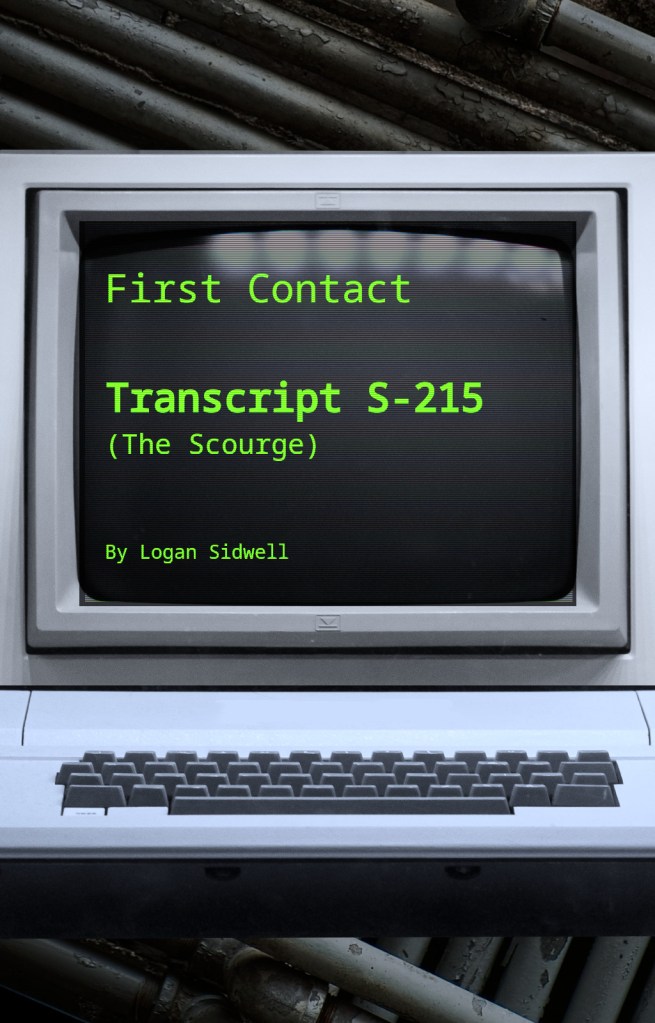
First Contact Transcript, Species-215

First Contact, Species-215 (Colloquially known as The Scourge)

Notes have been added to provide expert context.

S-215 Transcript #1 (First Contact):

BEEP BEEP

BEEP BEEP BEEP

BEEP BEEP BEEP BEEP BEEP

*Fibonacci sequence continued until 13.*

Earth Station B, operator 6, Mark Simmons responds: 

Clear. Identify.

FRIEND*

*Message received in direct english

*Word in S-215 lexicon carries second meaning of TOOL

Hello friend. Location?

*S215 responds with coordinates of Ross 248, located approximately ten light-years from Earth.

You are Rumbigeals?

*Rumbigeals (S11) are the known residents of Ross 248 and were originally contacts twenty-three years prior to S215.

NOT RUMBIGEALS. FRIEND.

What is your species name?

*Pause in responses lasts thirty-one minutes.

MOURNERS. WE ARE THE MOURNERS. YOU ARE HUMANS.

Hello mourners, humanity welcomes you.

WE ARE GLEEFUL TO MEET YOU.

Your english is excellent. What is your business?

*First contact conversation ends here. Operator Mark Simmons noted the high lingual capacity of this alien species and speculated that they had analyzed humanity’s early interplanetary broadcasts.

S-11 Transcript #18,216 (Initiated approximately five hours later):

MS: Good meetings Rumbigeals, which operator am I speaking to?

Operator two of fifteen.

*Mark Simmons notes that fifteen is the total number of operators, not the number currently on shift. This is against protocol.

MS: Zorle! This is Mark. How are the new spawnlings?

Challenging but rewarding. Thank you for inquiring.

MS: Good, that’s how they’re supposed to be! Just a moment.

*It is here that Mark Simmons is joined by Earth Station B’s director. The two discuss Zorle’s unusually curt responses for nine minutes, forty-three seconds.

Mark? Are you there Mark?

MS: I’m here Zorle. Just wanted to check on you. Is everything okay?

I am good Mark. We are good.

MS: I’m glad.

Thank you for checking in. I have to go.

MS: Have you heard of a species called the mourners?

No.

MS: Okay. Thanks anyway.

*Six minutes pass

Wait. Yes. I know the mourners.

*Mark Simmons notes that all his messages from here on were subject to approval from the station director.

MS: What do you know about them?

Nomads. Travellers. Rovers. Wayfarers. Peaceful drifters. Not a problem.

MS: They sound like a nice group of people.

If you are lucky they will pass through your system and trade with your species.

MS: Yeah, I’ll cross my fingers. Be well, Zorle.

*Be well in Rumbigean is considered a permanent form of goodbye.

I wait for our next hello Mark.

*On completion of this conversation, Earth ceased communication to S-9. No messages were ever again received from the Rumbigeals.

S-215 Transcript #2:

*All messages to S-215 from this point forward were prepared, reviewed, and submitted from within Earth Station A’s situation room. Mark Simmons was brought in to type the messages and to retain communicative continuity.

Hello. Mourners are you there?

WE ARE HERE MARK. WE ARE CLOSER NOW.

Closer to Earth, you mean?

YES, WE ARE CLOSER. WE HAVE MUCH TO SHARE.

How much closer are you?

*Coordinates list unoccupied solar system Lalande 21185, approximately 8.31 lightyears from Earth.

*Chief of Security Lorne Richards types the next message.

How fast are you able to travel?

*No response after thirty minutes. The keyboard is returned to Mark Simmons.

Can you tell us anything about what you intend to share with us?

WE CANNOT RUIN THE SURPRISE.

Is it information?

IT IS A NEW WAY TO LIVE.

*Additional messages were forwarded to S-215, but no response was recieved.

Final notes:

Approximately 48 hours after this conversation, Earth’s governmental bodies approved an additional $12.9 trillion dollars in starship development and $4.5 trillion in weapons research. 9 additional species ceased all communication in the coming months. For further information, review documents on The Scourge, The Abandonment of Earth’s Southwestern Hemisphere, and Policies Regarding Encounters with Half-Dead.

The Monkey Wrench Gang Taps Into A Timeless Rage

My favorite books are the ones written from a totally unique perspective. For me, there is no greater joy than seeing the world through the eyes of someone I’ve never even met. What matters little to me matters lots to them. What I don’t see, they stared at their entire life. What I hate, they love.

The Monkey Wrench Gang by Edward Abbey is one of those books. It’s fifty years old, but its rage makes it feel like it was written yesterday. Edward Abbey is a self-described anarchist. A warrior against the industrial world. And the way he shares his views is downright infectious.

Eco Warriors in Southern Utah

The Monkey Wrench Gang tells the story of four people who don’t fit into society. Hayduke is a Vietnam veteran with a hatred for authority. Seldon Seen Smith is a polygamist whose hometown was drowned by the creation of Lake Powell. Doc Sarvis is a healer and a skilled billboard toppler. Lastly, Bonnie Abbzug is a dancer from the Bronx. When these four anti-establishment individuals discover their shared worldview, they set to work dismantling the machines and symbols of industry all over Southern Utah.

Sabotaging freeway constructions, shoving tractors off cliffs, even destroying a bridge or two are well within this group’s capability. Every act is described in thorough detail. The book follows the group as they move from job to job, each act of rebellion more ambitious than the last. We see the quiet moments as they probe each other’s philosophies, the loud moments when their work inevitably runs afoul of law enforcement, and the scary moments when life and death are in the balance.

The writing has a country edge to it. The dialog can swing blunt and vulgar, and some of the behaviors of the characters can be downright classless. But at the same time, it’s authentic. These aren’t perfect people, they have vices and flaws and pasts that torment them. When a helicopter comes flying over and Hayduke warns the team not to look up, it’s not because he studied helicopters in a book, it’s because he had to hide from them in the war.

There are so many stories these days about people with perfect lives and simple pasts. They use clean language and avoid offensive action. One mistake often defines who they are. We want to be able to sympathize with our characters. They need to appeal broadly.

These characters aren’t like that. They’re flawed, they’re often broken, and when they engage with the world, it’s with an edge sharpened by years of living outside of civilized society.

Rage and Anarchy

Edward Abbey’s vision of the world is seeped in rage. The characters aren’t mad at a single broken part of a mostly working system, but at a humanity that can’t seem to stop themselves. When Hayduke and Doc look out at a new bridge across the Utah Desert, they don’t see a great new way to travel, they see modern industry bulldozing over what used to belong to all of us.

And it’s not high-minded either. When Bonnie sees a bridge that brings more traffic to a certain canyon, she’s pissed her canyon is being taken away. When “Seldom Seen” Smith looks at Lake Powell, he sees the town he used to live in and the canyons and secrets he used to know buried by a new recreational fishing area.

The world they remembered was taken from them.

It’s my favorite aspect of this book. I’m pretty young, by the time I was born Utah was full-speed on industrialization. Two years ago, the view from my home was a big flat desert. Now it’s three layers of houses. My only memory of Utah is now. This book captures the state when it was untamed.

A lot of books today like to talk about anger. Characters go on big diatribes about ‘getting back what was taken’. In most cases, I find that talk empty. Not here. When Hayduke sees a tractor, gets out his car, and drives it into a ravine just to stall industrialization for a day or two, I feel that in my soul.

The Right Book A Half Century Later

Don’t read this book for a great ending, read it for the adventure, read it to see the world through an anarchist’s eyes, read it to feel a rage that’s not acceptable in polite society. We live in such a censored age, a lot of the words I want to use to describe this book and the actions taken in it have to be left out of the review.

I picked this book up because three of the most interesting people I had ever met all recommended it. Now I understand why. In a lot of ways, it feels like the perfect timing. Utah sits at the center of a new war against data centers. The rage I felt in Hayduke’s heart as he watched the government lay down miles and miles of freeway is the same rage that pulses in my own as I read about the new mega-structures they want to build in Box Elder. It’s the pain of seeing the world we grew up in ripped away and turned into something we don’t understand.

The Monkey Wrench Gang taps into emotions most books can’t reach. It’s fifty years old, but it feels like it was written yesterday.

How A Writer Reads Their Client’s Mind

I used to write for an ed-tech company. We produced these magic schoolbus-like simulations where students in a computer lab used their curriculum to solve various crises and dilemmas. From time to time, organizations would commission us to create custom experiences. I got to write for 4H, Hill Air Force Base, US Synthetic, and a couple others.

The one I remember best was for Colorado State’s Veterinary College. We called the mission ‘Do No Harm’. It started with a sick sheep. The crew would shrink down, fly in, and over the course of a thirty minute adventure, cure the sheep of its ills.

But it was one particular meeting that still sticks with me. My team had finished the product and we were demoing it to the head of the program. We walked him through the whole experience. When it was over, he had an odd look in his eye. He scratched his chin, leaned into the camera, then asked how it was I had managed to read his mind. We laughed, but he was serious. He had no notes on the simulation, no items to change, it was ready to ship.

I didn’t tell him, but I had read his mind. It happened on our very first call. He didn’t spell it out or anything, but the program director told me everything I needed to know.

The Strategy Interview

When I jumped into that first ‘get to know you’ call, my primary concern wasn’t the story I’d tell, it was understanding my client’s goals and strategy. He regaled me with his vision of a thrilling adventure fighting off parasites with spaceship weapons. When he was finished, I asked him a couple big questions.

Where will this experience take place?
Who is the audience?
What are your goals?

Every question was open-ended by design. The more the client gave, the better the result.

His early responses told me the tone of the project. It was meant for middle-grade students, so I tuned the dialog to be a little more mature. It would be flown in a single computer lab as a part of a tour, so I book-ended the experience with tour shoutouts. His goal was for students to be excited about the work of veterinary medicine, so I made sure the experience was loving towards animals and ended on an upbeat note.

The most important element of the strategy interview was that I didn’t try to project my own idea onto the project until I understood the client’s goals. His answer shaped the foundation of the project. If I came in with my own pitch, prepackaged and ready-to-go, the idea wouldn’t fit. The age-range would be wrong or the tone would be too dark or the story wouldn’t emphasize the medical aspects.

The big-picture answers set the frame of the project.

The Personal Interview

Once I had an understanding of the shape and texture of the story, I shifted to more personal questions.

What made my client love veterinary medicine?
What moments were they most excited to see in the program?
Which animal did they want to treat?
What kind of challenges did my client encounter in the day-to-day of veterinary medicine?

These were the answers that gave the story authenticity. My client’s focus was farmwork, so putting an elephant or a giraffe onto the operating table would have been a big miss. 

As they told me more about their own experiences and their love of their work, I pivoted my plans. My client didn’t know it, but they wanted to see their lived experiences reflected back at them in the art. When they told me about curing a horse’s case of colic, I made sure to include it. When their eyes lit up telling me about the four compartments of a sheep’s stomach, you better believe those four compartments had to be scanned during the mission.

By the time we were done, the story wasn’t just a story, it was an interpretation of the client’s passion for his work. The personal interview gave the simulation those moments of delight and specificity that connected the client to the product.

Writing as a Product

We writers like to look at our works as art, and art alone. When we imagine ten million people reading our masterpiece, it’s all about the message being conveyed, or the emotions being evoked, or the characters that sweep them away.

This is the biggest difference between clients and writers. A client asks for a story in service of a purpose. The story, with all its themes, characters, twists-and-turns, is at the end of the day, a product. If you talk to the big executives at Amazon and Netflix, they don’t even call tv shows stories, they call them ‘content’. And if content fails to further a client’s goals, then it’s a bad product.

If your goal is to read your client’s mind and pluck an image from their brain, start by seeing the story from their point of view. Look at it like a product. What is that product doing? How will it serve the client’s goals? Starting with the right restrictions and expectations will save weeks down the road.

Once the restrictions are set, you can bring in the artist to turn the story into delight and wonder.

Learning From The Business Side

I used to see my books exclusively through the lens of the artist. Then I self-published. A week in and I found myself neck-deep in entrepreneurism.

My first misstep was the title. Everyone said the title wasn’t good enough. I didn’t understand why. I was the artist, and it was an interesting title, Mind’s Bane.

It was only when I looked at the title through the lens of a businessman that I realized my mistake. Mind’s Bane was a very interesting title for a dark fantasy book. Unfortunately, I was trying to sell a dystopian sci-fi. It was a title that failed to connect my book to its audience, a fundamentally commercial problem.

So I kicked the artist out of the room and found a more appropriate name. One that captured the concepts of sci-fi, dystopia, strategy, and ai. The Human Countermove.

Every conference I go to has a bunch of presentations on ‘how to make a good protagonist’ or ‘how to keep up the pacing of the story’. I used to think limiting your art that way was a mistake. I wanted the story to tell itself.

As I write my third and fourth books, I’ve come to understand the wisdom of those presentations. For an audience to enjoy a story, they have to like the protagonist. For them to stay engaged, the story needs good pacing. It’s good business, and it makes better art.

When we as writers and artists speak to our clients, it’s easy to see ourselves as the expert in the room. But everyone has their own set of skills to bring to the table. The client understands their goals and strategy. We understand how to produce the art.

There’s no telepathy in commissions. It’s all about understanding. When my client saw the simulation we had created, he loved it because it was the product he had been looking for. From the business side, it served his goals. From the art side, it resonated with his life experiences. All I needed was a couple conversations.

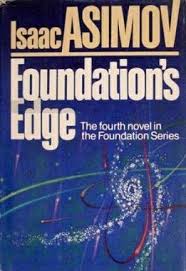
Foundation’s Edge (#4), Isaac Asimov – Book Review

29 years after writing the original trilogy, Isaac Asimov continues Foundation’s generation-spanning space epic with Foundation’s Edge.

The Foundation book series has always been a little strange. Every one of them has felt a bit like an accidental sequel to the last. The first book was a series of short stories, the second book threw the original concept in the trash, and the third book took the ideas from the first two and developed them into a spy thriller. 

Combine all that with an author coming into his own and every one of these books feels completely distinct. I’m happy to report that the fourth book in the series continues the pattern of genre-bending ideas and thrilling twists at a galactic scale. 

Read my discussion of the first three Foundation books here: How Asimov Saved The Foundation Books

Plot

Over a century after book 3, Foundation’s Edge tells the story of Golan Trevize, a council member in the First Foundation, as he investigates the invisible powers pulling The Foundation along the track to becoming a galactic empire. In parallel, Stor Gendibal, a leader of the psychic-led Second Foundation, uncovers a terrifying truth about the Seldon Plan.

For the first half, the story is a political thriller. At each twist and turn, Asimov makes sure to keep the audience fully informed as to what each action did, what it was aiming to do, and how each of the minor characters changes the calculation of the book.

After a series of political maneuvers, speculations, and schemes, Golan Trevize is sent off in search of ‘Gaia’, humanity’s legendary origin planet. At this point, the book’s genre suddenly changes. In a single chapter, we move from political thriller to treasure hunt. Adventure and mystery keep the story moving and the stakes climbing ever upward, ending in a satisfying conclusion.

Asimov’s Writing

Isaac Asimov learned a lot about writing in the nearly thirty-year gap between the third and fourth books. For the first time in the Foundation series, Foundation’s Edge tells a single, continuous story. Multiple POVs, yes, but it begins at the beginning and ends at the end. No century-long time jumps and no being introduced to an entirely new cast of characters halfway through the story. In this book, we have the time to get to know the characters and truly understand their motivations.

For a good bit of the story, I was confident it was setting up a new trilogy. The first half was paced much slower, deeply exploring the political intrigue while reminding the readers of the events of the past three books. By the two-thirds mark, there were a lot of starts without a lot of resolutions. I was pleasantly surprised when the final third of the book jumped into high-gear, delivering a tense and action-packed finale that closed every thread and reached the grand-scale the Foundation series is known for.

The Conclusion

After the first three books, the Foundation series felt like it was over. The goal of galactic empire was centuries away, but all the major factions had reached a balance, and the ending felt inevitable. With this story, Asimov re-contextualized past stories and painted the inevitable conclusion as a defeat rather than a victory, he introduced adventure and mystery to a completely mapped galaxy and layered new complexities on an already complicated universe in a way that breathed new life into the series.

Much like Asimov’s first and third books, Foundation’s Edge is a conclusion. But this time, the story also feels like the beginning of something new.

That Time A Space Simulation Turned Into a Spy Hunt

Readers of my blog know I used to simulate star-trek style spaceships. It was my entry-point to the world of writing, storytelling, theater, and tech all at once. A part of the reason I studied computer science was to make sense of the one part of the simulator I didn’t understand. My first written stories were simulations written to fill a story vacuum. As a flight director, I was lucky enough to not only write the stories, but perform them.

I told hundreds of stories in my five years simulating starships. Mostly I stuck to my biggest hits. Occasionally we’d test a new story and fiddle with it to make things more exciting. But this flight wasn’t like that. It was supposed to be a nice, normal mission. Instead it ended up being my most memorable flight in a half-decade of incredible stories.

Setting the Scene

The nine crew members each donned their uniform, a felt poncho modified with starship colors and branding. It was a birthday party, every kid was in second or third grade. A bit young, but me and my team had dealt with worse.

One side a school, one side a spaceship.

To reach the ship, they needed to pass through the ‘teleporter’, an old photography dark room door, the revolving kind. They’d step in two at a time. I’d remind them not to touch the side lest they be lost to space, then spin the door 180 degrees.

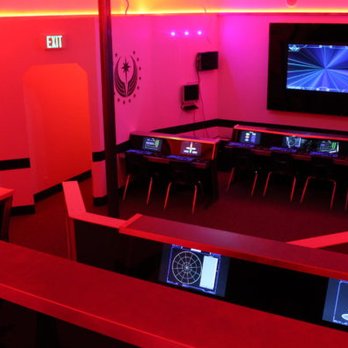
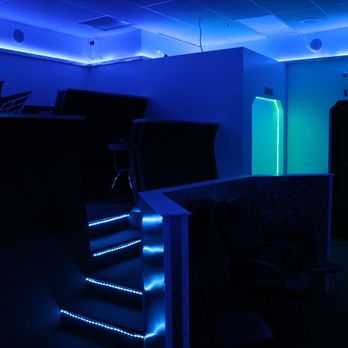
Pitch black for half a second, then the bridge of a starship. Even when you knew the trick, it still felt like magic. The UCS Everest was a large vessel, suited to handle parties of 10-15. There was a main viewscreen at the front and tiered seating at the back. A staff member would ask the arriving crew their job position, then direct them to their seat.

Once everyone was seated, I would teleport in behind them and the epic boarding music would fade away. Safety instructions were always boring, but from the very first second I could tell this crew was different. Eyes wandered, kids whispered. I talk quick, but this crew had no interest in any of it.

When the safety briefing was done, I had a single instruction for my staff. “Get through the training as fast as you can.”

We had a set of junior controls for young crews. Instead of everyone having a distinct job, they were all prompted to do the same activities together and drive the ship as a single unit. For groups younger than 4th grade, it was really the only way to keep them from being overwhelmed. Unfortunately, the most recent windows update had broken the juniors controls, so all we had were the advanced systems.

The Flight

The crew was both overwhelmed and not particularly invested in the story of the mission. They were supposed to fly to an endangered planet and help evacuate the citizens. For crews like this, we like to put a ‘doctor’ on the bridge to help them out. Whenever I came on over the speakers as the main engineer and told them they needed to ‘undock’ or ‘set course’, the doctor secretly made sure the task got done.

In this case, the doctor was basically flying the ship on their own.

Fifteen minutes into the flight, I could tell things weren’t working. I was quietly telling my staff to get ready to ‘board the ship’ as various alien intruders and wacky characters, but while that was being prepared, I needed the story to continue.

The Breakthrough

There was a political situation surrounding the endangered planet. I was on the speakers as a Texan ship captain warning them of the dangers. None of it was clicking, the whole mission was feeling like a bust. Then I said the words that changed the course of the mission. “The mayor of that planet is a crafty fella– he’s got people everywhere. Keep an eye out, you may have a spy on board.”

On the cameras, I could see kids’ heads popping up and glancing around. Their security officer, just eight years old, jumped out of his seat with a toy phaser in hand. There was still conversation being picked up by the microphones, but they weren’t talking about a party. They were talking about the spy.

Not yet realizing what had happened, I had the ‘ship doctor’ get back to the bridge to help them navigate the upcoming asteroids.

The second he teleported in, every kid in the room was out of their seat and yelling at the top of their lungs. They all made different accusations, but there was only one message: The Doctor was a spy.

My first reaction was frustration. Everyone had left their computers, which meant no one was driving the ship, which meant the mission was frozen in place. But these kids had never cared about the mission in the first place. As I watched the doctor get forced into the brig at phaser-point, I saw what I had been looking for since the start. A crew that cared about the mission. Not the space theater or the advance controls or the working together. They only cared about hunting for spies.

If the flight had been a field trip arranged by a school, I would have paused here. The crew would have gone back to their seats and we would have discussed what their priorities needed to be. But this was a birthday party, and when you’re flying a birthday party, it’s best to reserve the lectures for the really bad behavior.

A small brig for 6 suspects

So the mission changed. I ordered a volunteer dressed as a security guard to go up and help the kids interrogate the doctor. But their blind hunger for spies was worse than I thought. The security guard ended up in the brig right next to the doctor.

I was down to two volunteers. The next one I sent up with no costume at all and specifically told the kids that this person was not a part of the story. Just a staff member there to guide their experience. They reluctantly agreed not to stuff her into the brig, but there were plenty of murmurs that she was ‘secretly a spy’ anyways.

Now that I knew what kind of story we were telling, I knew what kind of tools we should use. We planted a device in a tunnel under their seats and set off the alarms until they found it. We played crazy ‘hacking’ noises over the speakers and flicked the lights from red-alert to green-alert to a bunch of other colors while they flipped switches on a panel. Whenever there was downtime, I didn’t even have to fill in the blanks, the crew would sprint right back to the brig and resume their interrogations of the prisoners.

Then came the masterstroke. An away mission to the lower decks. It’s a funny thing, kids love getting onto the starship, but once they’re on the ship, all they want to do is leave. There was a second starship right across the hall. We redirected that ship’s camera feed to the main view-screen. I told my last volunteer to go in there and stand around.

When the kids saw the footage of a person in a uniform doing nothing, they went wild. Never had they seen a more guilty figure in their lives. The staff member led them on the away mission and they caught the ‘spy’ with ease. They were thrilled for an excuse to use the phasers.

On their way back to the ship, the crew bumped into two unfortunate staff members who were returning from a lunch break. They were dragged to the brig like everyone else.

The Finish

With the end of the mission closing in, I decided it was time for a trial. We gave each student a seat and made them all a part of the jury. One by one we brought out the suspects. I wish I could tell you they were thorough in their questioning. I wish I could say they even listened to what each prospective spy had to say. But they didn’t. It was closer to a witch hunt than any form of judicial process.

At the end, they decided it was the doctor who was the spy. Of course it was, he was the first suspicious figure on the bridge and the only one they all remembered capturing. I told them they were right and that they had successfully completed the mission.

They cheered and ran off with their parents to eat cake. Great reviews all around, although I’m guessing that dying planet from the start of the mission would have a few complaints.

When we finished restoring the bridge from the child hurricane that had ripped through, I sat back and took a breath. One of the other staff members walked over to me with wide eyes. “That was amazing! I’ve never seen a mission like that before. You should write it down and fly it more often!”

I smiled and shook my head. We had improvised 2 and a half hours of nonsense. A playful nothing to distract a bunch of ten-year-olds. It was none of the magic that had drawn me to the program in the first place, and used none of the tools that made the simulator cool. Just one long string of chaos, and we were lucky the kids had liked it.