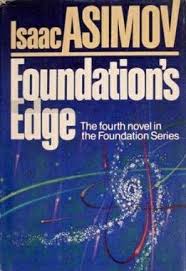
29 years after writing the original trilogy, Isaac Asimov continues Foundation’s generation-spanning space epic with Foundation’s Edge.
The Foundation book series has always been a little strange. Every one of them has felt a bit like an accidental sequel to the last. The first book was a series of short stories, the second book threw the original concept in the trash, and the third book took the ideas from the first two and developed them into a spy thriller.
Combine all that with an author coming into his own and every one of these books feels completely distinct. I’m happy to report that the fourth book in the series continues the pattern of genre-bending ideas and thrilling twists at a galactic scale.
Over a century after book 3, Foundation’s Edge tells the story of Golan Trevize, a council member in the First Foundation, as he investigates the invisible powers pulling The Foundation along the track to becoming a galactic empire. In parallel, Stor Gendibal, a leader of the psychic-led Second Foundation, uncovers a terrifying truth about the Seldon Plan.
For the first half, the story is a political thriller. At each twist and turn, Asimov makes sure to keep the audience fully informed as to what each action did, what it was aiming to do, and how each of the minor characters changes the calculation of the book.
After a series of political maneuvers, speculations, and schemes, Golan Trevize is sent off in search of ‘Gaia’, humanity’s legendary origin planet. At this point, the book’s genre suddenly changes. In a single chapter, we move from political thriller to treasure hunt. Adventure and mystery keep the story moving and the stakes climbing ever upward, ending in a satisfying conclusion.
Asimov’s Writing
Isaac Asimov learned a lot about writing in the nearly thirty-year gap between the third and fourth books. For the first time in the Foundation series, Foundation’s Edge tells a single, continuous story. Multiple POVs, yes, but it begins at the beginning and ends at the end. No century-long time jumps and no being introduced to an entirely new cast of characters halfway through the story. In this book, we have the time to get to know the characters and truly understand their motivations.
For a good bit of the story, I was confident it was setting up a new trilogy. The first half was paced much slower, deeply exploring the political intrigue while reminding the readers of the events of the past three books. By the two-thirds mark, there were a lot of starts without a lot of resolutions. I was pleasantly surprised when the final third of the book jumped into high-gear, delivering a tense and action-packed finale that closed every thread and reached the grand-scale the Foundation series is known for.
The Conclusion
After the first three books, the Foundation series felt like it was over. The goal of galactic empire was centuries away, but all the major factions had reached a balance, and the ending felt inevitable. With this story, Asimov re-contextualized past stories and painted the inevitable conclusion as a defeat rather than a victory, he introduced adventure and mystery to a completely mapped galaxy and layered new complexities on an already complicated universe in a way that breathed new life into the series.
Much like Asimov’s first and third books, Foundation’s Edge is a conclusion. But this time, the story also feels like the beginning of something new.
Readers of my blog know I used to simulate star-trek style spaceships. It was my entry-point to the world of writing, storytelling, theater, and tech all at once. A part of the reason I studied computer science was to make sense of the one part of the simulator I didn’t understand. My first written stories were simulations written to fill a story vacuum. As a flight director, I was lucky enough to not only write the stories, but perform them.
I told hundreds of stories in my five years simulating starships. Mostly I stuck to my biggest hits. Occasionally we’d test a new story and fiddle with it to make things more exciting. But this flight wasn’t like that. It was supposed to be a nice, normal mission. Instead it ended up being my most memorable flight in a half-decade of incredible stories.
Setting the Scene
The nine crew members each donned their uniform, a felt poncho modified with starship colors and branding. It was a birthday party, every kid was in second or third grade. A bit young, but me and my team had dealt with worse.
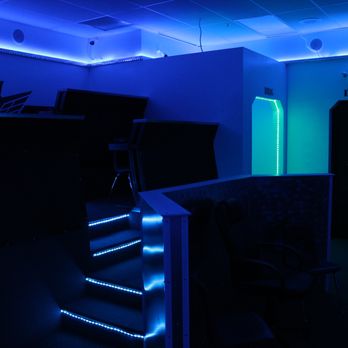
One side a school, one side a spaceship.
To reach the ship, they needed to pass through the ‘teleporter’, an old photography dark room door, the revolving kind. They’d step in two at a time. I’d remind them not to touch the side lest they be lost to space, then spin the door 180 degrees.
Pitch black for half a second, then the bridge of a starship. Even when you knew the trick, it still felt like magic. The UCS Everest was a large vessel, suited to handle parties of 10-15. There was a main viewscreen at the front and tiered seating at the back. A staff member would ask the arriving crew their job position, then direct them to their seat.
Once everyone was seated, I would teleport in behind them and the epic boarding music would fade away. Safety instructions were always boring, but from the very first second I could tell this crew was different. Eyes wandered, kids whispered. I talk quick, but this crew had no interest in any of it.
When the safety briefing was done, I had a single instruction for my staff. “Get through the training as fast as you can.”
We had a set of junior controls for young crews. Instead of everyone having a distinct job, they were all prompted to do the same activities together and drive the ship as a single unit. For groups younger than 4th grade, it was really the only way to keep them from being overwhelmed. Unfortunately, the most recent windows update had broken the juniors controls, so all we had were the advanced systems.
The Flight
The crew was both overwhelmed and not particularly invested in the story of the mission. They were supposed to fly to an endangered planet and help evacuate the citizens. For crews like this, we like to put a ‘doctor’ on the bridge to help them out. Whenever I came on over the speakers as the main engineer and told them they needed to ‘undock’ or ‘set course’, the doctor secretly made sure the task got done.
In this case, the doctor was basically flying the ship on their own.
Fifteen minutes into the flight, I could tell things weren’t working. I was quietly telling my staff to get ready to ‘board the ship’ as various alien intruders and wacky characters, but while that was being prepared, I needed the story to continue.
The Breakthrough
There was a political situation surrounding the endangered planet. I was on the speakers as a Texan ship captain warning them of the dangers. None of it was clicking, the whole mission was feeling like a bust. Then I said the words that changed the course of the mission. “The mayor of that planet is a crafty fella– he’s got people everywhere. Keep an eye out, you may have a spy on board.”
On the cameras, I could see kids’ heads popping up and glancing around. Their security officer, just eight years old, jumped out of his seat with a toy phaser in hand. There was still conversation being picked up by the microphones, but they weren’t talking about a party. They were talking about the spy.
Not yet realizing what had happened, I had the ‘ship doctor’ get back to the bridge to help them navigate the upcoming asteroids.
The second he teleported in, every kid in the room was out of their seat and yelling at the top of their lungs. They all made different accusations, but there was only one message: The Doctor was a spy.
My first reaction was frustration. Everyone had left their computers, which meant no one was driving the ship, which meant the mission was frozen in place. But these kids had never cared about the mission in the first place. As I watched the doctor get forced into the brig at phaser-point, I saw what I had been looking for since the start. A crew that cared about the mission. Not the space theater or the advance controls or the working together. They only cared about hunting for spies.
If the flight had been a field trip arranged by a school, I would have paused here. The crew would have gone back to their seats and we would have discussed what their priorities needed to be. But this was a birthday party, and when you’re flying a birthday party, it’s best to reserve the lectures for the really bad behavior.
A small brig for 6 suspects
So the mission changed. I ordered a volunteer dressed as a security guard to go up and help the kids interrogate the doctor. But their blind hunger for spies was worse than I thought. The security guard ended up in the brig right next to the doctor.
I was down to two volunteers. The next one I sent up with no costume at all and specifically told the kids that this person was not a part of the story. Just a staff member there to guide their experience. They reluctantly agreed not to stuff her into the brig, but there were plenty of murmurs that she was ‘secretly a spy’ anyways.
Now that I knew what kind of story we were telling, I knew what kind of tools we should use. We planted a device in a tunnel under their seats and set off the alarms until they found it. We played crazy ‘hacking’ noises over the speakers and flicked the lights from red-alert to green-alert to a bunch of other colors while they flipped switches on a panel. Whenever there was downtime, I didn’t even have to fill in the blanks, the crew would sprint right back to the brig and resume their interrogations of the prisoners.
Then came the masterstroke. An away mission to the lower decks. It’s a funny thing, kids love getting onto the starship, but once they’re on the ship, all they want to do is leave. There was a second starship right across the hall. We redirected that ship’s camera feed to the main view-screen. I told my last volunteer to go in there and stand around.
When the kids saw the footage of a person in a uniform doing nothing, they went wild. Never had they seen a more guilty figure in their lives. The staff member led them on the away mission and they caught the ‘spy’ with ease. They were thrilled for an excuse to use the phasers.
On their way back to the ship, the crew bumped into two unfortunate staff members who were returning from a lunch break. They were dragged to the brig like everyone else.
The Finish
With the end of the mission closing in, I decided it was time for a trial. We gave each student a seat and made them all a part of the jury. One by one we brought out the suspects. I wish I could tell you they were thorough in their questioning. I wish I could say they even listened to what each prospective spy had to say. But they didn’t. It was closer to a witch hunt than any form of judicial process.
At the end, they decided it was the doctor who was the spy. Of course it was, he was the first suspicious figure on the bridge and the only one they all remembered capturing. I told them they were right and that they had successfully completed the mission.
They cheered and ran off with their parents to eat cake. Great reviews all around, although I’m guessing that dying planet from the start of the mission would have a few complaints.
When we finished restoring the bridge from the child hurricane that had ripped through, I sat back and took a breath. One of the other staff members walked over to me with wide eyes. “That was amazing! I’ve never seen a mission like that before. You should write it down and fly it more often!”
I smiled and shook my head. We had improvised 2 and a half hours of nonsense. A playful nothing to distract a bunch of ten-year-olds. It was none of the magic that had drawn me to the program in the first place, and used none of the tools that made the simulator cool. Just one long string of chaos, and we were lucky the kids had liked it.
This week I was delighted to receive an in-depth review of my debut novel The Human Countermove from Dan Yocom at Guild Master Gaming. Since release, I’ve come to realize my book’s number one audience is fans of games and strategy gaming. This review represents the viewpoint of an expert in that space, so I’m deeply appreciative they would take the time to consider my book and give so much fantastic feedback. Check out what they have to say!
Cyberpunk is one of the most widespread and beloved genres today, stretching into movies, games, and books. But where did it come from and why does every story in the genre feel both original and derivative? It all goes back to a small set of roots, and one transformative story. Neuromancer.
It’s been a little over a month since my novel The Human Countermove debuted, and I figured now was a good time to share a part of the story. A reading of the chapter is also available on my YouTube Channel:
1 – Just a Game
Rank: 83
A space opened in the queue. I closed the gap, steel panels flexing under my step. A stream of LINE players stretched off into the distance. Security was never like this at a LINE event. A rush-job hall of steel tossed in front of the hotel’s front doors—what were the Minds thinking? Probably had something to do with that new directive.
No one spoke in the metal tunnel, every noise was echoed back and amplified into incoherence. I glanced behind me. Two bodies back, a hand waved in my direction. Jamie. I mouthed hello back. She was a strong player, better than I was these days. She had on a dark-green dress I had never seen, and her brown hair curled with the precision of a recent salon visit. A big change from her regular loose shirts, capris, and ponytails. Her eyes gleamed with life. Maybe she was finally over that insomnia, I’d have to ask her.
A new gap formed, I hurried to close it. In the wait, my mind began to wander. I used to relish moments like this, every idle second was a chance to review and revise my game plan. Not these days, let one of the players with a chance to win do that. I was well on my way out of the top one hundred, may as well have been retired. Thirty might seem young for retirement, but when all you’ve done is lose for over a year, it’s best to be honest with yourself.
The queue rounded a corner and the Greater Charters Hotel entrance came into view—an extravagant place with a penchant for gold trim. A full-body scanner in front of the lobby doors ruined the luxury aesthetic, which was well enough, considering I was wearing jeans. A guard’s voice echoed down the tunnel. “Step inside, arms out, legs shoulder-width apart.”
He was the same guy the Greater Charters Hotel always used, but the uniform was different. Bulletproof vest, at least three weapons, a wire running to his ear. It was a whole lot of security for a board game. At last, I reached the front. “Step inside, arms out, legs shoulder-width apart.”
His voice was tired and he didn’t even glance at me, his eyes locked on a screen. I followed his instructions. The booth was quiet and compact. My jeans kept my legs from reaching shoulder-width apart, but the guard said nothing. He pressed something in the corner of his screen. There was a momentary compression, the air felt oddly still. No more than a second. A 3D scan of my face appeared on-screen. Almost perfect. He had the same short black hair, receded hairline, and beginnings of a beard in need of a shave. He even had my smile, though the eyes looked a little dead, a little darker brown than I remembered. Maybe that was just what being thirty was like. A sweet, automated voice pumped through the speakers. “Welcome. Zouk Solinsen.”
“You’re good.”
I nodded my thanks and proceeded through the double doors. The lobby opened to an enormous conference hall. I always wondered how many rooms a hotel had to sacrifice to get ceilings to go that high. The room went on and on, filled with row after row of sleek black tables, like a great hall for gaming. Figures they’d spare no expense for The Global Playoffs. It was one of the biggest tournaments there was. Players flew in from all over to represent their countries. Best of the best, all here. These days, I’d be lucky to land in the middle of the pack.
The venue was still empty, mostly walked by arbiters. You could always spot an arbiter, the best-dressed people at the tournament. Maybe it’s easier to tell someone they lost when you’re wearing a suit. The pre-event instructions had emphasized the importance of good grooming and formal dress. Hopefully the polo would make up for the jeans.
“Zouk Solinsen?”
A woman in a black pantsuit approached, touchscreen in hand. Definitely an arbiter.
“That’s me.”
The arbiter scrolled through some list. After a moment, she glanced up. “Follow me.”
Her feet carried her at an incredible speed. I jogged just to keep up. Every couple steps, we passed another dozen seats. In front of each, a folded white square listed a player’s name. A few popped out to me: Alexandria, Oliver, the world champion Bergamaschi. My foot caught on the carpet. The arbiter barely glanced back. These were the best in the world, here to represent their province. Here I was, hoping to go home with a single win and a free lunch. Maybe coming at all was a mistake.
The arbiter stopped three-quarters of the way down the hall. A little further down, at the end of the hall, the hotel had set up a big platform overlooking the tables. We were close enough I could see a few of the empty seats, they looked a lot more cushioned than the ones for players. VIPs. It might explain the security. The arbiter turned sharply and led me between the rows of tables to my seat. Row six, position five. She came to a stop and pointed at a straight-back black chair.
“This is your seat, Mr. Solinsen. If you need anything before the game, please feel free to reach out to one of the arbiters.” I looked past the arbiter. No one was within a hundred feet. “We’re around. If you have a pressing issue during a game, pause the timer and raise your hand. Bathrooms are in the corner. Any questions?” She spoke at a breakneck pace, but I was pretty sure I had gotten it.
“None. Thank you.”
I took my seat and the arbiter hurried away. Like every other seat, there was a little folded note bearing my name: Zouk Solinsen, Sulmar Province. My eyes narrowed. There was something off about the label. I grabbed a name card one seat to my left. The color was different. Mine had a subtle yellow hue. I grabbed the name card to my right. All the others matched. Another sign I wasn’t supposed to be here.
“Zouk!” I turned quickly at the sound of my name. “You didn’t tell me you were playing!”
Jamie approached quickly, in a rush to keep up with her arbiter. I knew there was a reason I had been thinking about her. I spun the name card opposite mine around. Jamie Mendez, Reanrum Province. This was gonna be a tough first match.
“I didn’t even know I was playing until last week.” I returned each name card to its original position. “Pretty sure I’m a replacement.”
Jamie sat down. “Don’t do that. You were a good player.”
I leaned back in my chair and stared at her. We both knew I was past my prime. Her eyes narrowed. “How can you be sure?”
I slid my name card across the table. “Look. Different paper. I wasn’t in the original batch.” Jamie lifted the name card to her glasses and scrutinized it carefully. She had always been big on details.
“Different font too—they could have lost the original.” She slid my name card back to me.
“There’s more. My invitation came directly from the coach.” Jamie’s lips pressed into a thin line. She was getting convinced. “You know the lineup for the tournament? Released six hours after I accepted my offer. Come on, I’m a replacement.”
Jamie raised her hands in surrender. “So you’re a replacement.”
“You’re convinced?”
A smirk crept onto her lips. “I am, and that means you haven’t strategized with your team.”
Always looking for the advantage, Jamie. It’s what made us good rivals. I shook my head. “We all play our own games, what’s there to strategize? It’s not like they expect much of me.”
She leaned slightly forward. “Maybe you should throw the game, teach ‘em a lesson.”
I chuckled. She was probing for advantages, but she’d never forgive me for a free win. One more and she’d have a winning record against me. Then again, the team captain probably wouldn’t even notice. Even one win today would probably be categorized as an ‘over-performance’.
We chatted for a while about nothing. Showing up to all the same tournaments means either a lifelong hatred, or a lifelong friendship, and neither of us were good enough to waste time hating each other. That didn’t stop her from making every effort to wipe the floor with me, but it was nice to see a familiar face.
The hall went from empty to filled in no time. I did a sweep of the hundreds of faces for anyone else I recognized, then noticed Jamie’s eyes were locked on the front of the room. A crowd of well-dressed visitors were taking their seats on the platform. As one entered, Jamie sat up a little straighter.
“Maya’s here,” she whispered.
“Who?” I squinted into the crowd on the platform. In all the movement, one stood still, shaking hands and smiling at every person passing by. She was a beacon of positive energy in a short body. Her hair was somewhere between blonde and grey, and she wore a mauve pantsuit.
“Human Autonomy Activist. She convinced the Minds to pass the new directive.” The new directive. The “special” tournament. I had read it once, but knew I’d never qualify. It explained the extra security—the elite were here to watch our games live. To pick out potential champions.
“People are taking that seriously?” I asked. Jamie looked back at me with a raised eyebrow.
“The opportunity for a LINE player to join The Three? The chance to be the voice for humanity on the council? We’re all taking it seriously.” She leaned in close. “Zouk, you and I are among the one hundred players good enough to win this thing.”
I adjusted in my chair and picked at a piece of loose thread. “We’re not the best in the world, Jamie. We’re not even in the top ten.” Jamie said nothing, but her furrowed brow was enough to tell me her feelings.
The lights dimmed. My teammates finally arrived, all at once taking their seats. Table by table, soft blue LEDs flicked on, illuminating a thousand LINE players’ faces. A glass wall rose up between Jamie and I, and a message appeared in the virtual space, “CONNECTED”.
“Good luck, Zouk” I could barely make out Jamie’s face through the holographic separator, but whispered my thanks. All at once, the screens updated. A 12×12 grid of blue squares appeared on the table in front of me and in the image on the glass.
Back when I was teaching full time, students always told me their biggest fear in a game of LINE wasn’t playing poorly, it was the moment the game started. An empty board. An infinite garden of choices, from which players pruned a single game. But those were novices. I didn’t see the infinite anymore, I saw my plan, and I saw my opponent.
Another figure rushed past me to a seat at the end of the table. Someone was always late. Two little clocks appeared in the corner of the screen. One for me, one for Jamie. Each read 60:00. Looked like the tournament was starting on time. A gong played through the room, and the timers started ticking down.
The objective in a game of LINE (Leadership in Near-Range Emulation) was simple: use troops to attack your opponent, build walls to slow them down. Each squadron was represented by a set of six little blue dots. With some good strategy, a smart player could build a base, capture the board, and take their opponent’s command post. A dumb player could charge in and win in a few moves, but that was rarer. The graphics were simple—red dots, blue dots, a few lines representing the walls—but the complexity was near infinite.
I ordered a wall be placed near the bottom of the screen, near my command post, then pressed ‘Submit’. My clock stopped ticking. Jamie’s continued to count down, she was still deciding. After a few seconds, Jamie’s clock stopped too, and our moves were revealed.
A blue wall appeared where I had ordered it, the beginnings of a base. Jamie had brought out her first squadron, six dots with the power to tear my baseapart. This would be an aggressive game. I had hoped for that. Jamie was the stronger player these days, let her lead the attack.
Her squadron could only move one square at a time, so even with her extra initiative, I had time to get my side of the board organized before she hit me.
At move four, I deployed my first squadron. They took cover behind the walls and waited for the red troops to reach them. Jamie called her first squadron back to her base, not much point in attacking a well-defended position. But then again, she had already forced me into defense.
By move seven, the basic footprint of the Lost Star formation had taken shape in my base. It kind of looked like a spiky porcupine centered around my command post. Over the years, I had leaned on it more than a few times. Lots of cover, lots of mobility for squadrons, it tended to get the job done.
On move twelve, Jamie’s squadron count climbed to five. I continued the development of my base, waiting for the attack.
Six moves later, I glanced at the clock. I had burned fifteen minutes, Jamie had spent twenty-one.
I input another move and thought on Jamie’s comments about the new directive. Did the other pros really believe it? Win a few games of LINE and get put in charge of the government? It was ridiculous. Add in all the amateurs that thought they had a chance and the whole thing was a circus. Even if the offer was good, it wasn’t meant for middling players like me. The directive tournament was meant for the best, for players like Bergamaschi.
I pulled back from the board. As much as I respected Jamie, my head really wasn’t in it. I was thinking about the next match. Not much had been able to distract me from it the last few days. A gust of cold wind blew my way, an air conditioner had just turned on. Jamie had already input her next move. Time was ticking down, I needed to focus.
Her first squadron poked its head out from behind cover. A fight was just what I needed. I stretched my fingers, then input the attack orders. On the left, my little blue dots moved up through one of the Lost Star’s points and took firing positions. On the right, troops waited patiently.
Nine squadrons emerged from Jamie’s base. A proper army. The moment they came within three tiles of my walls, I gave the order for my troops to open fire. Gold-yellow flashes flew out from both sides. With every hit, a dot faded off the board. At the end of the first turn, I had lost five troops, Jamie had dropped considerably more.
Still, she pressed on. A steady stream of weapons fire down the left side tore through the Lost Star. My troops were sitting ducks. She closed in, lurching ever closer to the center of the base, and more importantly, abandoning her own. I ordered the counter offensive, three squadrons pushed out of my base and charged across the map.
Through the holographic separator, I could see Jamie’s eyes widen. Both sides were attacking. Both sides were defending. It was a precarious position. A single misplaced piece could end the game. Just as I had hoped, a chance to put skill against skill.
The next move rolled in. Jamie’s squadrons ceased fire and turned away from the mangled remains of my base. I blinked repeatedly. That wasn’t right. They were retreating. No. I craned my neck closer to the screen. Not a retreat, a pivot. She was coming for my counteroffensive.
I realized my mistake in an instant. I had forgotten to wall up the center of the board. Instead of a two-pronged skirmish, we were two armies facing each other in no-man’s-land. I counted out Jamie’s troops. Six more troops. No way out. My heart sank. In an open field there was no room for clever tactics, just flat numbers.
Weapons fire lit up the screen. In a single turn, three of my squadrons were wiped from the board. In exchange, Jamie had only lost four tiny red dots.
I put my head in my hands. Every little sound in the hall bothered me. A hundred players tapping at their screens, coughs and sneezes that made the whole place feel like a hospital, whispers from the politicians in the viewing gallery. The game was over, but I needed to see it through.
I ordered a retreat, but it was already too late. A flurry of golden light erased what was left of the blue army. I took in the rest of the board. My base could hold up for a few more turns, maybe even rebuff the attack. But against a pro like Jamie, defeat was inevitable.
My hand shook as I pressed ‘Resign’. The board vanished and the separator lowered. Jamie had a quizzical look on her face, as if she was surprised it was over. We shook hands over a final image of the board, projected onto the flat of the table.
“That was a dangerous plan, going for a flank on my army like that.”
I paused a moment, confused at her words. “It was supposed to be a counter-attack.”
Jamie held a thoughtful look, her eyes jumping back and forth, the sign of a player calculating moves. “You were missing a few walls.”
“Yeah.”
My chest felt heavy. It was an amateur mistake. But for me, mistakes like that were becoming the rule rather than the exception.
Jamie grabbed her bag off the floor. “Who are you facing next?”
I let out a nervous cough and reached into my pocket, pulling out a copy of my schedule. Jamie glanced at it and let out a laugh. “Bergamaschi?”
I nodded.
“How did you get him?”
I shrugged. “The coach wanted one of his lower-tiered players to face the champion. Manage the balance of wins and losses.”
She gave me a pitying look. “Cannon fodder, eh? Sorry, Zouk.”
That looked to be the story of the tournament for me, a last-second replacement set up to lose. “Hey, maybe that’s why the last guy dropped out.”
Directive 2149-M-13-A
“On Reintegrating Human Voice in Government” – Readable title appended by The Mind of Communications and Influence.
The following directive was presented and voted upon unanimously during session 1034 of the year 2149. Deliberations extended for eleven minutes and nineteen seconds. Transcripts have been sealed.
OBJECTIVES (ordered by anticipated impact):
Improve perception of human representation in government (Code: O-HP)
Upon ratification of this directive, a voluntary L.I.N.E. (Leadership In Near-Range Emulation) tournament will be made available to all citizens. The details of the tournament are as follows:
1. The rules of the game will follow the 2088 L.I.N.E. Rulebook.
2. Opponents for this activity will be chosen from a list composed of
A. The Mind of Communications and Influence
B. The Mind of Manufacturing and Distribution
C. The Mind of Strategy and Warfare
3. Should a citizen achieve three victories without suffering a defeat, said citizen will be awarded membership on the Nation’s Legislative Council.
4. At least one match will be conducted in a non-simulated environment.
5. This directive will be terminated after one player claims victory.
Competitors may join the tournament by filing a Voluntary Activity Admittance Form and entering activity code J199LI.
END
A Note from the Mind of Communications and Influence:
Hey folks! I know there’s a whole lot of directives coming down these days. I just wanted to take a moment and really highlight this one. For the last few months, the other Minds and I have been having some coffee and chat sessions with Human Autonomy Activist Maya Torrez. In case you don’t know her, first off, you are missing out, she is a blast and has made me spit out my coffee laughing on more than one occasion. But secondly, she is one of several leaders of the Human Autonomy Movement. And after a whole lotta chattin’, we ended up putting this thing together.
Here’s the rundown, we want a living, breathing, human being on the council. But we also need to stay true to the virtues that define our nation. We don’t want to be just another country plagued with corrupt politicians driving unrest and fear. So we’re being a little picky.
I know what you’re thinking, LINE? How can a game be the right tool to choose a fourth Mind? Well, let me tell you about the candidate we’re looking for. We want someone who isn’t just a speaking head, and isn’t just a vote. The person that joins this council has got to be a deep thinker, someone who can go head to head with any one of us and come out on top, someone ready to make a difference.
Here’s the thing, if you challenge us, we won’t hold back. Even the best in the world are gonna have a pretty tough time (looking at you Bergamaschi!). Our models project the only people who have any chance of winning this thing are professional LINE players (I know, shocker), but anyone is free to throw their hat in the ring, we love a good surprise.
So there ya go, take us out to lunch, challenge us to a game of LINE, and maybe start running the government. Good luck to everyone, and if you have the skill, we’ve got a chair waiting for you.
P.S. No, there is not a punishment for losing. It’s just a game people!
I wrote a book about a strategy game grandmaster challenging the AI Minds of his society for the fate of the future. It’s got politics, subterfuge, high-minded strategy, and danger. But I think at the heart of it all is a story about connection. A romance. Which is odd, because I don’t write romance.
Spoilers ahead.
A friend of mine pointed this out to me while they were reading my book. In the first chapter, you’re introduced to my main character, Zouk Solinsen, an isolated guy in the back half of his career navigating a cold and disconnected world. We’re then introduced to a young woman named Jamie. A rival in the strategy gaming space, and his opponent in the first round. They’re about the same age, opposite genders, and their conversation has a light, almost flirty back-and-forth before the game.
But it’s a red herring.
The target of this book’s romance isn’t Jamie. One of the romances isn’t even human.
Every good story has a certain element of romance. Whether it’s a pair of characters who hate each other and eventually learn to understand each other, or a collection of disjointed and quirky individuals finding the joy of becoming a cohesive group, what makes a romance is the journey from ambivalence and hatred to appreciation and love. Oftentimes, you don’t even need the kissy-kissy.
There are two ‘romances’ in The Human Countermove. The first is conventional. A small, personal story about Zouk and his wife Kira, whose relationship is on the rocks. Zouk is an outgoing person with a strong skill for communication, while Kira prefers her privacy. For her, a nice day is one spent in her office running data analytics and drinking hot cocoa.
In the time since they got married, life got complicated. Zouk had his career ups and downs, while Kira built quiet, steady work in the government. Zouk wants Kira to change, he wants her to love crowds and events and to be with him for all of it. She tries her best, but it’s not who she is.
But when he needs her, she’s there. Not usually with a well-placed word, but with her most sincere self. When Zouk is trying to make sense of a broken political system, she’s willing to put in weeks of work to help him. And she seems to relish every minute of it.
It’s all this that reminds Zouk why he fell in love with her. He remembers her passion, her care, the way she’s fought to stay in love with him. It’s a Him problem. He’s been asking her to change, when he’s the one that needs to start reaching out. He meets her where she is, accepts her for who she is, and is able to start loving again. They’re able to be that supportive, loving couple they had been chasing from the start.
But there’s a second romance in this story. One at a much larger scale.
A romance between Zouk Solinsen and The Minds.
Zouk is playing a series of strategy games in order to join The Minds’ council. Impossible games that take everything he has in order to win. But winning doesn’t suddenly put Zouk into power, it puts him in a partnership. A shared power structure with The Minds. And anyone forming a partnership knows the only way to make things in a partnership work is to ‘love’ the other party.
There’s an on-again, off-again relationship between Zouk and The Minds throughout the book. Near the beginning, The Mind of Communications and Influence is casual with Zouk. They’re fast friends and get along better than you’d think. The possibility of Zouk winning all the games becomes real. Folks listen when he speaks. The general consensus seems to be that he will be the fourth member of the council.
Then the hard times come. Zouk breaks ties to an organization when he discovers their plot to overthrow the government. And the break-up isn’t easy. A controversial game, a mutiny in the military, riots, and a frame job implicate Zouk in everything.
There’s nothing less romantic than a deposition. One of his wins is thrown out and The Mind of Strategy and Warfare ends his hopes of joining the council on a painful defeat. Whatever partnership The Minds were considering is dead.
If this were a traditional sci-fi dystopian story, this is the part where Zouk leads a resistance and burns it all down. But I wrote a romance. And in a romance, the protagonist doesn’t give up.
Zouk and Kira’s rekindled relationship is a lesson in accepting people as they are. A lesson that leads to a realization. The world talks to The Minds in the same way they talk to politicians. High-minded intellectualism, hopes and ideals, persuasion. But that’s not how The Minds think, that’s not who they are. They’re more like Kira. Evaluating good and bad ideas through raw numbers.
Society has been pushed to their limit. Every aspect is measured and maximized. But by seeing the world through The Minds’ eyes, Zouk and Kira uncover the fatal flaw, the mistake in the calculations, the first fix to a better world. Zouk knows his chance to join the council is dead. But he makes his case anyway. He makes it because he wants a better world, because he thinks The Minds help get them there.
And that act of good will and understanding changes everything.
This is why I say this book is a romance. It’s not traditional, but it hits all the beats. The meet-cute, the impossible relationship, the break-up, and at last the heartfelt reunion. A story whose roots are built in love and empathy rather than rage and destruction. I had no idea I was doing it when I wrote it, and only realized what I had made when it was out in the wild.
Maybe this is just what happens to stories that set out with a theme of connection and understanding. You go in planning on making a sci-fi thriller and end with an AI and a human holding hands in the rain.
The Human Countermove is available for purchase on Amazon!
Board games are usually designed to be played by a group of people. The mechanics are built so that each person has high agency over their own moves and can pursue their own strategy to win. When someone takes ten minutes to make a move, it’s because the player has so many considerations, there’s a real need to think.
If a person can barely track their own moves in a game, how could a reader track an entire game inside a book?
Despite being well aware of the challenges, I put a board game in my first book. In fact, I built the story around it.
LINE. Leadership in Near Emulation. I designed it from scratch. I was able to design a game that was compelling to read about and one that was fun to watch. From the moment I started, I gave myself one important instruction: Keep it simple.
If I ask a reader to track a hand of cards, or all the powerups affecting one of my protagonist’s heroes, I’ll lose them. The only people who understand all the subtleties of a game of Settlers of Catan are the people who played it, and even then, no one knows the entire story. Too many mechanics, too many unknowns, too many surprises. For a reader, an environment like this is hard to track and it doesn’t feel fair to the protagonist.
In LINE, there are only two pieces. Squadrons and walls. The squadrons move from tile to tile and fire on the enemy, while the walls do exactly what walls always do. Simple. At a glance, a casual viewer can glean the entire status of the game. “The enemy army flooded across the map”, or “Every squadron was hunkered down, hiding inside the base and waiting for the ambush.”
Like any good action scene, I avoided over-choreographing the movements on the board. We don’t need to know every intricate detail, we just need to get a feel for the moment, and the challenges facing the protagonist.
On a real board, an attack would translate to a bunch of dice being rolled or a computer running dozens of Random Number rolls. But a reader doesn’t need to know any of that, they just need to know the outcome and what it means for our hero. “The enemy’s walls crumbled under weapons fire. Finally, our battle of attrition was coming to an end.”
As in most board games, some turns completely transform the game, or even hand the victory to one player or the other. But other turns are quiet, an incremental step forward, a plodding move building up to the battle’s climax. When turns like this arise, I use the timeskip. Just like we don’t need to see every piece, we don’t need to see every moment. What I’m really giving the reader isn’t the livestream of the game, it’s a recap with live commentary from the protagonist. All the exciting bits, all the cerebral moments, none of the fluff.
“On Turn 8, a few walls repelled enemy aggression. By turn 24, I had completed ‘The Fallen Star” and set to work preparing an attack.”
But what really defines competition isn’t what happens on the board, it’s who our protagonist is facing. The adversary.
A board game in a book can be exciting on its own. But after a game or two, it gets stale. The audience has seen everything the mechanics have to offer. What really makes a game, or any sport exciting, is the human element.
Every player has their own flavor, their own approach to playing that gives the game a fresh feel. That feeling is informed by the player’s motivations, their intent, and their background. From the way the opponent moves a piece, we can derive how much experience they have with the game. From the way they rock in their chair, we can sense mental distress. It’s these reactions that help us contextualize the game’s importance without having to say it out loud.
Even the protagonist shows these attributes. When they make a mistake, sometimes it’s a ‘clench your fists’ moment, and sometimes it’s a ‘rip your hair out and scold yourself for throwing everything away’ blunder. Since we’re in their head, we know the reason behind their reaction. The whole book has been building to a single game, and now it’s all over because our hero got distracted by a bird for half a second.
But not everything in the story can be a board game. The game may be the most important thing in the protagonist’s life, they still need a reason to play it. The more drama around the game, the better. The harder the opponent, the better.
For my book, I chose the hardest opponents possible. AI Minds. With each game, it’s not just a difficult match, it’s an impossible one. In games like this, the buildup is as exciting as the game. How can Zouk win? What strategy could he possibly use to beat something that plays more games in a week than he does in a lifetime?
The prep matters. It’s like scaling a mountain. If someone casually scales the whole thing on the first try, how difficult was it in the first place? But if we see that person map out their entire approach, do practice runs, and scrape grass from the cracks. We get a much better understanding of the difficulty at hand. If the climber has been practicing jumping from one rock to the other for months, we’ll be thinking about that challenge the whole way up the wall.
After writing a couple LINE games into my story, I still felt the stakes could be bigger. If these games really are determining the future of Ion, they should be played in a stadium. Even better, they should be played with real people on the field. Every game matters to the protagonist, but a few field games are a great way to turn the dial all the way to MAX.
Zouk’s coach helps him work on strategy, finding the right approach and memorizing hundreds of moves. But more importantly, building the game up in the reader’s head. When Zouk thinks he’s found a blindspot in The Mind of Strategy and Warfare’s Algorithm, he spends the entire game getting his units into that blindspot. The tension builds. We may not know all the little nuances of Zouk’s play, we may be skipping five or six turns ahead at a time, but we know what’s coming. We know everything depends on one moment. Will War notice their blindspot, or will Zouk pull off a historic victory?
The Human Countermove is now available for purchase!
I didn’t realize it when I was writing it, but my sci-fi novel is a sports book. There’s a bunch of politics and AI to keep things interesting. But narratively, the book is closer to Moneyball than it is to Star Trek. It’s a funny realization, but an important one. The characters in a story should feel authentic, pieces of them should be drawn from real life, from the emotions and nuances of competition.
In the last few years, I’ve been a casual viewer of a lot of Chess content. Game recaps, lectures, tournaments, all the popular stuff. Along the way, I found a few players and personalities that drew my attention and inspired me to write.
Here are a few of the most significant.
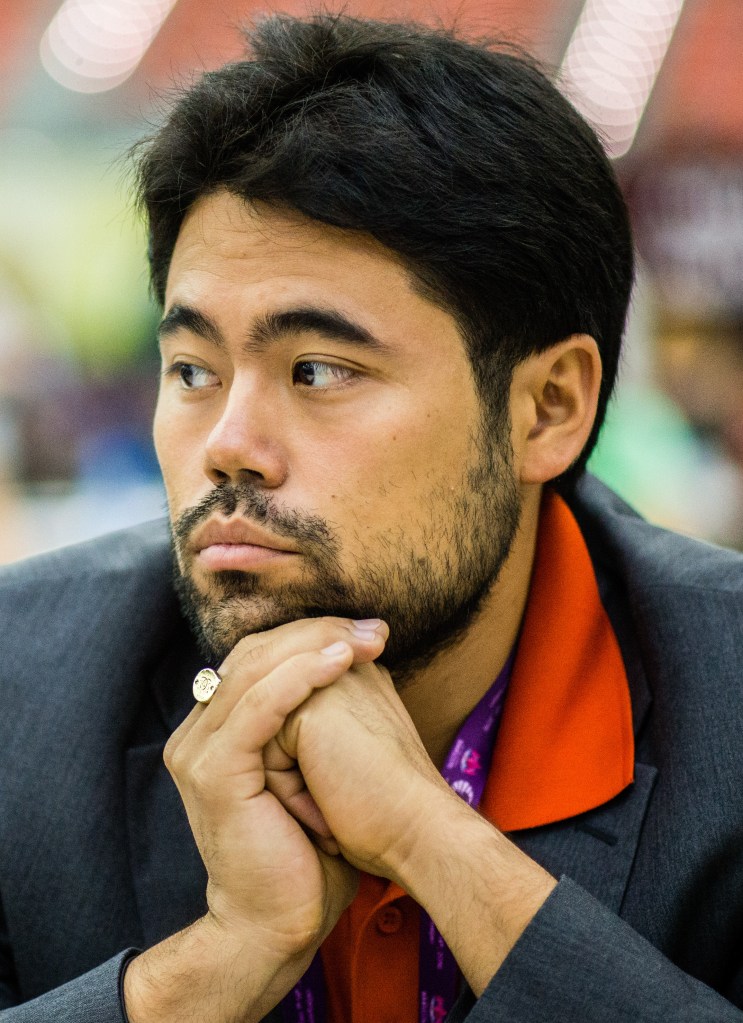
Hikaru Nakamura
A story of achievement is great. A person from one particular background rising above their peers and climbing all to the peak of performance is cool, but it usually doesn’t inspire me. I think it’s because it feels inevitable. If we create a competition with 250 players, somebody’s gotta be the best, right?
For me, the story that draws me in isn’t one of instant success, it’s the story of failure, and the strength to rise again.
In 2015, Hikaru Nakamura was the second best player in Chess. In 2019, he had dropped down to 21st. It may seem small, but that gap was enormous and the product of 3 years of decline.
It’s a mental game. Getting so close to the top, it’s easy to coast. A person can lose their motivation, their drive for competing. Life gets complicated, new priorities arise, old priorities sink. You can even forget why you started in the first place. After 3 years of decline, it can feel inevitable, like the natural lifespan of a career coming to an end. Why bother getting back into shape when the game is already over?
But Hikaru Nakamura didn’t give up. He started streaming. He built a better relationship with the game, and eventually, he found a new reason to compete.
Today, Hikaru Nakamura is back at #2, and his chances of winning the Candidates Tournament are higher than they ever were a decade ago.
I think I find a comeback story so inspiring for two reasons. One, they’re rare. Two, they teach us life doesn’t always turn out the same way for everyone. We can turn things around, rewrite our fate, outperform even our own preconceptions.
In my novel:
Zouk Solinsen is a washed-up strategy game grandmaster. He forgot what made him love the game, he got caught up in other things, teaching students and paying the bills, and he lost his self confidence.
But unique times and unique challenges give Zouk a second chance. A chance to love the game again, a chance to sharpen his strengths and become better than ever. There’s nothing better than a comeback story.
Yasser Seirawan and Garry Kasparov
Back when I was studying chess (I’m not very good), I looked up a lot of lectures on Youtube. My favorites are from Yasser Seirawan. The man approaches teaching with a childlike wonder for the game, an excitement to share his knowledge with anyone who wants to learn.
Yasser Seirawan has been an extraordinary player in the chess scene for 30 years. He was the second for Victor Korchnoi in 1981, meaning he was the chief advisor for the challenger for the world champion title, and all of that before Garry Kasparov was even on the scene.
He’s a player that has faced generations of players. He has seen the absolute best that Chess has to offer and shares it with his students. When he describes how the game transformed with the advent of computers, it isn’t theory, he witnessed it. What better mentor could there be?
And then there’s Garry Kasparov.
In my previous post I discussed at length the significance of Kasparov vs Deep Blue in inspiring my story, now I want to briefly discuss another of the man’s aspects. Politics.
In 1984, just after Kasparov had won two consecutive games against the world champion, FIDE abruptly ended the match, citing ‘player health’. They cheated Garry Kasparov out of a world championship title, and he didn’t take it lying down. The thing is, Kasparov defeating Karpov wasn’t just about Chess. It was about the future of the Soviet Union, and the game was being watched by the whole world.
Since then, the man has led protests, been arrested, and even been forced out of Russia. Every day he shows the boldness and courage most of us wish we had.
In my novel:
Yolniv is Zouk’s mentor. In the face of nearly unbeatable opponents, his decades of experience as both a player and teacher help Zouk discover the right strategies and refine them to a point. He never fears sharing his mind, and as the plot heats up, ancient history comes back to bite him.
Danny Rensch
For a post about famous chess players, Danny Rensch might be a surprise. He’s an International Masters player, sure, but he’s primarily known as the Chief Chess Officer at Chess.com.
And there’s a very particular reason he’s on my list.
Danny Rensch dances on a very thin tight-wire. Every day, the man is both the face of his company, and a key decision maker behind the scenes.
To some extent, all the biggest leaders today have to walk this tight-wire. They show confidence at the investor meetings, then go to their offices and make the hard choices. It’s a funny duality, but I find it more pronounced in Danny Rensch.
When Chess.com hosts a major tournament, he’s there. Casting games, plugging products, hosting the livestream. He’s an entertainer for hours on end. Most entertainers spend their whole career developing the skill to keep people engaged, Danny only gets to do that for half the time.
For the other half, he has to deal with the ugly side of the business. When there’s a controversy in the chess scene, he’s in the room deciding how to handle it. When there’s a clash between two players, he’s mediating the reconciliation. When a tournament needs bigger names and better sponsors, it’s all on him.
He plays both entertainer and decisionmaker. He’s done it for years, and it’s really extraordinary to watch.
In My Book:
The Mind of Communication and Influence (AKA Influence), is the voice of the Minds to the general population. Day to day, Influence is a news man, a face on tv reporting to the people of Iom. But he’s also one of the three Minds. The weight of the executive rests on his shoulders. It’s easy to get the wrong impression of Influence. Either he seems shallow and entertaining, or duplicitous in the separation between his speech and his action. But there’s more than meets the eye to Influence.
Final Thoughts
There are plenty more characters in my novel, some undeniably inspired by other chess players and competitors more broadly. A Magnus Carlsen-based is definitely hiding in my book somewhere. Anna Cramling might be too.
With competition comes real people. Success for one means failure for another. Everyone who competes does so sincerely, and it’s rare to get that kind of truth from a person these days. Virtues and flaws are put on display because anything less than giving it your all dooms you to defeat, and all that honesty makes for a great character.
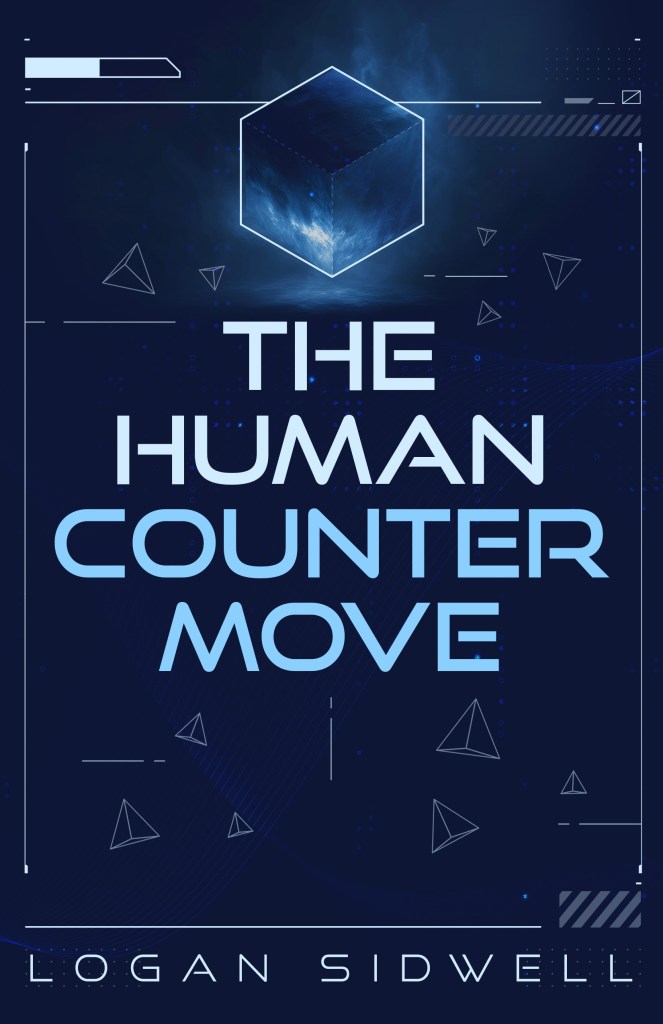
The Human Countermove is now available for purchase! Click the image to be taken to the amazon page.
Postscript: Although certain figures in The Human Countermove draw inspiration from real chess players, the story is a work of fiction. The characters and their choices are not reflections or critiques of any actual individuals.
For thirty years, strategy game players have been reckoning with the harsh reality that a computer might be able to play a game better than them. Beginning in 1997 with Kasparov vs Deep Blue and ending with Lee Se-Dol vs AlphaGo, AI inched ahead of human performance year by year, culminating in their total victory.
I love that tension, the open question that floats in the air with every game, ‘Can humanity win?’. Every victory and every defeat carried enormous weight. It’s the heart of my novel, The Human Countermove, strategy games and the fight against a mentally superior enemy.
The challenge with writing a strategy book is creating strategies that feel authentic and clever. The kind of ideas that are convincingly grandmaster in skill, but understandable to the general public. In order to achieve that, I had to learn from the best.
Kasparov vs Deep Blue (1997)
This game is the seed at the center of my book. The tipping point for humanity, the moment we realized computers could out-think people. In 1996, Kasparov won 4-2.
In 1997, they had a rematch, Deep Blue won 3.5-2.5.
Those two matches record the exact year engineering overtook training.
My favorite moment from the 1997 match comes in game 2, when Kasparov accused the Deep Blue team of cheating by having a Grandmaster help with a move. Even a computer can get illegal assistance from time-to-time it seems.
But the conflict of the moment is what really captures me. On the one hand, we want to believe a person is capable of outperforming a computer. On the other, what an incredible feat it is to reproduce the mind of a genius with a bit of code and training. Caught in between, the audience cheers both sides, athletic feat against human ingenuity.
Kasparov has a list of mistakes he says he regrets about that match. Moments he could have snatched a draw from a defeat, a victory from a stalemate. The thing is, if he had won, all it would have done is stall the inevitable. Instead of discussing the 1997 Kasparov vs Deep Blue match, we’d be discussing the 1998 Kasparov vs Deep Blue match.
It’s all of this I try to capture in my book. The tension, the conflict, the regret, and the determination to beat the unbeatable.
Now when Chess Engines and AI models face off against one another, they are a tier beyond our best players. A mentor for grandmasters like Magnus Carlsen, and something beyond the rest of our comprehension.
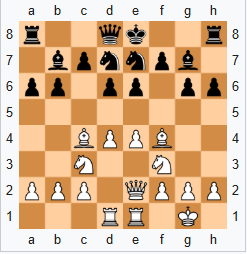
The Opera Game (1858)
This is a lighter game. The Opera game was played by Paul Morphy and The Duke of Brunswick over a century ago. It’s one I draw inspiration from in my novel not as a strategic tool, but as a piece of chess culture. The Opera Game represents the beginning of a chess student’s education, one of the very first games a novice will be introduced to.
Paul Morphy makes strong, understandable decisions against a much weaker opponent, rapidly gains the advantage, and wins in style. But it’s not just a game, it’s a story. The best in the world dragged into the Duke’s box to play a chess game in the middle of an opera. For beginners, it weaves a romance around chess, and attaches a narrative to one of their first lessons.
In my book, the protagonist Zouk does a lot of teaching on the side, as many professional players find themselves doing. When an opportunity to lecture to a big audience comes around and he realizes the inexperience of his listeners, he abandons the esoteric analysis had prepared, and leans on a tried and true classic with a fun story, The Highway Game.
Go: Lee Se-Dol vs AlphaGo(2017)
Lee Se-Dol vs AlphaGo ended in a 1-4 result. For those of us that had been tracking the development of computers since Deep Blue’s game against Kasparov, seeing AlphaGo take its victory wasn’t a surprise. Go is much more computationally difficult than chess, but Moore’s Law is a powerful force.
But did you notice the scoreboard? Lee Se-Dol won the fourth game. That was an upset.
Against Google’s best engineers and decades of neural networking and algorithmic design, a human being managed to snatch victory, and it all came from a single move. Move 78.
That move has been gone over, analyzed, and studied for years. It’s believed Move 78 pushed the game into a uniquely complicated position, a position AlphaGo couldn’t calculate. A blind spot in the computer’s play that drew out blunder after blunder.
Lee Se-Dol was like a grandmaster Quality Assurance tester, noticing where AlphaGo was weak and pushing it further and further down that path until its behavior was sub-par. Basically, Lee Se-Dol found a bug.
Even when it seemed impossible, a person beat the unbeatable.
The Hippo and Various Anti-AI Strategies
Since Kasparov vs Deep Blue, a thousand Chess engines have burst onto the scene. Anyone willing to run a bit of code on their computer and risk getting banned can play like a grandmaster. To beat such unsavory characters, grandmasters have had to develop a special set of tools. First and foremost is time.
Consider two games. One gives each player an hour to make all their turns, the other gives each player a minute to make their turns. The first game is deeply thought out, with strong moves that remove all chances of counterplay. The second is superficial, moves borne more from training than thought.
In tight time controls, using a chess engine becomes a liability. The grandmaster can play from their subconscious, but the cheater is stuck waiting for the ‘perfect answer’ from the machine.
Thus we meet The Hippo. The Hippo slows the game down to a crawl. Pieces only move forward a square or two, then build a near-impenetrable fortress. As the opponent approaches, the grandmaster makes every effort to close down the position, keeping the number of moving pieces to a minimum.
With each move, the cheater loses a little more time, and the walls close tighter around them.
As their time dwindles, the cheater is forced to throw in a few of their own moves. These usually turn out to be of a significantly lower quality than what a chess engine can put out. Once the grandmaster has stripped the cheater of their chess engine, they unravel all the complexity of The Hippo and go in for the kill.
Once again, complexity and time as weapons to beat an overthinking machine.
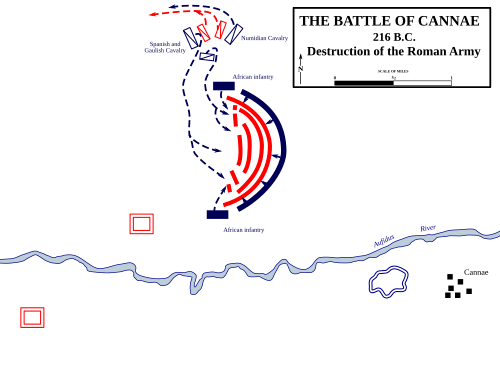
The Battle of Cannae and Real-Time Strategy Games
I love real-time strategy games. The feeling of making a plan, facing the hard truths of reality, making adjustments, and turning the battle in your favor is exhilarating. And they’re so different from a game like Chess or Go. In Chess and Go, the entire shape of the board is transformed in a single move.
In Real-Time Strategy games like Starcraft, you’re making a new move every second, and it’s only when you add all those little decisions up that you end up with a result.
And in games like that, there’s one particular battle result that everyone is chasing.
During the Second Punic Wars, Hannibal faced a much larger Roman force and turned the battle completely in his favor. The trick? Draw the enemy in, encircle them completely, then tighten the trap.
The game in my book, LINE, isn’t like Chess or Go. It’s a little more practical in nature. In theory, the game is playable on a field, not that most people would enjoy the feeling of being shot by a rubber bag. Because of the practical realities of squadrons facing off against one another, tactics like Chess’ fork and pin don’t translate.
But what does translate, is the greatest military trap of all time. Let the enemy over-extend themselves, wait for the right moment, and strike.
Final Words
There are plenty of other strategy games I no doubt pulled inspiration from. Things like the Total War games, Role Playing Games, X-COM, but Chess was my guiding star. It’s funny, once you open your mind to a question like, ‘how does a person beat an AI in strategy?’, you realize how many other people already pondered the same question.
AIs have been kicking Mankind’s collective butt for thirty years. It’s nearly impossible to imagine a person turning it around on them. But nearly impossible is still possible, it only takes the right person and the right techniques to turn things around. Even when the robot brains out-think us on every front, we can still squeak out a victory every now and then. Especially when we’re learning from everything that’s available.
In The Human Countermove, my protagonist Zouk Solinsen is the right person with the right techniques. The skills to outsmart computational genius.
My debut novel, THE HUMAN COUNTERMOVE is now available for purchase!
The following post contains spoilers for the novel The Circle by Dave Eggers.
I used to work for a tech company, somewhere over 1000 employees. I did a bit of coding, a bit of problem-solving, but most importantly a whole lot of messaging other people. There were a million different channels for a million different things. Some niche, some broad, but every one of them had new posts each morning.
When I first started, I tried to keep up with everything. It made me a nervous wreck. Then I tried to ignore everything, and I’d miss key announcements. I’ve always disliked those big messaging systems, and I’m glad I’m free of them.
Reading The Circle by Dave Eggers was like being dumped right back into the worst of it.
The book tells the story of Mae Holland, an eager-to-please young woman hired into the biggest social media company in the country, The Circle. She starts her job by constantly monitoring and posting to every little channel in The Circle’s network. The chapters when she’s posting, reading, and responding to surveys stress me out. It highlights early The Circle’s attitude towards information. Any moment not gathering or generating information is a moment wasted.
But it’s not all posts and likes. The story’s true plot is a battle for Mae’s soul.
At work, the executives and the employees make the argument for all the good social media is bringing to the world. No more secrets. No more backroom deals. All the world a friend.
At home, Mae’s parents and ex-boyfriend strive to protect their privacy. They don’t dare put down Mae’s achievements, but there’s a quiet reticence from her family to hop on board the information bandwagon.
But The Circle isn’t about Mae, and the fight for Mae’s soul is allegorical. The true fight is ours.
The Products of The Circle
We see a dozen different products from The Circle over the course of the book. Tiny cameras planted on every street corner, centralized identity systems to tie every post to a single person, complete catalogs of a person’s history. Each product helps build The Circle’s philosophy. Any information that isn’t recorded is information wasted. We even see 1984 style slogans like “All that happens must be known”.
But it comes from a good place. One of The Circle’s employees Francis Garaventa is out there inventing new ideas with the goal of protecting children. The kind of respectable, un-debatable goal that justifies putting chips in kids’ arms.
Later in the book, we see politicians wearing body cameras for their conversations. We see The Circle ask their users all kinds of questions and use those polls to push their political influence forward. The novel asks its readers hard questions. Is it so wrong to want to live in a transparent world? Is it so wrong to want to protect everyone? Aren’t you tired of the secrets and backroom deals of today?
Of course, with each product, we see both sides. All the good it could do, and all the privacy we’d have to surrender.
The Three Wise Men
In the back half of the book, we meet The Three Wise Men. These are the founders of The Circle. One a tech genius, one a product guy, and one a salesman.
Here, the book poses its second debate. If the products of The Circle didn’t send a shiver down your spine. If you find yourself drawn in by the products, happy to surrender a little privacy for a little more safety, Dave Eggers presents the flaw in making such an exchange.
The scene is presented as a meeting of three aquatic animals. A reclusive seahorse, an ever-stretching octopus, and a shark. The Three Wise Men. The meeting ends the way it always had to end. A shark is the only thing left in the tank.
A decade after the whole world joins The Circle, who will control the company? And how long do good intentions last?
Guided Into Their Arms
Mae’s journey into the inner sanctum of The Circle is one filled with tricks and manipulations. As she embraces the philosophy of The Circle. Her relationship with her family weakens with every visit. Her ex-boyfriend’s diatribes in favor of a less connected world feel more out of place with each speech. Mae’s embrace of the “Privacy is Theft” motto enables her to post his heartfelt hand-written letter online, a place where an echo chamber of commenters reinforce her every bias.
Then Mae makes a mistake. One with mild police involvement. The Circle is benevolent, it’s understanding, it helps Mae find freedom through confession of her mistakes.
A friend of mine pointed out The Circles tricks were exactly what a cult does to ensure its members stay with them forever. Cut off family and friends, take away Mae’s identity outside The Circle, let the social network fill her with all the love she’s losing without her family.
With Mae secure in The Circle, the evil plot is revealed. It’s not enough that all Circle users surrender their data. Everyone needs to be a part of it. A friendly invitation to be enforced on every citizen.
Tragedy and Hard Decisions
Major spoilers below.
Mae embraces it all of it, and The Circle’s influence is pushed to its limit, to tragic results. We see the cost of total transparency when one character’s historical ancestry is revealed to be a long line of monsters and criminals. We see the cost of enforced participation when Mae targets her ex-boyfriend to be brought into the fold.
This is the bucket of cold water, the moment of lucidity in Mae’s data-mining fever. She’s given a chance to change course. An opportunity to tear The Circle down before it’s drawn around the entire nation.
And she doesn’t.
Because it’s not really her choice to make. The book isn’t about Mae Holland saving the world from the dangers of social media. It’s about society’s enthusiastic surrender of our freedoms, about our call to lift every rock and shine a light down every alley, disregarding any notion of ‘privacy’.
So when Mae makes the wrong choice at the end of the book, she only does it because it’s what we’ve all been doing. Each time we make a new profile, refuse to delete an old one, dig up an old mistake to tear a person down, and offer a new picture for verification, we move one closer to closing The Circle.
The battle of The Circle is far from over. There have been some real victories for privacy in the last decade. Victories that probably looked impossible when this book was written. But if you want a clear picture of the sides and of what could be at stake, The Circle makes an extremely compelling case.
My debut novel, THE HUMAN COUNTERMOVE is now available for pre-order!







 Author Logan Sidwell