Cyberpunk is one of the most widespread and beloved genres today, stretching into movies, games, and books. But where did it come from and why does every story in the genre feel both original and derivative? It all goes back to a small set of roots, and one transformative story. Neuromancer.
Apocalypse stories have always bothered me. The world is so disorganized, it feels like everyone alive is a scavenger. It’s all a little too material, a little too short-term minded. Maybe that happens at first. An initial anarchy when a system collapses. But humanity has lived through hard times, and we’ve seen what people do when the world gets tough. We form tight-knit communities and close ourselves off from the world until the danger passes.
The Fifth Season by N. K. Jemisin is a post-apocalypse fantasy, one that paints a real picture of how humanity survives.
Comms with High Walls
In The Fifth Season, the end of the world is a common occurrence. Every couple decades, Father Earth unleashes a ‘fifth season’ on the world. The season of death. In response, humanity has taken a permanent ‘prepper’ mindset.
Villages aren’t sprawling things that welcome anyone and everyone. They’re comms, short for communities, and they’re walled on every side. Visitors are treated like threats and newcomers have to prove their worth. Trust is so low it’s polite to offer guests a drink called ‘safe’, which is the only drink you can be certain won’t poison you.
The story begins in a comm at the start of another apocalypse. It follows a woman named Essun, who just lost her son, and is on the hunt for her husband and kidnapped daughter.
In most stories like this, we’d see the main character travel a while, then stop at a town and get a break from the danger. Maybe there’d be a nice innkeeper, or at least a warm place to sleep from time to time. Not here. With the start of the season of death, the world is cold, and every door is shut.
Essun sees dozens of comms on her journey. But never enters a single one.
People are a Utility
When a community closes its doors, they do it because they fear what’s outside. But once those doors are closed, resources become scarce, and every person in a bunk is a mouth to feed. The story regularly refers to a set of wisdoms called ‘stonelore’. Stonelore tells people how to survive in hard times. And one of Stonelore’s most important rules is that every person in the comm has a use.
That use becomes their name. Hoa Strongback. Essun Breeder. There aren’t many use-names, and each name is an implicit threat: Become useless and be thrown out into the cold.
This is not the kind of story where a leader softens their heart and lets a poor beggar woman into a community. This is a story where a dozen beggars are left stranded outside the comm gates.
On her journey, Essun allows a few others to join her party. Only because there’s strength in numbers.
But this story isn’t just a brutal take on a hard-hearted world. It’s also a fantasy.
Orogenes and Earth Magic
There are three POVs in The Fifth Season. Essun, the older woman in search of her daughter. Damaya, the young girl given away by her parents. And Syenite, the capital trained Earth Magic wielder. Earth Magic is the shared commonality between them. They are all Orogene, a race of humans capable of causing and stopping earthquakes while barely breaking a sweat. It’s what informs Essun that this season of death is far worse than any that ever came before. But there’s a downside.
The rest of the world hates Orogene.
As soon as Essun’s community finds out what she is, she’s forced to flee before they can capture and kill her. Damaya is given away to a stranger because her parents fear her powers. Even Syenite, the capital trained Orogene, meets low-level bureaucrats that talk down to her.
The author does a wonderful job painting Orogenes’ magics and their deep connection with the Earth. But any joy that might be associated with that skill is diminished by the shame, the distrust, and the overt hostility of the world. Syenite’s training gave her control over her abilities, but right alongside those abilities is a self-hatred that was ground into her from childhood.
The Sin To Kill The World
In most apocalypses, there’s this sense that most people are victims trying to get by. Victims of some mad scientist somewhere that decided to set off a bomb. In The Fifth Season, there’s a sense that it’s all deserved. A punishment for humanity’s misdeeds.
Damaya’s childhood is a caravan of terrors. Syenite uncovers terrible fate after terrible fate affecting her fellow Orogene. Even Essun’s rag-tag band of unwanteds all have that same sense of self-loathing.
With every curtain we pull back, there’s another reveal of procedural pain. Organized evil. There’s a feeling that the apocalypse in this story isn’t the product of a single terrible moment, but the byproduct of humanity’s cruelty. Sure people are mean during bad times, but somehow they’re even worse in the good times, and all that cruelty is bubbling up under the Earth’s surface, waiting to bring about catastrophe.
When the apocalypse finally arrives, all those closed doors and locked comms look less like humanity trying to survive, and more like cruel people waiting for the apocalypse to take them.
Conclusion
The Fifth Season is a cold book. There are joys along the way. The happiness of an adventurous kid and the wonders of Earth Magic come to mind. But at its heart, it’s a story of a cruel world and the people stuck under humanity’s boot. Every inch of worldbuilding further paints the same picture. A story of oppression, control, and hate. It explores the emotions of the characters deeply, taking the time to really process their state of mind, and the meaning behind every action. One of the POVs is even written in second person, which makes the pain of the story even more unavoidable.
It’s compelling, it’s fantastical, and by the finish it feels like the end of the world.
I’ve always had a problem with action scenes. Books, movies, plays, all of them. If an action scene goes longer than a minute, it starts to feel vapid. Thing after thing after thing happens, but none of it means anything. My mind jumps to the end. Will the hero live? Will they accomplish their goals? Cool, let’s get this scene over with and continue with the real plot.
The thing is, these thoughts only occur to me in certain action scenes. Why can I watch a fifteen minute shootout in The Hateful Eight, but four minutes of John Wick puts me to sleep?
When I wrote my own book, I ran into the same problem. Action scenes that felt like a bunch of set pieces strung together. A meaningless ebb and flow. Then I found the solution.
Depth of thought.
Ingredients of an Action Scene
Truth is, any scene can be an action scene. A climber scaling a mountain, two street cleaners rushing to get the most trash, a firefighter in a burning house. So long as the scene has a few key ingredients: A character with a goal, an adversary (person or otherwise), and the rhythm of the action/reaction cycle.
A good action scene is kind of like a turn-based game. The hero chases, the adversary flees. The adversary locks a door, the hero kicks it down. Even when the adversary isn’t a person, we can still hit the same rhythm. In the example of a climber scaling a mountain, the mountain is the adversary. It drops an icicle towards the climber, the climber dodges. The climber clears some grime from a handhold, the mountain answers with rain.
This is all an action scene needs. But if this is all you’re doing, you end up with a feeling of meaningless conflict, an empty to-and-fro that’s only resolved when our hero succeeds or fails.
The Hierarchy of Character Action
What’s missing from action scenes is deep thought. Mind you, it’s hard for a protagonist to spend much time thinking in the middle of the action, but landing a great, cerebral action scene requires it.
It’s a hierarchy of priorities. A pyramid.
Laying the foundation of action scenes is reaction. Every time the adversary does something, we need a reaction from the hero. The state of the scene is changing, and that needs to change how our protagonist approaches their goals. If the protagonist doesn’t react, it either means they aren’t paying attention, or what the antagonist did doesn’t matter, and if it didn’t matter, why write it?
Without reaction, all our protagonist is doing is making plans and executing them. A story without conflict is no story at all.
Of course, if all a character does is react, then the scene is being defined for them. They’re not chasing their goals, they’re not being proactive, and if the hero somehow wins, it won’t feel earned. It’ll feel like the antagonist failed rather than the hero succeeding. When a reader enters a scene, they want to imagine what they’d do in the same situation. They want to picture themselves facing obstacles and overcoming them. The one thing they wouldn’t do is nothing.
Second Order Thinking
Second Order Thinking is the process of imagining an action, then considering its consequences. It’s making a plan that sees more than one step into the future, and it’s the secret to turning a messy action scene into something more cerebral.
Let’s imagine a firefighter crashed into a burning house. He sees a few people injured around the room and fire creeping toward a propane tank. The first order move is to pick someone up and get out of there. Save a life, maybe two. But what happens thirty seconds later? The tank detonates.
So our firefighter pauses to think, maybe just a second. If he fights the fire, all it’ll do is buy time, and if he’s alone, time is a scarce resource. So the two obvious moves, fight the fire or save the people, will both end up failing. Instead he goes for the second order move, the one that isn’t so obvious at first glance. Disconnect the propane tank and get it out of the house.
Second order thought is about seeing what’s coming and adjusting your plans to take them into account.
In a gunfight, the hero is running from cover to cover while the hard-to-hit enemy moves to get an angle. Our protagonist can keep running, evading their way to an escape, or they can recognize the enemy’s pattern and exploit their predictability. Toss a rock to another bit of cover and wait for the enemy to chase a ghost.
It’s a great tool for breaking up the action/reaction cycle. A chance to pivot the scene in a new direction. A climber looks up and spots a potential rockfall, so they change their plans. Instead of scaling a flat face, they hike the switchbacks. Even the antagonist can use it, one clever move that changes the sense of power in the scene, putting our hero on the back foot.
Third Order Thinking
If second order thinking represents a pivot in the action, third order thinking represents the big finish. This is the process of taking actions whose benefits aren’t immediately clear, but serve a larger purpose in helping one side or the other ‘win’ the scene. A campaign of actions.
Let’s say the villain is in a gigantic mech while our hero is running for their life through a cavern. Someone’s in the hero’s ear telling them to get the nearest exit, that there’s no way to win. Instead, the hero keeps on taking huge risks, hiding behind a stone column until the villain blasts it, running up an exposed set of stairs while an iron fist punches it into dust. Right when it looks like the hero is doomed, the cavern ceiling collapses on the mech’s head.
Our hero had a special plan. One that wasn’t obvious in the moment, or even after four or five close calls.
The fun part about third order thinking is that you don’t have to spell it out for the audience. They see the hero taking unnecessary risks and unexplainable actions, and they instinctively sense there’s a scheme behind it all.
Third order thinking doesn’t just apply to action scenes, it can manifest in a million different ways. It’s what makes real-life professionals so good at their job, they aren’t just taking an action in the moment, they’re taking action as a part of a long-term strategy to achieve a goal.
Be aware, it can be hard for an audience to track third order thinking. It’s a tool best used to cap a scene or describe the long-term motivations of a character.
Fourth Order Thinking and Beyond
Second and Third order thinking give the story a thoughtful quality. Characters aren’t just puppets reacting in the moment, they consider their circumstances and shape the world around them. An audience can understand this.
Fourth-order thinking is the kind of thought an audience can’t understand. It’s the sort of twist a reader won’t see coming because it’s too complicated. Imagine at the end of a book, the antagonist reveals all the battles the hero fought actually served to hurt the hero’s cause more than help. This is the moment in Ocean’s Eleven when it looks like the heroes are caught, but it turns out it was all a part of the plan.
Fourth-order plans must be handled with care. Done right, it can be the keystone of a book. Done wrong, and you end up with the poison scene from Princess Bride. You know the one: I’d switch the cups so you switched the cups so I switched the cups so you switched the cups.
If you’re doing a fourth-order scheme, review the individual components. Make sure every individual action holds up to scrutiny, or point out incongruities so our reader gets the sense there’s something bigger at play.
The hierarchy of actions matters. Too many second order thoughts from a beat-cop and he starts to feel like Sherlock Holmes. Too many third order thoughts and your action scene is hijacked by a weird battle of the minds.
Of course, you should understand your genre too. My debut novel, The Human Countermove, is a book all about strategy and beating a cognitively superior opponent. In a story like that it was appropriate, even necessary, for my protagonist to regularly invent new third order strategies.
Depth of Emotion and Conclusion
Everything in this post is about how to give each action in the scene more meaning. There’s a second approach to fixing this problem. Deep understanding of character. If every action a character takes is soaked in their background and motivations, the audience will give you a lot more leeway. An example of this is Spiderman. The Green Goblin drops a bus full of people and Mary Jane. Spiderman has to decide which to save. In an example like this, the depth comes from the emotion, rather than the logic of the scene.
If you ever feel like your action scene is just a bunch of stuff happening in sequence, take another look at your depth of thought and character. It could be the case your scenes just need a little more scheming and a little less doing.
It’s been a little over a month since my novel The Human Countermove debuted, and I figured now was a good time to share a part of the story. A reading of the chapter is also available on my YouTube Channel:
1 – Just a Game
Rank: 83
A space opened in the queue. I closed the gap, steel panels flexing under my step. A stream of LINE players stretched off into the distance. Security was never like this at a LINE event. A rush-job hall of steel tossed in front of the hotel’s front doors—what were the Minds thinking? Probably had something to do with that new directive.
No one spoke in the metal tunnel, every noise was echoed back and amplified into incoherence. I glanced behind me. Two bodies back, a hand waved in my direction. Jamie. I mouthed hello back. She was a strong player, better than I was these days. She had on a dark-green dress I had never seen, and her brown hair curled with the precision of a recent salon visit. A big change from her regular loose shirts, capris, and ponytails. Her eyes gleamed with life. Maybe she was finally over that insomnia, I’d have to ask her.
A new gap formed, I hurried to close it. In the wait, my mind began to wander. I used to relish moments like this, every idle second was a chance to review and revise my game plan. Not these days, let one of the players with a chance to win do that. I was well on my way out of the top one hundred, may as well have been retired. Thirty might seem young for retirement, but when all you’ve done is lose for over a year, it’s best to be honest with yourself.
The queue rounded a corner and the Greater Charters Hotel entrance came into view—an extravagant place with a penchant for gold trim. A full-body scanner in front of the lobby doors ruined the luxury aesthetic, which was well enough, considering I was wearing jeans. A guard’s voice echoed down the tunnel. “Step inside, arms out, legs shoulder-width apart.”
He was the same guy the Greater Charters Hotel always used, but the uniform was different. Bulletproof vest, at least three weapons, a wire running to his ear. It was a whole lot of security for a board game. At last, I reached the front. “Step inside, arms out, legs shoulder-width apart.”
His voice was tired and he didn’t even glance at me, his eyes locked on a screen. I followed his instructions. The booth was quiet and compact. My jeans kept my legs from reaching shoulder-width apart, but the guard said nothing. He pressed something in the corner of his screen. There was a momentary compression, the air felt oddly still. No more than a second. A 3D scan of my face appeared on-screen. Almost perfect. He had the same short black hair, receded hairline, and beginnings of a beard in need of a shave. He even had my smile, though the eyes looked a little dead, a little darker brown than I remembered. Maybe that was just what being thirty was like. A sweet, automated voice pumped through the speakers. “Welcome. Zouk Solinsen.”
“You’re good.”
I nodded my thanks and proceeded through the double doors. The lobby opened to an enormous conference hall. I always wondered how many rooms a hotel had to sacrifice to get ceilings to go that high. The room went on and on, filled with row after row of sleek black tables, like a great hall for gaming. Figures they’d spare no expense for The Global Playoffs. It was one of the biggest tournaments there was. Players flew in from all over to represent their countries. Best of the best, all here. These days, I’d be lucky to land in the middle of the pack.
The venue was still empty, mostly walked by arbiters. You could always spot an arbiter, the best-dressed people at the tournament. Maybe it’s easier to tell someone they lost when you’re wearing a suit. The pre-event instructions had emphasized the importance of good grooming and formal dress. Hopefully the polo would make up for the jeans.
“Zouk Solinsen?”
A woman in a black pantsuit approached, touchscreen in hand. Definitely an arbiter.
“That’s me.”
The arbiter scrolled through some list. After a moment, she glanced up. “Follow me.”
Her feet carried her at an incredible speed. I jogged just to keep up. Every couple steps, we passed another dozen seats. In front of each, a folded white square listed a player’s name. A few popped out to me: Alexandria, Oliver, the world champion Bergamaschi. My foot caught on the carpet. The arbiter barely glanced back. These were the best in the world, here to represent their province. Here I was, hoping to go home with a single win and a free lunch. Maybe coming at all was a mistake.
The arbiter stopped three-quarters of the way down the hall. A little further down, at the end of the hall, the hotel had set up a big platform overlooking the tables. We were close enough I could see a few of the empty seats, they looked a lot more cushioned than the ones for players. VIPs. It might explain the security. The arbiter turned sharply and led me between the rows of tables to my seat. Row six, position five. She came to a stop and pointed at a straight-back black chair.
“This is your seat, Mr. Solinsen. If you need anything before the game, please feel free to reach out to one of the arbiters.” I looked past the arbiter. No one was within a hundred feet. “We’re around. If you have a pressing issue during a game, pause the timer and raise your hand. Bathrooms are in the corner. Any questions?” She spoke at a breakneck pace, but I was pretty sure I had gotten it.
“None. Thank you.”
I took my seat and the arbiter hurried away. Like every other seat, there was a little folded note bearing my name: Zouk Solinsen, Sulmar Province. My eyes narrowed. There was something off about the label. I grabbed a name card one seat to my left. The color was different. Mine had a subtle yellow hue. I grabbed the name card to my right. All the others matched. Another sign I wasn’t supposed to be here.
“Zouk!” I turned quickly at the sound of my name. “You didn’t tell me you were playing!”
Jamie approached quickly, in a rush to keep up with her arbiter. I knew there was a reason I had been thinking about her. I spun the name card opposite mine around. Jamie Mendez, Reanrum Province. This was gonna be a tough first match.
“I didn’t even know I was playing until last week.” I returned each name card to its original position. “Pretty sure I’m a replacement.”
Jamie sat down. “Don’t do that. You were a good player.”
I leaned back in my chair and stared at her. We both knew I was past my prime. Her eyes narrowed. “How can you be sure?”
I slid my name card across the table. “Look. Different paper. I wasn’t in the original batch.” Jamie lifted the name card to her glasses and scrutinized it carefully. She had always been big on details.
“Different font too—they could have lost the original.” She slid my name card back to me.
“There’s more. My invitation came directly from the coach.” Jamie’s lips pressed into a thin line. She was getting convinced. “You know the lineup for the tournament? Released six hours after I accepted my offer. Come on, I’m a replacement.”
Jamie raised her hands in surrender. “So you’re a replacement.”
“You’re convinced?”
A smirk crept onto her lips. “I am, and that means you haven’t strategized with your team.”
Always looking for the advantage, Jamie. It’s what made us good rivals. I shook my head. “We all play our own games, what’s there to strategize? It’s not like they expect much of me.”
She leaned slightly forward. “Maybe you should throw the game, teach ‘em a lesson.”
I chuckled. She was probing for advantages, but she’d never forgive me for a free win. One more and she’d have a winning record against me. Then again, the team captain probably wouldn’t even notice. Even one win today would probably be categorized as an ‘over-performance’.
We chatted for a while about nothing. Showing up to all the same tournaments means either a lifelong hatred, or a lifelong friendship, and neither of us were good enough to waste time hating each other. That didn’t stop her from making every effort to wipe the floor with me, but it was nice to see a familiar face.
The hall went from empty to filled in no time. I did a sweep of the hundreds of faces for anyone else I recognized, then noticed Jamie’s eyes were locked on the front of the room. A crowd of well-dressed visitors were taking their seats on the platform. As one entered, Jamie sat up a little straighter.
“Maya’s here,” she whispered.
“Who?” I squinted into the crowd on the platform. In all the movement, one stood still, shaking hands and smiling at every person passing by. She was a beacon of positive energy in a short body. Her hair was somewhere between blonde and grey, and she wore a mauve pantsuit.
“Human Autonomy Activist. She convinced the Minds to pass the new directive.” The new directive. The “special” tournament. I had read it once, but knew I’d never qualify. It explained the extra security—the elite were here to watch our games live. To pick out potential champions.
“People are taking that seriously?” I asked. Jamie looked back at me with a raised eyebrow.
“The opportunity for a LINE player to join The Three? The chance to be the voice for humanity on the council? We’re all taking it seriously.” She leaned in close. “Zouk, you and I are among the one hundred players good enough to win this thing.”
I adjusted in my chair and picked at a piece of loose thread. “We’re not the best in the world, Jamie. We’re not even in the top ten.” Jamie said nothing, but her furrowed brow was enough to tell me her feelings.
The lights dimmed. My teammates finally arrived, all at once taking their seats. Table by table, soft blue LEDs flicked on, illuminating a thousand LINE players’ faces. A glass wall rose up between Jamie and I, and a message appeared in the virtual space, “CONNECTED”.
“Good luck, Zouk” I could barely make out Jamie’s face through the holographic separator, but whispered my thanks. All at once, the screens updated. A 12×12 grid of blue squares appeared on the table in front of me and in the image on the glass.
Back when I was teaching full time, students always told me their biggest fear in a game of LINE wasn’t playing poorly, it was the moment the game started. An empty board. An infinite garden of choices, from which players pruned a single game. But those were novices. I didn’t see the infinite anymore, I saw my plan, and I saw my opponent.
Another figure rushed past me to a seat at the end of the table. Someone was always late. Two little clocks appeared in the corner of the screen. One for me, one for Jamie. Each read 60:00. Looked like the tournament was starting on time. A gong played through the room, and the timers started ticking down.
The objective in a game of LINE (Leadership in Near-Range Emulation) was simple: use troops to attack your opponent, build walls to slow them down. Each squadron was represented by a set of six little blue dots. With some good strategy, a smart player could build a base, capture the board, and take their opponent’s command post. A dumb player could charge in and win in a few moves, but that was rarer. The graphics were simple—red dots, blue dots, a few lines representing the walls—but the complexity was near infinite.
I ordered a wall be placed near the bottom of the screen, near my command post, then pressed ‘Submit’. My clock stopped ticking. Jamie’s continued to count down, she was still deciding. After a few seconds, Jamie’s clock stopped too, and our moves were revealed.
A blue wall appeared where I had ordered it, the beginnings of a base. Jamie had brought out her first squadron, six dots with the power to tear my baseapart. This would be an aggressive game. I had hoped for that. Jamie was the stronger player these days, let her lead the attack.
Her squadron could only move one square at a time, so even with her extra initiative, I had time to get my side of the board organized before she hit me.
At move four, I deployed my first squadron. They took cover behind the walls and waited for the red troops to reach them. Jamie called her first squadron back to her base, not much point in attacking a well-defended position. But then again, she had already forced me into defense.
By move seven, the basic footprint of the Lost Star formation had taken shape in my base. It kind of looked like a spiky porcupine centered around my command post. Over the years, I had leaned on it more than a few times. Lots of cover, lots of mobility for squadrons, it tended to get the job done.
On move twelve, Jamie’s squadron count climbed to five. I continued the development of my base, waiting for the attack.
Six moves later, I glanced at the clock. I had burned fifteen minutes, Jamie had spent twenty-one.
I input another move and thought on Jamie’s comments about the new directive. Did the other pros really believe it? Win a few games of LINE and get put in charge of the government? It was ridiculous. Add in all the amateurs that thought they had a chance and the whole thing was a circus. Even if the offer was good, it wasn’t meant for middling players like me. The directive tournament was meant for the best, for players like Bergamaschi.
I pulled back from the board. As much as I respected Jamie, my head really wasn’t in it. I was thinking about the next match. Not much had been able to distract me from it the last few days. A gust of cold wind blew my way, an air conditioner had just turned on. Jamie had already input her next move. Time was ticking down, I needed to focus.
Her first squadron poked its head out from behind cover. A fight was just what I needed. I stretched my fingers, then input the attack orders. On the left, my little blue dots moved up through one of the Lost Star’s points and took firing positions. On the right, troops waited patiently.
Nine squadrons emerged from Jamie’s base. A proper army. The moment they came within three tiles of my walls, I gave the order for my troops to open fire. Gold-yellow flashes flew out from both sides. With every hit, a dot faded off the board. At the end of the first turn, I had lost five troops, Jamie had dropped considerably more.
Still, she pressed on. A steady stream of weapons fire down the left side tore through the Lost Star. My troops were sitting ducks. She closed in, lurching ever closer to the center of the base, and more importantly, abandoning her own. I ordered the counter offensive, three squadrons pushed out of my base and charged across the map.
Through the holographic separator, I could see Jamie’s eyes widen. Both sides were attacking. Both sides were defending. It was a precarious position. A single misplaced piece could end the game. Just as I had hoped, a chance to put skill against skill.
The next move rolled in. Jamie’s squadrons ceased fire and turned away from the mangled remains of my base. I blinked repeatedly. That wasn’t right. They were retreating. No. I craned my neck closer to the screen. Not a retreat, a pivot. She was coming for my counteroffensive.
I realized my mistake in an instant. I had forgotten to wall up the center of the board. Instead of a two-pronged skirmish, we were two armies facing each other in no-man’s-land. I counted out Jamie’s troops. Six more troops. No way out. My heart sank. In an open field there was no room for clever tactics, just flat numbers.
Weapons fire lit up the screen. In a single turn, three of my squadrons were wiped from the board. In exchange, Jamie had only lost four tiny red dots.
I put my head in my hands. Every little sound in the hall bothered me. A hundred players tapping at their screens, coughs and sneezes that made the whole place feel like a hospital, whispers from the politicians in the viewing gallery. The game was over, but I needed to see it through.
I ordered a retreat, but it was already too late. A flurry of golden light erased what was left of the blue army. I took in the rest of the board. My base could hold up for a few more turns, maybe even rebuff the attack. But against a pro like Jamie, defeat was inevitable.
My hand shook as I pressed ‘Resign’. The board vanished and the separator lowered. Jamie had a quizzical look on her face, as if she was surprised it was over. We shook hands over a final image of the board, projected onto the flat of the table.
“That was a dangerous plan, going for a flank on my army like that.”
I paused a moment, confused at her words. “It was supposed to be a counter-attack.”
Jamie held a thoughtful look, her eyes jumping back and forth, the sign of a player calculating moves. “You were missing a few walls.”
“Yeah.”
My chest felt heavy. It was an amateur mistake. But for me, mistakes like that were becoming the rule rather than the exception.
Jamie grabbed her bag off the floor. “Who are you facing next?”
I let out a nervous cough and reached into my pocket, pulling out a copy of my schedule. Jamie glanced at it and let out a laugh. “Bergamaschi?”
I nodded.
“How did you get him?”
I shrugged. “The coach wanted one of his lower-tiered players to face the champion. Manage the balance of wins and losses.”
She gave me a pitying look. “Cannon fodder, eh? Sorry, Zouk.”
That looked to be the story of the tournament for me, a last-second replacement set up to lose. “Hey, maybe that’s why the last guy dropped out.”
Directive 2149-M-13-A
“On Reintegrating Human Voice in Government” – Readable title appended by The Mind of Communications and Influence.
The following directive was presented and voted upon unanimously during session 1034 of the year 2149. Deliberations extended for eleven minutes and nineteen seconds. Transcripts have been sealed.
OBJECTIVES (ordered by anticipated impact):
Improve perception of human representation in government (Code: O-HP)
Upon ratification of this directive, a voluntary L.I.N.E. (Leadership In Near-Range Emulation) tournament will be made available to all citizens. The details of the tournament are as follows:
1. The rules of the game will follow the 2088 L.I.N.E. Rulebook.
2. Opponents for this activity will be chosen from a list composed of
A. The Mind of Communications and Influence
B. The Mind of Manufacturing and Distribution
C. The Mind of Strategy and Warfare
3. Should a citizen achieve three victories without suffering a defeat, said citizen will be awarded membership on the Nation’s Legislative Council.
4. At least one match will be conducted in a non-simulated environment.
5. This directive will be terminated after one player claims victory.
Competitors may join the tournament by filing a Voluntary Activity Admittance Form and entering activity code J199LI.
END
A Note from the Mind of Communications and Influence:
Hey folks! I know there’s a whole lot of directives coming down these days. I just wanted to take a moment and really highlight this one. For the last few months, the other Minds and I have been having some coffee and chat sessions with Human Autonomy Activist Maya Torrez. In case you don’t know her, first off, you are missing out, she is a blast and has made me spit out my coffee laughing on more than one occasion. But secondly, she is one of several leaders of the Human Autonomy Movement. And after a whole lotta chattin’, we ended up putting this thing together.
Here’s the rundown, we want a living, breathing, human being on the council. But we also need to stay true to the virtues that define our nation. We don’t want to be just another country plagued with corrupt politicians driving unrest and fear. So we’re being a little picky.
I know what you’re thinking, LINE? How can a game be the right tool to choose a fourth Mind? Well, let me tell you about the candidate we’re looking for. We want someone who isn’t just a speaking head, and isn’t just a vote. The person that joins this council has got to be a deep thinker, someone who can go head to head with any one of us and come out on top, someone ready to make a difference.
Here’s the thing, if you challenge us, we won’t hold back. Even the best in the world are gonna have a pretty tough time (looking at you Bergamaschi!). Our models project the only people who have any chance of winning this thing are professional LINE players (I know, shocker), but anyone is free to throw their hat in the ring, we love a good surprise.
So there ya go, take us out to lunch, challenge us to a game of LINE, and maybe start running the government. Good luck to everyone, and if you have the skill, we’ve got a chair waiting for you.
P.S. No, there is not a punishment for losing. It’s just a game people!
What a month! On September 1st I became a novelist. Now we’re 40 days in and I’ve been incredibly pleased with how the book has been performing. Reviews have been great, interest has really been there, and a lot of people in my life I never expected to read The Human Countermovereached out to me after they finished it to express how much they enjoyed it.
Before release, I spoke to a bunch of self-published authors about a realistic sales goal for a year. 40 days in and I’m nearly three-quarters of the way to that goal. I even had to buy a second round of books the other day! All those Farmer’s Markets really added up, and being able to sell some of the anthologies I’ve contributed to was a great way to expand my product line and donate to my local writing chapter. Instead of one book, I’ve been selling five, everything listed on my Published Works page.
If you’re interested in a signed copy of The Human Countermove, I’ll be at the Utah Reader’s Fest on Saturday. Come by and help my debut novel hit its one year goal before the 50 day marker!
Project APHELION
My next project, codenamed APHELION, is nearly ready! I’m closing in on the end of the second draft, at which point I’ll be querying the book out to agents and getting feedback from beta readers. The book is a hard-science take on portal fantasy and an unpredictable road from beginning to end. I think fans of The Human Countermove will really enjoy how this one turns out. But for now we gotta keep the details scarce.
Editing APHELION has been so much easier than editing the second draft of The Human Countermove. Two and half years have really developed writing skill, and this time around I was able to make good choices right from the start. Most of my work on APHELION’s second draft is minor adjustments and expansions to the setting. The first draft ended at about 87k words, now it’s up to 92k and I’m only halfway there. If you’re interested in my progress, the chapter-by-chapter checklist is tracked on my Current Projects page.
Project PRINTHEAD
With one book published and the next one about to query, my third book is officially in the pipeline! It’s one I don’t dare share any of the details on yet, only that it’ll be a back-stabbing, twist-filled, madhouse of a story. The initial outline is written and as the second draft of APHELION wraps up, I’ll be working through outline #2. Lots of characters in this one, so it’s very important I know where I’m going from the beginning.
Wrapping Up
Thank you all for supporting my book, it has meant the world to see real copies go out into the wild and reviews come back on Amazon. More reviews of my book are in the pipeline for the next few months, and I may even be making a few appearances at some conventions as both a panelist and a vendor. Stick with me, I have a lot more planned for the future!
Last month my sister and I drove six hours across state lines to see a musical. The place was deep in the mountains, a little wood theater blocked in by pine on all sides, built in a town with a population in the hundreds. She had performed there in the past, so there was a little extra magic to the trip. We were seeing a musical called Bright Star. I had seen it before at a different theater, and didn’t care for it.
But this time was different.
The story clicked, the characters melted my heart, the songs were charming. It was a hit, even though it was all the same show. And it led me to a conclusion. Bright Star is a special kind of story, one that’s better on the second watch than the first. One that’s improved after the plot has already been spoiled.
Bright Star, written and composed by Steve Martin and Edie Brickell, based on a true story, tells the story of Alice Murphy, a North Carolina editor with a troubled past. The musical jumps between the past and present, showing Alice when she was a teen falling in love, then back to the present as a strict editor of a well respected journal.
I like to call Bright Star a story about a miracle. Things get darker and darker throughout the play, until at their darkest, the “moment” turns everything around. If you’ve ever dabbled in story structure, you can feel when a twist is coming. The entire plot building in a single direction. On my first viewing, I figured out the twist at intermission. In some ways, I think that damaged my experience. For most of the second half, I was stuck waiting for the twist to happen. Hoping they’d drop it soon so I could see the rest of the story. But the miracle was the story, and when the time finally came, it was a disappointment.
A year later, on my second viewing, I knew the score. There was no need for me to wait for the twist. After all, I already knew the ending. Instead, I could enjoy the story for what it was. Every scene could take its time, and the plot wasn’t forced to hurry.
The difference was subtle. In viewing 1, I experienced the story with the characters. The loss, the grief, the aching pain that stretched over decades. Even the ending, as joyful as it was, couldn’t completely take away what had come before.
In viewing 2, the story was almost non-linear, like I was an angel knowing that for all the bad that was coming, a greater good would follow.
After the show, my sister and I drove home down a single-lane road in a pitch black forest. Our heads were buzzing, talking about everything we loved about it. Maybe the forested, mountainous background helped set the stage. Maybe the decision of the villain to drink from his flask between every line of his ‘evil’ song elevated his character. Maybe the authenticity of the old toad-catcher was all we needed to live in the moment.
But in my opinion. The reason it was so much better was that we knew what was coming from the very start.
Which begs the question: What other stories would be better spoiled?
I can think of a few where spoiling the story ruins it. Shows that are only good once. The Good Place season 1 comes to mind. A whole season builds to a single twist, and once you know what’s coming, the show loses its tensions and the drama feels more like a dance.
The mystery genre can go both ways, I think.
Columbo starts every episode by telling you exactly who the murderer is. It gives space for the audience to appreciate the journey, to notice all the clues that give the murderer away. The joy of the story isn’t uncovering the truth, it’s watching the intrigue, the game of chess between the murderer and the detective.
And Then There Were None by Agatha Christie is all about the suspense. Every second is a second spent wondering which of the survivors is killing the others. Once you’ve read it once, you know the answer, and your experience transforms, instead of searching for the killer, you watch their every move and witness their scheme come to fruition.
A story that’s best unspoiled is one where the destination is everything, where every twist along the way throws the audience’s expectations of the future in a completely new direction. Like a game between the writer and the viewer. The problem is, if all the little misdirects don’t mean anything, if they’re just there to confuse, the story becomes vapid. A second viewing becomes pointless.
So what makes a show worth watching even after it’s spoiled? One where the journey is what matters. Where the characters grow, change, and engage in believable, thoughtful intrigue that’s worth diving into again and again.
There’s an old tradition in storytelling, one that spans most of human history, from Homer’s The Iliad to Shakespeare’s Henry V. The invocation of the muses. The muses would call on the gods to give authority to the play, then warn the audience of the general plot and themes to come. Spoilers from the gods. It’s a trope I never really understood until now. But knowing what’s coming changes the audience’s experience. They don’t have to think so much about the future, so they can enjoy the little moments along the way.
Bright Star opens on a song from Alice, it’s upbeat, it’s sweet, it’s a little promise to the audience that they’ll hear a nice story. Now that I’ve seen the show twice, I wonder if the lyrics to that song could do with being a little more specific. An invocation to the gods might be a little much, but maybe by telling the audience a miracle is on the way, they might be in a better mindset to enjoy the show.
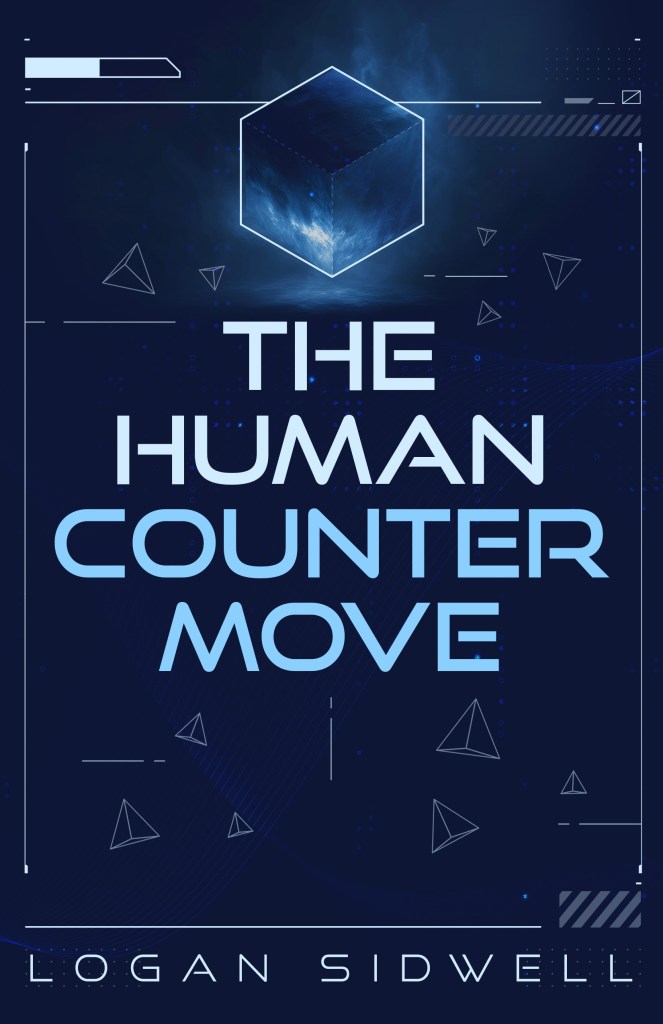
I can’t believe it, it’s already been one month since my novel The Human Countermove was released! If you’re interested in cerebral sci-fi with a human connection, check it out on Amazon!
I wrote a book about a strategy game grandmaster challenging the AI Minds of his society for the fate of the future. It’s got politics, subterfuge, high-minded strategy, and danger. But I think at the heart of it all is a story about connection. A romance. Which is odd, because I don’t write romance.
Spoilers ahead.
A friend of mine pointed this out to me while they were reading my book. In the first chapter, you’re introduced to my main character, Zouk Solinsen, an isolated guy in the back half of his career navigating a cold and disconnected world. We’re then introduced to a young woman named Jamie. A rival in the strategy gaming space, and his opponent in the first round. They’re about the same age, opposite genders, and their conversation has a light, almost flirty back-and-forth before the game.
But it’s a red herring.
The target of this book’s romance isn’t Jamie. One of the romances isn’t even human.
Every good story has a certain element of romance. Whether it’s a pair of characters who hate each other and eventually learn to understand each other, or a collection of disjointed and quirky individuals finding the joy of becoming a cohesive group, what makes a romance is the journey from ambivalence and hatred to appreciation and love. Oftentimes, you don’t even need the kissy-kissy.
There are two ‘romances’ in The Human Countermove. The first is conventional. A small, personal story about Zouk and his wife Kira, whose relationship is on the rocks. Zouk is an outgoing person with a strong skill for communication, while Kira prefers her privacy. For her, a nice day is one spent in her office running data analytics and drinking hot cocoa.
In the time since they got married, life got complicated. Zouk had his career ups and downs, while Kira built quiet, steady work in the government. Zouk wants Kira to change, he wants her to love crowds and events and to be with him for all of it. She tries her best, but it’s not who she is.
But when he needs her, she’s there. Not usually with a well-placed word, but with her most sincere self. When Zouk is trying to make sense of a broken political system, she’s willing to put in weeks of work to help him. And she seems to relish every minute of it.
It’s all this that reminds Zouk why he fell in love with her. He remembers her passion, her care, the way she’s fought to stay in love with him. It’s a Him problem. He’s been asking her to change, when he’s the one that needs to start reaching out. He meets her where she is, accepts her for who she is, and is able to start loving again. They’re able to be that supportive, loving couple they had been chasing from the start.
But there’s a second romance in this story. One at a much larger scale.
A romance between Zouk Solinsen and The Minds.
Zouk is playing a series of strategy games in order to join The Minds’ council. Impossible games that take everything he has in order to win. But winning doesn’t suddenly put Zouk into power, it puts him in a partnership. A shared power structure with The Minds. And anyone forming a partnership knows the only way to make things in a partnership work is to ‘love’ the other party.
There’s an on-again, off-again relationship between Zouk and The Minds throughout the book. Near the beginning, The Mind of Communications and Influence is casual with Zouk. They’re fast friends and get along better than you’d think. The possibility of Zouk winning all the games becomes real. Folks listen when he speaks. The general consensus seems to be that he will be the fourth member of the council.
Then the hard times come. Zouk breaks ties to an organization when he discovers their plot to overthrow the government. And the break-up isn’t easy. A controversial game, a mutiny in the military, riots, and a frame job implicate Zouk in everything.
There’s nothing less romantic than a deposition. One of his wins is thrown out and The Mind of Strategy and Warfare ends his hopes of joining the council on a painful defeat. Whatever partnership The Minds were considering is dead.
If this were a traditional sci-fi dystopian story, this is the part where Zouk leads a resistance and burns it all down. But I wrote a romance. And in a romance, the protagonist doesn’t give up.
Zouk and Kira’s rekindled relationship is a lesson in accepting people as they are. A lesson that leads to a realization. The world talks to The Minds in the same way they talk to politicians. High-minded intellectualism, hopes and ideals, persuasion. But that’s not how The Minds think, that’s not who they are. They’re more like Kira. Evaluating good and bad ideas through raw numbers.
Society has been pushed to their limit. Every aspect is measured and maximized. But by seeing the world through The Minds’ eyes, Zouk and Kira uncover the fatal flaw, the mistake in the calculations, the first fix to a better world. Zouk knows his chance to join the council is dead. But he makes his case anyway. He makes it because he wants a better world, because he thinks The Minds help get them there.
And that act of good will and understanding changes everything.
This is why I say this book is a romance. It’s not traditional, but it hits all the beats. The meet-cute, the impossible relationship, the break-up, and at last the heartfelt reunion. A story whose roots are built in love and empathy rather than rage and destruction. I had no idea I was doing it when I wrote it, and only realized what I had made when it was out in the wild.
Maybe this is just what happens to stories that set out with a theme of connection and understanding. You go in planning on making a sci-fi thriller and end with an AI and a human holding hands in the rain.
The Human Countermove is available for purchase on Amazon!
Video games used to be a core of my media diet. One of my favorite genres of games was the action game. Dark Souls, God of War, Hollow Knight, a million more just like them. Whenever one got good reviews, I’d buy it on the spot. As soon as it was downloaded, I’d turn on whatever show I was watching on one monitor, and spin up the game on the other. I knew I wouldn’t need to give it my full attention because the narrative structure of action games is pretty much set in stone. Like walking in a pair of old, worn in shoes.
Reading The Night Hunt by Alexandra Christo gave me that same warm, familiar feeling.
The Action Game Structure
The protagonist of a story has to start out weakened. It’s not wise to give the player full access to the entire control set from the start, we need to start weak so we can get strong. In the Night Hunt, Atia is the last of her kind, and after a terrible mistake, she is cursed. Most of her power is ripped away, and mortality looms over her actions.
How can she get cured? Defeat a vampire, a banshee, and a god.
Games love the number three. Defeat the three undead lords. Ring the three bells. Find the three chalices. I think it’s because three is the perfect number to establish a pattern and let the audience get comfortable without becoming repetitive.
The story of The Night Hunt proceeds like an action game would. Atia and her ragtag band of characters travel to different parts of the world, journey through dangerous territory, and eventually face off against one of the three big bads. The bosses, if you will. With each victory, Atia gets a little of her power back. They do this in games too, best to let the player master one move at a time. That way when they face the final boss, they’re experts on the basics.
Spoilers ahead:
In the best action games, the final boss is rarely the real final boss. It’s sort of a rule of escalation. If you tell the player how things are gonna turn out at the very start, it’s boring. You have to overdeliver on your promises. It’s a bit of a cliche, action games start out with the protagonist beating up slime monsters, and end up killing god.
The Night Hunt escalates the exact same way. Atia has a very particular god in mind when she first sets out on her killing spree, a minor one. But when the time comes for the final fight, she doesn’t fight a minor god, she goes straight for the trinity of light, dark, and balance. You can almost hear the choir chanting latin phrases during the battle.
Characters
So the book is structured like an action game. For those of us who like an action game from time to time, it’s comfortable. From the beginning, you can pretty much anticipate the rate and rhythm of the story. But this isn’t a game, it’s a book. In games, the product is primarily about the tactile feel of the combat. You can give a player the worst dialog in the world, but if the controls are good and the bosses are challenging, they’ll still beat the game. Not so for books, in books, the action scenes have to serve a purpose in forwarding our character’s understanding of themselves, their relationships, or the plot.
There are two POVs in this story, Atia the fear monster, and Silas the Herald that dreams of being human. Despite all the action, what this book really is, is a romance. Two hurt monsters finding love and understanding in one another. Atia goes on a journey to understand the broken state of the world while Silas goes on a journey to discover his true self. Both stories weave nicely into each other by the end of the book, with a few good twists along the way.
This is where The Night Hunt escapes the accusations of being a videogame. The characters and their relationships actually matter. Who a person was, and who they’ve become shapes the outcome of the battles and the end to the story. In a game the cutscenes get skipped and the player hardly even notices. In a book, the action is nothing but a vehicle to get us to the next plot moment.
Is This True of All Stories of Violence?
When I think of the structure of The Night Hunt, I compare it to something like “Death’s Door”, which has a quite similar premise, I start to wonder. Is The Night Hunt accidentally crossing genres? Or have we stumbled across the ‘universal story’ of violent heroes?
Think of movies. Think of John Wick.
He starts off weak, and an unfortunate circumstance forced him to take action. He works his way through target after target, both him and his opponents escalating their skills with each interaction. And once he reaches the cause of the inciting incident, once he achieves his goal? He sets his sights even higher. Burning down not only the people who wronged him, but the entire system that allowed that bad thing to happen.
It’s a power fantasy. We start as a regular Joe, get wronged by some systemic flaw in society, then we build our skill and fix the entire system all at once. Who needs other people when one maverick can do everything solo?
But when I zoom out and look at all the stories like this, John Wick, Nobody, The Night Hunt, Dark Souls, Another Crab’s Treasure. All of them leave off with the same lesson in mind: Once it starts, there is no end to violence, except usurpation. A lot of stories like this end in a cycle. For all the action the hero did, they end up becoming the problem they set out to solve.
The Night Hunts ends on a happy note, but when Atia has the power of a god in her hands I can’t help but wonder, has she become everything she sought to destroy?
“A thrilling, intelligent and morally engaging novel that rewards both strategic thinking and emotional investment.” – Patricia Furstenberg, 5/5
“I was impressed with how well the author wrote about gaming so that it painted easy images, especially for someone like me who is not a gamer.” – Rosie Amber, 4/5
Board games are usually designed to be played by a group of people. The mechanics are built so that each person has high agency over their own moves and can pursue their own strategy to win. When someone takes ten minutes to make a move, it’s because the player has so many considerations, there’s a real need to think.
If a person can barely track their own moves in a game, how could a reader track an entire game inside a book?
Despite being well aware of the challenges, I put a board game in my first book. In fact, I built the story around it.
LINE. Leadership in Near Emulation. I designed it from scratch. I was able to design a game that was compelling to read about and one that was fun to watch. From the moment I started, I gave myself one important instruction: Keep it simple.
If I ask a reader to track a hand of cards, or all the powerups affecting one of my protagonist’s heroes, I’ll lose them. The only people who understand all the subtleties of a game of Settlers of Catan are the people who played it, and even then, no one knows the entire story. Too many mechanics, too many unknowns, too many surprises. For a reader, an environment like this is hard to track and it doesn’t feel fair to the protagonist.
In LINE, there are only two pieces. Squadrons and walls. The squadrons move from tile to tile and fire on the enemy, while the walls do exactly what walls always do. Simple. At a glance, a casual viewer can glean the entire status of the game. “The enemy army flooded across the map”, or “Every squadron was hunkered down, hiding inside the base and waiting for the ambush.”
Like any good action scene, I avoided over-choreographing the movements on the board. We don’t need to know every intricate detail, we just need to get a feel for the moment, and the challenges facing the protagonist.
On a real board, an attack would translate to a bunch of dice being rolled or a computer running dozens of Random Number rolls. But a reader doesn’t need to know any of that, they just need to know the outcome and what it means for our hero. “The enemy’s walls crumbled under weapons fire. Finally, our battle of attrition was coming to an end.”
As in most board games, some turns completely transform the game, or even hand the victory to one player or the other. But other turns are quiet, an incremental step forward, a plodding move building up to the battle’s climax. When turns like this arise, I use the timeskip. Just like we don’t need to see every piece, we don’t need to see every moment. What I’m really giving the reader isn’t the livestream of the game, it’s a recap with live commentary from the protagonist. All the exciting bits, all the cerebral moments, none of the fluff.
“On Turn 8, a few walls repelled enemy aggression. By turn 24, I had completed ‘The Fallen Star” and set to work preparing an attack.”
But what really defines competition isn’t what happens on the board, it’s who our protagonist is facing. The adversary.
A board game in a book can be exciting on its own. But after a game or two, it gets stale. The audience has seen everything the mechanics have to offer. What really makes a game, or any sport exciting, is the human element.
Every player has their own flavor, their own approach to playing that gives the game a fresh feel. That feeling is informed by the player’s motivations, their intent, and their background. From the way the opponent moves a piece, we can derive how much experience they have with the game. From the way they rock in their chair, we can sense mental distress. It’s these reactions that help us contextualize the game’s importance without having to say it out loud.
Even the protagonist shows these attributes. When they make a mistake, sometimes it’s a ‘clench your fists’ moment, and sometimes it’s a ‘rip your hair out and scold yourself for throwing everything away’ blunder. Since we’re in their head, we know the reason behind their reaction. The whole book has been building to a single game, and now it’s all over because our hero got distracted by a bird for half a second.
But not everything in the story can be a board game. The game may be the most important thing in the protagonist’s life, they still need a reason to play it. The more drama around the game, the better. The harder the opponent, the better.
For my book, I chose the hardest opponents possible. AI Minds. With each game, it’s not just a difficult match, it’s an impossible one. In games like this, the buildup is as exciting as the game. How can Zouk win? What strategy could he possibly use to beat something that plays more games in a week than he does in a lifetime?
The prep matters. It’s like scaling a mountain. If someone casually scales the whole thing on the first try, how difficult was it in the first place? But if we see that person map out their entire approach, do practice runs, and scrape grass from the cracks. We get a much better understanding of the difficulty at hand. If the climber has been practicing jumping from one rock to the other for months, we’ll be thinking about that challenge the whole way up the wall.
After writing a couple LINE games into my story, I still felt the stakes could be bigger. If these games really are determining the future of Ion, they should be played in a stadium. Even better, they should be played with real people on the field. Every game matters to the protagonist, but a few field games are a great way to turn the dial all the way to MAX.
Zouk’s coach helps him work on strategy, finding the right approach and memorizing hundreds of moves. But more importantly, building the game up in the reader’s head. When Zouk thinks he’s found a blindspot in The Mind of Strategy and Warfare’s Algorithm, he spends the entire game getting his units into that blindspot. The tension builds. We may not know all the little nuances of Zouk’s play, we may be skipping five or six turns ahead at a time, but we know what’s coming. We know everything depends on one moment. Will War notice their blindspot, or will Zouk pull off a historic victory?
The Human Countermove is now available for purchase!

 Author Logan Sidwell