The Best Art Isn’t Popular, It’s Specific

In 2022, I bought a ticket at my local arthouse cinema for the movie Living with Bill Nighy. All my coworkers told me it was terrible. They warned me the pacing was slow, the message was hollow, and the movie was boring. I saw it anyway.

I bawled in the theater.

It’s a good thing no one went with me, they would have been dealing with a blubbering mess for half the show. Three years later, it remains the best movie experience I have had in my life. When I came back to work, my coworkers tried to convince me I was wrong. They told me I had overlooked the movie’s flaws. They told me there was no way I had really enjoyed the experience. But the real message was clear: The group hadn’t enjoyed it, so I shouldn’t either.

Their experience didn’t change my opinion. If I had listened to them from the beginning, I would have missed out on one of the most emotionally impactful evenings of my life.

Living isn’t a movie for everyone. But for a few, it resonates deeply.

Broad vs Specific

There’s a concept in comedy. Broad vs specific. Broad comedy is the kind that everyone will laugh at. A slip on a banana peel, a silly noise, commentary quality of airline food. The most successful comedies in the world are broad comedies. After all, how would you bring in tens of millions in the box office if they didn’t appeal to everyone?

What people don’t talk about is specific comedy. Comedy targeted at a small group of people and appealing to their shared experiences. There’s a reason the cardiac doctor gets gut-busting laughs at the health conference and crickets at the local comedy club. “Drum Sound Check at Medium Sized Venue’ from Fred Armisen’s album 100 Sound Effects is a perfect example, funny for concert goers, totally unfamiliar to everyone else.

But the concept of broad and specific doesn’t end at comedy. It extends into every marketable genre. In music, broad pop music covers dancing in a nightclub while specific country music tells the tragedy of growing up in a particular part of the south. Most importantly, the concept of broad and specific applies to art. Broad art covers wide themes and topics with mass appeal, while the specific speaks to the soul of an individual.

Producing any piece of art meant to generate income means the art must be broad in nature. To be profitable, the artist walks a difficult tightwire: Tell a story specific enough to engage the audience but broad enough to appeal to everyone.

The NYTimes recently released a ‘top 100 films of all time’ list based on a poll of hundreds of industry insiders. What they found was that most of the films on the list were made by a single director with a singular vision. Artists who had managed to dance the difficult dance and produce a story that was both appealing to an audience, and told from a distinct and specific perspective.

A Bored Audience

There’s a vibe in the world today. If you ask your coworker what they think of the movie industry, they’ll probably tell you that everything has gotten a little samey. It’s not true, but it reflects a problem: Many of the movies in theaters these days are so broad they all feel like the same thing.

Modern film finance can only justify a movie going into theaters if it’s going to earn tens of millions of dollars. The broadest movies imaginable. This doesn’t mean specific stories aren’t being produced. They just skip the theaters and get dropped straight into the vast ocean of streaming services.

It poses a problem for marketers. How do you find your audience when your audience only knows to look for your movies in theaters? I think this is why we lean so heavily on ‘genre’ these days. It’s easy to tell someone they’re about to watch a ‘horror’. Folks who know they like horror will tune right in and folks who don’t will move on to something else.

But what about the stories that can’t be put in a box? This is the greatest obstacle to auteur artists breaking out onto the scene. The artist can work on their marketing, but what really needs to change is the audience. We need viewers with the curiosity to try new things.

The Courage to Enjoy What Speaks to You

The thumbs-up and the thumbs-down are the ultimate judges. A simple ‘good’ or ‘bad’. I read a book recently, A Spindle Splintered. The author’s passion was present in every page, the words were delicately crafted. A story of a teen girl with an obsession with Sleeping Beauty.

It wasn’t for me.

It wasn’t that the book was bad, or even that the story was uncompelling. Only that its message was completely unaligned with my background. How does a person review a book like that? A thumbs-down since it didn’t appeal to me, a thumbs-up because I could imagine how the story might resonate with someone else?

Enjoying Living (2022) was a lonely experience. Everyone else at my job had given the thing a thumbs-down, and according to the rules of Rotten Tomatoes, that meant it wasn’t worth watching. I think if each of them had taken the time on their own to reflect on the story, they might have realized it wasn’t the case that the movie was bad, only that it didn’t appeal to them.

Disagreeing with the crowd takes courage. Recommending a specific piece of art can be oddly vulnerable. I think all of us want to know that our artistic taste is ‘good’. But that’s where we confuse the purpose of art. It’s not always there to be enjoyed, it’s there to touch our soul and help us make sense of the world.

Lately, when I hear a movie is polarizing, I buy a ticket. Polarizing doesn’t mean bad, it means its message is specific and only resonates with some of its watchers.

If you get the chance, I recommend you do the same. There’s a piece of art out there for everyone. A specific story that will speak to you on a personal level like no broad art could. The only way to find it is to search. And the only way to truly appreciate it is to have the courage to experience it for yourself.

A Review of My Novel from Guild Master Gaming!

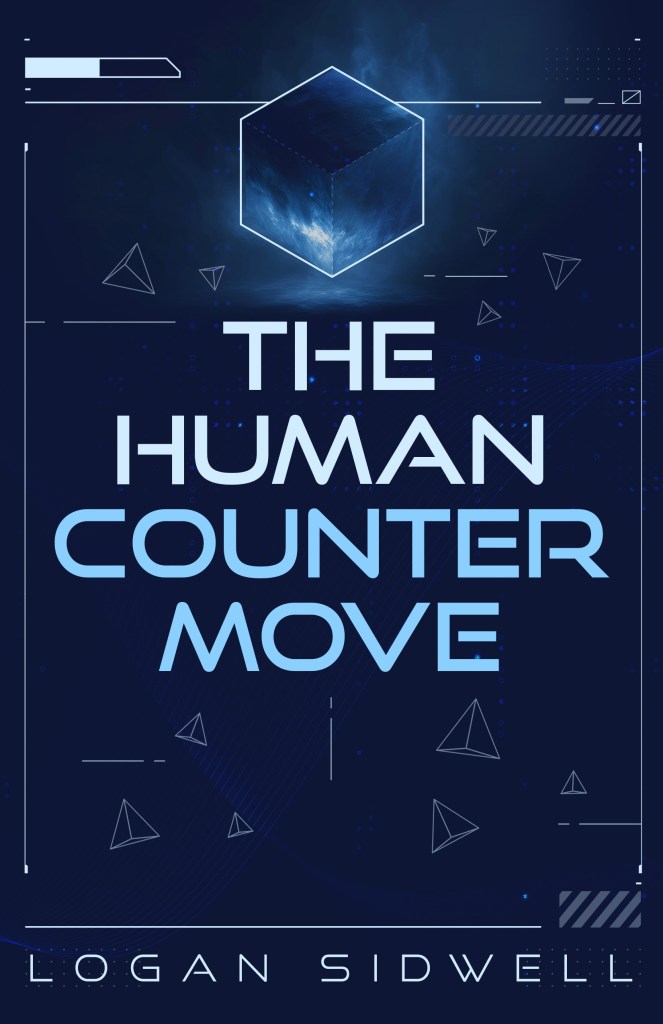
This week I was delighted to receive an in-depth review of my debut novel The Human Countermove from Dan Yocom at Guild Master Gaming. Since release, I’ve come to realize my book’s number one audience is fans of games and strategy gaming. This review represents the viewpoint of an expert in that space, so I’m deeply appreciative they would take the time to consider my book and give so much fantastic feedback. Check out what they have to say!

https://guildmastergaming.blogspot.com/2025/11/the-human-countermove-by-logan-sidwell.html

There’s a Tragedy Hidden in Confucius’ Analects

The night after I read Confucius’ Analects, I slipped into something of an existential crisis. Nothing big, just your standard reassessment of life direction. The thing is, as much as I had enjoyed reading all the wisdoms, I really didn’t think they’d have an impact. So why was I pacing my kitchen at 10pm lost in thought?

The Analects are a collection of Confucius’ wisdom. Every line reads like a riddle, a clever metaphor with multiple meanings that only become clear after careful contemplation. 

Turns out, those lines weren’t written for people to read them in isolation. Half of The Analects are the oral tradition that goes along with. Two thousand years of teachers passed down context and analysis from one to the other that explains why Confucius takes so many potshots on the kingdom of Lu while praising music from the Shao. Thankfully my copy included much of that analysis, which turned the reading into a fun wisdom puzzle book. I’d read a line, consider it for a minute, then get a full answer from the analysts.

It ages surprisingly well, too. Much of the wisdom is on cultivating a moral approach to life, surrounding yourself with other moral people, and leading from the top-down to reshape a state. Any advice on how to appropriately serve your ‘lord’ easily extends to dealing with a boss at work, and it turns out ‘petty’ people are just as common now as they were in 500BCE.

In the early chapters, I studied each line like a student cramming for a test. This turned out to be unnecessary, as each meaningful piece of wisdom is repeated, reworded, and taken from multiple angles throughout the book. It’s a layering approach that slowly paints Confucius’ vision of appropriate behavior onto your mind through carefully paced character studies and metaphors.

Storytelling is an absolutely key aspect of The Analects. Confucius’ disciples are analyzed one by one throughout, their virtues and vices made clear. Zhong Yu, despite all his positive traits, was impetuous. Despite The Master making multiple interventions, he eventually dies in battle. His passing serves a lesson. A practical example of what happens when you allow certain character flaws to dominate your way of dealing with the world. A tragedy.

Zhong Yu is the most obvious of the tragedies in The Analects, but there’s one that’s far more resonant. The story secretly woven through the entire book. The story that made me run circles around my table in the middle of the night. One character that was present through the whole analects and whose life taught the most important moral of all.

Confucius himself.

By the time The Analects were assembled, Confucius had slipped into legend. The last few sections of the book talk about him as one with the sun and the moon. Down the line, he’s deified. But in the first half of The Analects, he’s a person. A wise person with a whole lot of followers, but a person. And he can’t find a job.

One of the central tenets of The Analects is that leaders shape the morality and culture of the people they are leading. A great minister can shape a state into a moral and upstanding place free of crime. I love this, and I tend to believe this idea extends into the modern day through corporations. A corporation run by a corrupt CEO will inevitably see their own behavior reflected back at them through their employees.

If you accept this statement as true, then talented scholars have an obligation to make every effort to put their talents to use. It’s a cruel world, but you can personally help reshape it by climbing the ladder and showing others the way.

Confucius wants to be hired. That’s his character arc in The Analects. He’s already learned and wise and kind and talented. The only thing missing is the opportunity to put those ideas to work. When he laments his unemployment, it pulls at your heartstrings that someone with so much vision is unable to apply it.

In the later sections, he encounters recluse scholars on the road. Wise men with perhaps as much understanding of the world as Confucius who, rather than taking on the challenge of leadership, retreated into isolation. They encourage him to give up, they tell him his dream of a moral world is an impossible one.

Despite this. Confucius persists. He pushes through the relentless rejections and cajoling of the recluse-scholars. It makes him the hero of the story. A person willing to take on the impossible day after day in the hope he will one day be given the opportunity to reshape the world into a better place.

But The Analects isn’t an uplifting story. It’s a tragedy. Confucius fails. He goes his whole life without the chance to reshape a state into his moral vision.

Yet his wisdom persists. A second chance at Confucius’ vision. A chance for the reader to step up where The Master failed.

This was why I was pacing my kitchen in the middle of the night. Confucius’ tragic failure haunted me and his wisdom echoed in my head. Go out. Apply yourself. Chase opportunity so that one day you can fulfill The Master’s dream of reshaping a piece of the world.

When I went into The Analects, I expected wisdom and wisdom alone. If I was lucky, it would give me a new perspective on how I interacted with others. Instead, I was told a story that tugged on my heartstrings. A tragedy that painted an aspirational vision of a more moral world. Then at the end, I was told the only way to make it happen was to do it myself.

Check out my Post on Neuromancer and the Origins of Cyberpunk!

Cyberpunk is one of the most widespread and beloved genres today, stretching into movies, games, and books. But where did it come from and why does every story in the genre feel both original and derivative? It all goes back to a small set of roots, and one transformative story. Neuromancer.

Check out my article on Guild Master Gaming: https://guildmastergaming.blogspot.com/2025/11/neuromancer-and-genesis-of-genre-by.html

The Fifth Season is Apocalyptic Fantasy

Apocalypse stories have always bothered me. The world is so disorganized, it feels like everyone alive is a scavenger. It’s all a little too material, a little too short-term minded. Maybe that happens at first. An initial anarchy when a system collapses. But humanity has lived through hard times, and we’ve seen what people do when the world gets tough. We form tight-knit communities and close ourselves off from the world until the danger passes.

The Fifth Season by N. K. Jemisin is a post-apocalypse fantasy, one that paints a real picture of how humanity survives.

Comms with High Walls

In The Fifth Season, the end of the world is a common occurrence. Every couple decades, Father Earth unleashes a ‘fifth season’ on the world. The season of death. In response, humanity has taken a permanent ‘prepper’ mindset.

Villages aren’t sprawling things that welcome anyone and everyone. They’re comms, short for communities, and they’re walled on every side. Visitors are treated like threats and newcomers have to prove their worth. Trust is so low it’s polite to offer guests a drink called ‘safe’, which is the only drink you can be certain won’t poison you.

The story begins in a comm at the start of another apocalypse. It follows a woman named Essun, who just lost her son, and is on the hunt for her husband and kidnapped daughter.

In most stories like this, we’d see the main character travel a while, then stop at a town and get a break from the danger. Maybe there’d be a nice innkeeper, or at least a warm place to sleep from time to time. Not here. With the start of the season of death, the world is cold, and every door is shut.

Essun sees dozens of comms on her journey. But never enters a single one.

People are a Utility

When a community closes its doors, they do it because they fear what’s outside. But once those doors are closed, resources become scarce, and every person in a bunk is a mouth to feed. The story regularly refers to a set of wisdoms called ‘stonelore’. Stonelore tells people how to survive in hard times. And one of Stonelore’s most important rules is that every person in the comm has a use.

That use becomes their name. Hoa Strongback. Essun Breeder. There aren’t many use-names, and each name is an implicit threat: Become useless and be thrown out into the cold.

This is not the kind of story where a leader softens their heart and lets a poor beggar woman into a community. This is a story where a dozen beggars are left stranded outside the comm gates.

On her journey, Essun allows a few others to join her party. Only because there’s strength in numbers.

But this story isn’t just a brutal take on a hard-hearted world. It’s also a fantasy.

Orogenes and Earth Magic

There are three POVs in The Fifth Season. Essun, the older woman in search of her daughter. Damaya, the young girl given away by her parents. And Syenite, the capital trained Earth Magic wielder. Earth Magic is the shared commonality between them. They are all Orogene, a race of humans capable of causing and stopping earthquakes while barely breaking a sweat. It’s what informs Essun that this season of death is far worse than any that ever came before. But there’s a downside.

The rest of the world hates Orogene.

As soon as Essun’s community finds out what she is, she’s forced to flee before they can capture and kill her. Damaya is given away to a stranger because her parents fear her powers. Even Syenite, the capital trained Orogene, meets low-level bureaucrats that talk down to her.

The author does a wonderful job painting Orogenes’ magics and their deep connection with the Earth. But any joy that might be associated with that skill is diminished by the shame, the distrust, and the overt hostility of the world. Syenite’s training gave her control over her abilities, but right alongside those abilities is a self-hatred that was ground into her from childhood.

The Sin To Kill The World

In most apocalypses, there’s this sense that most people are victims trying to get by. Victims of some mad scientist somewhere that decided to set off a bomb. In The Fifth Season, there’s a sense that it’s all deserved. A punishment for humanity’s misdeeds.

Damaya’s childhood is a caravan of terrors. Syenite uncovers terrible fate after terrible fate affecting her fellow Orogene. Even Essun’s rag-tag band of unwanteds all have that same sense of self-loathing. 

With every curtain we pull back, there’s another reveal of procedural pain. Organized evil. There’s a feeling that the apocalypse in this story isn’t the product of a single terrible moment, but the byproduct of humanity’s cruelty. Sure people are mean during bad times, but somehow they’re even worse in the good times, and all that cruelty is bubbling up under the Earth’s surface, waiting to bring about catastrophe.

When the apocalypse finally arrives, all those closed doors and locked comms look less like humanity trying to survive, and more like cruel people waiting for the apocalypse to take them.

Conclusion

The Fifth Season is a cold book. There are joys along the way. The happiness of an adventurous kid and the wonders of Earth Magic come to mind. But at its heart, it’s a story of a cruel world and the people stuck under humanity’s boot. Every inch of worldbuilding further paints the same picture. A story of oppression, control, and hate. It explores the emotions of the characters deeply, taking the time to really process their state of mind, and the meaning behind every action. One of the POVs is even written in second person, which makes the pain of the story even more unavoidable.

It’s compelling, it’s fantastical, and by the finish it feels like the end of the world.

Is My Cerebral Science Fiction Secretly a Romance?

I wrote a book about a strategy game grandmaster challenging the AI Minds of his society for the fate of the future. It’s got politics, subterfuge, high-minded strategy, and danger. But I think at the heart of it all is a story about connection. A romance. Which is odd, because I don’t write romance.

Spoilers ahead.

A friend of mine pointed this out to me while they were reading my book. In the first chapter, you’re introduced to my main character, Zouk Solinsen, an isolated guy in the back half of his career navigating a cold and disconnected world. We’re then introduced to a young woman named Jamie. A rival in the strategy gaming space, and his opponent in the first round. They’re about the same age, opposite genders, and their conversation has a light, almost flirty back-and-forth before the game.

But it’s a red herring.

The target of this book’s romance isn’t Jamie. One of the romances isn’t even human.

Every good story has a certain element of romance. Whether it’s a pair of characters who hate each other and eventually learn to understand each other, or a collection of disjointed and quirky individuals finding the joy of becoming a cohesive group, what makes a romance is the journey from ambivalence and hatred to appreciation and love. Oftentimes, you don’t even need the kissy-kissy.

There are two ‘romances’ in The Human Countermove. The first is conventional. A small, personal story about Zouk and his wife Kira, whose relationship is on the rocks. Zouk is an outgoing person with a strong skill for communication, while Kira prefers her privacy. For her, a nice day is one spent in her office running data analytics and drinking hot cocoa.

In the time since they got married, life got complicated. Zouk had his career ups and downs, while Kira built quiet, steady work in the government. Zouk wants Kira to change, he wants her to love crowds and events and to be with him for all of it. She tries her best, but it’s not who she is.

But when he needs her, she’s there. Not usually with a well-placed word, but with her most sincere self. When Zouk is trying to make sense of a broken political system, she’s willing to put in weeks of work to help him. And she seems to relish every minute of it.

It’s all this that reminds Zouk why he fell in love with her. He remembers her passion, her care, the way she’s fought to stay in love with him. It’s a Him problem. He’s been asking her to change, when he’s the one that needs to start reaching out. He meets her where she is, accepts her for who she is, and is able to start loving again. They’re able to be that supportive, loving couple they had been chasing from the start.

But there’s a second romance in this story. One at a much larger scale.

A romance between Zouk Solinsen and The Minds.

Zouk is playing a series of strategy games in order to join The Minds’ council. Impossible games that take everything he has in order to win. But winning doesn’t suddenly put Zouk into power, it puts him in a partnership. A shared power structure with The Minds. And anyone forming a partnership knows the only way to make things in a partnership work is to ‘love’ the other party.

There’s an on-again, off-again relationship between Zouk and The Minds throughout the book. Near the beginning, The Mind of Communications and Influence is casual with Zouk. They’re fast friends and get along better than you’d think. The possibility of Zouk winning all the games becomes real. Folks listen when he speaks. The general consensus seems to be that he will be the fourth member of the council.

Then the hard times come. Zouk breaks ties to an organization when he discovers their plot to overthrow the government. And the break-up isn’t easy. A controversial game, a mutiny in the military, riots, and a frame job implicate Zouk in everything.

There’s nothing less romantic than a deposition. One of his wins is thrown out and The Mind of Strategy and Warfare ends his hopes of joining the council on a painful defeat. Whatever partnership The Minds were considering is dead.

If this were a traditional sci-fi dystopian story, this is the part where Zouk leads a resistance and burns it all down. But I wrote a romance. And in a romance, the protagonist doesn’t give up.

Zouk and Kira’s rekindled relationship is a lesson in accepting people as they are. A lesson that leads to a realization. The world talks to The Minds in the same way they talk to politicians. High-minded intellectualism, hopes and ideals, persuasion. But that’s not how The Minds think, that’s not who they are. They’re more like Kira. Evaluating good and bad ideas through raw numbers.

Society has been pushed to their limit. Every aspect is measured and maximized. But by seeing the world through The Minds’ eyes, Zouk and Kira uncover the fatal flaw, the mistake in the calculations, the first fix to a better world. Zouk knows his chance to join the council is dead. But he makes his case anyway. He makes it because he wants a better world, because he thinks The Minds help get them there.

And that act of good will and understanding changes everything.

This is why I say this book is a romance. It’s not traditional, but it hits all the beats. The meet-cute, the impossible relationship, the break-up, and at last the heartfelt reunion. A story whose roots are built in love and empathy rather than rage and destruction. I had no idea I was doing it when I wrote it, and only realized what I had made when it was out in the wild.

Maybe this is just what happens to stories that set out with a theme of connection and understanding. You go in planning on making a sci-fi thriller and end with an AI and a human holding hands in the rain.

The Human Countermove is available for purchase on Amazon!

“The Night Hunt” Is a Book Structured Like an Action Game

Video games used to be a core of my media diet. One of my favorite genres of games was the action game. Dark Souls, God of War, Hollow Knight, a million more just like them. Whenever one got good reviews, I’d buy it on the spot. As soon as it was downloaded, I’d turn on whatever show I was watching on one monitor, and spin up the game on the other. I knew I wouldn’t need to give it my full attention because the narrative structure of action games is pretty much set in stone. Like walking in a pair of old, worn in shoes.

Reading The Night Hunt by Alexandra Christo gave me that same warm, familiar feeling.

The Action Game Structure

The protagonist of a story has to start out weakened. It’s not wise to give the player full access to the entire control set from the start, we need to start weak so we can get strong. In the Night Hunt, Atia is the last of her kind, and after a terrible mistake, she is cursed. Most of her power is ripped away, and mortality looms over her actions.

How can she get cured? Defeat a vampire, a banshee, and a god.

Games love the number three. Defeat the three undead lords. Ring the three bells. Find the three chalices. I think it’s because three is the perfect number to establish a pattern and let the audience get comfortable without becoming repetitive.

The story of The Night Hunt proceeds like an action game would. Atia and her ragtag band of characters travel to different parts of the world, journey through dangerous territory, and eventually face off against one of the three big bads. The bosses, if you will. With each victory, Atia gets a little of her power back. They do this in games too, best to let the player master one move at a time. That way when they face the final boss, they’re experts on the basics.

Spoilers ahead:

In the best action games, the final boss is rarely the real final boss. It’s sort of a rule of escalation. If you tell the player how things are gonna turn out at the very start, it’s boring. You have to overdeliver on your promises. It’s a bit of a cliche, action games start out with the protagonist beating up slime monsters, and end up killing god.

The Night Hunt escalates the exact same way. Atia has a very particular god in mind when she first sets out on her killing spree, a minor one. But when the time comes for the final fight, she doesn’t fight a minor god, she goes straight for the trinity of light, dark, and balance. You can almost hear the choir chanting latin phrases during the battle.

Characters

So the book is structured like an action game. For those of us who like an action game from time to time, it’s comfortable. From the beginning, you can pretty much anticipate the rate and rhythm of the story. But this isn’t a game, it’s a book. In games, the product is primarily about the tactile feel of the combat. You can give a player the worst dialog in the world, but if the controls are good and the bosses are challenging, they’ll still beat the game. Not so for books, in books, the action scenes have to serve a purpose in forwarding our character’s understanding of themselves, their relationships, or the plot.

There are two POVs in this story, Atia the fear monster, and Silas the Herald that dreams of being human. Despite all the action, what this book really is, is a romance. Two hurt monsters finding love and understanding in one another. Atia goes on a journey to understand the broken state of the world while Silas goes on a journey to discover his true self. Both stories weave nicely into each other by the end of the book, with a few good twists along the way.

This is where The Night Hunt escapes the accusations of being a videogame. The characters and their relationships actually matter. Who a person was, and who they’ve become shapes the outcome of the battles and the end to the story. In a game the cutscenes get skipped and the player hardly even notices. In a book, the action is nothing but a vehicle to get us to the next plot moment.

Is This True of All Stories of Violence?

When I think of the structure of The Night Hunt, I compare it to something like “Death’s Door”, which has a quite similar premise, I start to wonder. Is The Night Hunt accidentally crossing genres? Or have we stumbled across the ‘universal story’ of violent heroes?

Think of movies. Think of John Wick.

He starts off weak, and an unfortunate circumstance forced him to take action. He works his way through target after target, both him and his opponents escalating their skills with each interaction. And once he reaches the cause of the inciting incident, once he achieves his goal? He sets his sights even higher. Burning down not only the people who wronged him, but the entire system that allowed that bad thing to happen.

It’s a power fantasy. We start as a regular Joe, get wronged by some systemic flaw in society, then we build our skill and fix the entire system all at once. Who needs other people when one maverick can do everything solo?

But when I zoom out and look at all the stories like this, John Wick, Nobody, The Night Hunt, Dark Souls, Another Crab’s Treasure. All of them leave off with the same lesson in mind: Once it starts, there is no end to violence, except usurpation. A lot of stories like this end in a cycle. For all the action the hero did, they end up becoming the problem they set out to solve.

The Night Hunts ends on a happy note, but when Atia has the power of a god in her hands I can’t help but wonder, has she become everything she sought to destroy?

The first reviews of my debut novel The Human Countermove are in!

“A thrilling, intelligent and morally engaging novel that rewards both strategic thinking and emotional investment.” – Patricia Furstenberg, 5/5

“I was impressed with how well the author wrote about gaming so that it painted easy images, especially for someone like me who is not a gamer.” – Rosie Amber, 4/5

The Circle and The Allegorical Battle for Society’s Soul

The following post contains spoilers for the novel The Circle by Dave Eggers.

I used to work for a tech company, somewhere over 1000 employees. I did a bit of coding, a bit of problem-solving, but most importantly a whole lot of messaging other people. There were a million different channels for a million different things. Some niche, some broad, but every one of them had new posts each morning.

When I first started, I tried to keep up with everything. It made me a nervous wreck. Then I tried to ignore everything, and I’d miss key announcements. I’ve always disliked those big messaging systems, and I’m glad I’m free of them.

Reading The Circle by Dave Eggers was like being dumped right back into the worst of it.

The book tells the story of Mae Holland, an eager-to-please young woman hired into the biggest social media company in the country, The Circle. She starts her job by constantly monitoring and posting to every little channel in The Circle’s network. The chapters when she’s posting, reading, and responding to surveys stress me out. It highlights early The Circle’s attitude towards information. Any moment not gathering or generating information is a moment wasted.

But it’s not all posts and likes. The story’s true plot is a battle for Mae’s soul. 

At work, the executives and the employees make the argument for all the good social media is bringing to the world. No more secrets. No more backroom deals. All the world a friend.

At home, Mae’s parents and ex-boyfriend strive to protect their privacy. They don’t dare put down Mae’s achievements, but there’s a quiet reticence from her family to hop on board the information bandwagon.

But The Circle isn’t about Mae, and the fight for Mae’s soul is allegorical. The true fight is ours.

The Products of The Circle

We see a dozen different products from The Circle over the course of the book. Tiny cameras planted on every street corner, centralized identity systems to tie every post to a single person, complete catalogs of a person’s history. Each product helps build The Circle’s philosophy. Any information that isn’t recorded is information wasted. We even see 1984 style slogans like “All that happens must be known”.

But it comes from a good place. One of The Circle’s employees Francis Garaventa is out there inventing new ideas with the goal of protecting children. The kind of respectable, un-debatable goal that justifies putting chips in kids’ arms.

Later in the book, we see politicians wearing body cameras for their conversations. We see The Circle ask their users all kinds of questions and use those polls to push their political influence forward. The novel asks its readers hard questions. Is it so wrong to want to live in a transparent world? Is it so wrong to want to protect everyone? Aren’t you tired of the secrets and backroom deals of today?

Of course, with each product, we see both sides. All the good it could do, and all the privacy we’d have to surrender.

The Three Wise Men

In the back half of the book, we meet The Three Wise Men. These are the founders of The Circle. One a tech genius, one a product guy, and one a salesman.

Here, the book poses its second debate. If the products of The Circle didn’t send a shiver down your spine. If you find yourself drawn in by the products, happy to surrender a little privacy for a little more safety, Dave Eggers presents the flaw in making such an exchange.

The scene is presented as a meeting of three aquatic animals. A reclusive seahorse, an ever-stretching octopus, and a shark. The Three Wise Men. The meeting ends the way it always had to end. A shark is the only thing left in the tank.

A decade after the whole world joins The Circle, who will control the company? And how long do good intentions last?

Guided Into Their Arms

Mae’s journey into the inner sanctum of The Circle is one filled with tricks and manipulations. As she embraces the philosophy of The Circle. Her relationship with her family weakens with every visit. Her ex-boyfriend’s diatribes in favor of a less connected world feel more out of place with each speech. Mae’s embrace of the “Privacy is Theft” motto enables her to post his heartfelt hand-written letter online, a place where an echo chamber of commenters reinforce her every bias.

Then Mae makes a mistake. One with mild police involvement. The Circle is benevolent, it’s understanding, it helps Mae find freedom through confession of her mistakes.

A friend of mine pointed out The Circles tricks were exactly what a cult does to ensure its members stay with them forever. Cut off family and friends, take away Mae’s identity outside The Circle, let the social network fill her with all the love she’s losing without her family.

With Mae secure in The Circle, the evil plot is revealed. It’s not enough that all Circle users surrender their data. Everyone needs to be a part of it. A friendly invitation to be enforced on every citizen.

Tragedy and Hard Decisions

Major spoilers below.

Mae embraces it all of it, and The Circle’s influence is pushed to its limit, to tragic results. We see the cost of total transparency when one character’s historical ancestry is revealed to be a long line of monsters and criminals. We see the cost of enforced participation when Mae targets her ex-boyfriend to be brought into the fold.

This is the bucket of cold water, the moment of lucidity in Mae’s data-mining fever. She’s given a chance to change course. An opportunity to tear The Circle down before it’s drawn around the entire nation.

And she doesn’t.

Because it’s not really her choice to make. The book isn’t about Mae Holland saving the world from the dangers of social media. It’s about society’s enthusiastic surrender of our freedoms, about our call to lift every rock and shine a light down every alley, disregarding any notion of ‘privacy’.

So when Mae makes the wrong choice at the end of the book, she only does it because it’s what we’ve all been doing. Each time we make a new profile, refuse to delete an old one, dig up an old mistake to tear a person down, and offer a new picture for verification, we move one closer to closing The Circle.

The battle of The Circle is far from over. There have been some real victories for privacy in the last decade. Victories that probably looked impossible when this book was written. But if you want a clear picture of the sides and of what could be at stake, The Circle makes an extremely compelling case.

My debut novel, THE HUMAN COUNTERMOVE is now available for pre-order!

Wait, Is Hyperion a Retelling of Terminator?

The following is a discussion of Dan Simmons’ Hyperion and Fall of Hyperion books. Spoilers abound.

My Discovery

So there I was, reading through Fall of Hyperion, following the story of Fehdman Kassad. He had finally met up with his Moneta right after they had tried to kill each other. Then the text of the book read ‘her shifted like quicksilver’. I don’t have a lot of experience with quicksilver, and even less with the shifting variety. My mind jumped to a single image. The T-1000 from terminator.

Well my brain started making connections. Connections that probably shouldn’t be made, the kind of connections that steal a story’s originality. I always pictured The Shrike as a light-grey metal monster, it wouldn’t be impossible to imagine its skin shifting like quicksilver either. A little later, the book revealed The Shrike had been sent back in time from the future. And the next time The Shrike made an appearance in the story, the next time he slowly walked towards one of the characters with murderous intent. I heard that iconic drumbeat in my head.

Dun dun dun dun dun.

And it all came together.

Recasting Hyperion

The funny thing here is that the T-1000 is from Terminator 2, which came out in 1991, the same year as Fall of Hyperion, no way for Dan Simmons to have copied the movie directly. Maybe it was a case of parallel thinking. Maybe Dan Simmons saw the first Terminator and was inspired. Nevertheless, if we stretch the connections between these two stories, there’s a lot more that matches up than you’d think.

So the Shrike is The Terminator, sent back in time to fulfill the wishes of a devious far-future net of alien consciousness. In Terminator, it was called Skynet. In Hyperion, they call it The Ultimate Intelligence. Does it go further than that? Well, as we discover in the book, The Shrike isn’t just here to be evil, it’s here to find and eliminate one particular target. The future Empathy branch of Humanity’s Ultimate Intelligence. In other words, eliminate John Connor before he could become the leader of the human resistance.

And we can’t ignore the main character of The Terminator Franchise. The series may be named after the T-800 and T-1000, but Sarah Connor is without a doubt the protagonist of the series. Let’s meet her Hyperion counterpart, Brawne Lamia! In my first review of Hyperion, I didn’t talk much about her, but she is effectively the main character in The Fall of Hyperion’s massive ensemble. She’s the one who gets the big flash-forward to an apocalyptic future. Of course, instead of Skynet going to war with humans, we have an AI Ultimate Intelligence at war with a Human Ultimate Intelligence.

She’s also, as we discover at the back of the book, the mother of the future Empathy branch of Humanity’s Ultimate Intelligence. Literally Sarah Connor, the mother of John Connor! We even have a conversation between Brawne Lamia and one of the super AI’s Ummon where it says there are many probable futures, but the one with two Gods fighting each other is the most likely, which is dangerously close to “The future is not set. There is no fate but what we make for ourselves”

Now the most forgotten member of the Terminator story, Kyle Reese. The soldier from the future trying to keep Sarah Connor alive. Who could this be? There’s only one candidate. Moneta, the mysterious woman with ties to The Shrike who is in love with Fehdman Kassad. She is literally sent from the future to watch The Shrike’s actions. Unfortunately for Kassad, she’s a little more concerned with her present then staying in the past, and the poor guy is dragged into an intergalactic war against millions and billions of Shrike. The one thing worse than being hunted by The Terminator is being brought into the future and fighting armies of T-1000s.

All right, I confess, those are all the direct character connections, as far as I could find them. The Fall of Hyperion is an ensemble story, a book that follows about 9 different main characters through the plot. And in order to make that story fulfilling, it takes a few detours along the way.

When Hyperion Rises Above Terminator

In the first few Terminator movies, the plot is about keeping Sarah Connor alive. It’s not about stopping Skynet or reshaping what’s to come. Humanity basically plays defense, keeping things as they are, no matter how dystopian they turn out, because it could always get worse. That’s not good enough for Hyperion.

CEO Meina Gladstone is humanity’s champion. The politician in the right place at the right time to make historic decisions. So much of The Fall of Hyperion is about slowly uncovering what kind of nightmare awaits us in the future, and how it happened. There’s a general sense that some kind of apocalypse is coming. Father Dure, cursed back to life, is taken on a journey through the most upsetting aspects of the future. Cruciforms used on billions to drag them back to life again and again as nothing but human chattel.

New questions arise. How was humanity shackled like this? Was it these strange Ousters from the edge of the galaxy? Where does the Technocore come into play? Why does the Technocore keep helping humanity when it seems like their two paths are in constant opposition?

The most chilling moment of the book is a subtle one. The apocalypse appears to have come, a ragtag group called The Ousters has proven far more capable and widespread than anyone suspected, and humanity is getting desperate. In their desperation, they ask the technocore for a solution. The Deathwand. We don’t need a character going on a long diatribe to understand why a device like that could be dangerous. The technocore explains its many safeties. And in a long, long book, one little warning is enough to telegraph everything. “Those must have been the same promises the Technocore made moments before the Kiev Incident.”

It’s like witnessing the minutes before Skynet was turned on, but worse. It isn’t just a mistake from humanity, but a cleverly designed ruse that, in the pit of your stomach, you know will end humanity as a race forever.

And this is where we go beyond Terminator. The world of Terminator is spanning, but the plot is small: the survival of a single character, the journey of Sarah Connor. Hyperion doesn’t just tell the story of the person who is meant to turn the tide, it tells the story of the moment humanity’s hope was nearly snuffed out.

Is it Really Terminator?

Mark Twain once said, ‘There is no such thing as an original idea’.

Outer Limits is a tv from 1964, one of its episodes, ‘soldier’, tells the story of two future soldiers sent back in time to change the future. The story ‘I have no mouth and I must scream’ depicts a moment when human decision is removed from nuclear war, eventually resulting in an AI called the Allied Master computer wiping out all of humanity but a few it keeps alive underground as chattel.

These ideas existed before Terminator (Although if you ask writer Harlan Ellison, they started with him).

Dan Simmons takes the original concept of Terminator, and elevates it into something so much bigger. He rewrites a battle between two armies to a war between Gods. We initially think it’s just a nice metaphor, but by the end, it’s literal. A Titan and A God in eternal battle at the end of time. Instead of hard drums and rock, he uses poetry and classical epics to give the story a literary significance. The Terminator is iconic. But the Shrike is evil incarnate. Like The Terminator turned up to eleven.

But the best part of these books is when they diverge from The Terminator storyline, when we take time to get to know the ensemble that surrounds the main story. I could barely remember the name Kyle Reese when I wrote this up, but the names Father Dure, Fehdman Kassad, Sol Weintraub, Martin Silenus, and Brawne Lahmia stick with me. Tiny players in the grand story of divine war, but its their stories that stick with you.