The Chess Players that Inspired my Novel

I didn’t realize it when I was writing it, but my sci-fi novel is a sports book. There’s a bunch of politics and AI to keep things interesting. But narratively, the book is closer to Moneyball than it is to Star Trek. It’s a funny realization, but an important one. The characters in a story should feel authentic, pieces of them should be drawn from real life, from the emotions and nuances of competition.

In the last few years, I’ve been a casual viewer of a lot of Chess content. Game recaps, lectures, tournaments, all the popular stuff. Along the way, I found a few players and personalities that drew my attention and inspired me to write.

Here are a few of the most significant.

Hikaru Nakamura
A story of achievement is great. A person from one particular background rising above their peers and climbing all to the peak of performance is cool, but it usually doesn’t inspire me. I think it’s because it feels inevitable. If we create a competition with 250 players, somebody’s gotta be the best, right?

For me, the story that draws me in isn’t one of instant success, it’s the story of failure, and the strength to rise again.

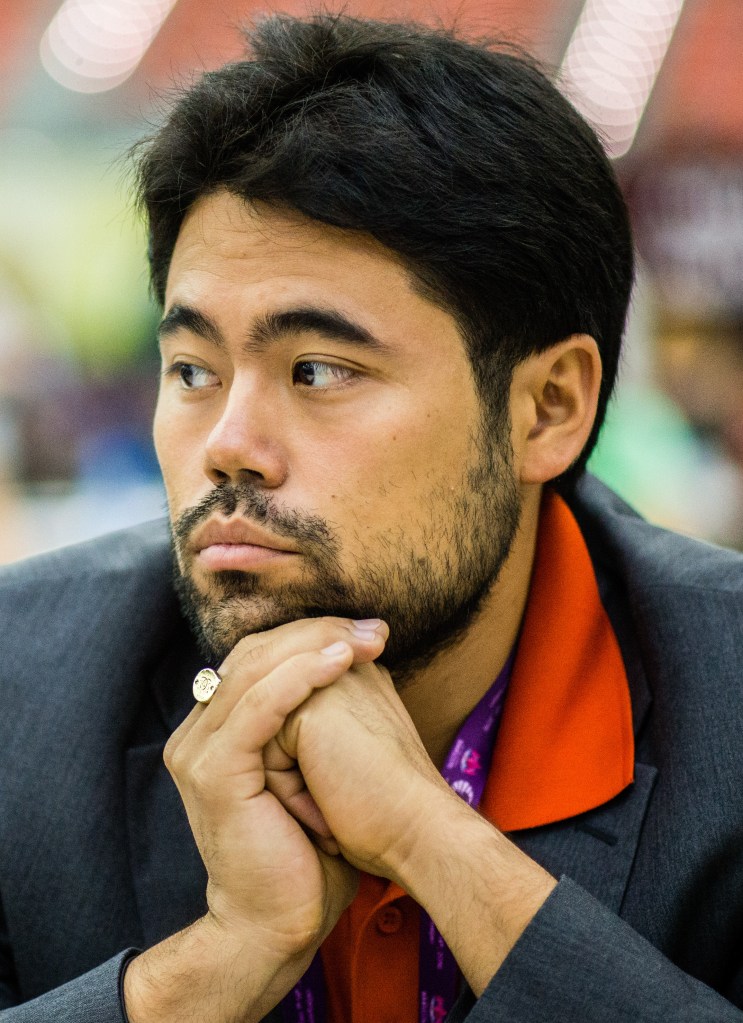
In 2015, Hikaru Nakamura was the second best player in Chess. In 2019, he had dropped down to 21st. It may seem small, but that gap was enormous and the product of 3 years of decline.

It’s a mental game. Getting so close to the top, it’s easy to coast. A person can lose their motivation, their drive for competing. Life gets complicated, new priorities arise, old priorities sink. You can even forget why you started in the first place. After 3 years of decline, it can feel inevitable, like the natural lifespan of a career coming to an end. Why bother getting back into shape when the game is already over?

But Hikaru Nakamura didn’t give up. He started streaming. He built a better relationship with the game, and eventually, he found a new reason to compete.

Today, Hikaru Nakamura is back at #2, and his chances of winning the Candidates Tournament are higher than they ever were a decade ago.

I think I find a comeback story so inspiring for two reasons. One, they’re rare. Two, they teach us life doesn’t always turn out the same way for everyone. We can turn things around, rewrite our fate, outperform even our own preconceptions.

In my novel:

Zouk Solinsen is a washed-up strategy game grandmaster. He forgot what made him love the game, he got caught up in other things, teaching students and paying the bills, and he lost his self confidence.

But unique times and unique challenges give Zouk a second chance. A chance to love the game again, a chance to sharpen his strengths and become better than ever. There’s nothing better than a comeback story.

Yasser Seirawan and Garry Kasparov
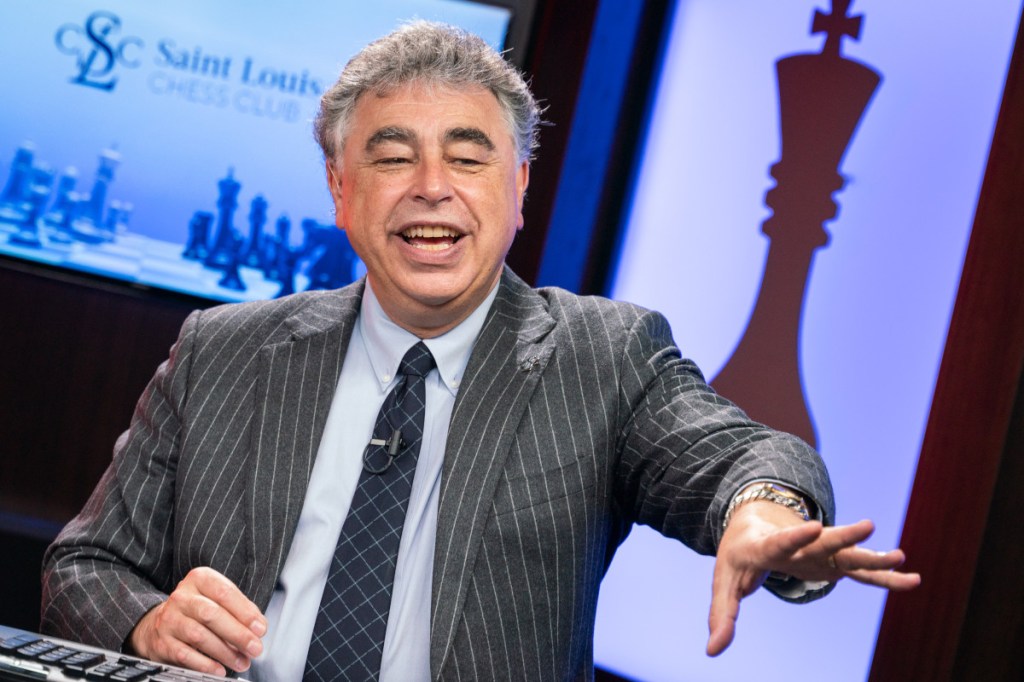
Back when I was studying chess (I’m not very good), I looked up a lot of lectures on Youtube. My favorites are from Yasser Seirawan. The man approaches teaching with a childlike wonder for the game, an excitement to share his knowledge with anyone who wants to learn.

Yasser Seirawan has been an extraordinary player in the chess scene for 30 years. He was the second for Victor Korchnoi in 1981, meaning he was the chief advisor for the challenger for the world champion title, and all of that before Garry Kasparov was even on the scene.

He’s a player that has faced generations of players. He has seen the absolute best that Chess has to offer and shares it with his students. When he describes how the game transformed with the advent of computers, it isn’t theory, he witnessed it. What better mentor could there be?

And then there’s Garry Kasparov.

In my previous post I discussed at length the significance of Kasparov vs Deep Blue in inspiring my story, now I want to briefly discuss another of the man’s aspects. Politics.

In 1984, just after Kasparov had won two consecutive games against the world champion, FIDE abruptly ended the match, citing ‘player health’. They cheated Garry Kasparov out of a world championship title, and he didn’t take it lying down. The thing is, Kasparov defeating Karpov wasn’t just about Chess. It was about the future of the Soviet Union, and the game was being watched by the whole world.

Since then, the man has led protests, been arrested, and even been forced out of Russia. Every day he shows the boldness and courage most of us wish we had.

In my novel:

Yolniv is Zouk’s mentor. In the face of nearly unbeatable opponents, his decades of experience as both a player and teacher help Zouk discover the right strategies and refine them to a point. He never fears sharing his mind, and as the plot heats up, ancient history comes back to bite him.

Danny Rensch
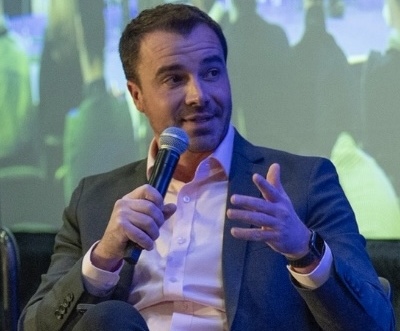
For a post about famous chess players, Danny Rensch might be a surprise. He’s an International Masters player, sure, but he’s primarily known as the Chief Chess Officer at Chess.com.

And there’s a very particular reason he’s on my list.

Danny Rensch dances on a very thin tight-wire. Every day, the man is both the face of his company, and a key decision maker behind the scenes.

To some extent, all the biggest leaders today have to walk this tight-wire. They show confidence at the investor meetings, then go to their offices and make the hard choices. It’s a funny duality, but I find it more pronounced in Danny Rensch.

When Chess.com hosts a major tournament, he’s there. Casting games, plugging products, hosting the livestream. He’s an entertainer for hours on end. Most entertainers spend their whole career developing the skill to keep people engaged, Danny only gets to do that for half the time.

For the other half, he has to deal with the ugly side of the business. When there’s a controversy in the chess scene, he’s in the room deciding how to handle it. When there’s a clash between two players, he’s mediating the reconciliation. When a tournament needs bigger names and better sponsors, it’s all on him.

He plays both entertainer and decisionmaker. He’s done it for years, and it’s really extraordinary to watch.

In My Book:

The Mind of Communication and Influence (AKA Influence), is the voice of the Minds to the general population. Day to day, Influence is a news man, a face on tv reporting to the people of Iom. But he’s also one of the three Minds. The weight of the executive rests on his shoulders. It’s easy to get the wrong impression of Influence. Either he seems shallow and entertaining, or duplicitous in the separation between his speech and his action. But there’s more than meets the eye to Influence.

Final Thoughts

There are plenty more characters in my novel, some undeniably inspired by other chess players and competitors more broadly. A Magnus Carlsen-based is definitely hiding in my book somewhere. Anna Cramling might be too.

With competition comes real people. Success for one means failure for another. Everyone who competes does so sincerely, and it’s rare to get that kind of truth from a person these days. Virtues and flaws are put on display because anything less than giving it your all dooms you to defeat, and all that honesty makes for a great character.

The Human Countermove is now available for purchase! Click the image to be taken to the amazon page.
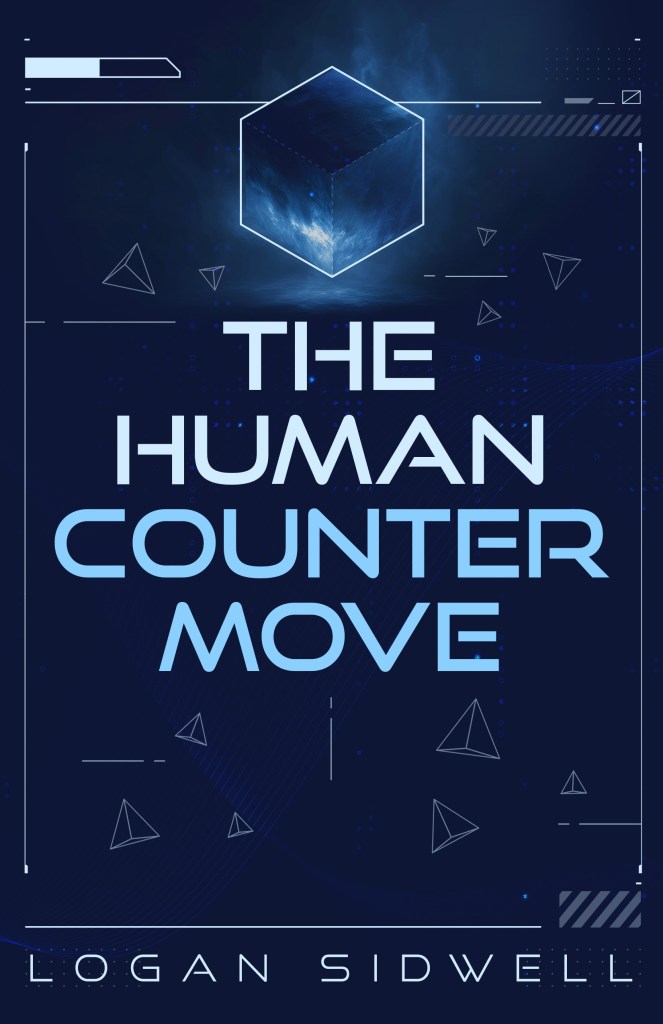
Postscript: Although certain figures in The Human Countermove draw inspiration from real chess players, the story is a work of fiction. The characters and their choices are not reflections or critiques of any actual individuals.

The Historic Strategy Games That Built My Book

For thirty years, strategy game players have been reckoning with the harsh reality that a computer might be able to play a game better than them. Beginning in 1997 with Kasparov vs Deep Blue and ending with Lee Se-Dol vs AlphaGo, AI inched ahead of human performance year by year, culminating in their total victory.

I love that tension, the open question that floats in the air with every game, ‘Can humanity win?’. Every victory and every defeat carried enormous weight. It’s the heart of my novel, The Human Countermove, strategy games and the fight against a mentally superior enemy.

The challenge with writing a strategy book is creating strategies that feel authentic and clever. The kind of ideas that are convincingly grandmaster in skill, but understandable to the general public. In order to achieve that, I had to learn from the best.

Kasparov vs Deep Blue (1997)

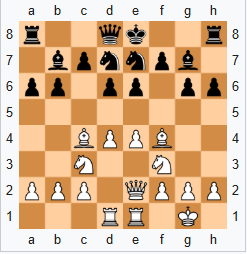
This game is the seed at the center of my book. The tipping point for humanity, the moment we realized computers could out-think people. In 1996, Kasparov won 4-2.

In 1997, they had a rematch, Deep Blue won 3.5-2.5.

Those two matches record the exact year engineering overtook training.

My favorite moment from the 1997 match comes in game 2, when Kasparov accused the Deep Blue team of cheating by having a Grandmaster help with a move. Even a computer can get illegal assistance from time-to-time it seems.

But the conflict of the moment is what really captures me. On the one hand, we want to believe a person is capable of outperforming a computer. On the other, what an incredible feat it is to reproduce the mind of a genius with a bit of code and training. Caught in between, the audience cheers both sides, athletic feat against human ingenuity.

Kasparov has a list of mistakes he says he regrets about that match. Moments he could have snatched a draw from a defeat, a victory from a stalemate. The thing is, if he had won, all it would have done is stall the inevitable. Instead of discussing the 1997 Kasparov vs Deep Blue match, we’d be discussing the 1998 Kasparov vs Deep Blue match.

It’s all of this I try to capture in my book. The tension, the conflict, the regret, and the determination to beat the unbeatable.

Now when Chess Engines and AI models face off against one another, they are a tier beyond our best players. A mentor for grandmasters like Magnus Carlsen, and something beyond the rest of our comprehension.

The Opera Game (1858)

This is a lighter game. The Opera game was played by Paul Morphy and The Duke of Brunswick over a century ago. It’s one I draw inspiration from in my novel not as a strategic tool, but as a piece of chess culture. The Opera Game represents the beginning of a chess student’s education, one of the very first games a novice will be introduced to.

Paul Morphy makes strong, understandable decisions against a much weaker opponent, rapidly gains the advantage, and wins in style. But it’s not just a game, it’s a story. The best in the world dragged into the Duke’s box to play a chess game in the middle of an opera. For beginners, it weaves a romance around chess, and attaches a narrative to one of their first lessons.

In my book, the protagonist Zouk does a lot of teaching on the side, as many professional players find themselves doing. When an opportunity to lecture to a big audience comes around and he realizes the inexperience of his listeners, he abandons the esoteric analysis had prepared, and leans on a tried and true classic with a fun story, The Highway Game.

Go: Lee Se-Dol vs AlphaGo (2017)

Lee Se-Dol vs AlphaGo ended in a 1-4 result. For those of us that had been tracking the development of computers since Deep Blue’s game against Kasparov, seeing AlphaGo take its victory wasn’t a surprise. Go is much more computationally difficult than chess, but Moore’s Law is a powerful force.

But did you notice the scoreboard? Lee Se-Dol won the fourth game. That was an upset.

Against Google’s best engineers and decades of neural networking and algorithmic design, a human being managed to snatch victory, and it all came from a single move. Move 78.

That move has been gone over, analyzed, and studied for years. It’s believed Move 78 pushed the game into a uniquely complicated position, a position AlphaGo couldn’t calculate. A blind spot in the computer’s play that drew out blunder after blunder.

Lee Se-Dol was like a grandmaster Quality Assurance tester, noticing where AlphaGo was weak and pushing it further and further down that path until its behavior was sub-par. Basically, Lee Se-Dol found a bug.

Even when it seemed impossible, a person beat the unbeatable.

The Hippo and Various Anti-AI Strategies

Since Kasparov vs Deep Blue, a thousand Chess engines have burst onto the scene. Anyone willing to run a bit of code on their computer and risk getting banned can play like a grandmaster. To beat such unsavory characters, grandmasters have had to develop a special set of tools. First and foremost is time.

Consider two games. One gives each player an hour to make all their turns, the other gives each player a minute to make their turns. The first game is deeply thought out, with strong moves that remove all chances of counterplay. The second is superficial, moves borne more from training than thought.

In tight time controls, using a chess engine becomes a liability. The grandmaster can play from their subconscious, but the cheater is stuck waiting for the ‘perfect answer’ from the machine.

Thus we meet The Hippo. The Hippo slows the game down to a crawl. Pieces only move forward a square or two, then build a near-impenetrable fortress. As the opponent approaches, the grandmaster makes every effort to close down the position, keeping the number of moving pieces to a minimum.

With each move, the cheater loses a little more time, and the walls close tighter around them.

As their time dwindles, the cheater is forced to throw in a few of their own moves. These usually turn out to be of a significantly lower quality than what a chess engine can put out. Once the grandmaster has stripped the cheater of their chess engine, they unravel all the complexity of The Hippo and go in for the kill.

Once again, complexity and time as weapons to beat an overthinking machine.

The Battle of Cannae and Real-Time Strategy Games

I love real-time strategy games. The feeling of making a plan, facing the hard truths of reality, making adjustments, and turning the battle in your favor is exhilarating. And they’re so different from a game like Chess or Go. In Chess and Go, the entire shape of the board is transformed in a single move. 

In Real-Time Strategy games like Starcraft, you’re making a new move every second, and it’s only when you add all those little decisions up that you end up with a result.

And in games like that, there’s one particular battle result that everyone is chasing.

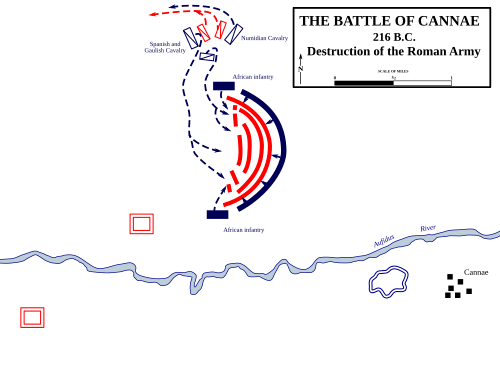
During the Second Punic Wars, Hannibal faced a much larger Roman force and turned the battle completely in his favor. The trick? Draw the enemy in, encircle them completely, then tighten the trap.

The game in my book, LINE, isn’t like Chess or Go. It’s a little more practical in nature. In theory, the game is playable on a field, not that most people would enjoy the feeling of being shot by a rubber bag. Because of the practical realities of squadrons facing off against one another, tactics like Chess’ fork and pin don’t translate.

But what does translate, is the greatest military trap of all time. Let the enemy over-extend themselves, wait for the right moment, and strike.

Final Words

There are plenty of other strategy games I no doubt pulled inspiration from. Things like the Total War games, Role Playing Games, X-COM, but Chess was my guiding star. It’s funny, once you open your mind to a question like, ‘how does a person beat an AI in strategy?’, you realize how many other people already pondered the same question. 

AIs have been kicking Mankind’s collective butt for thirty years. It’s nearly impossible to imagine a person turning it around on them. But nearly impossible is still possible, it only takes the right person and the right techniques to turn things around. Even when the robot brains out-think us on every front, we can still squeak out a victory every now and then. Especially when we’re learning from everything that’s available.

In The Human Countermove, my protagonist Zouk Solinsen is the right person with the right techniques. The skills to outsmart computational genius.

My debut novel, THE HUMAN COUNTERMOVE is now available for purchase!