December Update: 100 Days Since My Debut

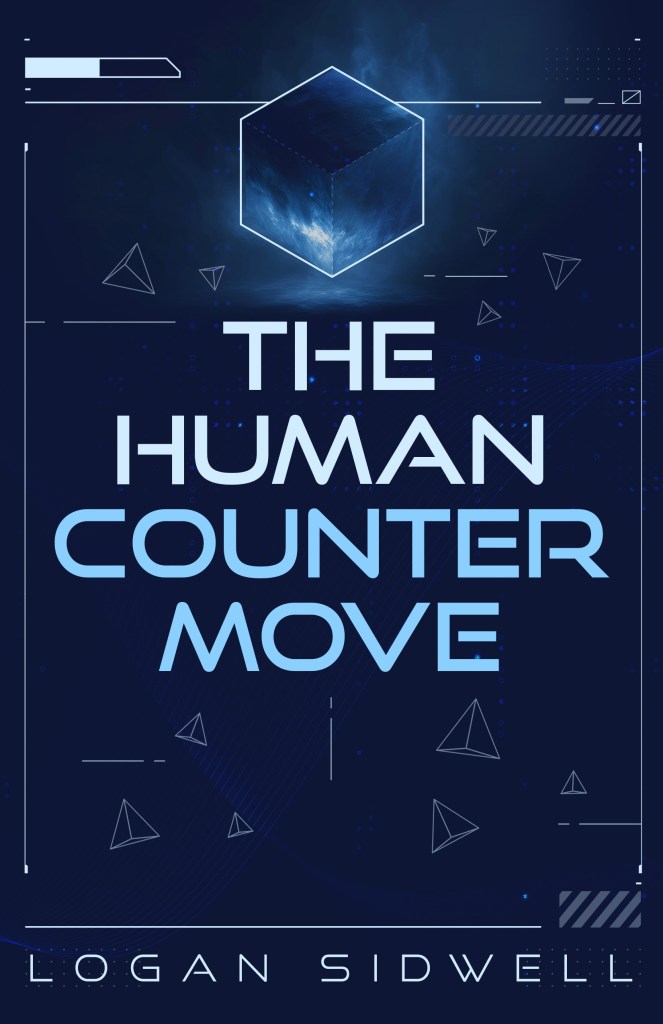
December already! It’s hard to believe my debut novel has already been out for 100 days. I set a one year sales goal for myself at the start of this process. A number drawn from speaking to other indie writers, and one I could be proud of if I hit it. 

We hit the goal on day 68.

Some of that was farmer’s markets, some of that was family, but most of it was reviewers sharing their thoughts and inviting others to experience the story. For everyone who bought my book and helped me reach my goal, thank you. There is no way I could have reached this goal without you.

Reviews of The Human Countermove

Now that the book has been out for a bit, I’ve been able to get real feedback from reviewers, family, and friends. 

At my extended family holiday party, I found out that about a quarter of the attendees had read my novel from front to back. As an artist, it’s difficult to glean meaning from loved ones’ feedback. We can’t always take opinions at their face value, especially when the opinion-giver doesn’t want to offend. This meant I had to resort to interpreting signals. This was my system: I knew at least a half-dozen relatives that had bought my book. If none of them mentioned it during the holidays, or only mentioned it in passing, it would have been a strong sign they couldn’t get through it. If they finished the book and mentioned a plotline, that meant the book was readable.

But neither of those possibilities were the case. My extended family had not only read my book, they had shared it around to other relatives and friends. So far, my favorite compliment was when I started telling one of my cousin’s about my next book and they said “Woah! Spoilers!”.

Here’s another signal I’ve been reading wayyyy too much into: At my local writer’s events, I’ve had four author friends approach me about my book. Each one of them has been eager to tell me how they would have made X plotline pop or amped up the pacing during section Y. I love hearing the different perspectives and approaches to storytelling. But in terms of signal interpretation, the number one message I took away was this: They read the whole story, stayed engaged the whole time, and only had minor notes on how to make it better.

I’ve now passed 12 reviews on Amazon. It’s hard to overstate how important getting to that double-digit number really is. Enough reviews helps new readers trust that the book really is a ‘book’ in a market filled with AI slop. So thank you again to everyone who has written a review on any platform.

Audiobook Underway

If you know me, you know I’ve worked as a part-time voice actor for the last six years. Thanks to a few connections, I was able to secure a recording booth for the audiobook version of The Human Countermove without going bankrupt. We’re 15 hours into the recording process and about three-quarters of the way through the initial recording. I’m anticipating bringing in an actor and actress to fill in a few of the voices that I think could be improved. The recording process should be complete by the end of January. After that, we’ll see how long editing takes.

A nice benefit of doing the audiobook is a thorough word-by-word proof read of the novel. There weren’t many errors, but my favorite so far is a moment when I used the word “basket” instead of “bracket”.

Project APHELION Draft 2 Complete!

Project APHELION has been my biggest focus this year. The manuscript is now sitting at 102,000 words. Second drafts are way harder than the first. It feels like 100 hours of constant decision-making. Things that were left for later suddenly have to be dealt with, hints in the first draft have to be cemented into plotlines, characters arcs have to lose much of their ambiguity.

But it’s done! The second draft has been distributed to a few alpha readers. I’m feeling really good about this story. It’s my first foray into fantasy and I gave it everything I had. A third draft is underway to pretty up the prose and fix continuity errors. It should be querying to agents by January!

New Projects

If you’ve been tracking my current projects page, you’ll see I have two new projects. PRINTHEAD and RELENTLESS. 

PRINTHEAD is my megaproject, and it’s been delayed. The rough outline was getting out of hand and one of the three key POVs had a lot of scenes missing. Plus I don’t want to start on my megaproject until I have a few more regular books out for consideration with agents. I will return to this project. I love it too much not to.

RELENTLESS is my silly project. It’s a spin on the revenge power fantasy genre with a much lighter tone (I wrote a bit about that genre here). My last two projects have been so serious, I decided that this time around, I’m having fun. Whenever an idea that makes me laugh, it goes on the page. I’m already 10% of the way through the first draft and enjoying every minute of it. I wouldn’t be surprised if it were in alpha reader’s hands by the start of March.

Closing Remarks

I’ve been getting closer and closer to my goal writing pace. Having a book out in the wild helps a lot. Having one project to edit and one to write is nice too. One of the hardest parts of being a writer is having a hundred ideas in your head but only being able to writing one or two a year. I’m hoping that problem will be resolved soon.

My website’s been getting a lot more traffic lately. If you’re new, thank you for dropping by! If you’re interested in my writing, I have a few short stories from last year available here and I post essays on various subjects here weekly.

Thank you all for your support. Looking forward to more stories next year!
We Need More Aspirational Art

Art holds a mirror to society.

Through stories we see aspects of ourselves and the world we live in. The Circle shows us a world where social media becomes ubiquitous and inescapable. The Fifth Season quietly highlights the bubbling fury of institutional oppression and racism. Neuromancer blurs the relationship between people and technology. Every time, these dark stories end in tragedy. A mirror that reflects a dark and cruel world where people in power serve themselves and sacrifice others without a second thought. 

These stories keep us grounded. They keep us connected to how the world really works. 

They’re also a self-fulfilling prophecy. Too many sad stories about an irredeemable world and people start to believe it. In a world with no principles, staying committed to a moral fiber becomes the losing move. We become cynical and jaded. Once a community stops protecting one another and each individual focuses on fending for themselves, it stops being a community.

But it doesn’t have to be that way. A mirror doesn’t have to highlight our worst instincts, it doesn’t have to reflect our darkest selves. It can do the opposite. It can show us our best selves, an aspirational vision of who we wish we were. Stories of idealists like Mr. Smith Goes to Washington, or of a new society like the utopian days of early Star Trek.

We need more aspirational stories.

In 1986, Star Trek: The Voyage Home, transparent aluminum was introduced as a curious futuristic invention. A novelty. But not to the chemists and engineers that watched that movie. Transparent aluminum now exists, a case of life imitating fiction. It’s not the only time this has happened. Mobile phones, tables, and voice controlled computers were all first Star Trek tools before they became our reality.

The opposite is just as true. War of the Worlds told the story of a highly advanced alien invasion involving chemical warfare, lasers, tanks, and aircraft. Fifteen years later, we saw almost all these inventions in WW1. Squid Game told the story of increasingly desperate contestants in a lethal competition, now the competition is a real game show (except for the lethal part).

We underestimate the power of collective thought. A politician achieves their ambitions by convincing enough people something is possible. A stock rises or falls not based on the company’s performance, but its perception. If an expert tells a country they are in decline, it becomes true.

So what happens when the only stories we tell of the future are dark and cynical? Black Mirror stops being a warning and instead becomes a checklist. Every person sees every other person’s action in the worst possible light. Billionaires take notes on dystopian stories and program them into their product. The scientists that grow up on these stories fear the consequences of their inventions.

In 2023, Alexander MacDonald, NASA’s chief economist said about the impact of sci-fi writers. “We don’t go to space because we have the machines. We go to space because we have a culture of people who are inspired to build the machines.”

We need science fiction stories that imagine and inspire, that tell the stories of heroes saving the day and technologies that transform life in the most wonderful of ways. Most importantly, we need sci-fi stories that dream of a bright future.

But this isn’t just a problem with science fiction, it extends into fantasy and thrillers and mystery and every other genre. We keep telling stories about vigilante superheroes in corrupt societies. What about the leaders that shine a light on corruption and fight to make things better? Instead of cynical wheeling and dealing in the west wing, what about an idealist that manages to get a piece of impossible legislation passed because they inspire their peers?

It’s something I’ve been wanting to adjust in my writing. I want to dream of a better world and a better universe. I want to know that the stories I write inspire a materials scientist thirty years from now to invent bendy glass, or bouncy steel, or non-toxic mercury.

We’ve spent a long time critiquing the present. For incremental change, critique is incredibly important. It keeps us moving forward. But it won’t be revolutionary. It won’t reinvent how we live.

The only way for that to happen is for us to change the types of stories we tell ourselves. Fill the world with moral, upstanding heroes by telling stories of moral, upstanding heroes. Advance technology to improve the human experience by telling stories of technology that improves the human experience.

It’s naive. It’s idealistic. But that’s what storytelling is for. For us to one day live in a utopia, we first have to imagine it.

The Fifth Season is Apocalyptic Fantasy

Apocalypse stories have always bothered me. The world is so disorganized, it feels like everyone alive is a scavenger. It’s all a little too material, a little too short-term minded. Maybe that happens at first. An initial anarchy when a system collapses. But humanity has lived through hard times, and we’ve seen what people do when the world gets tough. We form tight-knit communities and close ourselves off from the world until the danger passes.

The Fifth Season by N. K. Jemisin is a post-apocalypse fantasy, one that paints a real picture of how humanity survives.

Comms with High Walls

In The Fifth Season, the end of the world is a common occurrence. Every couple decades, Father Earth unleashes a ‘fifth season’ on the world. The season of death. In response, humanity has taken a permanent ‘prepper’ mindset.

Villages aren’t sprawling things that welcome anyone and everyone. They’re comms, short for communities, and they’re walled on every side. Visitors are treated like threats and newcomers have to prove their worth. Trust is so low it’s polite to offer guests a drink called ‘safe’, which is the only drink you can be certain won’t poison you.

The story begins in a comm at the start of another apocalypse. It follows a woman named Essun, who just lost her son, and is on the hunt for her husband and kidnapped daughter.

In most stories like this, we’d see the main character travel a while, then stop at a town and get a break from the danger. Maybe there’d be a nice innkeeper, or at least a warm place to sleep from time to time. Not here. With the start of the season of death, the world is cold, and every door is shut.

Essun sees dozens of comms on her journey. But never enters a single one.

People are a Utility

When a community closes its doors, they do it because they fear what’s outside. But once those doors are closed, resources become scarce, and every person in a bunk is a mouth to feed. The story regularly refers to a set of wisdoms called ‘stonelore’. Stonelore tells people how to survive in hard times. And one of Stonelore’s most important rules is that every person in the comm has a use.

That use becomes their name. Hoa Strongback. Essun Breeder. There aren’t many use-names, and each name is an implicit threat: Become useless and be thrown out into the cold.

This is not the kind of story where a leader softens their heart and lets a poor beggar woman into a community. This is a story where a dozen beggars are left stranded outside the comm gates.

On her journey, Essun allows a few others to join her party. Only because there’s strength in numbers.

But this story isn’t just a brutal take on a hard-hearted world. It’s also a fantasy.

Orogenes and Earth Magic

There are three POVs in The Fifth Season. Essun, the older woman in search of her daughter. Damaya, the young girl given away by her parents. And Syenite, the capital trained Earth Magic wielder. Earth Magic is the shared commonality between them. They are all Orogene, a race of humans capable of causing and stopping earthquakes while barely breaking a sweat. It’s what informs Essun that this season of death is far worse than any that ever came before. But there’s a downside.

The rest of the world hates Orogene.

As soon as Essun’s community finds out what she is, she’s forced to flee before they can capture and kill her. Damaya is given away to a stranger because her parents fear her powers. Even Syenite, the capital trained Orogene, meets low-level bureaucrats that talk down to her.

The author does a wonderful job painting Orogenes’ magics and their deep connection with the Earth. But any joy that might be associated with that skill is diminished by the shame, the distrust, and the overt hostility of the world. Syenite’s training gave her control over her abilities, but right alongside those abilities is a self-hatred that was ground into her from childhood.

The Sin To Kill The World

In most apocalypses, there’s this sense that most people are victims trying to get by. Victims of some mad scientist somewhere that decided to set off a bomb. In The Fifth Season, there’s a sense that it’s all deserved. A punishment for humanity’s misdeeds.

Damaya’s childhood is a caravan of terrors. Syenite uncovers terrible fate after terrible fate affecting her fellow Orogene. Even Essun’s rag-tag band of unwanteds all have that same sense of self-loathing. 

With every curtain we pull back, there’s another reveal of procedural pain. Organized evil. There’s a feeling that the apocalypse in this story isn’t the product of a single terrible moment, but the byproduct of humanity’s cruelty. Sure people are mean during bad times, but somehow they’re even worse in the good times, and all that cruelty is bubbling up under the Earth’s surface, waiting to bring about catastrophe.

When the apocalypse finally arrives, all those closed doors and locked comms look less like humanity trying to survive, and more like cruel people waiting for the apocalypse to take them.

Conclusion

The Fifth Season is a cold book. There are joys along the way. The happiness of an adventurous kid and the wonders of Earth Magic come to mind. But at its heart, it’s a story of a cruel world and the people stuck under humanity’s boot. Every inch of worldbuilding further paints the same picture. A story of oppression, control, and hate. It explores the emotions of the characters deeply, taking the time to really process their state of mind, and the meaning behind every action. One of the POVs is even written in second person, which makes the pain of the story even more unavoidable.

It’s compelling, it’s fantastical, and by the finish it feels like the end of the world.

“The Night Hunt” Is a Book Structured Like an Action Game

Video games used to be a core of my media diet. One of my favorite genres of games was the action game. Dark Souls, God of War, Hollow Knight, a million more just like them. Whenever one got good reviews, I’d buy it on the spot. As soon as it was downloaded, I’d turn on whatever show I was watching on one monitor, and spin up the game on the other. I knew I wouldn’t need to give it my full attention because the narrative structure of action games is pretty much set in stone. Like walking in a pair of old, worn in shoes.

Reading The Night Hunt by Alexandra Christo gave me that same warm, familiar feeling.

The Action Game Structure

The protagonist of a story has to start out weakened. It’s not wise to give the player full access to the entire control set from the start, we need to start weak so we can get strong. In the Night Hunt, Atia is the last of her kind, and after a terrible mistake, she is cursed. Most of her power is ripped away, and mortality looms over her actions.

How can she get cured? Defeat a vampire, a banshee, and a god.

Games love the number three. Defeat the three undead lords. Ring the three bells. Find the three chalices. I think it’s because three is the perfect number to establish a pattern and let the audience get comfortable without becoming repetitive.

The story of The Night Hunt proceeds like an action game would. Atia and her ragtag band of characters travel to different parts of the world, journey through dangerous territory, and eventually face off against one of the three big bads. The bosses, if you will. With each victory, Atia gets a little of her power back. They do this in games too, best to let the player master one move at a time. That way when they face the final boss, they’re experts on the basics.

Spoilers ahead:

In the best action games, the final boss is rarely the real final boss. It’s sort of a rule of escalation. If you tell the player how things are gonna turn out at the very start, it’s boring. You have to overdeliver on your promises. It’s a bit of a cliche, action games start out with the protagonist beating up slime monsters, and end up killing god.

The Night Hunt escalates the exact same way. Atia has a very particular god in mind when she first sets out on her killing spree, a minor one. But when the time comes for the final fight, she doesn’t fight a minor god, she goes straight for the trinity of light, dark, and balance. You can almost hear the choir chanting latin phrases during the battle.

Characters

So the book is structured like an action game. For those of us who like an action game from time to time, it’s comfortable. From the beginning, you can pretty much anticipate the rate and rhythm of the story. But this isn’t a game, it’s a book. In games, the product is primarily about the tactile feel of the combat. You can give a player the worst dialog in the world, but if the controls are good and the bosses are challenging, they’ll still beat the game. Not so for books, in books, the action scenes have to serve a purpose in forwarding our character’s understanding of themselves, their relationships, or the plot.

There are two POVs in this story, Atia the fear monster, and Silas the Herald that dreams of being human. Despite all the action, what this book really is, is a romance. Two hurt monsters finding love and understanding in one another. Atia goes on a journey to understand the broken state of the world while Silas goes on a journey to discover his true self. Both stories weave nicely into each other by the end of the book, with a few good twists along the way.

This is where The Night Hunt escapes the accusations of being a videogame. The characters and their relationships actually matter. Who a person was, and who they’ve become shapes the outcome of the battles and the end to the story. In a game the cutscenes get skipped and the player hardly even notices. In a book, the action is nothing but a vehicle to get us to the next plot moment.

Is This True of All Stories of Violence?

When I think of the structure of The Night Hunt, I compare it to something like “Death’s Door”, which has a quite similar premise, I start to wonder. Is The Night Hunt accidentally crossing genres? Or have we stumbled across the ‘universal story’ of violent heroes?

Think of movies. Think of John Wick.

He starts off weak, and an unfortunate circumstance forced him to take action. He works his way through target after target, both him and his opponents escalating their skills with each interaction. And once he reaches the cause of the inciting incident, once he achieves his goal? He sets his sights even higher. Burning down not only the people who wronged him, but the entire system that allowed that bad thing to happen.

It’s a power fantasy. We start as a regular Joe, get wronged by some systemic flaw in society, then we build our skill and fix the entire system all at once. Who needs other people when one maverick can do everything solo?

But when I zoom out and look at all the stories like this, John Wick, Nobody, The Night Hunt, Dark Souls, Another Crab’s Treasure. All of them leave off with the same lesson in mind: Once it starts, there is no end to violence, except usurpation. A lot of stories like this end in a cycle. For all the action the hero did, they end up becoming the problem they set out to solve.

The Night Hunts ends on a happy note, but when Atia has the power of a god in her hands I can’t help but wonder, has she become everything she sought to destroy?

The first reviews of my debut novel The Human Countermove are in!

“A thrilling, intelligent and morally engaging novel that rewards both strategic thinking and emotional investment.” – Patricia Furstenberg, 5/5

“I was impressed with how well the author wrote about gaming so that it painted easy images, especially for someone like me who is not a gamer.” – Rosie Amber, 4/5