Bright Star and The Case for Spoilers

Last month my sister and I drove six hours across state lines to see a musical. The place was deep in the mountains, a little wood theater blocked in by pine on all sides, built in a town with a population in the hundreds. She had performed there in the past, so there was a little extra magic to the trip. We were seeing a musical called Bright Star. I had seen it before at a different theater, and didn’t care for it.

But this time was different.

The story clicked, the characters melted my heart, the songs were charming. It was a hit, even though it was all the same show. And it led me to a conclusion. Bright Star is a special kind of story, one that’s better on the second watch than the first. One that’s improved after the plot has already been spoiled.

Bright Star, written and composed by Steve Martin and Edie Brickell, based on a true story, tells the story of Alice Murphy, a North Carolina editor with a troubled past. The musical jumps between the past and present, showing Alice when she was a teen falling in love, then back to the present as a strict editor of a well respected journal.

I like to call Bright Star a story about a miracle. Things get darker and darker throughout the play, until at their darkest, the “moment” turns everything around. If you’ve ever dabbled in story structure, you can feel when a twist is coming. The entire plot building in a single direction. On my first viewing, I figured out the twist at intermission. In some ways, I think that damaged my experience. For most of the second half, I was stuck waiting for the twist to happen. Hoping they’d drop it soon so I could see the rest of the story. But the miracle was the story, and when the time finally came, it was a disappointment.

A year later, on my second viewing, I knew the score. There was no need for me to wait for the twist. After all, I already knew the ending. Instead, I could enjoy the story for what it was. Every scene could take its time, and the plot wasn’t forced to hurry.

The difference was subtle. In viewing 1, I experienced the story with the characters. The loss, the grief, the aching pain that stretched over decades. Even the ending, as joyful as it was, couldn’t completely take away what had come before.

In viewing 2, the story was almost non-linear, like I was an angel knowing that for all the bad that was coming, a greater good would follow.

After the show, my sister and I drove home down a single-lane road in a pitch black forest. Our heads were buzzing, talking about everything we loved about it. Maybe the forested, mountainous background helped set the stage. Maybe the decision of the villain to drink from his flask between every line of his ‘evil’ song elevated his character. Maybe the authenticity of the old toad-catcher was all we needed to live in the moment. 

But in my opinion. The reason it was so much better was that we knew what was coming from the very start.

Which begs the question: What other stories would be better spoiled?

I can think of a few where spoiling the story ruins it. Shows that are only good once. The Good Place season 1 comes to mind. A whole season builds to a single twist, and once you know what’s coming, the show loses its tensions and the drama feels more like a dance.

The mystery genre can go both ways, I think.

Columbo starts every episode by telling you exactly who the murderer is. It gives space for the audience to appreciate the journey, to notice all the clues that give the murderer away. The joy of the story isn’t uncovering the truth, it’s watching the intrigue, the game of chess between the murderer and the detective.

And Then There Were None by Agatha Christie is all about the suspense. Every second is a second spent wondering which of the survivors is killing the others. Once you’ve read it once, you know the answer, and your experience transforms, instead of searching for the killer, you watch their every move and witness their scheme come to fruition.

A story that’s best unspoiled is one where the destination is everything, where every twist along the way throws the audience’s expectations of the future in a completely new direction. Like a game between the writer and the viewer. The problem is, if all the little misdirects don’t mean anything, if they’re just there to confuse, the story becomes vapid. A second viewing becomes pointless.

So what makes a show worth watching even after it’s spoiled? One where the journey is what matters. Where the characters grow, change, and engage in believable, thoughtful intrigue that’s worth diving into again and again.

There’s an old tradition in storytelling, one that spans most of human history, from Homer’s The Iliad to Shakespeare’s Henry V. The invocation of the muses. The muses would call on the gods to give authority to the play, then warn the audience of the general plot and themes to come. Spoilers from the gods. It’s a trope I never really understood until now. But knowing what’s coming changes the audience’s experience. They don’t have to think so much about the future, so they can enjoy the little moments along the way.

Bright Star opens on a song from Alice, it’s upbeat, it’s sweet, it’s a little promise to the audience that they’ll hear a nice story. Now that I’ve seen the show twice, I wonder if the lyrics to that song could do with being a little more specific. An invocation to the gods might be a little much, but maybe by telling the audience a miracle is on the way, they might be in a better mindset to enjoy the show.
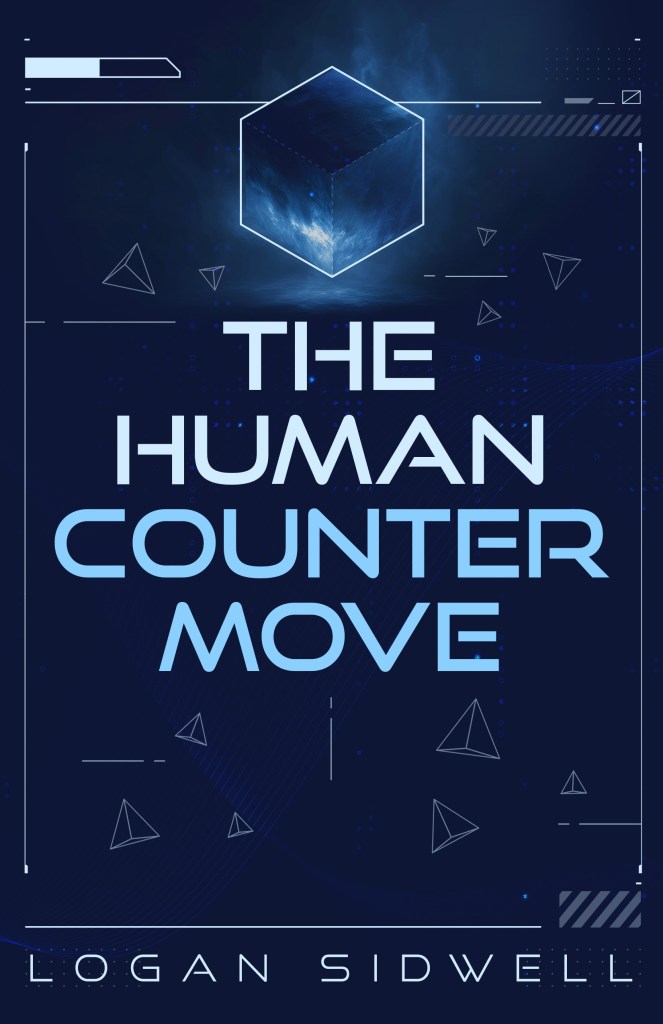
I can’t believe it, it’s already been one month since my novel The Human Countermove was released! If you’re interested in cerebral sci-fi with a human connection, check it out on Amazon!

Mystery is the Engine of The Dark Forest

The following is a discussion of Liu Cixin’s novel The Dark Forest. Spoilers abound.

The end of The Three Body Problem novel poses a fundamental issue. If humanity can’t progress technologically, how do they defeat an alien race with a five-hundred year scientific lead that can see everything humans do? At the beginning of The Dark Forest, we get part of an answer. The Trisolarans have a weakness, they can’t lie, and thus have never engaged in the twisted logic of Humanity’s games of deception.

So the whole of The Dark Forest, although often told from different character’s points of view, is effectively told from the point of view of the Trisolarans. We see everything humanity does, but the intent is kept hidden. This is what makes The Dark Forest compelling, it’s not a traditionally fantastical or sociological sci-fi, it’s a mystery novel powered by reader speculation. Tension, twists, turns, all of it exists to mislead and trick the reader before the grand reveal. And not just one reveal, but five or six.

Walls, Facers, and Breakers

The Wallfacers are humanity’s answer to the Trisolaran weakness. Four individuals given wide-ranging authority and instructed to do whatever they’d like, with the intent of defeating the Trisolaran menace. During the novel we see each Wallfacer’s actions. We see how they speak to their troops, what they research, their personal relationships, but nothing inside their head.

Frederick Tyler is the first Wallfacer. His entire plan is basically to pretend to be friends with the Trisolarans, get close to them, then blow them up. The evidence is all in the pages black and white. Research on self-destructing swarms, water on Saturn, connections with human supporters of the Tri-solarans. It’s a 1-dimensional plan, and it teaches the reader how things work. Just as the reader think they might have a clue about Frederick Tyler’s plan, a man shows up out of nowhere and says “Frederick Tyler, I am your Wallbreaker”.

This is the equivalent of Sherlock Holmes gathering everyone in the library and revealing his theory. After Frederick Tyler, each time a wallbreaker appeared, I would close the book and craft in my own head the vision in my head of what the Wallfacer’s scheme involved. And that’s how this book is supposed to be experienced, you should be guessing, because with each wrong guess, you learn the rules a little better, and you get a little closer on the next one.

The second Wallfacer is Ray Diaz. His scheme rocks, and I think the book owed that man more respect than he got. He rises above simple tactics and ‘destroy the enemy’ thinking and instead goes down the path of mutually assured destruction. This reveal doesn’t just close the door on a part of The Wallfacer Project, it helps prime the reader for bigger mysteries down the road.

Our last regular Wallfacer is Bill Hines. This guy goes full old-school sci-fi mind-control. And his plot represents an entirely different camp, the camp that asks the question, “What if humanity can’t win?” The fun part about this guy’s work is that even when he’s discovered, there’s no way of knowing who he got to.

We’ll get to the protagonist soon. First, let’s talk a little more about the plot.

Great and Terrible Battles

In any mystery novel, the resolution of the book always revolves around one of its key mysteries. Despite being about the 400-year buildup to interplanetary war, most of the book takes place in the first one-hundred years. It’s a signal to readers that victory won’t come from scientific progress, it’ll come from unraveling a mystery.

In the back half of the book, a couple centuries down the road, our main character catches up with the future. He’s told the human starships are unbeatable, that victory is inevitable, and most importantly, that the mysteries of the cosmos don’t matter.

This runs in direct opposition to everything we’ve seen in the book so far. Instead of excitement for a great battle, the book leaves a pit in your stomach. A sense of terrible fear you already know the outcome. Either the book was about to break a fundamental rule of mystery writing, or humanity was about to take the biggest L in history.

And they do.

And without an army, without a means to defend itself, the only chance to victory is to solve the mystery.

The Mystery of The Universe

Luo Ji is an astrophysicist, the target of many assassination attempts, and a wallfacer without a plan. We are told again and again that this is the man the Trisolarans are afraid of. They use DNA targeted diseases, assassin viruses, and hacked cars to try to kill the guy. All this because he knows what no on else does. The thing is, as readers we’re allowed into Luo Ji’s mind, and inside it, we discover that this Wallfacer, this leader of humanity’s defense, has no plan at all.

It’s exciting. It’s compelling. Our protagonist only has one clue as to what makes him so formidable. He suspects that somewhere in his research, somewhere in his understanding of the universe, lies a terrible secret, and the answer to Trisolaran defeat. It’s the central mystery of the book, the murderer with the knife, the revelation that beats an unbeatable opponent.

We are only given one real clue. Luo Ji casts a spell on a nearby solar system, and a hundred years later, that solar system is completely annihilated.

The Dark Forest is almost twenty years old, and the downside of age and fame is spoilers. Before I read the book, I had heard “The Dark Forest Theory” explained to me on three separate occasions, so the great mystery of the novel was apparent to me by the one-third mark. I wouldn’t dare peel back the mask here, instead I’ll just say this. The novel follows the rules of mysteries, and by identifying the murderer, so to speak, we see a path to possible victory.

Additional Comments

There’s a lot more to this book than the mysteries, there’s whole stories of intrigue, conspiracy, and multi-century planning. But this is also a book set in war-time, there’s not much room for these characters to grow and change, it’s more about who they already are, and what actions they take. Our protagonist’s starts as something of a nihilist, finally finds happiness, then has it ripped away as a manipulation to force him to perform his role as Wallfacer.

My favorite section of the book is titled The Battle of Darkness. It has almost nothing to do with the overarching mystery, and more to do with the painful sacrifices and cruel realities of space travel during wartime. The best conversation is one that’s had without a single word, soldiers coming to terms with an unavoidable truth.

Most Sci-fi is built around wonder and adventure. Exploring the cosmos, extraordinary technologies, alien species. This book isn’t that. This is hard-science book that asks the reader to come along, to observe the evidence of the story as an impartial observer, and to unwind the mystery a page before the book reveals it.