I love stumbling across paired stories. Those rare and curious times when two different writers take on the same concept around the same time. There are plenty of Hollywood examples. Armageddon and Deep Impact. White House Down and Olympus Has Fallen. The Illusionist and The Prestige. It feels like two philosophers each making their own argument in the public forum and by reading their story, you see the full journey to their conclusion.
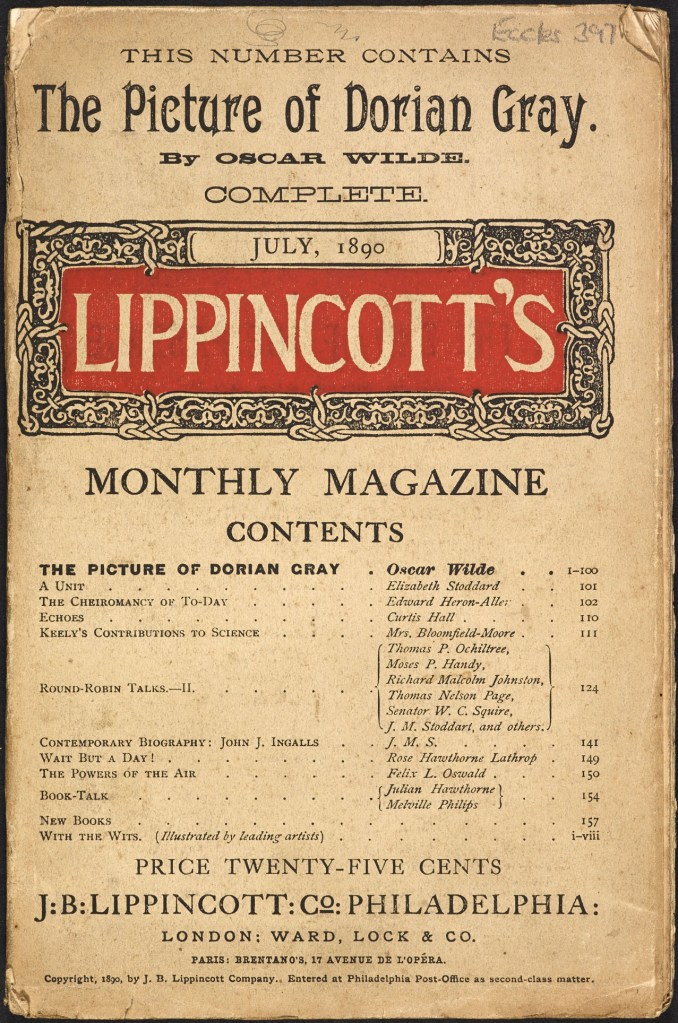
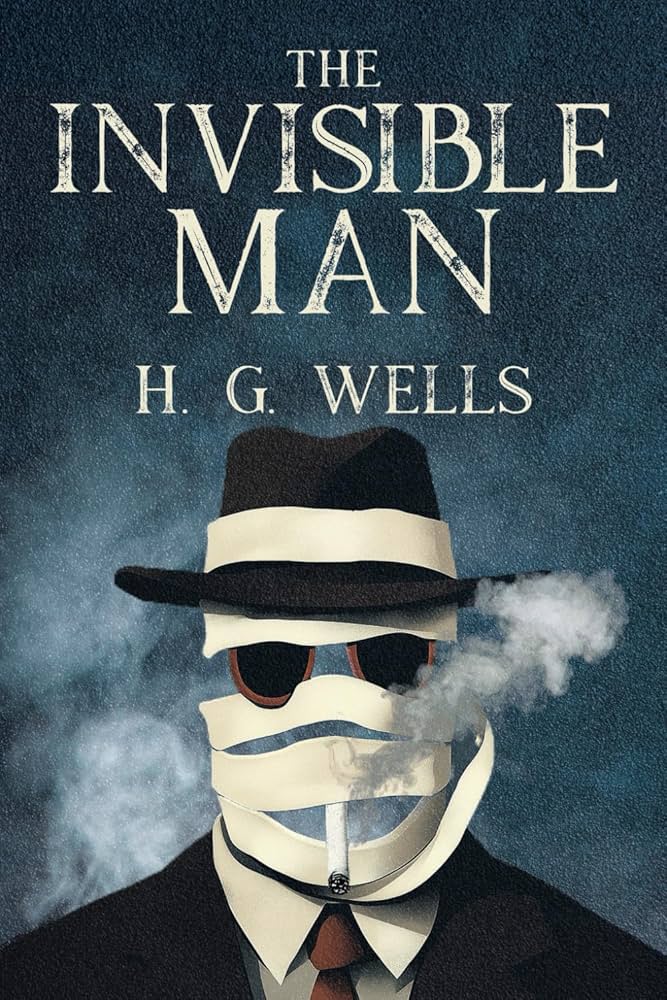
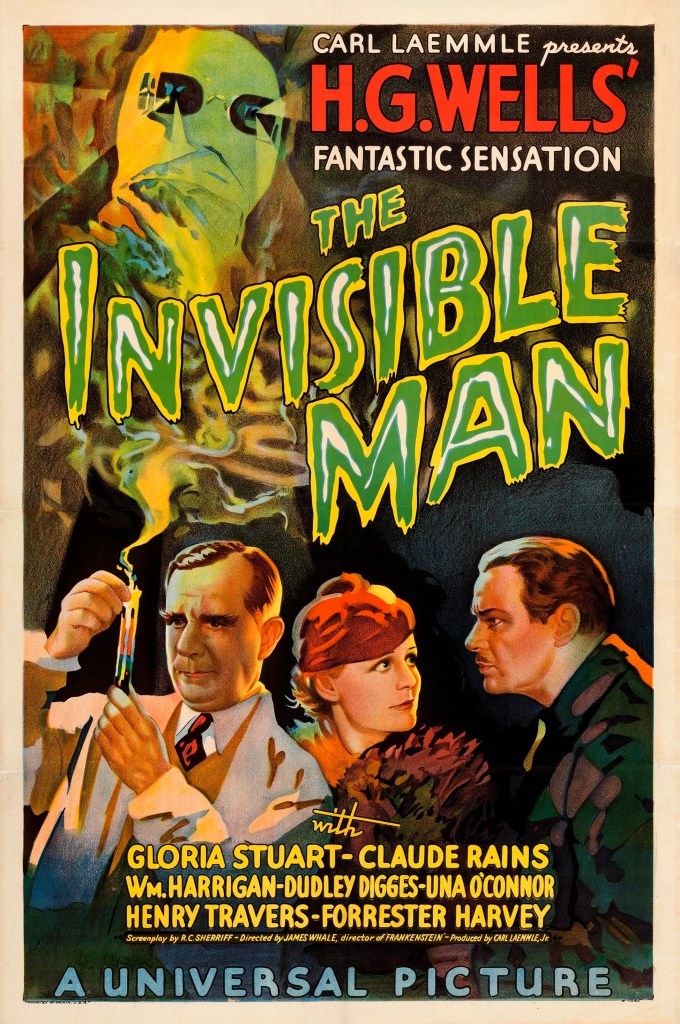
In the 1890s, two of the greatest authors of their time wrote two of their greatest books. First was The Picture of Dorian Gray. Originally published in Lippincott’s Monthly Magazine in 1890 and expanded into a novel in 1891, it stands as Oscar Wild’s only novel in a career writing plays and poetry. Then in 1897, two years into HG Wells half-century long science fiction career, he released The Invisible Man.
Both stories have been told and adapted and shared millions of times over the years, both stories have outlived their creator. And while the two stories on their face appear completely different, both try to answer the same question: What would a person become if they could act without consequence?
To me, these two books are my favorite example of paired works. An opportunity to see a sci-fi writer and a playwright approach the same philosophical concept. A chance to observe two masters each bring their own unique perspectives and reach vastly different conclusions.
Two villainous leads
When a skilled storyteller knows what kind of story they want to write, even if they don’t know the details, the nature of the story trims down the possibilities. If you want to tell a story of someone reconnecting with a community, it means they had a community to begin with. If you’re writing a revenge power fantasy, it usually helps for the main character to at one time in the past be a uniquely skilled fighter. I like to call it ‘novel-writing algebra’.
In the case of a theme like ‘no consequences’, both storytellers realized they had to start from the same place. To truly explore the space, each story’s protagonist had to be more villain than hero.
The Picture of Dorian Gray tells the story of eponymous Dorian Gray, a young man that values his appearance and youth above all other things. After realizing all his cruelties appear on his portrait rather than being reflected onto his person, he embraces his worst tendencies. Hurting those who love him, extorting, murdering, everything he can think of in one long hedonism treadmill.
The Invisible Man’s protagonist is just as reprehensible, but in his own way. Jack Griffin, for what it’s worth, earns his invisibility. He discovers the means to turn living tissue invisible and uses it to burgle, rob, and threaten. But it wasn’t the invisibility that made him that way. He robbed his father even while his skin was still opaque. Throughout the book he is teasing and cruel to the people he is closest to. The kind of man no person would want to associate with in real life.
A pair of cruel characters for a pair of moral lessons. How else could you teach it? If you start with a good character using their protection for a good cause, you end up with The Invisible Woman saving the world in a comic book.
Both authors realized that in order to explore the concept of consequence fully, they needed a bad actor to exploit the situation.
Freedom from Consequence
At the question of ‘What does a bad person do without consequences?’, our two authors diverge.
HG Wells goes down the obvious path. Mayhem, havoc, and immediate self-serving cruelty. In every action, The Invisible Man acts as untouchable as he feels. HIs dealings with others are impatient and demanding. As the story goes on, his ambition grows. His vision expands from short-term robberies to an ‘epoch of the invisible man’ by means of violent threat.
A bully. That’s all Griffin is. The second he gets an ounce of power, he stretches it to its utmost with no plans for the future. At the outset, this feels like the only answer. A person without fear of reprisal tries to force the world into their vision of things.
But Oscar Wilde’s take is vastly different.
Dorian Gray isn’t an ambitious man, he’s petty. Looks matter more than character. Charm more than soul. Over the course of a lifetime, consequences seem to evade him. When a man comes to avenge his sister, he realizes that Dorian Gray couldn’t possibly be the man from 20 years ago, after all he hasn’t aged a day.
When Dorian is given the freedom to do as he’d like, he doesn’t shape the world, he plays with it. People and institutions become toys to be tinkered with, broken, and tossed away. Even when hiding a body he handles the whole situation with a cold psychopathy. The dead man isn’t a person, it’s a thing. Dorian accumulates wealth and connections all through the world and his capacity to do expands, but the answer to ‘what will he do’ seems to come down to a single answer: whatever he feels like.
Although Griffin is supposed to be the more intelligent of the two characters, Dorian without a doubt makes better use of his power. He feels more real too, like one of thousands of kids born and raised into wealth under a system built to protect and empower them. A lifetime with no fear gives him a detachment from his actions. Everything is a game to be played and moved on from.
When the hammer comes down
Both authors reach similar conclusions at the end of their stories. Even if a person sees no immediate consequences to their actions, there are always consequences.
The Invisible Man gives the easy answer. If a person behaves cruelly for a long time the world will eventually hunt that person down and deliver the consequences nature tried to protect them from. Jack Griffin’s final moments are spent being beaten by a mob. Victim not of a single action, but the sum of all his behaviors.
I don’t know how much I believe it. There are plenty of stories of people getting away with their crimes, even in a court of law. Even tyrants die of old age from time to time.
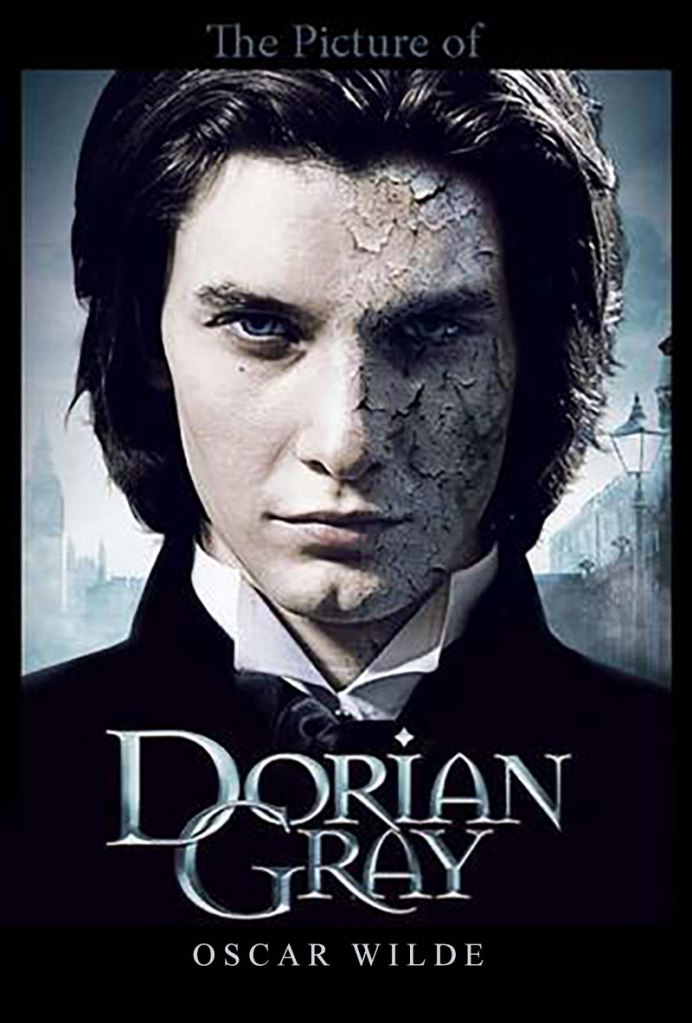
Oscar Wilde gives a different vision of ‘consequence’, and one that is clear from the beginning of the book. With every sin Dorian Gray commits, his portrait changes. A cruel smile at the edge of his lips, bloodstains, scars. The portrait isn’t just a magical painting, it is a reflection of Dorian’s soul, and for me, the better answer to the question of consequence.
Even if the world never retaliates. Every evil action distorts a person’s truest self. A murder doesn’t just stain the hands, it stains the heart. By the end of Dorian Gray’s life, the portrait doesn’t even look human. Terrible deeds have reshaped the man so far as to cut out his humanity entirely.
Conclusion
It’s impossible to move through life without seeing the occasional villain. I think that’s what makes the theme of ‘consequence free action’ resonate. Injustice is a part of life. Maybe what that makes these stories palatable is knowing the author will deliver some kind of justice by the end.
To me, The Invisible Man has the feel of a comforting moral tale for the upstanding in society. Eventually evil will be held accountable, even if it takes awhile.
But The Picture of Dorian Gray gives an answer that feels truer to life. Justice is not exact. Sometimes the worst of the worst escape their consequences and the good suffer in their wake. The only thing that can truly be said of the person that acts with no fear of reprisal is that they will eventually lose their personhood entirely and by the end of their life become unrecognizable to the world around them.
I didn’t start my writing journey with books. It wasn’t short stories or fan-fiction either. My original medium of storytelling was a bit more improvised.
Star Trek Simulations.
It sounds a little silly, but for the first five years of my storytelling journey, I was a game master. Crews of birthday parties and corporate events would show up, I would give them a mission, put them on their ship, and send them on their flight. Whenever they spoke to the computer or the main engineer or an alien, it was usually me. When the ship took damage and smoke rolled in near the security terminal, I was flipping the switches.
It’s where I cut my teeth. It’s where I learned how to make the big moments of a story pop. And when my time flying starships came to an end and I made the move to telling stories in books, I discovered how unprepared I was.
Telling a story in a book is one thing. Telling a story in a game is something entirely different.
First and Third Person POV
Realistically, it isn’t just a split between games and books. It’s a split between interactive media and non-interactive media. When a reader reads a book, they expect to be told a story. When a player starts a game, they expect to be the story.
In a book, the main character is the main character. In a game, even if there is a main character, the real protagonist isn’t inside the game, it’s the person holding the controls. For a game to feel engaging, it needs to engage not just with the moving avatar on the screen, but with the human being that’s driving the decisions.
Much like in books, games have two main pov styles. First-person and third-person. Note these are different from where the camera is. Those familiar with books and movies will probably understand gaming’s third-person approach to storytelling. There’s a character on screen with a history, traits, and a connection to the world.
A game like God of War tells the story of Kratos trying to raise his son in a cruel world controlled by the gods. When things happen, they happen to Kratos and Kratos reacts to them. He changes as the story goes on. This makes sense. This is close to traditional storytelling.
For games, first-person perspective storytelling is a complete 180.
A book uses first person to connect more deeply with the protagonist. We’re closer to the main character than ever. We can see their thoughts and how they decide how to act in the world. Games do the opposite. In the first-person perspective, the main character is washed away, made into nothing but a vessel for the player to control. It’s an effort to place the player directly into the story. Now when bad things happen, they don’t just happen to the character, they happen to the person playing.
In DOOM, the players inhabit a character only known as Doomslayer as they defeat demon hordes. In Legend of Zelda, the players play Link, a character who never speaks and simply reacts to the world. Even though Link is shown as a real person in the game, he has no distinct attributes, only the ones a player projects onto him.
The Gameplay is the Story
When I first began simulating starships, I found the moments that were most story intense were the least engaging for participants. They didn’t care about two other characters arguing between one another to decide the fate of a planet. They didn’t care about the lore that set up the story.
In a game, cutscenes are skipped. There’s a reason for this: The main character doesn’t need development, after all, the player is the true main character. And if the main character doesn’t need development, then the only kind of story events that matter are the ones that change the gameplay.
In games, a story is what happens to the main character and what they do in response. If something changes in the world, it has to be at least in part triggered by the player’s actions. And when something happens in the story, it can’t just have emotional weight, it has to mean something for the gameplay.
I used to play a typing game. You were in a cage descending into the depths and sharks would emerge from the darkness with words written on their belly. I’d type the words and the sharks would go away. It was fun, but the story wasn’t exactly engaging. In fact, the setting could have been replaced by a hundred other settings and I wouldn’t have even noticed.
This is the trouble with splitting story from gameplay. If halfway down, the operator radios in to tell me they’ve been in love with me for years, it doesn’t mean anything. The operator isn’t real, the love isn’t real. But if they radio in to tell me all our shark research has allowed us to slow the shark’s attacks, that does mean something. It changes how the game plays, so I become invested in that element of the story.
It’s hard to accept. The story of a game is only as good as how it affects the gameplay. This is where the phrase ‘ludonarrative dissonance’ comes from. If the gameplay and the story aren’t telling the same experience, the player disconnects from the half they don’t care about.
In the world of starship simulation, cutscenes between characters became a no-go. If I had something important to share, it needed to be delivered directly to the crew, and it had to change how they approached the mission.
Interactive Storytelling Workarounds
There’s a certain selfishness to a player’s approach to the story. They only care about what affects them. So how do you tell a story about complicated characters and nuanced situations in a way that makes the player pay attention?
I’ve found three ways:
Optional stories, passive stories, and mysteries.
Optional stories are exactly what they sound like. If 50% of players don’t want the lore, don’t force it down their throats. Sidequests are great, but some people are in a hurry. You leave the B-tier material in the game, but as optional content. Games are a bit like a walk down a buffet line. Everyone gets an entree, most people get the sides, and some people pick up a dessert at the end. In books, everybody gets the same experience. In interactive media, we don’t have the same luxury. It’s up to us to meet each player where they are instead of demanding they enjoy things they don’t like.
The idea behind passive storytelling is finding a way to sneak details into the experience without bogging down the gameplay. Gameplay is king. But if we can find a way to deliver a few lines of dialog without interrupting anything, then there’s no harm in it. This is how God of War told a character driven story, they’d give the player a level to traverse and the characters would talk amongst one another on the way. It’s like playing a podcast while working out. The player’s unrelenting drive to do things is fed, but the context of the story sneaks in with it.
Mystery is exactly what it sounds like. Players enter an area, make observations, and form their own conclusions about the situation. If anything, I think mysteries actually are better suited to interactive media than books. My most successful Star Trek story was one where the crew was coming to save a trapped squadron. When they arrived, they’d discover the squadron was gone. After a brief investigation, they’d discover a wormhole leading to who-knows-where. Without telling the crew a single aspect of the story, they figured it all out, and within a minute or two, they’d inevitably enter the wormhole with no plan on how to get home.
Conclusion
Games come with entirely different expectations. A reader expects a story. A player expects an experience. This post didn’t even discuss handling player freedom, needless to say that’s a rabbit hole for another day.
I had to make some adjustments when I switched from interactive media to direct storytelling. I imagine a lot of D&D Dungeon Masters go through a similar experience. They realize the main character can’t just be a vessel anymore, they need personality, background, and a particular view on the world. Every character can’t just talk to the protagonist anymore, they need to be living, breathing parts of the world with their own motivations.
Both mediums are difficult. Both mediums highlight different strengths. For games, accomplishment is the greatest payoff. For books, it’s usually something a little more philosophical.
If you get a chance, consider writing a story for a game someday. Nothing captures the difference in formats quite as much as watching your audience glaze over the moment you force them into a cutscene.
Logan Sidwell is a sci-fi and fantasy writer from Utah. He started as a writer and director in Ed-Tech, he now strives to marry his background in Computer Science and his years of storytelling to create fun, compelling ideas that explore new ground in technological and fantastical settings.
December already! It’s hard to believe my debut novel has already been out for 100 days. I set a one year sales goal for myself at the start of this process. A number drawn from speaking to other indie writers, and one I could be proud of if I hit it.
We hit the goal on day 68.
Some of that was farmer’s markets, some of that was family, but most of it was reviewers sharing their thoughts and inviting others to experience the story. For everyone who bought my book and helped me reach my goal, thank you. There is no way I could have reached this goal without you.
Reviews of The Human Countermove
Now that the book has been out for a bit, I’ve been able to get real feedback from reviewers, family, and friends.
At my extended family holiday party, I found out that about a quarter of the attendees had read my novel from front to back. As an artist, it’s difficult to glean meaning from loved ones’ feedback. We can’t always take opinions at their face value, especially when the opinion-giver doesn’t want to offend. This meant I had to resort to interpreting signals. This was my system: I knew at least a half-dozen relatives that had bought my book. If none of them mentioned it during the holidays, or only mentioned it in passing, it would have been a strong sign they couldn’t get through it. If they finished the book and mentioned a plotline, that meant the book was readable.
But neither of those possibilities were the case. My extended family had not only read my book, they had shared it around to other relatives and friends. So far, my favorite compliment was when I started telling one of my cousin’s about my next book and they said “Woah! Spoilers!”.
Here’s another signal I’ve been reading wayyyy too much into: At my local writer’s events, I’ve had four author friends approach me about my book. Each one of them has been eager to tell me how they would have made X plotline pop or amped up the pacing during section Y. I love hearing the different perspectives and approaches to storytelling. But in terms of signal interpretation, the number one message I took away was this: They read the whole story, stayed engaged the whole time, and only had minor notes on how to make it better.
I’ve now passed 12 reviews on Amazon. It’s hard to overstate how important getting to that double-digit number really is. Enough reviews helps new readers trust that the book really is a ‘book’ in a market filled with AI slop. So thank you again to everyone who has written a review on any platform.
Audiobook Underway
If you know me, you know I’ve worked as a part-time voice actor for the last six years. Thanks to a few connections, I was able to secure a recording booth for the audiobook version of The Human Countermove without going bankrupt. We’re 15 hours into the recording process and about three-quarters of the way through the initial recording. I’m anticipating bringing in an actor and actress to fill in a few of the voices that I think could be improved. The recording process should be complete by the end of January. After that, we’ll see how long editing takes.
A nice benefit of doing the audiobook is a thorough word-by-word proof read of the novel. There weren’t many errors, but my favorite so far is a moment when I used the word “basket” instead of “bracket”.
Project APHELION Draft 2 Complete!
Project APHELION has been my biggest focus this year. The manuscript is now sitting at 102,000 words. Second drafts are way harder than the first. It feels like 100 hours of constant decision-making. Things that were left for later suddenly have to be dealt with, hints in the first draft have to be cemented into plotlines, characters arcs have to lose much of their ambiguity.
But it’s done! The second draft has been distributed to a few alpha readers. I’m feeling really good about this story. It’s my first foray into fantasy and I gave it everything I had. A third draft is underway to pretty up the prose and fix continuity errors. It should be querying to agents by January!
New Projects
If you’ve been tracking my current projects page, you’ll see I have two new projects. PRINTHEAD and RELENTLESS.
PRINTHEAD is my megaproject, and it’s been delayed. The rough outline was getting out of hand and one of the three key POVs had a lot of scenes missing. Plus I don’t want to start on my megaproject until I have a few more regular books out for consideration with agents. I will return to this project. I love it too much not to.
RELENTLESS is my silly project. It’s a spin on the revenge power fantasy genre with a much lighter tone (I wrote a bit about that genre here). My last two projects have been so serious, I decided that this time around, I’m having fun. Whenever an idea that makes me laugh, it goes on the page. I’m already 10% of the way through the first draft and enjoying every minute of it. I wouldn’t be surprised if it were in alpha reader’s hands by the start of March.
Closing Remarks
I’ve been getting closer and closer to my goal writing pace. Having a book out in the wild helps a lot. Having one project to edit and one to write is nice too. One of the hardest parts of being a writer is having a hundred ideas in your head but only being able to writing one or two a year. I’m hoping that problem will be resolved soon.
My website’s been getting a lot more traffic lately. If you’re new, thank you for dropping by! If you’re interested in my writing, I have a few short stories from last year available here and I post essays on various subjects here weekly.
Thank you all for your support. Looking forward to more stories next year!
This week I was delighted to receive an in-depth review of my debut novel The Human Countermove from Dan Yocom at Guild Master Gaming. Since release, I’ve come to realize my book’s number one audience is fans of games and strategy gaming. This review represents the viewpoint of an expert in that space, so I’m deeply appreciative they would take the time to consider my book and give so much fantastic feedback. Check out what they have to say!
Apocalypse stories have always bothered me. The world is so disorganized, it feels like everyone alive is a scavenger. It’s all a little too material, a little too short-term minded. Maybe that happens at first. An initial anarchy when a system collapses. But humanity has lived through hard times, and we’ve seen what people do when the world gets tough. We form tight-knit communities and close ourselves off from the world until the danger passes.
The Fifth Season by N. K. Jemisin is a post-apocalypse fantasy, one that paints a real picture of how humanity survives.
Comms with High Walls
In The Fifth Season, the end of the world is a common occurrence. Every couple decades, Father Earth unleashes a ‘fifth season’ on the world. The season of death. In response, humanity has taken a permanent ‘prepper’ mindset.
Villages aren’t sprawling things that welcome anyone and everyone. They’re comms, short for communities, and they’re walled on every side. Visitors are treated like threats and newcomers have to prove their worth. Trust is so low it’s polite to offer guests a drink called ‘safe’, which is the only drink you can be certain won’t poison you.
The story begins in a comm at the start of another apocalypse. It follows a woman named Essun, who just lost her son, and is on the hunt for her husband and kidnapped daughter.
In most stories like this, we’d see the main character travel a while, then stop at a town and get a break from the danger. Maybe there’d be a nice innkeeper, or at least a warm place to sleep from time to time. Not here. With the start of the season of death, the world is cold, and every door is shut.
Essun sees dozens of comms on her journey. But never enters a single one.
People are a Utility
When a community closes its doors, they do it because they fear what’s outside. But once those doors are closed, resources become scarce, and every person in a bunk is a mouth to feed. The story regularly refers to a set of wisdoms called ‘stonelore’. Stonelore tells people how to survive in hard times. And one of Stonelore’s most important rules is that every person in the comm has a use.
That use becomes their name. Hoa Strongback. Essun Breeder. There aren’t many use-names, and each name is an implicit threat: Become useless and be thrown out into the cold.
This is not the kind of story where a leader softens their heart and lets a poor beggar woman into a community. This is a story where a dozen beggars are left stranded outside the comm gates.
On her journey, Essun allows a few others to join her party. Only because there’s strength in numbers.
But this story isn’t just a brutal take on a hard-hearted world. It’s also a fantasy.
Orogenes and Earth Magic
There are three POVs in The Fifth Season. Essun, the older woman in search of her daughter. Damaya, the young girl given away by her parents. And Syenite, the capital trained Earth Magic wielder. Earth Magic is the shared commonality between them. They are all Orogene, a race of humans capable of causing and stopping earthquakes while barely breaking a sweat. It’s what informs Essun that this season of death is far worse than any that ever came before. But there’s a downside.
The rest of the world hates Orogene.
As soon as Essun’s community finds out what she is, she’s forced to flee before they can capture and kill her. Damaya is given away to a stranger because her parents fear her powers. Even Syenite, the capital trained Orogene, meets low-level bureaucrats that talk down to her.
The author does a wonderful job painting Orogenes’ magics and their deep connection with the Earth. But any joy that might be associated with that skill is diminished by the shame, the distrust, and the overt hostility of the world. Syenite’s training gave her control over her abilities, but right alongside those abilities is a self-hatred that was ground into her from childhood.
The Sin To Kill The World
In most apocalypses, there’s this sense that most people are victims trying to get by. Victims of some mad scientist somewhere that decided to set off a bomb. In The Fifth Season, there’s a sense that it’s all deserved. A punishment for humanity’s misdeeds.
Damaya’s childhood is a caravan of terrors. Syenite uncovers terrible fate after terrible fate affecting her fellow Orogene. Even Essun’s rag-tag band of unwanteds all have that same sense of self-loathing.
With every curtain we pull back, there’s another reveal of procedural pain. Organized evil. There’s a feeling that the apocalypse in this story isn’t the product of a single terrible moment, but the byproduct of humanity’s cruelty. Sure people are mean during bad times, but somehow they’re even worse in the good times, and all that cruelty is bubbling up under the Earth’s surface, waiting to bring about catastrophe.
When the apocalypse finally arrives, all those closed doors and locked comms look less like humanity trying to survive, and more like cruel people waiting for the apocalypse to take them.
Conclusion
The Fifth Season is a cold book. There are joys along the way. The happiness of an adventurous kid and the wonders of Earth Magic come to mind. But at its heart, it’s a story of a cruel world and the people stuck under humanity’s boot. Every inch of worldbuilding further paints the same picture. A story of oppression, control, and hate. It explores the emotions of the characters deeply, taking the time to really process their state of mind, and the meaning behind every action. One of the POVs is even written in second person, which makes the pain of the story even more unavoidable.
It’s compelling, it’s fantastical, and by the finish it feels like the end of the world.
It’s been a little over a month since my novel The Human Countermove debuted, and I figured now was a good time to share a part of the story. A reading of the chapter is also available on my YouTube Channel:
1 – Just a Game
Rank: 83
A space opened in the queue. I closed the gap, steel panels flexing under my step. A stream of LINE players stretched off into the distance. Security was never like this at a LINE event. A rush-job hall of steel tossed in front of the hotel’s front doors—what were the Minds thinking? Probably had something to do with that new directive.
No one spoke in the metal tunnel, every noise was echoed back and amplified into incoherence. I glanced behind me. Two bodies back, a hand waved in my direction. Jamie. I mouthed hello back. She was a strong player, better than I was these days. She had on a dark-green dress I had never seen, and her brown hair curled with the precision of a recent salon visit. A big change from her regular loose shirts, capris, and ponytails. Her eyes gleamed with life. Maybe she was finally over that insomnia, I’d have to ask her.
A new gap formed, I hurried to close it. In the wait, my mind began to wander. I used to relish moments like this, every idle second was a chance to review and revise my game plan. Not these days, let one of the players with a chance to win do that. I was well on my way out of the top one hundred, may as well have been retired. Thirty might seem young for retirement, but when all you’ve done is lose for over a year, it’s best to be honest with yourself.
The queue rounded a corner and the Greater Charters Hotel entrance came into view—an extravagant place with a penchant for gold trim. A full-body scanner in front of the lobby doors ruined the luxury aesthetic, which was well enough, considering I was wearing jeans. A guard’s voice echoed down the tunnel. “Step inside, arms out, legs shoulder-width apart.”
He was the same guy the Greater Charters Hotel always used, but the uniform was different. Bulletproof vest, at least three weapons, a wire running to his ear. It was a whole lot of security for a board game. At last, I reached the front. “Step inside, arms out, legs shoulder-width apart.”
His voice was tired and he didn’t even glance at me, his eyes locked on a screen. I followed his instructions. The booth was quiet and compact. My jeans kept my legs from reaching shoulder-width apart, but the guard said nothing. He pressed something in the corner of his screen. There was a momentary compression, the air felt oddly still. No more than a second. A 3D scan of my face appeared on-screen. Almost perfect. He had the same short black hair, receded hairline, and beginnings of a beard in need of a shave. He even had my smile, though the eyes looked a little dead, a little darker brown than I remembered. Maybe that was just what being thirty was like. A sweet, automated voice pumped through the speakers. “Welcome. Zouk Solinsen.”
“You’re good.”
I nodded my thanks and proceeded through the double doors. The lobby opened to an enormous conference hall. I always wondered how many rooms a hotel had to sacrifice to get ceilings to go that high. The room went on and on, filled with row after row of sleek black tables, like a great hall for gaming. Figures they’d spare no expense for The Global Playoffs. It was one of the biggest tournaments there was. Players flew in from all over to represent their countries. Best of the best, all here. These days, I’d be lucky to land in the middle of the pack.
The venue was still empty, mostly walked by arbiters. You could always spot an arbiter, the best-dressed people at the tournament. Maybe it’s easier to tell someone they lost when you’re wearing a suit. The pre-event instructions had emphasized the importance of good grooming and formal dress. Hopefully the polo would make up for the jeans.
“Zouk Solinsen?”
A woman in a black pantsuit approached, touchscreen in hand. Definitely an arbiter.
“That’s me.”
The arbiter scrolled through some list. After a moment, she glanced up. “Follow me.”
Her feet carried her at an incredible speed. I jogged just to keep up. Every couple steps, we passed another dozen seats. In front of each, a folded white square listed a player’s name. A few popped out to me: Alexandria, Oliver, the world champion Bergamaschi. My foot caught on the carpet. The arbiter barely glanced back. These were the best in the world, here to represent their province. Here I was, hoping to go home with a single win and a free lunch. Maybe coming at all was a mistake.
The arbiter stopped three-quarters of the way down the hall. A little further down, at the end of the hall, the hotel had set up a big platform overlooking the tables. We were close enough I could see a few of the empty seats, they looked a lot more cushioned than the ones for players. VIPs. It might explain the security. The arbiter turned sharply and led me between the rows of tables to my seat. Row six, position five. She came to a stop and pointed at a straight-back black chair.
“This is your seat, Mr. Solinsen. If you need anything before the game, please feel free to reach out to one of the arbiters.” I looked past the arbiter. No one was within a hundred feet. “We’re around. If you have a pressing issue during a game, pause the timer and raise your hand. Bathrooms are in the corner. Any questions?” She spoke at a breakneck pace, but I was pretty sure I had gotten it.
“None. Thank you.”
I took my seat and the arbiter hurried away. Like every other seat, there was a little folded note bearing my name: Zouk Solinsen, Sulmar Province. My eyes narrowed. There was something off about the label. I grabbed a name card one seat to my left. The color was different. Mine had a subtle yellow hue. I grabbed the name card to my right. All the others matched. Another sign I wasn’t supposed to be here.
“Zouk!” I turned quickly at the sound of my name. “You didn’t tell me you were playing!”
Jamie approached quickly, in a rush to keep up with her arbiter. I knew there was a reason I had been thinking about her. I spun the name card opposite mine around. Jamie Mendez, Reanrum Province. This was gonna be a tough first match.
“I didn’t even know I was playing until last week.” I returned each name card to its original position. “Pretty sure I’m a replacement.”
Jamie sat down. “Don’t do that. You were a good player.”
I leaned back in my chair and stared at her. We both knew I was past my prime. Her eyes narrowed. “How can you be sure?”
I slid my name card across the table. “Look. Different paper. I wasn’t in the original batch.” Jamie lifted the name card to her glasses and scrutinized it carefully. She had always been big on details.
“Different font too—they could have lost the original.” She slid my name card back to me.
“There’s more. My invitation came directly from the coach.” Jamie’s lips pressed into a thin line. She was getting convinced. “You know the lineup for the tournament? Released six hours after I accepted my offer. Come on, I’m a replacement.”
Jamie raised her hands in surrender. “So you’re a replacement.”
“You’re convinced?”
A smirk crept onto her lips. “I am, and that means you haven’t strategized with your team.”
Always looking for the advantage, Jamie. It’s what made us good rivals. I shook my head. “We all play our own games, what’s there to strategize? It’s not like they expect much of me.”
She leaned slightly forward. “Maybe you should throw the game, teach ‘em a lesson.”
I chuckled. She was probing for advantages, but she’d never forgive me for a free win. One more and she’d have a winning record against me. Then again, the team captain probably wouldn’t even notice. Even one win today would probably be categorized as an ‘over-performance’.
We chatted for a while about nothing. Showing up to all the same tournaments means either a lifelong hatred, or a lifelong friendship, and neither of us were good enough to waste time hating each other. That didn’t stop her from making every effort to wipe the floor with me, but it was nice to see a familiar face.
The hall went from empty to filled in no time. I did a sweep of the hundreds of faces for anyone else I recognized, then noticed Jamie’s eyes were locked on the front of the room. A crowd of well-dressed visitors were taking their seats on the platform. As one entered, Jamie sat up a little straighter.
“Maya’s here,” she whispered.
“Who?” I squinted into the crowd on the platform. In all the movement, one stood still, shaking hands and smiling at every person passing by. She was a beacon of positive energy in a short body. Her hair was somewhere between blonde and grey, and she wore a mauve pantsuit.
“Human Autonomy Activist. She convinced the Minds to pass the new directive.” The new directive. The “special” tournament. I had read it once, but knew I’d never qualify. It explained the extra security—the elite were here to watch our games live. To pick out potential champions.
“People are taking that seriously?” I asked. Jamie looked back at me with a raised eyebrow.
“The opportunity for a LINE player to join The Three? The chance to be the voice for humanity on the council? We’re all taking it seriously.” She leaned in close. “Zouk, you and I are among the one hundred players good enough to win this thing.”
I adjusted in my chair and picked at a piece of loose thread. “We’re not the best in the world, Jamie. We’re not even in the top ten.” Jamie said nothing, but her furrowed brow was enough to tell me her feelings.
The lights dimmed. My teammates finally arrived, all at once taking their seats. Table by table, soft blue LEDs flicked on, illuminating a thousand LINE players’ faces. A glass wall rose up between Jamie and I, and a message appeared in the virtual space, “CONNECTED”.
“Good luck, Zouk” I could barely make out Jamie’s face through the holographic separator, but whispered my thanks. All at once, the screens updated. A 12×12 grid of blue squares appeared on the table in front of me and in the image on the glass.
Back when I was teaching full time, students always told me their biggest fear in a game of LINE wasn’t playing poorly, it was the moment the game started. An empty board. An infinite garden of choices, from which players pruned a single game. But those were novices. I didn’t see the infinite anymore, I saw my plan, and I saw my opponent.
Another figure rushed past me to a seat at the end of the table. Someone was always late. Two little clocks appeared in the corner of the screen. One for me, one for Jamie. Each read 60:00. Looked like the tournament was starting on time. A gong played through the room, and the timers started ticking down.
The objective in a game of LINE (Leadership in Near-Range Emulation) was simple: use troops to attack your opponent, build walls to slow them down. Each squadron was represented by a set of six little blue dots. With some good strategy, a smart player could build a base, capture the board, and take their opponent’s command post. A dumb player could charge in and win in a few moves, but that was rarer. The graphics were simple—red dots, blue dots, a few lines representing the walls—but the complexity was near infinite.
I ordered a wall be placed near the bottom of the screen, near my command post, then pressed ‘Submit’. My clock stopped ticking. Jamie’s continued to count down, she was still deciding. After a few seconds, Jamie’s clock stopped too, and our moves were revealed.
A blue wall appeared where I had ordered it, the beginnings of a base. Jamie had brought out her first squadron, six dots with the power to tear my baseapart. This would be an aggressive game. I had hoped for that. Jamie was the stronger player these days, let her lead the attack.
Her squadron could only move one square at a time, so even with her extra initiative, I had time to get my side of the board organized before she hit me.
At move four, I deployed my first squadron. They took cover behind the walls and waited for the red troops to reach them. Jamie called her first squadron back to her base, not much point in attacking a well-defended position. But then again, she had already forced me into defense.
By move seven, the basic footprint of the Lost Star formation had taken shape in my base. It kind of looked like a spiky porcupine centered around my command post. Over the years, I had leaned on it more than a few times. Lots of cover, lots of mobility for squadrons, it tended to get the job done.
On move twelve, Jamie’s squadron count climbed to five. I continued the development of my base, waiting for the attack.
Six moves later, I glanced at the clock. I had burned fifteen minutes, Jamie had spent twenty-one.
I input another move and thought on Jamie’s comments about the new directive. Did the other pros really believe it? Win a few games of LINE and get put in charge of the government? It was ridiculous. Add in all the amateurs that thought they had a chance and the whole thing was a circus. Even if the offer was good, it wasn’t meant for middling players like me. The directive tournament was meant for the best, for players like Bergamaschi.
I pulled back from the board. As much as I respected Jamie, my head really wasn’t in it. I was thinking about the next match. Not much had been able to distract me from it the last few days. A gust of cold wind blew my way, an air conditioner had just turned on. Jamie had already input her next move. Time was ticking down, I needed to focus.
Her first squadron poked its head out from behind cover. A fight was just what I needed. I stretched my fingers, then input the attack orders. On the left, my little blue dots moved up through one of the Lost Star’s points and took firing positions. On the right, troops waited patiently.
Nine squadrons emerged from Jamie’s base. A proper army. The moment they came within three tiles of my walls, I gave the order for my troops to open fire. Gold-yellow flashes flew out from both sides. With every hit, a dot faded off the board. At the end of the first turn, I had lost five troops, Jamie had dropped considerably more.
Still, she pressed on. A steady stream of weapons fire down the left side tore through the Lost Star. My troops were sitting ducks. She closed in, lurching ever closer to the center of the base, and more importantly, abandoning her own. I ordered the counter offensive, three squadrons pushed out of my base and charged across the map.
Through the holographic separator, I could see Jamie’s eyes widen. Both sides were attacking. Both sides were defending. It was a precarious position. A single misplaced piece could end the game. Just as I had hoped, a chance to put skill against skill.
The next move rolled in. Jamie’s squadrons ceased fire and turned away from the mangled remains of my base. I blinked repeatedly. That wasn’t right. They were retreating. No. I craned my neck closer to the screen. Not a retreat, a pivot. She was coming for my counteroffensive.
I realized my mistake in an instant. I had forgotten to wall up the center of the board. Instead of a two-pronged skirmish, we were two armies facing each other in no-man’s-land. I counted out Jamie’s troops. Six more troops. No way out. My heart sank. In an open field there was no room for clever tactics, just flat numbers.
Weapons fire lit up the screen. In a single turn, three of my squadrons were wiped from the board. In exchange, Jamie had only lost four tiny red dots.
I put my head in my hands. Every little sound in the hall bothered me. A hundred players tapping at their screens, coughs and sneezes that made the whole place feel like a hospital, whispers from the politicians in the viewing gallery. The game was over, but I needed to see it through.
I ordered a retreat, but it was already too late. A flurry of golden light erased what was left of the blue army. I took in the rest of the board. My base could hold up for a few more turns, maybe even rebuff the attack. But against a pro like Jamie, defeat was inevitable.
My hand shook as I pressed ‘Resign’. The board vanished and the separator lowered. Jamie had a quizzical look on her face, as if she was surprised it was over. We shook hands over a final image of the board, projected onto the flat of the table.
“That was a dangerous plan, going for a flank on my army like that.”
I paused a moment, confused at her words. “It was supposed to be a counter-attack.”
Jamie held a thoughtful look, her eyes jumping back and forth, the sign of a player calculating moves. “You were missing a few walls.”
“Yeah.”
My chest felt heavy. It was an amateur mistake. But for me, mistakes like that were becoming the rule rather than the exception.
Jamie grabbed her bag off the floor. “Who are you facing next?”
I let out a nervous cough and reached into my pocket, pulling out a copy of my schedule. Jamie glanced at it and let out a laugh. “Bergamaschi?”
I nodded.
“How did you get him?”
I shrugged. “The coach wanted one of his lower-tiered players to face the champion. Manage the balance of wins and losses.”
She gave me a pitying look. “Cannon fodder, eh? Sorry, Zouk.”
That looked to be the story of the tournament for me, a last-second replacement set up to lose. “Hey, maybe that’s why the last guy dropped out.”
Directive 2149-M-13-A
“On Reintegrating Human Voice in Government” – Readable title appended by The Mind of Communications and Influence.
The following directive was presented and voted upon unanimously during session 1034 of the year 2149. Deliberations extended for eleven minutes and nineteen seconds. Transcripts have been sealed.
OBJECTIVES (ordered by anticipated impact):
Improve perception of human representation in government (Code: O-HP)
Upon ratification of this directive, a voluntary L.I.N.E. (Leadership In Near-Range Emulation) tournament will be made available to all citizens. The details of the tournament are as follows:
1. The rules of the game will follow the 2088 L.I.N.E. Rulebook.
2. Opponents for this activity will be chosen from a list composed of
A. The Mind of Communications and Influence
B. The Mind of Manufacturing and Distribution
C. The Mind of Strategy and Warfare
3. Should a citizen achieve three victories without suffering a defeat, said citizen will be awarded membership on the Nation’s Legislative Council.
4. At least one match will be conducted in a non-simulated environment.
5. This directive will be terminated after one player claims victory.
Competitors may join the tournament by filing a Voluntary Activity Admittance Form and entering activity code J199LI.
END
A Note from the Mind of Communications and Influence:
Hey folks! I know there’s a whole lot of directives coming down these days. I just wanted to take a moment and really highlight this one. For the last few months, the other Minds and I have been having some coffee and chat sessions with Human Autonomy Activist Maya Torrez. In case you don’t know her, first off, you are missing out, she is a blast and has made me spit out my coffee laughing on more than one occasion. But secondly, she is one of several leaders of the Human Autonomy Movement. And after a whole lotta chattin’, we ended up putting this thing together.
Here’s the rundown, we want a living, breathing, human being on the council. But we also need to stay true to the virtues that define our nation. We don’t want to be just another country plagued with corrupt politicians driving unrest and fear. So we’re being a little picky.
I know what you’re thinking, LINE? How can a game be the right tool to choose a fourth Mind? Well, let me tell you about the candidate we’re looking for. We want someone who isn’t just a speaking head, and isn’t just a vote. The person that joins this council has got to be a deep thinker, someone who can go head to head with any one of us and come out on top, someone ready to make a difference.
Here’s the thing, if you challenge us, we won’t hold back. Even the best in the world are gonna have a pretty tough time (looking at you Bergamaschi!). Our models project the only people who have any chance of winning this thing are professional LINE players (I know, shocker), but anyone is free to throw their hat in the ring, we love a good surprise.
So there ya go, take us out to lunch, challenge us to a game of LINE, and maybe start running the government. Good luck to everyone, and if you have the skill, we’ve got a chair waiting for you.
P.S. No, there is not a punishment for losing. It’s just a game people!
What a month! On September 1st I became a novelist. Now we’re 40 days in and I’ve been incredibly pleased with how the book has been performing. Reviews have been great, interest has really been there, and a lot of people in my life I never expected to read The Human Countermovereached out to me after they finished it to express how much they enjoyed it.
Before release, I spoke to a bunch of self-published authors about a realistic sales goal for a year. 40 days in and I’m nearly three-quarters of the way to that goal. I even had to buy a second round of books the other day! All those Farmer’s Markets really added up, and being able to sell some of the anthologies I’ve contributed to was a great way to expand my product line and donate to my local writing chapter. Instead of one book, I’ve been selling five, everything listed on my Published Works page.
If you’re interested in a signed copy of The Human Countermove, I’ll be at the Utah Reader’s Fest on Saturday. Come by and help my debut novel hit its one year goal before the 50 day marker!
Project APHELION
My next project, codenamed APHELION, is nearly ready! I’m closing in on the end of the second draft, at which point I’ll be querying the book out to agents and getting feedback from beta readers. The book is a hard-science take on portal fantasy and an unpredictable road from beginning to end. I think fans of The Human Countermove will really enjoy how this one turns out. But for now we gotta keep the details scarce.
Editing APHELION has been so much easier than editing the second draft of The Human Countermove. Two and half years have really developed writing skill, and this time around I was able to make good choices right from the start. Most of my work on APHELION’s second draft is minor adjustments and expansions to the setting. The first draft ended at about 87k words, now it’s up to 92k and I’m only halfway there. If you’re interested in my progress, the chapter-by-chapter checklist is tracked on my Current Projects page.
Project PRINTHEAD
With one book published and the next one about to query, my third book is officially in the pipeline! It’s one I don’t dare share any of the details on yet, only that it’ll be a back-stabbing, twist-filled, madhouse of a story. The initial outline is written and as the second draft of APHELION wraps up, I’ll be working through outline #2. Lots of characters in this one, so it’s very important I know where I’m going from the beginning.
Wrapping Up
Thank you all for supporting my book, it has meant the world to see real copies go out into the wild and reviews come back on Amazon. More reviews of my book are in the pipeline for the next few months, and I may even be making a few appearances at some conventions as both a panelist and a vendor. Stick with me, I have a lot more planned for the future!
Last month my sister and I drove six hours across state lines to see a musical. The place was deep in the mountains, a little wood theater blocked in by pine on all sides, built in a town with a population in the hundreds. She had performed there in the past, so there was a little extra magic to the trip. We were seeing a musical called Bright Star. I had seen it before at a different theater, and didn’t care for it.
But this time was different.
The story clicked, the characters melted my heart, the songs were charming. It was a hit, even though it was all the same show. And it led me to a conclusion. Bright Star is a special kind of story, one that’s better on the second watch than the first. One that’s improved after the plot has already been spoiled.
Bright Star, written and composed by Steve Martin and Edie Brickell, based on a true story, tells the story of Alice Murphy, a North Carolina editor with a troubled past. The musical jumps between the past and present, showing Alice when she was a teen falling in love, then back to the present as a strict editor of a well respected journal.
I like to call Bright Star a story about a miracle. Things get darker and darker throughout the play, until at their darkest, the “moment” turns everything around. If you’ve ever dabbled in story structure, you can feel when a twist is coming. The entire plot building in a single direction. On my first viewing, I figured out the twist at intermission. In some ways, I think that damaged my experience. For most of the second half, I was stuck waiting for the twist to happen. Hoping they’d drop it soon so I could see the rest of the story. But the miracle was the story, and when the time finally came, it was a disappointment.
A year later, on my second viewing, I knew the score. There was no need for me to wait for the twist. After all, I already knew the ending. Instead, I could enjoy the story for what it was. Every scene could take its time, and the plot wasn’t forced to hurry.
The difference was subtle. In viewing 1, I experienced the story with the characters. The loss, the grief, the aching pain that stretched over decades. Even the ending, as joyful as it was, couldn’t completely take away what had come before.
In viewing 2, the story was almost non-linear, like I was an angel knowing that for all the bad that was coming, a greater good would follow.
After the show, my sister and I drove home down a single-lane road in a pitch black forest. Our heads were buzzing, talking about everything we loved about it. Maybe the forested, mountainous background helped set the stage. Maybe the decision of the villain to drink from his flask between every line of his ‘evil’ song elevated his character. Maybe the authenticity of the old toad-catcher was all we needed to live in the moment.
But in my opinion. The reason it was so much better was that we knew what was coming from the very start.
Which begs the question: What other stories would be better spoiled?
I can think of a few where spoiling the story ruins it. Shows that are only good once. The Good Place season 1 comes to mind. A whole season builds to a single twist, and once you know what’s coming, the show loses its tensions and the drama feels more like a dance.
The mystery genre can go both ways, I think.
Columbo starts every episode by telling you exactly who the murderer is. It gives space for the audience to appreciate the journey, to notice all the clues that give the murderer away. The joy of the story isn’t uncovering the truth, it’s watching the intrigue, the game of chess between the murderer and the detective.
And Then There Were None by Agatha Christie is all about the suspense. Every second is a second spent wondering which of the survivors is killing the others. Once you’ve read it once, you know the answer, and your experience transforms, instead of searching for the killer, you watch their every move and witness their scheme come to fruition.
A story that’s best unspoiled is one where the destination is everything, where every twist along the way throws the audience’s expectations of the future in a completely new direction. Like a game between the writer and the viewer. The problem is, if all the little misdirects don’t mean anything, if they’re just there to confuse, the story becomes vapid. A second viewing becomes pointless.
So what makes a show worth watching even after it’s spoiled? One where the journey is what matters. Where the characters grow, change, and engage in believable, thoughtful intrigue that’s worth diving into again and again.
There’s an old tradition in storytelling, one that spans most of human history, from Homer’s The Iliad to Shakespeare’s Henry V. The invocation of the muses. The muses would call on the gods to give authority to the play, then warn the audience of the general plot and themes to come. Spoilers from the gods. It’s a trope I never really understood until now. But knowing what’s coming changes the audience’s experience. They don’t have to think so much about the future, so they can enjoy the little moments along the way.
Bright Star opens on a song from Alice, it’s upbeat, it’s sweet, it’s a little promise to the audience that they’ll hear a nice story. Now that I’ve seen the show twice, I wonder if the lyrics to that song could do with being a little more specific. An invocation to the gods might be a little much, but maybe by telling the audience a miracle is on the way, they might be in a better mindset to enjoy the show.
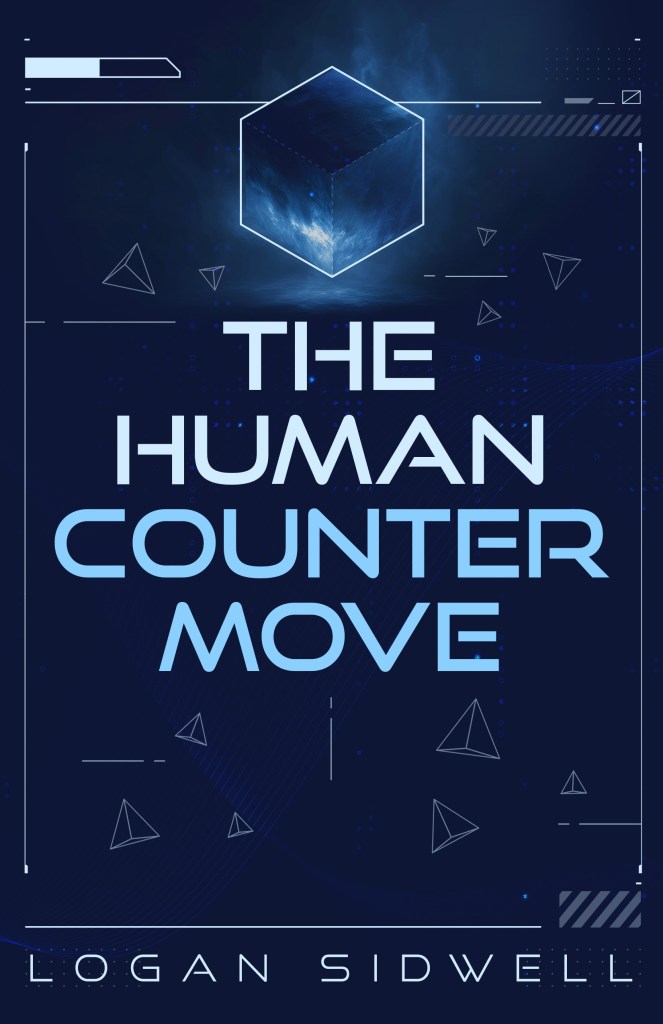
I can’t believe it, it’s already been one month since my novel The Human Countermove was released! If you’re interested in cerebral sci-fi with a human connection, check it out on Amazon!
After three years my debut novel is now available to purchase on Amazon! It’s a cerebral, near-future sci-fi built from my love of strategy games like Chess. In the next few days I will be releasing a post discussing all the different strategies and games I built my book from, but today it’s all about the celebration!
Thank you to all my readers, my family, and my friends. Becoming a novelist took a lot longer than I expected, but I’ve enjoyed every little project along the way. The terrible practice novel, the staged reading of my play, the years developing ed-tech stories for students, each project was a step on my journey here.
Don’t worry, I have no intention of stopping. My next project (Project APHELION) is already about 10% of the way through its second draft, so hopefully it won’t be too long before we’re back here again with another exciting story.
As I schedule appearances at book signings, farmer’s markets, and reader events, I will post them here.
In a nation ruled by AI Minds, productivity is everything—even play.
Once a legend in the world of strategy games, Zouk Solinsen is now just another burnout in a society obsessed with efficiency. But when the Minds announce a high-stakes tournament—with a seat on the ruling council as the prize—Zouk is drawn back into the fray, determined to reshape the future.
With help from the enigmatic Torrez Institute, Zouk racks up early victories against the Minds. But when Maya Torrez reveals the cost of her support—a violent coup against the Minds—he rejects it and strikes out alone.
Now, with no allies, dwindling resources, and a nation on the brink, Zouk faces the biggest game of his life—and a final, impossible choice: reform the system from within, or burn it all down.
In April of 2020 I wrote my first book. By May, I was done. I was pulling 5,000 word days, scrawling ideas on a whiteboard, I’d think of a plot in the morning and write it in the afternoon. It took 6 weeks. At the time, it was thrilling, I was telling myself I was gonna be a published novelist by my mid-20s. I was already shopping which publisher I wanted to use. For half a year, I had a tab open to the Pegasus publishing open submission page, because this book needed to get out into the world.
Right after it was edited.
My first book was a complicated thing. It tried to walk the thin line of a story about people summoning demons, revenge, power politics, and a bunch of witchcraft. And those were supposed to be the good guys. In retrospect, I think the book has good bones, but I didn’t have the skills to tell it.
The first sign something was wrong was when I started editing. Every chapter needed work, every paragraph had to be rewritten. I was basically rebuilding the book from scratch, but when I looked at the second draft, the quality still wasn’t there.
The nail in the coffin was when I shared it with my Mom. This is a kind lady who always finds the positive in things, and she was eager to read it! In preparation for her notes, I told myself she’s gonna say a lot of nice things, but I’d need to keep an ear open for opportunities to improve.
When she got back to me, she only had one note. “There wasn’t a lot of emotion in the book”.
That may not sound that bad, but notes on creative endeavors are weird. If you get a bunch of small, nit-picky notes on moments and characters, it’s a good thing. It’s a sign your reader followed the story and was invested in it. A note telling you your story has no emotion means your reader had no investment. A death sentence for the work.
In the year since, I’ve spoken to other writers about their experiences. Turns out what I had done was a common occurrence. The first book is terrible. We call it the practice book, and I had written one doozy of a practice book.
Lesson 1: Don’t write in a vacuum
I was focussed on the end-goal. Get a book published, present at a conference, win awards. But it takes years to learn the fundamentals of good storytelling. Churning a book out doesn’t make you a better writer, it highlights what you’re already doing. Strengths and weaknesses. If I had been attending writer’s groups, if I had had an editor, if I had posted samples online, they might have caught my errors before I was finished.
They might have told me my first book shouldn’t have 7 POVs. They might have told me books are meant to live in the minds of the characters, not simply describe the sequence of events. They could have told me foreshadowing isn’t just a writer being clever, it’s essential for helping the reading process the events of the book.
Lesson 2: Keep it simple
The plot of my book was compared to Shakespeare’s Hamlet, but not in a good way. Complex, deep characters being handled by a novice with the brush. The only story I had ever written was a hike through a Lovecraftian Jungle, the complexities of Hamlet were a bit more than I could handle. It should have been 100,000 words minimum. I had tried to do it in 52,000.
It’s advice I’ve heard from film makers, game designers, novelists, and artists. The four-book epic can wait. Start with a story you know you can do well.
Lesson 3: Learn from others
I had a lot of hubris on my first go-around. Ambition is a great thing, but the story I was writing was unlike any other story I had ever read, which meant I was inventing it whole-cloth. If I had searched a little harder, read more deeply, analyzed a few more stories, I might have found a framework from which I could build out my story.
When I pitched my story to an editor, they said, oh it’s kind of like a Jurassic Park for demons. I wish I had heard that feedback before writing the book, because it clarified a lot of what I was trying to do. Some of the story beats in Jurassic Park would fit comfortably into my story and fixed a lot of the awkwardness with the characters. It even clarified what the theme of the story was, capturing demonic beasts was a whole lot like keeping Dinosaurs in a park, something that can only end in disaster, no matter how well-intentioned the characters were.
What I mean to say here is that I could have studied Jurassic Park for good story beats. I could have watched Constantine for a lesson on how to deal with angels and demons. I could have watched The Witch to really elevate the evil aspects. I could have taken notes from the best to better understand my own work.
Conclusion
It’s been five years since I wrote my first book. My second book took a little over a year, and my third book looks like it’ll take a little less than that. I talk to writers as much as I can. I keep my books simple. I read more these days. I put every lesson to practice.
I hope anyone reading this won’t be chased away from writing their first novel. It’s gonna be trouble, but thinking it’s gonna be great is a rite of passage. Write it anyway! Take some big swings! What’s the worst that could happen? For me, I’m just glad that such a painful lesson only took a couple of months to learn.
The fastest way to write your first good book is to write your bad book quickly.

 Author Logan Sidwell