The Best Art Isn’t Popular, It’s Specific

In 2022, I bought a ticket at my local arthouse cinema for the movie Living with Bill Nighy. All my coworkers told me it was terrible. They warned me the pacing was slow, the message was hollow, and the movie was boring. I saw it anyway.

I bawled in the theater.

It’s a good thing no one went with me, they would have been dealing with a blubbering mess for half the show. Three years later, it remains the best movie experience I have had in my life. When I came back to work, my coworkers tried to convince me I was wrong. They told me I had overlooked the movie’s flaws. They told me there was no way I had really enjoyed the experience. But the real message was clear: The group hadn’t enjoyed it, so I shouldn’t either.

Their experience didn’t change my opinion. If I had listened to them from the beginning, I would have missed out on one of the most emotionally impactful evenings of my life.

Living isn’t a movie for everyone. But for a few, it resonates deeply.

Broad vs Specific

There’s a concept in comedy. Broad vs specific. Broad comedy is the kind that everyone will laugh at. A slip on a banana peel, a silly noise, commentary quality of airline food. The most successful comedies in the world are broad comedies. After all, how would you bring in tens of millions in the box office if they didn’t appeal to everyone?

What people don’t talk about is specific comedy. Comedy targeted at a small group of people and appealing to their shared experiences. There’s a reason the cardiac doctor gets gut-busting laughs at the health conference and crickets at the local comedy club. “Drum Sound Check at Medium Sized Venue’ from Fred Armisen’s album 100 Sound Effects is a perfect example, funny for concert goers, totally unfamiliar to everyone else.

But the concept of broad and specific doesn’t end at comedy. It extends into every marketable genre. In music, broad pop music covers dancing in a nightclub while specific country music tells the tragedy of growing up in a particular part of the south. Most importantly, the concept of broad and specific applies to art. Broad art covers wide themes and topics with mass appeal, while the specific speaks to the soul of an individual.

Producing any piece of art meant to generate income means the art must be broad in nature. To be profitable, the artist walks a difficult tightwire: Tell a story specific enough to engage the audience but broad enough to appeal to everyone.

The NYTimes recently released a ‘top 100 films of all time’ list based on a poll of hundreds of industry insiders. What they found was that most of the films on the list were made by a single director with a singular vision. Artists who had managed to dance the difficult dance and produce a story that was both appealing to an audience, and told from a distinct and specific perspective.

A Bored Audience

There’s a vibe in the world today. If you ask your coworker what they think of the movie industry, they’ll probably tell you that everything has gotten a little samey. It’s not true, but it reflects a problem: Many of the movies in theaters these days are so broad they all feel like the same thing.

Modern film finance can only justify a movie going into theaters if it’s going to earn tens of millions of dollars. The broadest movies imaginable. This doesn’t mean specific stories aren’t being produced. They just skip the theaters and get dropped straight into the vast ocean of streaming services.

It poses a problem for marketers. How do you find your audience when your audience only knows to look for your movies in theaters? I think this is why we lean so heavily on ‘genre’ these days. It’s easy to tell someone they’re about to watch a ‘horror’. Folks who know they like horror will tune right in and folks who don’t will move on to something else.

But what about the stories that can’t be put in a box? This is the greatest obstacle to auteur artists breaking out onto the scene. The artist can work on their marketing, but what really needs to change is the audience. We need viewers with the curiosity to try new things.

The Courage to Enjoy What Speaks to You

The thumbs-up and the thumbs-down are the ultimate judges. A simple ‘good’ or ‘bad’. I read a book recently, A Spindle Splintered. The author’s passion was present in every page, the words were delicately crafted. A story of a teen girl with an obsession with Sleeping Beauty.

It wasn’t for me.

It wasn’t that the book was bad, or even that the story was uncompelling. Only that its message was completely unaligned with my background. How does a person review a book like that? A thumbs-down since it didn’t appeal to me, a thumbs-up because I could imagine how the story might resonate with someone else?

Enjoying Living (2022) was a lonely experience. Everyone else at my job had given the thing a thumbs-down, and according to the rules of Rotten Tomatoes, that meant it wasn’t worth watching. I think if each of them had taken the time on their own to reflect on the story, they might have realized it wasn’t the case that the movie was bad, only that it didn’t appeal to them.

Disagreeing with the crowd takes courage. Recommending a specific piece of art can be oddly vulnerable. I think all of us want to know that our artistic taste is ‘good’. But that’s where we confuse the purpose of art. It’s not always there to be enjoyed, it’s there to touch our soul and help us make sense of the world.

Lately, when I hear a movie is polarizing, I buy a ticket. Polarizing doesn’t mean bad, it means its message is specific and only resonates with some of its watchers.

If you get the chance, I recommend you do the same. There’s a piece of art out there for everyone. A specific story that will speak to you on a personal level like no broad art could. The only way to find it is to search. And the only way to truly appreciate it is to have the courage to experience it for yourself.
Bright Star and The Case for Spoilers

Last month my sister and I drove six hours across state lines to see a musical. The place was deep in the mountains, a little wood theater blocked in by pine on all sides, built in a town with a population in the hundreds. She had performed there in the past, so there was a little extra magic to the trip. We were seeing a musical called Bright Star. I had seen it before at a different theater, and didn’t care for it.

But this time was different.

The story clicked, the characters melted my heart, the songs were charming. It was a hit, even though it was all the same show. And it led me to a conclusion. Bright Star is a special kind of story, one that’s better on the second watch than the first. One that’s improved after the plot has already been spoiled.

Bright Star, written and composed by Steve Martin and Edie Brickell, based on a true story, tells the story of Alice Murphy, a North Carolina editor with a troubled past. The musical jumps between the past and present, showing Alice when she was a teen falling in love, then back to the present as a strict editor of a well respected journal.

I like to call Bright Star a story about a miracle. Things get darker and darker throughout the play, until at their darkest, the “moment” turns everything around. If you’ve ever dabbled in story structure, you can feel when a twist is coming. The entire plot building in a single direction. On my first viewing, I figured out the twist at intermission. In some ways, I think that damaged my experience. For most of the second half, I was stuck waiting for the twist to happen. Hoping they’d drop it soon so I could see the rest of the story. But the miracle was the story, and when the time finally came, it was a disappointment.

A year later, on my second viewing, I knew the score. There was no need for me to wait for the twist. After all, I already knew the ending. Instead, I could enjoy the story for what it was. Every scene could take its time, and the plot wasn’t forced to hurry.

The difference was subtle. In viewing 1, I experienced the story with the characters. The loss, the grief, the aching pain that stretched over decades. Even the ending, as joyful as it was, couldn’t completely take away what had come before.

In viewing 2, the story was almost non-linear, like I was an angel knowing that for all the bad that was coming, a greater good would follow.

After the show, my sister and I drove home down a single-lane road in a pitch black forest. Our heads were buzzing, talking about everything we loved about it. Maybe the forested, mountainous background helped set the stage. Maybe the decision of the villain to drink from his flask between every line of his ‘evil’ song elevated his character. Maybe the authenticity of the old toad-catcher was all we needed to live in the moment. 

But in my opinion. The reason it was so much better was that we knew what was coming from the very start.

Which begs the question: What other stories would be better spoiled?

I can think of a few where spoiling the story ruins it. Shows that are only good once. The Good Place season 1 comes to mind. A whole season builds to a single twist, and once you know what’s coming, the show loses its tensions and the drama feels more like a dance.

The mystery genre can go both ways, I think.

Columbo starts every episode by telling you exactly who the murderer is. It gives space for the audience to appreciate the journey, to notice all the clues that give the murderer away. The joy of the story isn’t uncovering the truth, it’s watching the intrigue, the game of chess between the murderer and the detective.

And Then There Were None by Agatha Christie is all about the suspense. Every second is a second spent wondering which of the survivors is killing the others. Once you’ve read it once, you know the answer, and your experience transforms, instead of searching for the killer, you watch their every move and witness their scheme come to fruition.

A story that’s best unspoiled is one where the destination is everything, where every twist along the way throws the audience’s expectations of the future in a completely new direction. Like a game between the writer and the viewer. The problem is, if all the little misdirects don’t mean anything, if they’re just there to confuse, the story becomes vapid. A second viewing becomes pointless.

So what makes a show worth watching even after it’s spoiled? One where the journey is what matters. Where the characters grow, change, and engage in believable, thoughtful intrigue that’s worth diving into again and again.

There’s an old tradition in storytelling, one that spans most of human history, from Homer’s The Iliad to Shakespeare’s Henry V. The invocation of the muses. The muses would call on the gods to give authority to the play, then warn the audience of the general plot and themes to come. Spoilers from the gods. It’s a trope I never really understood until now. But knowing what’s coming changes the audience’s experience. They don’t have to think so much about the future, so they can enjoy the little moments along the way.

Bright Star opens on a song from Alice, it’s upbeat, it’s sweet, it’s a little promise to the audience that they’ll hear a nice story. Now that I’ve seen the show twice, I wonder if the lyrics to that song could do with being a little more specific. An invocation to the gods might be a little much, but maybe by telling the audience a miracle is on the way, they might be in a better mindset to enjoy the show.

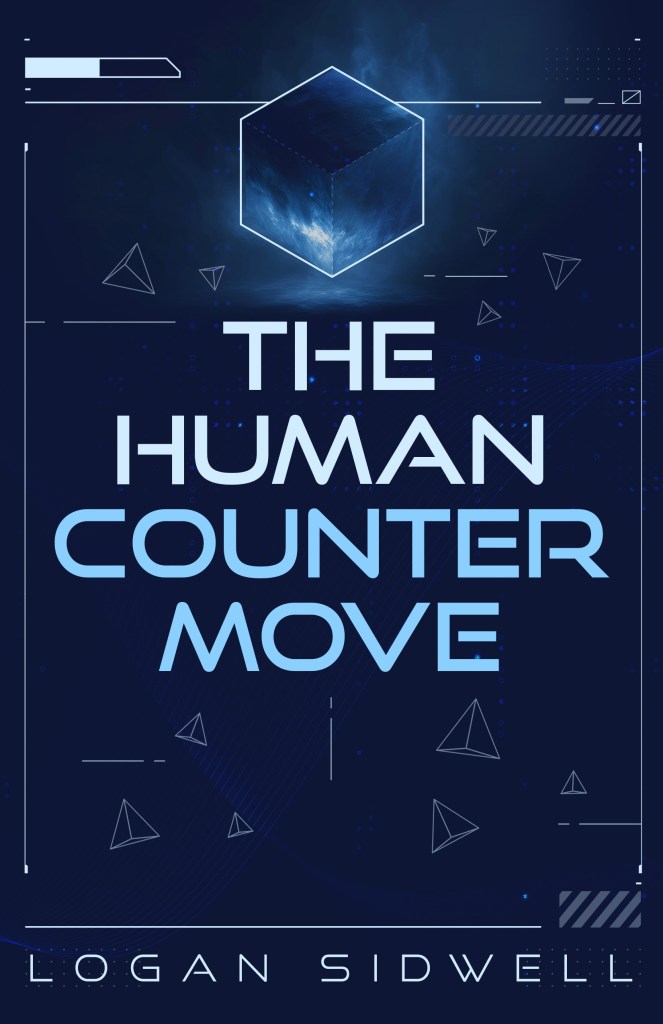
I can’t believe it, it’s already been one month since my novel The Human Countermove was released! If you’re interested in cerebral sci-fi with a human connection, check it out on Amazon!

An Interactive Adventure That Wants You To Be Silly

Every choice is ridiculous, zany, or crude. Every outcome is inspired by classic science fiction moments. The twist re-contextualizes the entire book. Trial of the Clone by Zach Weinersmith (mind behind the Saturday Morning Breakfast Cereal webcomic) is a parody of the Interactive Adventure Genre.

The back of the book reads “Make the right decisions and you’ll prove yourself a hero. Here’s a pro tip for you: Try to make the right decisions.” That advice is more prescient than it seems.

Trial of The Clone

Trial of the Clone is an interactive adventure, which means the book branches in a hundred different directions. To keep things structured, the story is split into 5 acts. At the end of each act, assuming you’re still alive, you’ll get something akin to a fresh start. Which is good, because wherever you go, things tend to only go from bad to worse.

The book tells the story of a perfectly ordinary clone. Your first choice in the game is your occupation. I decided to become a medic. As with any interactive adventure, the book then prompts you to flip a few pages forward to your choice. This is where the author does something clever. Between your choice and your destination, you will see 3-4 illustrations, a teaser for the rest of the book and an invitation to explore every nook and cranny.

The tone of the book is over the top zany. Within three choices, I became a terrible surgeon, fought an old woman, became the chosen one, and faked my way through surgery on the president. Bear in mind, I was trying to make the “right decisions” and based on the other branches I read, my journey was one of the tamer ones. The story doesn’t mind leaning on sci-fi tropes for many of the branched paths and it’s fun to see your character completely botch an off-brand Yoda’s training sequence.

My favorite joke comes in at the start of Act 4. You’re teleported to a secret base, and the book informs you that “if you philosophically believe that a duplicate of you, no matter how accurate, does not count as you, you die here”.

It’s a comedy book, don’t expect deep character development, just enjoy the ride. The book introduces several gameplay mechanics at the front. Inventory, combat, skills. There isn’t much to keep track of, and failure is rewarded just as much as success. Being defeated by ‘Nice man [Level 3]’ may send you somewhere much more fun than if you beat him to a pulp.

The Finale

From here on in this review, we have to talk about spoilers. Big ones.

At the start of act 5, a single conversation flips the book on its head. The loose plot and wacky adventures all take on a real meaning.

The vice president is the one to explain it. Turns out, all those weird, silly choices in the book were a part of a plan. The president needed your character to be silly. He ensured every smart choice you made blew up in your face, and every foolish decision was rewarded. Behind the scenes, unseen figures were working to ensure your every flight of whimsy turned into a spark of genius. A cultivation of the silliest person in the universe. On the back of the book was the clue. The author doesn’t say “Make the smart choice”, he says “Make the right choice”. The book was quietly training you to behave like a goofball.

And then they punish you for it. In the final act, our character must stop their silliness and save the universe. There’s real tension in the final scenes, when you have to choose between dancing a jig and stopping the big bad. The guardrails are gone, you can’t be silly forever. Your character puts up a fight too, a little too set in their silly ways. The final battle isn’t so much a battle against evil as it is an internal war between a clown and a normal, functioning adult. Can you overcome your intrusive thoughts?

Overall

If you’re looking for a quick, silly read, Trial of The Clone delivers. There’s plenty of illustrations to keep the book interesting and the scenarios are not only out of this world, they’re the most improbable sequence of events you’ve ever seen. The twist makes it all memorable, giving the story meaning beyond the jokes. If you want to lean into your ridiculous side, or maybe you’re a fan of the Saturday Morning Breakfast Cereal webcomics, give it a read.

But be warned: By the time it’s over, you will be sillier.

The Long Way to a Small Angry Planet is a Sit-Com

The great thing about a story set on a starship is that every person on board fulfills a different role, they all have their own personalities, skills, cultural background, and for long-voyage vessels, every person on that ship feels disconnected from their home.

I made a mistake when I read this book, I came in with the wrong expectations. At first glance, I believed this was a sci-fi epic, a gritty journey on a run-down starship to an impossible destination. Wrong. What this book really is, is a Cozy Sci-fi. It’s a season of a sit-com set in the stars. So settle down, wrap yourself in a weighted blanket, and enjoy the comforting sounds of the vacuum of space.

Plot

Rosemary Harper, in a bid to escape her past, joins the crew of the Wayfarer on its newest mission: Travel to a planet in a war-torn star system, and build diplomatic ties.

But the book isn’t about the mission, it’s about the characters on that mission. The Long Way to a Small Angry Planet is an ensemble piece. So although we start with Rosemary, she’s just one of many characters. Everyone on board eventually gets their time in the sun.

The flight takes more than a year, and across that extended journey, we take every opportunity we can to stop by a planet, meet some aliens, and have some fun. It really feels like a season of television. Each stop represents an episode of the tv show, conflicts are created, explored, and resolved inside that chapter. Sometimes there are lasting effects that extend to the rest of the book, other times they’re an opportunity for our characters to redefine their relationships with one another and understand themselves more.

All this adds up to a relaxing journey, the story is set to impulse speed and we’re taking the scenic route. The danger in your average chapter is gonna be lower. But emotionally, things are elevated.

Characters

Characters are the bread and butter of this book. Most everyone on-board is an alien or a robot or something else kinda strange. We have Rosemary, a human. Sizzix, the reptilian pilot, Dr. Chef the last of their kind, Lovey the AI with a heart of gold, Ohan the isolationist navigator, and a couple more humans. Together they form a classic sitcom cast with regular culture clashing, personality conflict, and comedic quirks. 

I’m not going to go into too much detail on the individual plotlines. All I’ll say is that this book achieves a really good chemistry between its characters. It doesn’t take the world too lightly, and it doesn’t take things too seriously either. The differences in culture, anatomy, personality, and background, all really add to the ‘found-family’ feel of the book.

World building

This book’s world is mostly your standard sci-fi affair. I’d say it leans more in the safer, cleaner direction of star trek than in the rough-shod universes of Star Wars or Firefly. Which lends itself to imagining every scene on a bright, multicam set. There’s a big focus on the friction between human and alien cultures. This book doesn’t lean into the idealistic, non-interventionist enlightenment direction of Star Trek. The crew of this ship are very comfortable sharing their opinions on other cultures, and even openly disagreeing with their fellow crew members.

From time to time, a decision one of the characters made rubbed me the wrong way morally. But this is a book about flawed people finding a home, it shouldn’t be a surprise that people make mistakes.

Conclusion

The book’s big landing is at the end. I won’t spoil it here, but there’s a reason season finales are the most memorable parts of tv shows. You spend the whole book getting to know the characters, building an understanding of their relationships, and growing to care for them. So when conflict forces those relationships to change, it hits hard.

Like any good sitcom, this book is only the first season. A strong start with a great cast and a long way to go.

If you’re looking for a different brand of sci-fi, if you want to travel through space, but feel the right way to do it is with a fireplace and a cup of tea, consider tuning in and seeing what it has to offer.