I didn’t start my writing journey with books. It wasn’t short stories or fan-fiction either. My original medium of storytelling was a bit more improvised.
Star Trek Simulations.
It sounds a little silly, but for the first five years of my storytelling journey, I was a game master. Crews of birthday parties and corporate events would show up, I would give them a mission, put them on their ship, and send them on their flight. Whenever they spoke to the computer or the main engineer or an alien, it was usually me. When the ship took damage and smoke rolled in near the security terminal, I was flipping the switches.
It’s where I cut my teeth. It’s where I learned how to make the big moments of a story pop. And when my time flying starships came to an end and I made the move to telling stories in books, I discovered how unprepared I was.
Telling a story in a book is one thing. Telling a story in a game is something entirely different.
First and Third Person POV
Realistically, it isn’t just a split between games and books. It’s a split between interactive media and non-interactive media. When a reader reads a book, they expect to be told a story. When a player starts a game, they expect to be the story.
In a book, the main character is the main character. In a game, even if there is a main character, the real protagonist isn’t inside the game, it’s the person holding the controls. For a game to feel engaging, it needs to engage not just with the moving avatar on the screen, but with the human being that’s driving the decisions.
Much like in books, games have two main pov styles. First-person and third-person. Note these are different from where the camera is. Those familiar with books and movies will probably understand gaming’s third-person approach to storytelling. There’s a character on screen with a history, traits, and a connection to the world.
A game like God of War tells the story of Kratos trying to raise his son in a cruel world controlled by the gods. When things happen, they happen to Kratos and Kratos reacts to them. He changes as the story goes on. This makes sense. This is close to traditional storytelling.
For games, first-person perspective storytelling is a complete 180.
A book uses first person to connect more deeply with the protagonist. We’re closer to the main character than ever. We can see their thoughts and how they decide how to act in the world. Games do the opposite. In the first-person perspective, the main character is washed away, made into nothing but a vessel for the player to control. It’s an effort to place the player directly into the story. Now when bad things happen, they don’t just happen to the character, they happen to the person playing.
In DOOM, the players inhabit a character only known as Doomslayer as they defeat demon hordes. In Legend of Zelda, the players play Link, a character who never speaks and simply reacts to the world. Even though Link is shown as a real person in the game, he has no distinct attributes, only the ones a player projects onto him.
The Gameplay is the Story
When I first began simulating starships, I found the moments that were most story intense were the least engaging for participants. They didn’t care about two other characters arguing between one another to decide the fate of a planet. They didn’t care about the lore that set up the story.
In a game, cutscenes are skipped. There’s a reason for this: The main character doesn’t need development, after all, the player is the true main character. And if the main character doesn’t need development, then the only kind of story events that matter are the ones that change the gameplay.
In games, a story is what happens to the main character and what they do in response. If something changes in the world, it has to be at least in part triggered by the player’s actions. And when something happens in the story, it can’t just have emotional weight, it has to mean something for the gameplay.
I used to play a typing game. You were in a cage descending into the depths and sharks would emerge from the darkness with words written on their belly. I’d type the words and the sharks would go away. It was fun, but the story wasn’t exactly engaging. In fact, the setting could have been replaced by a hundred other settings and I wouldn’t have even noticed.
This is the trouble with splitting story from gameplay. If halfway down, the operator radios in to tell me they’ve been in love with me for years, it doesn’t mean anything. The operator isn’t real, the love isn’t real. But if they radio in to tell me all our shark research has allowed us to slow the shark’s attacks, that does mean something. It changes how the game plays, so I become invested in that element of the story.
It’s hard to accept. The story of a game is only as good as how it affects the gameplay. This is where the phrase ‘ludonarrative dissonance’ comes from. If the gameplay and the story aren’t telling the same experience, the player disconnects from the half they don’t care about.
In the world of starship simulation, cutscenes between characters became a no-go. If I had something important to share, it needed to be delivered directly to the crew, and it had to change how they approached the mission.
Interactive Storytelling Workarounds
There’s a certain selfishness to a player’s approach to the story. They only care about what affects them. So how do you tell a story about complicated characters and nuanced situations in a way that makes the player pay attention?
I’ve found three ways:
Optional stories, passive stories, and mysteries.
Optional stories are exactly what they sound like. If 50% of players don’t want the lore, don’t force it down their throats. Sidequests are great, but some people are in a hurry. You leave the B-tier material in the game, but as optional content. Games are a bit like a walk down a buffet line. Everyone gets an entree, most people get the sides, and some people pick up a dessert at the end. In books, everybody gets the same experience. In interactive media, we don’t have the same luxury. It’s up to us to meet each player where they are instead of demanding they enjoy things they don’t like.
The idea behind passive storytelling is finding a way to sneak details into the experience without bogging down the gameplay. Gameplay is king. But if we can find a way to deliver a few lines of dialog without interrupting anything, then there’s no harm in it. This is how God of War told a character driven story, they’d give the player a level to traverse and the characters would talk amongst one another on the way. It’s like playing a podcast while working out. The player’s unrelenting drive to do things is fed, but the context of the story sneaks in with it.
Mystery is exactly what it sounds like. Players enter an area, make observations, and form their own conclusions about the situation. If anything, I think mysteries actually are better suited to interactive media than books. My most successful Star Trek story was one where the crew was coming to save a trapped squadron. When they arrived, they’d discover the squadron was gone. After a brief investigation, they’d discover a wormhole leading to who-knows-where. Without telling the crew a single aspect of the story, they figured it all out, and within a minute or two, they’d inevitably enter the wormhole with no plan on how to get home.
Conclusion
Games come with entirely different expectations. A reader expects a story. A player expects an experience. This post didn’t even discuss handling player freedom, needless to say that’s a rabbit hole for another day.
I had to make some adjustments when I switched from interactive media to direct storytelling. I imagine a lot of D&D Dungeon Masters go through a similar experience. They realize the main character can’t just be a vessel anymore, they need personality, background, and a particular view on the world. Every character can’t just talk to the protagonist anymore, they need to be living, breathing parts of the world with their own motivations.
Both mediums are difficult. Both mediums highlight different strengths. For games, accomplishment is the greatest payoff. For books, it’s usually something a little more philosophical.
If you get a chance, consider writing a story for a game someday. Nothing captures the difference in formats quite as much as watching your audience glaze over the moment you force them into a cutscene.
Logan Sidwell is a sci-fi and fantasy writer from Utah. He started as a writer and director in Ed-Tech, he now strives to marry his background in Computer Science and his years of storytelling to create fun, compelling ideas that explore new ground in technological and fantastical settings.
Check out my debut novel: The Human Countermove
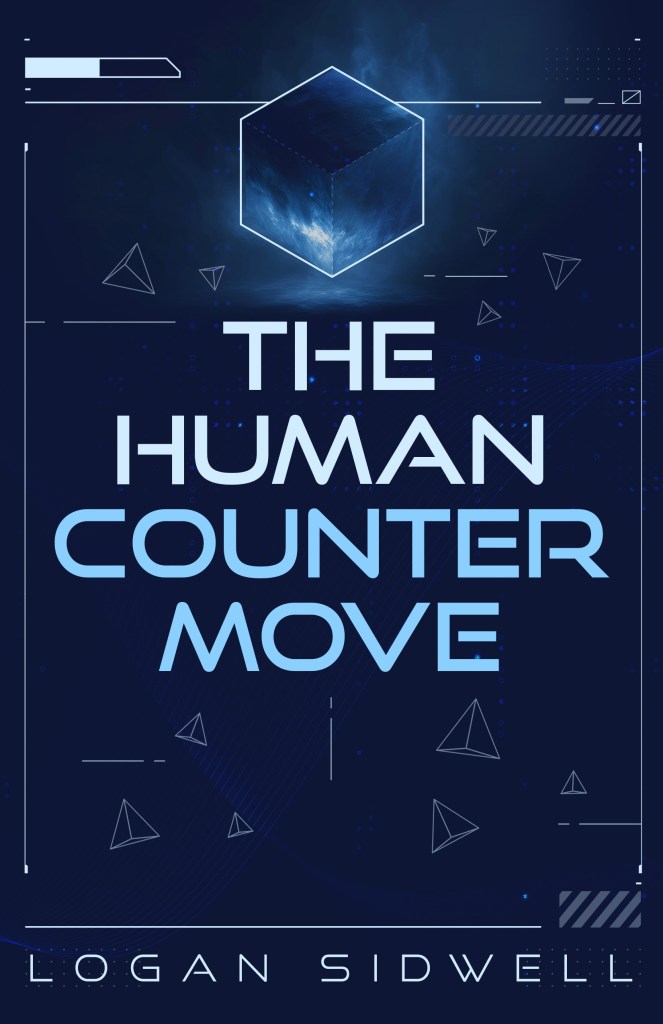
 Author Logan Sidwell