Last month my sister and I drove six hours across state lines to see a musical. The place was deep in the mountains, a little wood theater blocked in by pine on all sides, built in a town with a population in the hundreds. She had performed there in the past, so there was a little extra magic to the trip. We were seeing a musical called Bright Star. I had seen it before at a different theater, and didn’t care for it.
But this time was different.
The story clicked, the characters melted my heart, the songs were charming. It was a hit, even though it was all the same show. And it led me to a conclusion. Bright Star is a special kind of story, one that’s better on the second watch than the first. One that’s improved after the plot has already been spoiled.
Bright Star, written and composed by Steve Martin and Edie Brickell, based on a true story, tells the story of Alice Murphy, a North Carolina editor with a troubled past. The musical jumps between the past and present, showing Alice when she was a teen falling in love, then back to the present as a strict editor of a well respected journal.
I like to call Bright Star a story about a miracle. Things get darker and darker throughout the play, until at their darkest, the “moment” turns everything around. If you’ve ever dabbled in story structure, you can feel when a twist is coming. The entire plot building in a single direction. On my first viewing, I figured out the twist at intermission. In some ways, I think that damaged my experience. For most of the second half, I was stuck waiting for the twist to happen. Hoping they’d drop it soon so I could see the rest of the story. But the miracle was the story, and when the time finally came, it was a disappointment.
A year later, on my second viewing, I knew the score. There was no need for me to wait for the twist. After all, I already knew the ending. Instead, I could enjoy the story for what it was. Every scene could take its time, and the plot wasn’t forced to hurry.
The difference was subtle. In viewing 1, I experienced the story with the characters. The loss, the grief, the aching pain that stretched over decades. Even the ending, as joyful as it was, couldn’t completely take away what had come before.
In viewing 2, the story was almost non-linear, like I was an angel knowing that for all the bad that was coming, a greater good would follow.
After the show, my sister and I drove home down a single-lane road in a pitch black forest. Our heads were buzzing, talking about everything we loved about it. Maybe the forested, mountainous background helped set the stage. Maybe the decision of the villain to drink from his flask between every line of his ‘evil’ song elevated his character. Maybe the authenticity of the old toad-catcher was all we needed to live in the moment.
But in my opinion. The reason it was so much better was that we knew what was coming from the very start.
Which begs the question: What other stories would be better spoiled?
I can think of a few where spoiling the story ruins it. Shows that are only good once. The Good Place season 1 comes to mind. A whole season builds to a single twist, and once you know what’s coming, the show loses its tensions and the drama feels more like a dance.
The mystery genre can go both ways, I think.
Columbo starts every episode by telling you exactly who the murderer is. It gives space for the audience to appreciate the journey, to notice all the clues that give the murderer away. The joy of the story isn’t uncovering the truth, it’s watching the intrigue, the game of chess between the murderer and the detective.
And Then There Were None by Agatha Christie is all about the suspense. Every second is a second spent wondering which of the survivors is killing the others. Once you’ve read it once, you know the answer, and your experience transforms, instead of searching for the killer, you watch their every move and witness their scheme come to fruition.
A story that’s best unspoiled is one where the destination is everything, where every twist along the way throws the audience’s expectations of the future in a completely new direction. Like a game between the writer and the viewer. The problem is, if all the little misdirects don’t mean anything, if they’re just there to confuse, the story becomes vapid. A second viewing becomes pointless.
So what makes a show worth watching even after it’s spoiled? One where the journey is what matters. Where the characters grow, change, and engage in believable, thoughtful intrigue that’s worth diving into again and again.
There’s an old tradition in storytelling, one that spans most of human history, from Homer’s The Iliad to Shakespeare’s Henry V. The invocation of the muses. The muses would call on the gods to give authority to the play, then warn the audience of the general plot and themes to come. Spoilers from the gods. It’s a trope I never really understood until now. But knowing what’s coming changes the audience’s experience. They don’t have to think so much about the future, so they can enjoy the little moments along the way.
Bright Star opens on a song from Alice, it’s upbeat, it’s sweet, it’s a little promise to the audience that they’ll hear a nice story. Now that I’ve seen the show twice, I wonder if the lyrics to that song could do with being a little more specific. An invocation to the gods might be a little much, but maybe by telling the audience a miracle is on the way, they might be in a better mindset to enjoy the show.
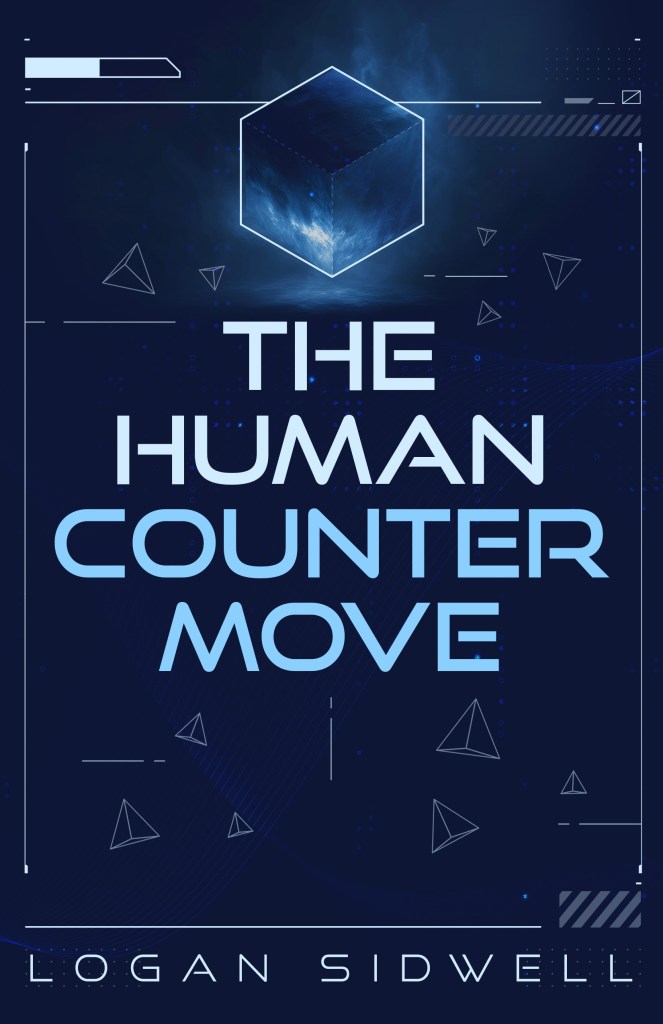
I can’t believe it, it’s already been one month since my novel The Human Countermove was released! If you’re interested in cerebral sci-fi with a human connection, check it out on Amazon!
 Author Logan Sidwell