The Amazing Digital Circus Mixes Marketing and Story

Sometimes I watch a little more Youtube than I should. My algorithm consists mostly of video essays on the economy, tournament footage, and random gaming clips. Well one day I was whiling the hours away watching a bit of nonsense, and the algorithm recommended the pilot to a new cartoon series. The Amazing Digital Circus. I did a cursory search and discovered this random pilot is the start of a mega-successful series with a massive fanbase, all based on an old sci-fi horror called I Have No Mouth and I Must Scream.

This week the finale was released and I binged the entire back half of the series in one night. It’s a fun and tense series for teens and young adults that was well worth the watch. But the thing that caught my eye was how Glitch Productions blurred the line between new episodes, new merch, and marketing.

Plot

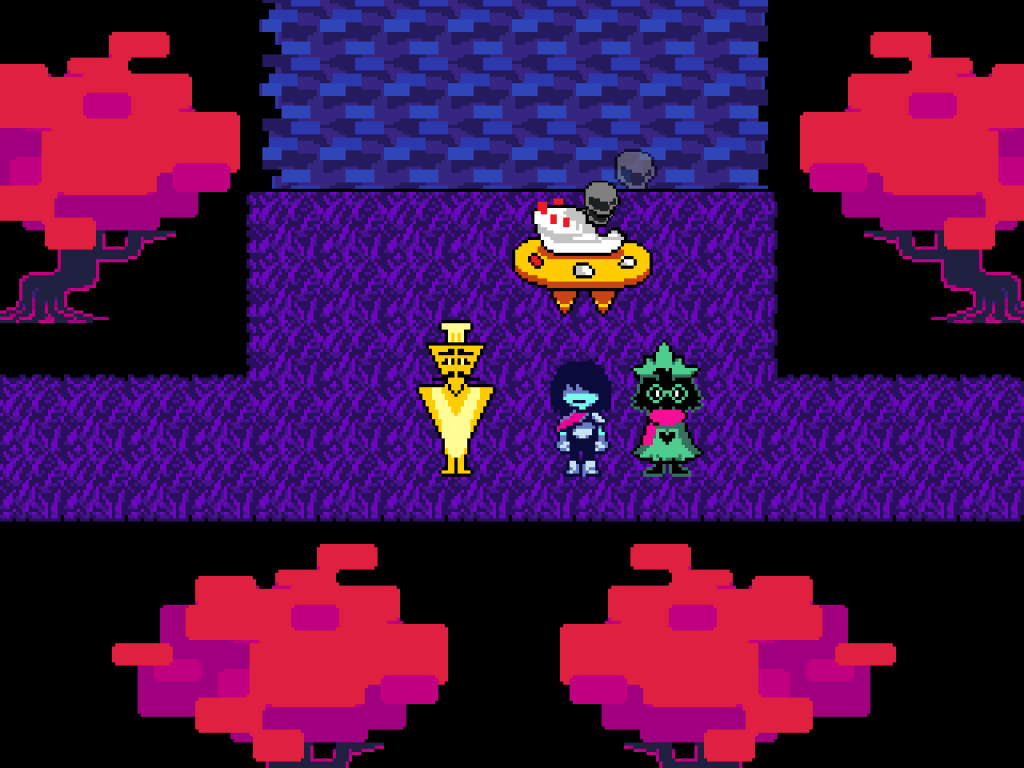
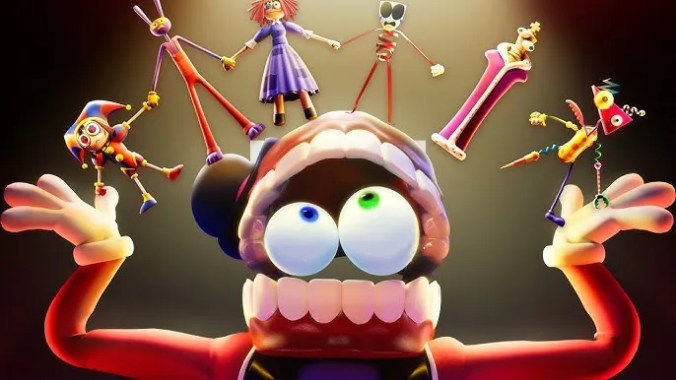
The Amazing Digital Circus tells the story of a group of unfortunates trapped inside an old 1990’s videogame. No one remembers their name, and everyone has taken on the form of an avatar appropriate for the circus atmosphere of the game. Kinger is a king chess piece, Jax is a prankster rabbit, and the protagonist Pomni is a sad little jester with very expressive eyes.

Running the world is an AI named Caine. Caine has godlike power in the simulation and a primary mission of keeping his trapped human guests engaged with his various adventures. If you’re familiar with the original Harlan Ellison story there may be some alarms going off in your head here. Thankfully instead of behaving like the malevolent AM of the original story, Caine brings an energy that’s a mix of circus barker and the Genie from Disney’s Aladdin (best captured during his show-stopping song in the eight episode).

Caine’s adventures inevitably go off the tracks in a dangerous and psychologically tormenting direction, and the plot of the show focuses on its human cast’s efforts to endure Caine’s accidental tortures while seeking a way out of their digital prison. It might sound like a horrific story, but the cartoony characters, comedic tone, and wacky settings take most of the edge off the physical horror, leaving only the existential.

An Exploration of Psychological Conditions

Since death is off the table, the worst-case scenario for our band of plucky characters is called ‘abstraction’. Years spent trapped in a simulation take their toll. If a character loses their grip on reality too much, they ‘abstract’, which means turning into a horrible monster that Caine makes sure to store permanently in the basement.

Keeping each other sane and healthy becomes the day-to-day focus of our characters. Each character has to fight their own inner-demons. To add insult to injury, the avatars in the game are specifically designed as physical representation of each person’s psychological struggles. Gangle carries a collection of masks and can only express the emotion on the mask she wears. Zooble’s body is an assortment of components she can mix and match, representing her own body dysmorphia. Ragatha is a raggedy ann doll that’s desperate for other’s approval. As the series goes on, we see each character’s deal with their own psychological turmoil. As you can imagine, there’s a heavy theme of self-acceptance that runs through the story.

Marketing Blurring Into Story

The entire series of The Amazing Digital Circus (TADS) was released directly to Youtube, rather than through some streaming service. From an accessibility standpoint, this allowed the show to reach a massive teen and young adult audience. From a financial standpoint, this meant Glitch Productions had to get creative.

If you’ve already seen every episode of TADS, you’ve actually only seen about 75% of the content related to the story. When a company advertises their upcoming episode, it’s a cut up of clips from the episode. Not here. Every preview TADS is entirely unique content. The AI Caine speaks directly to the audience, and often reveals elements of his character that weren’t visible inside the story.

One particularly meta moment comes when Caine advertises the series by practicing knife throwing on poor Pomni. Then in one of the later episodes, Pomni is blinked out of existence while eating a sandwich, and when she returns, she has a bunch of knives sticking into her jester avatar. The commercials are literally canon to the series.

But it doesn’t just extend to previews. Merchandising is a key element of funding TADS, so one of Caine’s favorite gimmicks in the youtube shorts is to punish his players by taking their avatars and turning them into the plushies that are sold online and forcing them to sing songs or engage in various harrowing challenges. After watching the whole series, the best thing to do is go to Glitch Production’s Youtube channel and watch all the advertisements. They even hid some key lore related to one of the ‘abstracted’ characters that isn’t present in the main series while advertising pins and plushies.

Conclusion

The story is a great modernizing of a sci-fi classic with modern, psychological sensibility. But the greatest innovation of this series comes in the marketing. Glitch Productions didn’t just make a great story, it produced an online experience. The voice actors are regularly invited to play games with one another online, they’re brought out to cons, the fanbase is constantly speculating on tiny aspects of the lore, they even got the finale into theaters (with a sing-a-long of Caine’s song that you can see online).

We’re getting to a place in the modern age where tv advertising and big posters aren’t the way to get butts in seats. Rather than following the cinema model, Glitch Productions followed the model set by the game series Five Nights at Freddy’s. Make a ton of content, add enough deep lore to get the fanbase buzzing, and produce tiers of content. The end result is that no matter what kind of fan you are, you’ll always leave satiated.

Something Changes When Story Moves From A Book To A Game

I didn’t start my writing journey with books. It wasn’t short stories or fan-fiction either. My original medium of storytelling was a bit more improvised. 

Star Trek Simulations.

It sounds a little silly, but for the first five years of my storytelling journey, I was a game master. Crews of birthday parties and corporate events would show up, I would give them a mission, put them on their ship, and send them on their flight. Whenever they spoke to the computer or the main engineer or an alien, it was usually me. When the ship took damage and smoke rolled in near the security terminal, I was flipping the switches.

It’s where I cut my teeth. It’s where I learned how to make the big moments of a story pop. And when my time flying starships came to an end and I made the move to telling stories in books, I discovered how unprepared I was.

Telling a story in a book is one thing. Telling a story in a game is something entirely different.

First and Third Person POV

Realistically, it isn’t just a split between games and books. It’s a split between interactive media and non-interactive media. When a reader reads a book, they expect to be told a story. When a player starts a game, they expect to be the story.

In a book, the main character is the main character. In a game, even if there is a main character, the real protagonist isn’t inside the game, it’s the person holding the controls. For a game to feel engaging, it needs to engage not just with the moving avatar on the screen, but with the human being that’s driving the decisions.

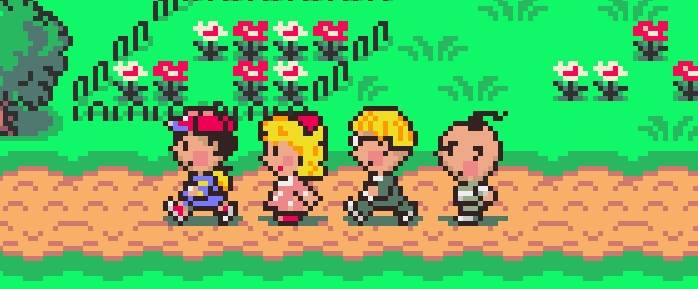
Much like in books, games have two main pov styles. First-person and third-person. Note these are different from where the camera is. Those familiar with books and movies will probably understand gaming’s third-person approach to storytelling. There’s a character on screen with a history, traits, and a connection to the world. 

A game like God of War tells the story of Kratos trying to raise his son in a cruel world controlled by the gods. When things happen, they happen to Kratos and Kratos reacts to them. He changes as the story goes on. This makes sense. This is close to traditional storytelling.

For games, first-person perspective storytelling is a complete 180.

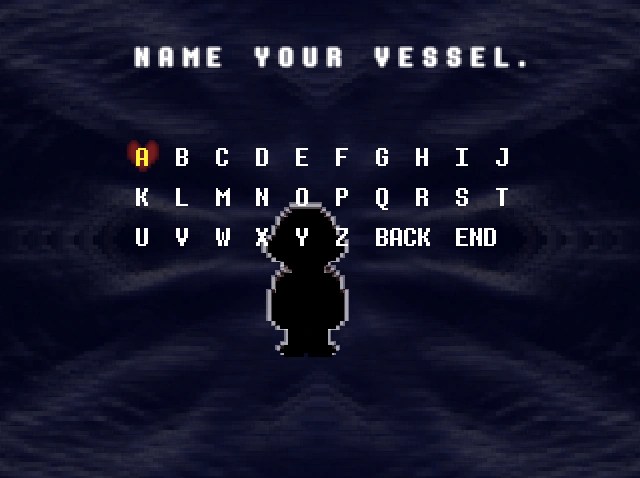
A book uses first person to connect more deeply with the protagonist. We’re closer to the main character than ever. We can see their thoughts and how they decide how to act in the world. Games do the opposite. In the first-person perspective, the main character is washed away, made into nothing but a vessel for the player to control. It’s an effort to place the player directly into the story. Now when bad things happen, they don’t just happen to the character, they happen to the person playing. 

In DOOM, the players inhabit a character only known as Doomslayer as they defeat demon hordes. In Legend of Zelda, the players play Link, a character who never speaks and simply reacts to the world. Even though Link is shown as a real person in the game, he has no distinct attributes, only the ones a player projects onto him.

The Gameplay is the Story

When I first began simulating starships, I found the moments that were most story intense were the least engaging for participants. They didn’t care about two other characters arguing between one another to decide the fate of a planet. They didn’t care about the lore that set up the story. 

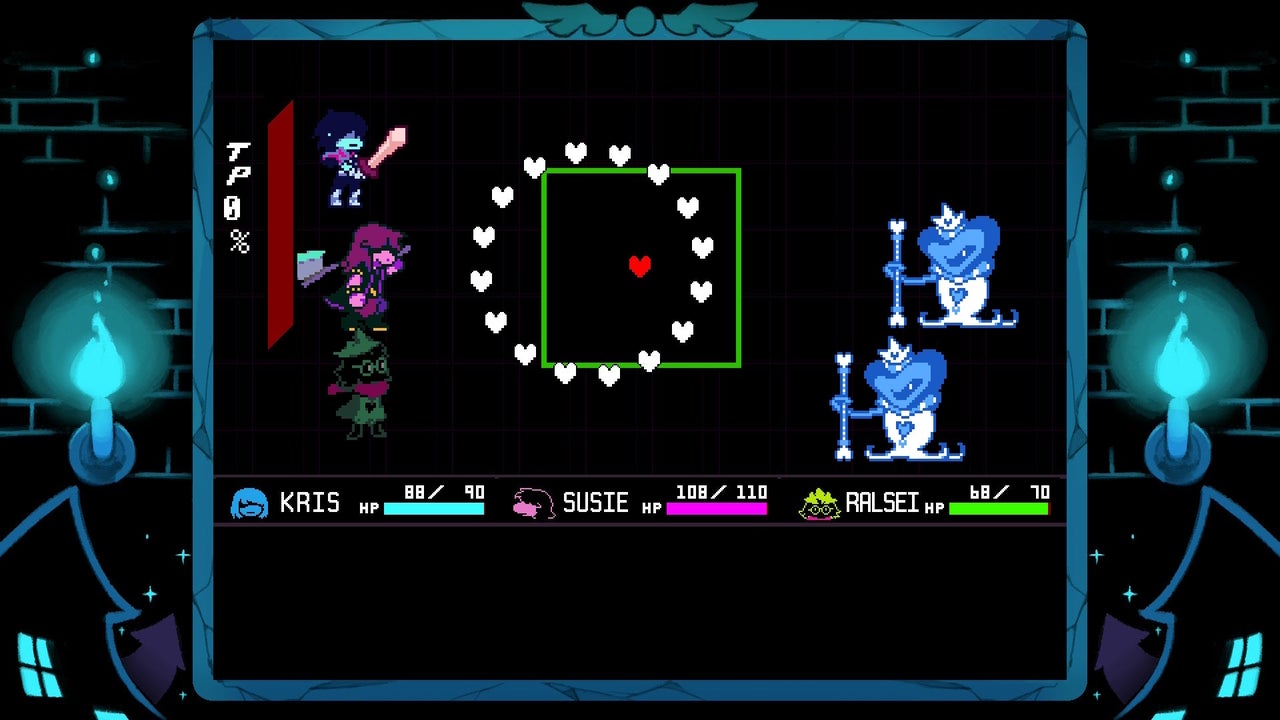
In a game, cutscenes are skipped. There’s a reason for this: The main character doesn’t need development, after all, the player is the true main character. And if the main character doesn’t need development, then the only kind of story events that matter are the ones that change the gameplay.

In games, a story is what happens to the main character and what they do in response. If something changes in the world, it has to be at least in part triggered by the player’s actions. And when something happens in the story, it can’t just have emotional weight, it has to mean something for the gameplay.

I used to play a typing game. You were in a cage descending into the depths and sharks would emerge from the darkness with words written on their belly. I’d type the words and the sharks would go away. It was fun, but the story wasn’t exactly engaging. In fact, the setting could have been replaced by a hundred other settings and I wouldn’t have even noticed.

This is the trouble with splitting story from gameplay. If halfway down, the operator radios in to tell me they’ve been in love with me for years, it doesn’t mean anything. The operator isn’t real, the love isn’t real. But if they radio in to tell me all our shark research has allowed us to slow the shark’s attacks, that does mean something. It changes how the game plays, so I become invested in that element of the story.

It’s hard to accept. The story of a game is only as good as how it affects the gameplay. This is where the phrase ‘ludonarrative dissonance’ comes from. If the gameplay and the story aren’t telling the same experience, the player disconnects from the half they don’t care about.

In the world of starship simulation, cutscenes between characters became a no-go. If I had something important to share, it needed to be delivered directly to the crew, and it had to change how they approached the mission.

Interactive Storytelling Workarounds

There’s a certain selfishness to a player’s approach to the story. They only care about what affects them. So how do you tell a story about complicated characters and nuanced situations in a way that makes the player pay attention?

I’ve found three ways:

Optional stories, passive stories, and mysteries.

Optional stories are exactly what they sound like. If 50% of players don’t want the lore, don’t force it down their throats. Sidequests are great, but some people are in a hurry. You leave the B-tier material in the game, but as optional content. Games are a bit like a walk down a buffet line. Everyone gets an entree, most people get the sides, and some people pick up a dessert at the end. In books, everybody gets the same experience. In interactive media, we don’t have the same luxury. It’s up to us to meet each player where they are instead of demanding they enjoy things they don’t like.

The idea behind passive storytelling is finding a way to sneak details into the experience without bogging down the gameplay. Gameplay is king. But if we can find a way to deliver a few lines of dialog without interrupting anything, then there’s no harm in it. This is how God of War told a character driven story, they’d give the player a level to traverse and the characters would talk amongst one another on the way. It’s like playing a podcast while working out. The player’s unrelenting drive to do things is fed, but the context of the story sneaks in with it.

Mystery is exactly what it sounds like. Players enter an area, make observations, and form their own conclusions about the situation. If anything, I think mysteries actually are better suited to interactive media than books. My most successful Star Trek story was one where the crew was coming to save a trapped squadron. When they arrived, they’d discover the squadron was gone. After a brief investigation, they’d discover a wormhole leading to who-knows-where. Without telling the crew a single aspect of the story, they figured it all out, and within a minute or two, they’d inevitably enter the wormhole with no plan on how to get home.

Conclusion

Games come with entirely different expectations. A reader expects a story. A player expects an experience. This post didn’t even discuss handling player freedom, needless to say that’s a rabbit hole for another day.

I had to make some adjustments when I switched from interactive media to direct storytelling. I imagine a lot of D&D Dungeon Masters go through a similar experience. They realize the main character can’t just be a vessel anymore, they need personality, background, and a particular view on the world. Every character can’t just talk to the protagonist anymore, they need to be living, breathing parts of the world with their own motivations.

Both mediums are difficult. Both mediums highlight different strengths. For games, accomplishment is the greatest payoff. For books, it’s usually something a little more philosophical.

If you get a chance, consider writing a story for a game someday. Nothing captures the difference in formats quite as much as watching your audience glaze over the moment you force them into a cutscene.

Logan Sidwell is a sci-fi and fantasy writer from Utah. He started as a writer and director in Ed-Tech, he now strives to marry his background in Computer Science and his years of storytelling to create fun, compelling ideas that explore new ground in technological and fantastical settings.


Check out my debut novel: The Human Countermove

Bright Star and The Case for Spoilers

Last month my sister and I drove six hours across state lines to see a musical. The place was deep in the mountains, a little wood theater blocked in by pine on all sides, built in a town with a population in the hundreds. She had performed there in the past, so there was a little extra magic to the trip. We were seeing a musical called Bright Star. I had seen it before at a different theater, and didn’t care for it.

But this time was different.

The story clicked, the characters melted my heart, the songs were charming. It was a hit, even though it was all the same show. And it led me to a conclusion. Bright Star is a special kind of story, one that’s better on the second watch than the first. One that’s improved after the plot has already been spoiled.

Bright Star, written and composed by Steve Martin and Edie Brickell, based on a true story, tells the story of Alice Murphy, a North Carolina editor with a troubled past. The musical jumps between the past and present, showing Alice when she was a teen falling in love, then back to the present as a strict editor of a well respected journal.

I like to call Bright Star a story about a miracle. Things get darker and darker throughout the play, until at their darkest, the “moment” turns everything around. If you’ve ever dabbled in story structure, you can feel when a twist is coming. The entire plot building in a single direction. On my first viewing, I figured out the twist at intermission. In some ways, I think that damaged my experience. For most of the second half, I was stuck waiting for the twist to happen. Hoping they’d drop it soon so I could see the rest of the story. But the miracle was the story, and when the time finally came, it was a disappointment.

A year later, on my second viewing, I knew the score. There was no need for me to wait for the twist. After all, I already knew the ending. Instead, I could enjoy the story for what it was. Every scene could take its time, and the plot wasn’t forced to hurry.

The difference was subtle. In viewing 1, I experienced the story with the characters. The loss, the grief, the aching pain that stretched over decades. Even the ending, as joyful as it was, couldn’t completely take away what had come before.

In viewing 2, the story was almost non-linear, like I was an angel knowing that for all the bad that was coming, a greater good would follow.

After the show, my sister and I drove home down a single-lane road in a pitch black forest. Our heads were buzzing, talking about everything we loved about it. Maybe the forested, mountainous background helped set the stage. Maybe the decision of the villain to drink from his flask between every line of his ‘evil’ song elevated his character. Maybe the authenticity of the old toad-catcher was all we needed to live in the moment. 

But in my opinion. The reason it was so much better was that we knew what was coming from the very start.

Which begs the question: What other stories would be better spoiled?

I can think of a few where spoiling the story ruins it. Shows that are only good once. The Good Place season 1 comes to mind. A whole season builds to a single twist, and once you know what’s coming, the show loses its tensions and the drama feels more like a dance.

The mystery genre can go both ways, I think.

Columbo starts every episode by telling you exactly who the murderer is. It gives space for the audience to appreciate the journey, to notice all the clues that give the murderer away. The joy of the story isn’t uncovering the truth, it’s watching the intrigue, the game of chess between the murderer and the detective.

And Then There Were None by Agatha Christie is all about the suspense. Every second is a second spent wondering which of the survivors is killing the others. Once you’ve read it once, you know the answer, and your experience transforms, instead of searching for the killer, you watch their every move and witness their scheme come to fruition.

A story that’s best unspoiled is one where the destination is everything, where every twist along the way throws the audience’s expectations of the future in a completely new direction. Like a game between the writer and the viewer. The problem is, if all the little misdirects don’t mean anything, if they’re just there to confuse, the story becomes vapid. A second viewing becomes pointless.

So what makes a show worth watching even after it’s spoiled? One where the journey is what matters. Where the characters grow, change, and engage in believable, thoughtful intrigue that’s worth diving into again and again.

There’s an old tradition in storytelling, one that spans most of human history, from Homer’s The Iliad to Shakespeare’s Henry V. The invocation of the muses. The muses would call on the gods to give authority to the play, then warn the audience of the general plot and themes to come. Spoilers from the gods. It’s a trope I never really understood until now. But knowing what’s coming changes the audience’s experience. They don’t have to think so much about the future, so they can enjoy the little moments along the way.

Bright Star opens on a song from Alice, it’s upbeat, it’s sweet, it’s a little promise to the audience that they’ll hear a nice story. Now that I’ve seen the show twice, I wonder if the lyrics to that song could do with being a little more specific. An invocation to the gods might be a little much, but maybe by telling the audience a miracle is on the way, they might be in a better mindset to enjoy the show.

I can’t believe it, it’s already been one month since my novel The Human Countermove was released! If you’re interested in cerebral sci-fi with a human connection, check it out on Amazon!