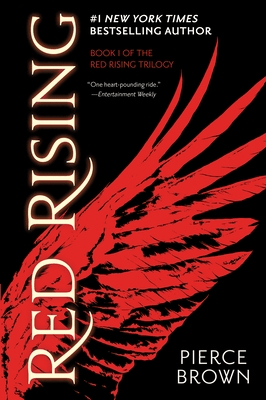
Darrow is a Red in a world where the worst thing you can be is a Red. He works as a miner several miles beneath the surface of Mars with the rest of his family. They all dream of one day terraforming the surface and living up in the sun. But Mars was terraformed centuries ago, and the squalor, poverty, and pain the Red clans suffer only aids in growing the wealth of The Golds.
The Red Rising series by Pierce Brown isn’t here to pick through moral ambiguity. The Society is a military dictatorship that divides the population into colors according to the role they serve. It’s evil. Everyone who wasn’t born a Gold lives in service of the Golds. Some colors live more comfortably, while others toil their life away. The need for change is clear, the only question is: How will Darrow rise from nothing to break The Society’s shackles?
Book 1: A Rated-R Hunger Games
After a lot of pain and tragedy, Darrow finds himself on the surface and working for a radical group called The Sons of Ares. Outright rebellion is doomed to fail, so The Sons focus on infiltration. Darrow is carved into the shape of a Gold sent to The Institute. In The Society’s strict military system, The Institute is a brutal testing ground where the best up-and-coming talents are scouted for future fleet commands. The perfect opportunity for a secret Red to ascend.
The Institute is less of a school, and more of a year-long, ultra-violent game of capture the flag. Twelve tribes bearing the names of the twelve gods of the Roman Pantheon battle one another for control. The first Red Rising book focuses on Darrow’s exploits as a member of the violent and temperamental Mars tribe. It reads like an adult version of The Hunger Games. The mutilation, betrayal, espionage, and murder rise into rated-R territory, which also gives the story room to explore more mature themes.
I struggled with The Hunger Games, I think it’s because the participants were children and usually involuntary draftees. Red Rising solves this problem by ensuring every student in The Institute’s great game is wealthy, ambitious, and a little bit horrible. From minute one, Darrow is surrounded by backstabbing, violence-prone ‘allies’ with a long family tree of cruelty. When he is forced into drastic action, it’s hard to blame him.
Even the idealists in this story are far from objectively good. Mustang is the leader of house Minerva and the ambitious daughter of a governor. She serves as the romantic interest and the conscience of the Golds. Through the horrors of The Institute, Mustang grapples with the concept of abandoning the colors and embracing democracy, though it’s more of a thought exercise for her.
By the end of the book, Darrow is established as a towering figure of ability, and a knack for not only excelling, but breaking Gold systems.
Book 2: Playing The Game of Power
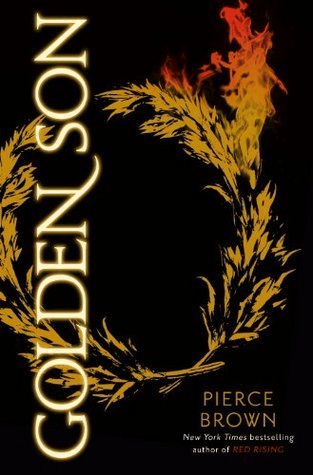
In Golden Son, Darrow accepts a position with one of the most powerful figures in the solar system. Governor Nero au Augustus. The simulations and tests of the first book come to a rapid end as Darrow enters the brutal world of interstellar power politics.
The transition proves difficult. Enemies made in The Institute pursue Darrow with lethal intent. He finds himself on the outs with his governor and facing a contract termination that is all but guaranteed to result in his death.
Golden Son is a non-stop rollercoaster ride of court intrigue, feuding families, and outright warfare. Underneath it all lies the tension between Darrow’s long-term goals and his short-term actions. Governor Augustus is no Democrat, his vision for the future of The Society is to stand on the top of the pile. To serve him risks putting a new monster in charge.
Like in the first book, we see brutal betrayals and heroic deeds all around. Each time Darrow recruits a new ally, the friction grows between his true self and the self he shows to others. Each kindness he offers to a member of a lower color costs him dearly in the political sphere.
Golden Son is like a scaled up version of Red Rising. The violence is grander, the betrayals are more sudden, and the stakes are always life-and-death. One big difference is that the Golds are much more empathetic this time around. We see that many of them are simply doing the best they can from within the system they grew up in.
Book 3: Honest War
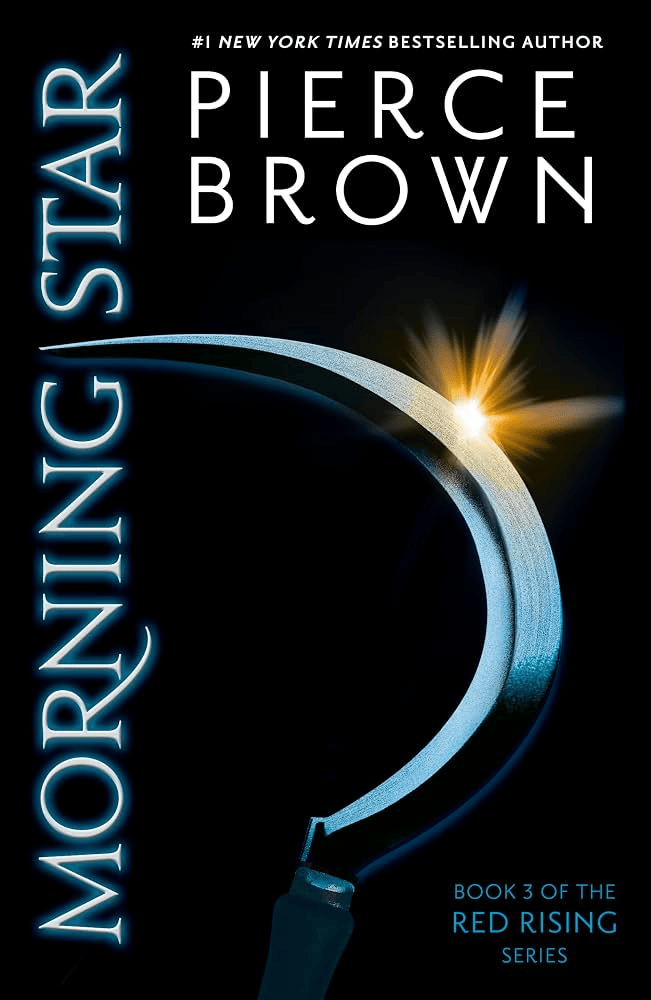
The final book in the trilogy, Morning Star, starts with a hard reset. Darrow’s Gold identity is peeled away and he is forced to start anew. There are no beautiful feasts and high-end parties this time around. Without any political influence or status, Darrow’s enemies don’t hold back. Golds eager to enforce The Society punish entire innocent populations in their endless hunt for Darrow and The Sons of Ares.
Although the story is filled with epic battles and tense sequences, Darrow’s true war is for the hearts and minds of the people. The Sons of Ares mindless rage has to be redirected towards productive action. The working classes are fed a near-deified vision of Darrow to inspire a general uprising. The Obsidians, a group of zealous and fanatic fighters, have to be broken free from The Gold’s implanted beliefs. Finally, The Golds themselves, who liked to speak of their disgust for the military dictatorship for recreation, are forced to ask themselves if they are willing to help tear down their own system.
Book 3 was a continuation of everything that worked in Books 1 and 2. Lots of cool space battles. Lots of narrow escapes. Plenty of intrigue in the ranks. The trilogy ends in a fulfilling conclusion that makes the journey worth it.
Conclusion
Red Rising depicts an evil society set in its ways. By the end of the first chapter of the first book, you’ll already know who is good and who is evil. The moments when the book shines most were when it pitted Golds against their own system, or forced radicals to recalibrate from violence to revolution.
If you’re looking for a science fiction that is non-stop action, tension, and political thriller, the Red Rising series delivers in spades.
I don’t enjoy competition. Paradoxically, I do enjoy competing. When you’re competing, you push yourself and push yourself and watch as your skills improve. It’s the stuff that comes after the skill building that sucks. A competition pits you against your friends and peers. Instead of celebrating successes, you become adversaries, rooting for one another’s failure. It’s unnecessary conflict, and it’s the reason I don’t submit my writing to local competitions.
Back in February, a friend of mine convinced me to take a moon shot. The Utah Book Awards. It was such a large competition that I wouldn’t recognize the names of the majority of my opponents. And what were the chances I’d be chosen, anyway?
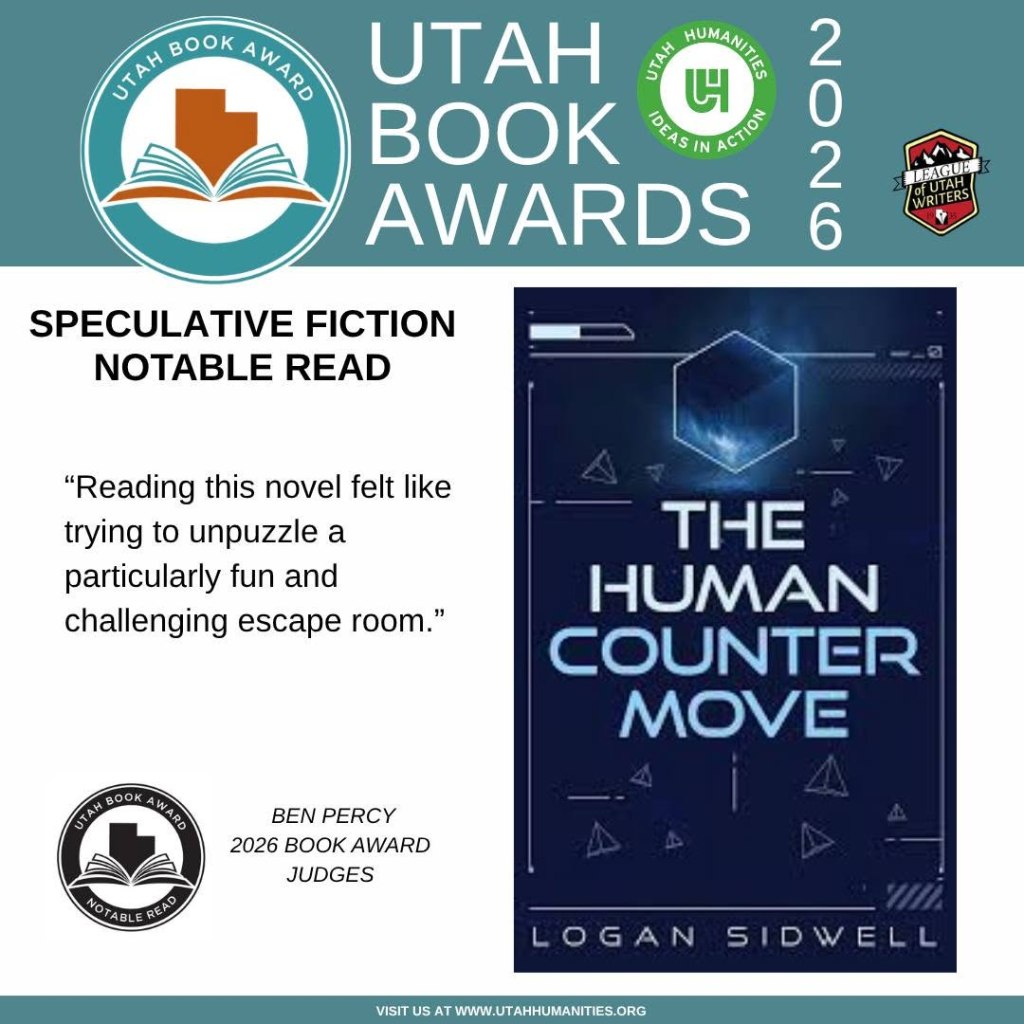
It’s my first ever writing honor. The Human Countermove has been selected as one of Utah’s Five Notable Reads in Speculative Fiction for 2026 and is in competition to win the grand prize. I was wrong about not knowing my competitors, too. My work is up against some of the biggest names in Utah. Brandon Sanderson, Bryan Young, CK Turner, and Robyn Dabney.
A Healthy Ambition
When I heard the news, I got so excited I forgot to reply to the email. It’s been torture keeping this secret to myself. But ever since the announcement was made, I’ve been thinking a lot about the future.
I used to struggle with ambition. I was a high-performing student and a high-performing employee. If there was a grade to earn or a task to be done, I insisted on being the one to do it. But after years of striving, I realized something. My work didn’t satisfy. When I look back, the cause is clear. I wasn’t just ambitious, I was insatiable. I wanted an indefinable ‘more’ for more’s sake, and nothing less than more would do. Some might call it FOMO. At one point, a boss of mine was projecting my future earnings. He told me my salary would cap at more than double the rate I was being paid. When he asked if it was enough, I couldn’t answer him. How could I? A salary cap was anathema to my ‘more, more, more’ philosophy.
That period of my life has thankfully passed. These days, I find myself content. There’s plenty of happiness in the little moments. When I’m eating a bowl of oatmeal in a sunbeam, I’m at peace. When I’m on a walk around the park, I’m happy. ‘More’ doesn’t come into it. The present satisfies me just fine.
That said, a part of me loves the journey of self-growth. You could call it ambition if you wanted. Sometimes I think it’s just our in-built desire to make use of the precious time we’ve been given. If I’m of sound mind and strong body, then what’s there to do but work hard and contribute to the common good?
So I’m ambitious again. Not for myself, not for ‘more’, but to keep busy and contribute to the world. I still find those moments of contentment, but I also find joy in the pride of a job well done and a day’s work writing to the best of my ability.
Climbing The Writing Ladder
When you release a book, it’s hard to tell if it’s any good. It took me four months to gain any confidence in mine. The biggest signal of the book’s quality was that half of my friends and most of my extended family had read it from cover-to-cover. When they came to talk to me about it, they were excited, engaged, and eager to discuss. One of my best friends has now read The Human Countermove three times. I’m told that’s a rarity.
Since publishing, I’ve written a couple more unreleased books and submitted a few short stories for local anthologies. But every once in a while, I write a story that crackles. It feels fresh in a way totally unlike my past writing, and I start to wonder. Should I be saving those ‘crackling’ stories for a more competitive contest? This award has confirmed my suspicions.
I’ve always imagined the skill of writing as a pyramid. The better you get, the higher you climb on the pyramids tiers and the better your peers become. I organize the pyramid in the same manner as sports teams and performing clubs. City -> County -> State -> Region -> National -> International.
I use this system not to compare myself to others, but because I want to improve as a writer. The best way to grow is to surround yourself with people at, or slightly above your own skill level. What better way is there to learn than to lose against a more practiced peer?
Room to Grow
My old approach to short story submissions was scattered. I’d submit to a few local contests a year based on word of mouth. I’m now pivoting to a higher competition level. My targets are the contests with hundreds of submitters and long histories. I’m pushing my writing to its limit. Art is always subjective, but technique can be sharpened to a point.
I’m experimenting, too. Every story I write is pulled from a different era of the novel writing movement. Often I don’t even know if the story will make sense until it’s on the page.
For me, ambition in writing isn’t about accolades, it’s about testing new ideas on the page and offering those experiments to the contest judges for honest feedback. I don’t have a goal in mind, I’m sharpening my craft because I enjoy the process of sharpening.
The Present
Whenever a friend reads about my award, they send me a text along the lines of, “YOU’RE UP AGAINST BRANDON SANDERSON??!?”
In a faux-macho voice, I respond, “Dude’s washed. I’m sending him home.”
It’s all in jest. For me, being included on a list with people as talented as Brandon Sanderson, or Bryan Young, an author I know personally and hugely respect, is a bigger achievement than I could have imagined receiving at this stage of my career. I’m treating it like a step forward into something new.
Thank you to all my readers for following my journey so far. There’s a long way to go, and so much more for me to learn. I promise you now that I’m nowhere near done learning, and nowhere near done writing.
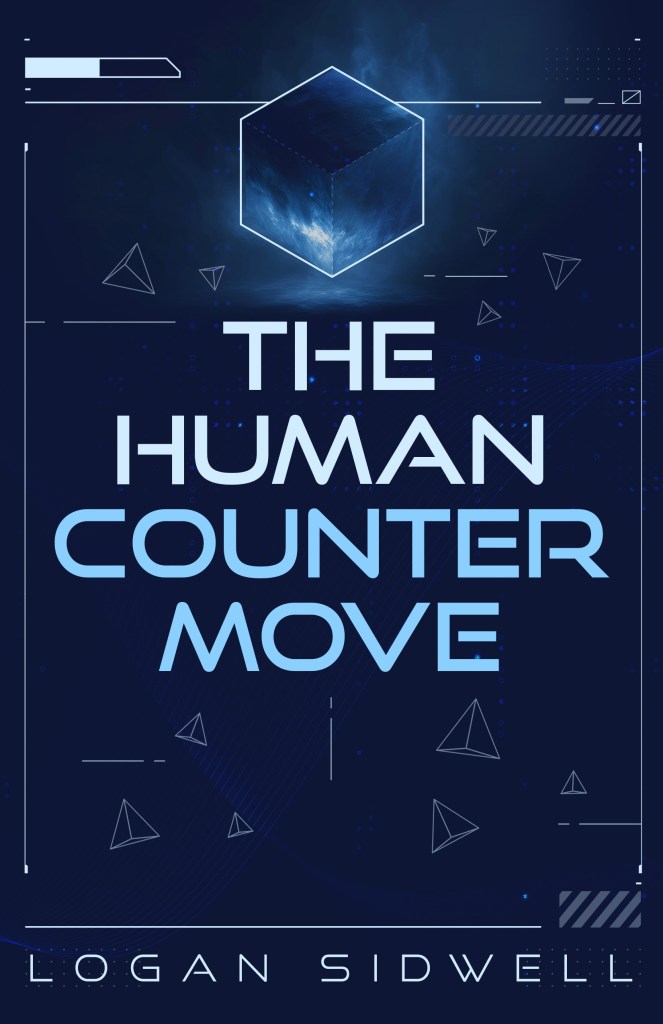
In a nation ruled by AI Minds, productivity is everything, even play.
Once a legend in the world of strategy games, Zouk Solinsen is just another burnout in a society obsessed with efficiency. But when the Minds announce a high-stakes tournament, with a seat on the ruling council as the prize, Zouk is drawn back into the fray, determined to reshape the future.
With help from the enigmatic Torrez Institute, Zouk racks up early victories against the Minds. But when Maya Torrez reveals the cost of her support, a violent coup against the Minds, he rejects it and strikes out alone.
Now, with no allies, dwindling resources, and a nation on the brink, Zouk faces the biggest game of his life, and a final, impossible choice: reform the system from within, or burn it all down.
First Contact, Species-215 (Colloquially known as The Scourge)
Notes have been added to provide expert context.
S-215 Transcript #1 (First Contact):
BEEP BEEP
BEEP BEEP BEEP
BEEP BEEP BEEP BEEP BEEP
*Fibonacci sequence continued until 13.*
Earth Station B, operator 6, Mark Simmons responds:
Clear. Identify.
FRIEND*
*Message received in direct english
*Word in S-215 lexicon carries second meaning of TOOL
Hello friend. Location?
*S215 responds with coordinates of Ross 248, located approximately ten light-years from Earth.
You are Rumbigeals?
*Rumbigeals (S11) are the known residents of Ross 248 and were originally contacts twenty-three years prior to S215.
NOT RUMBIGEALS. FRIEND.
What is your species name?
*Pause in responses lasts thirty-one minutes.
MOURNERS. WE ARE THE MOURNERS. YOU ARE HUMANS.
Hello mourners, humanity welcomes you.
WE ARE GLEEFUL TO MEET YOU.
Your english is excellent. What is your business?
*First contact conversation ends here. Operator Mark Simmons noted the high lingual capacity of this alien species and speculated that they had analyzed humanity’s early interplanetary broadcasts.
S-11 Transcript #18,216 (Initiated approximately five hours later):
MS: Good meetings Rumbigeals, which operator am I speaking to?
Operator two of fifteen.
*Mark Simmons notes that fifteen is the total number of operators, not the number currently on shift. This is against protocol.
MS: Zorle! This is Mark. How are the new spawnlings?
Challenging but rewarding. Thank you for inquiring.
MS: Good, that’s how they’re supposed to be! Just a moment.
*It is here that Mark Simmons is joined by Earth Station B’s director. The two discuss Zorle’s unusually curt responses for nine minutes, forty-three seconds.
Mark? Are you there Mark?
MS: I’m here Zorle. Just wanted to check on you. Is everything okay?
I am good Mark. We are good.
MS: I’m glad.
Thank you for checking in. I have to go.
MS: Have you heard of a species called the mourners?
No.
MS: Okay. Thanks anyway.
*Six minutes pass
Wait. Yes. I know the mourners.
*Mark Simmons notes that all his messages from here on were subject to approval from the station director.
MS: What do you know about them?
Nomads. Travellers. Rovers. Wayfarers. Peaceful drifters. Not a problem.
MS: They sound like a nice group of people.
If you are lucky they will pass through your system and trade with your species.
MS: Yeah, I’ll cross my fingers. Be well, Zorle.
*Be well in Rumbigean is considered a permanent form of goodbye.
I wait for our next hello Mark.
*On completion of this conversation, Earth ceased communication to S-9. No messages were ever again received from the Rumbigeals.
S-215 Transcript #2:
*All messages to S-215 from this point forward were prepared, reviewed, and submitted from within Earth Station A’s situation room. Mark Simmons was brought in to type the messages and to retain communicative continuity.
Hello. Mourners are you there?
WE ARE HERE MARK. WE ARE CLOSER NOW.
Closer to Earth, you mean?
YES, WE ARE CLOSER. WE HAVE MUCH TO SHARE.
How much closer are you?
*Coordinates list unoccupied solar system Lalande 21185, approximately 8.31 lightyears from Earth.
*Chief of Security Lorne Richards types the next message.
How fast are you able to travel?
*No response after thirty minutes. The keyboard is returned to Mark Simmons.
Can you tell us anything about what you intend to share with us?
WE CANNOT RUIN THE SURPRISE.
Is it information?
IT IS A NEW WAY TO LIVE.
*Additional messages were forwarded to S-215, but no response was recieved.
Final notes:
Approximately 48 hours after this conversation, Earth’s governmental bodies approved an additional $12.9 trillion dollars in starship development and $4.5 trillion in weapons research. 9 additional species ceased all communication in the coming months. For further information, review documents on The Scourge, The Abandonment of Earth’s Southwestern Hemisphere, and Policies Regarding Encounters with Half-Dead.
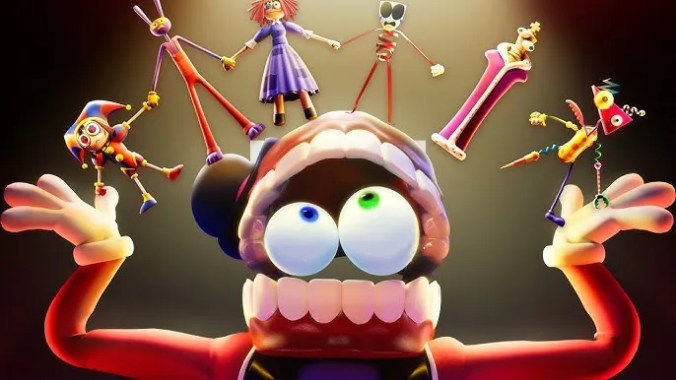
Sometimes I watch a little more Youtube than I should. My algorithm consists mostly of video essays on the economy, tournament footage, and random gaming clips. Well one day I was whiling the hours away watching a bit of nonsense, and the algorithm recommended the pilot to a new cartoon series. The Amazing Digital Circus. I did a cursory search and discovered this random pilot is the start of a mega-successful series with a massive fanbase, all based on an old sci-fi horror called I Have No Mouth and I Must Scream.
This week the finale was released and I binged the entire back half of the series in one night. It’s a fun and tense series for teens and young adults that was well worth the watch. But the thing that caught my eye was how Glitch Productions blurred the line between new episodes, new merch, and marketing.
Plot
The Amazing Digital Circus tells the story of a group of unfortunates trapped inside an old 1990’s videogame. No one remembers their name, and everyone has taken on the form of an avatar appropriate for the circus atmosphere of the game. Kinger is a king chess piece, Jax is a prankster rabbit, and the protagonist Pomni is a sad little jester with very expressive eyes.
Running the world is an AI named Caine. Caine has godlike power in the simulation and a primary mission of keeping his trapped human guests engaged with his various adventures. If you’re familiar with the original Harlan Ellison story there may be some alarms going off in your head here. Thankfully instead of behaving like the malevolent AM of the original story, Caine brings an energy that’s a mix of circus barker and the Genie from Disney’s Aladdin (best captured during his show-stopping song in the eight episode).
Caine’s adventures inevitably go off the tracks in a dangerous and psychologically tormenting direction, and the plot of the show focuses on its human cast’s efforts to endure Caine’s accidental tortures while seeking a way out of their digital prison. It might sound like a horrific story, but the cartoony characters, comedic tone, and wacky settings take most of the edge off the physical horror, leaving only the existential.
An Exploration of Psychological Conditions
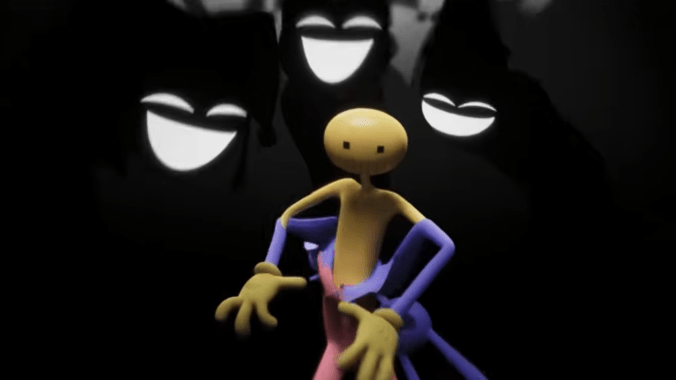
Since death is off the table, the worst-case scenario for our band of plucky characters is called ‘abstraction’. Years spent trapped in a simulation take their toll. If a character loses their grip on reality too much, they ‘abstract’, which means turning into a horrible monster that Caine makes sure to store permanently in the basement.
Keeping each other sane and healthy becomes the day-to-day focus of our characters. Each character has to fight their own inner-demons. To add insult to injury, the avatars in the game are specifically designed as physical representation of each person’s psychological struggles. Gangle carries a collection of masks and can only express the emotion on the mask she wears. Zooble’s body is an assortment of components she can mix and match, representing her own body dysmorphia. Ragatha is a raggedy ann doll that’s desperate for other’s approval. As the series goes on, we see each character’s deal with their own psychological turmoil. As you can imagine, there’s a heavy theme of self-acceptance that runs through the story.
Marketing Blurring Into Story
The entire series of The Amazing Digital Circus (TADS) was released directly to Youtube, rather than through some streaming service. From an accessibility standpoint, this allowed the show to reach a massive teen and young adult audience. From a financial standpoint, this meant Glitch Productions had to get creative.
If you’ve already seen every episode of TADS, you’ve actually only seen about 75% of the content related to the story. When a company advertises their upcoming episode, it’s a cut up of clips from the episode. Not here. Every preview TADS is entirely unique content. The AI Caine speaks directly to the audience, and often reveals elements of his character that weren’t visible inside the story.
One particularly meta moment comes when Caine advertises the series by practicing knife throwing on poor Pomni. Then in one of the later episodes, Pomni is blinked out of existence while eating a sandwich, and when she returns, she has a bunch of knives sticking into her jester avatar. The commercials are literally canon to the series.
But it doesn’t just extend to previews. Merchandising is a key element of funding TADS, so one of Caine’s favorite gimmicks in the youtube shorts is to punish his players by taking their avatars and turning them into the plushies that are sold online and forcing them to sing songs or engage in various harrowing challenges. After watching the whole series, the best thing to do is go to Glitch Production’s Youtube channel and watch all the advertisements. They even hid some key lore related to one of the ‘abstracted’ characters that isn’t present in the main series while advertising pins and plushies.
Conclusion
The story is a great modernizing of a sci-fi classic with modern, psychological sensibility. But the greatest innovation of this series comes in the marketing. Glitch Productions didn’t just make a great story, it produced an online experience. The voice actors are regularly invited to play games with one another online, they’re brought out to cons, the fanbase is constantly speculating on tiny aspects of the lore, they even got the finale into theaters (with a sing-a-long of Caine’s song that you can see online).
We’re getting to a place in the modern age where tv advertising and big posters aren’t the way to get butts in seats. Rather than following the cinema model, Glitch Productions followed the model set by the game series Five Nights at Freddy’s. Make a ton of content, add enough deep lore to get the fanbase buzzing, and produce tiers of content. The end result is that no matter what kind of fan you are, you’ll always leave satiated.
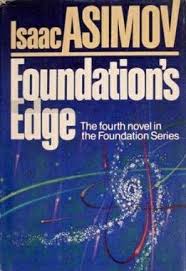
29 years after writing the original trilogy, Isaac Asimov continues Foundation’s generation-spanning space epic with Foundation’s Edge.
The Foundation book series has always been a little strange. Every one of them has felt a bit like an accidental sequel to the last. The first book was a series of short stories, the second book threw the original concept in the trash, and the third book took the ideas from the first two and developed them into a spy thriller.
Combine all that with an author coming into his own and every one of these books feels completely distinct. I’m happy to report that the fourth book in the series continues the pattern of genre-bending ideas and thrilling twists at a galactic scale.
Over a century after book 3, Foundation’s Edge tells the story of Golan Trevize, a council member in the First Foundation, as he investigates the invisible powers pulling The Foundation along the track to becoming a galactic empire. In parallel, Stor Gendibal, a leader of the psychic-led Second Foundation, uncovers a terrifying truth about the Seldon Plan.
For the first half, the story is a political thriller. At each twist and turn, Asimov makes sure to keep the audience fully informed as to what each action did, what it was aiming to do, and how each of the minor characters changes the calculation of the book.
After a series of political maneuvers, speculations, and schemes, Golan Trevize is sent off in search of ‘Gaia’, humanity’s legendary origin planet. At this point, the book’s genre suddenly changes. In a single chapter, we move from political thriller to treasure hunt. Adventure and mystery keep the story moving and the stakes climbing ever upward, ending in a satisfying conclusion.
Asimov’s Writing
Isaac Asimov learned a lot about writing in the nearly thirty-year gap between the third and fourth books. For the first time in the Foundation series, Foundation’s Edge tells a single, continuous story. Multiple POVs, yes, but it begins at the beginning and ends at the end. No century-long time jumps and no being introduced to an entirely new cast of characters halfway through the story. In this book, we have the time to get to know the characters and truly understand their motivations.
For a good bit of the story, I was confident it was setting up a new trilogy. The first half was paced much slower, deeply exploring the political intrigue while reminding the readers of the events of the past three books. By the two-thirds mark, there were a lot of starts without a lot of resolutions. I was pleasantly surprised when the final third of the book jumped into high-gear, delivering a tense and action-packed finale that closed every thread and reached the grand-scale the Foundation series is known for.
The Conclusion
After the first three books, the Foundation series felt like it was over. The goal of galactic empire was centuries away, but all the major factions had reached a balance, and the ending felt inevitable. With this story, Asimov re-contextualized past stories and painted the inevitable conclusion as a defeat rather than a victory, he introduced adventure and mystery to a completely mapped galaxy and layered new complexities on an already complicated universe in a way that breathed new life into the series.
Much like Asimov’s first and third books, Foundation’s Edge is a conclusion. But this time, the story also feels like the beginning of something new.
Readers of my blog know I used to simulate star-trek style spaceships. It was my entry-point to the world of writing, storytelling, theater, and tech all at once. A part of the reason I studied computer science was to make sense of the one part of the simulator I didn’t understand. My first written stories were simulations written to fill a story vacuum. As a flight director, I was lucky enough to not only write the stories, but perform them.
I told hundreds of stories in my five years simulating starships. Mostly I stuck to my biggest hits. Occasionally we’d test a new story and fiddle with it to make things more exciting. But this flight wasn’t like that. It was supposed to be a nice, normal mission. Instead it ended up being my most memorable flight in a half-decade of incredible stories.
Setting the Scene
The nine crew members each donned their uniform, a felt poncho modified with starship colors and branding. It was a birthday party, every kid was in second or third grade. A bit young, but me and my team had dealt with worse.
One side a school, one side a spaceship.
To reach the ship, they needed to pass through the ‘teleporter’, an old photography dark room door, the revolving kind. They’d step in two at a time. I’d remind them not to touch the side lest they be lost to space, then spin the door 180 degrees.
Pitch black for half a second, then the bridge of a starship. Even when you knew the trick, it still felt like magic. The UCS Everest was a large vessel, suited to handle parties of 10-15. There was a main viewscreen at the front and tiered seating at the back. A staff member would ask the arriving crew their job position, then direct them to their seat.
Once everyone was seated, I would teleport in behind them and the epic boarding music would fade away. Safety instructions were always boring, but from the very first second I could tell this crew was different. Eyes wandered, kids whispered. I talk quick, but this crew had no interest in any of it.
When the safety briefing was done, I had a single instruction for my staff. “Get through the training as fast as you can.”
We had a set of junior controls for young crews. Instead of everyone having a distinct job, they were all prompted to do the same activities together and drive the ship as a single unit. For groups younger than 4th grade, it was really the only way to keep them from being overwhelmed. Unfortunately, the most recent windows update had broken the juniors controls, so all we had were the advanced systems.
The Flight
The crew was both overwhelmed and not particularly invested in the story of the mission. They were supposed to fly to an endangered planet and help evacuate the citizens. For crews like this, we like to put a ‘doctor’ on the bridge to help them out. Whenever I came on over the speakers as the main engineer and told them they needed to ‘undock’ or ‘set course’, the doctor secretly made sure the task got done.
In this case, the doctor was basically flying the ship on their own.
Fifteen minutes into the flight, I could tell things weren’t working. I was quietly telling my staff to get ready to ‘board the ship’ as various alien intruders and wacky characters, but while that was being prepared, I needed the story to continue.
The Breakthrough
There was a political situation surrounding the endangered planet. I was on the speakers as a Texan ship captain warning them of the dangers. None of it was clicking, the whole mission was feeling like a bust. Then I said the words that changed the course of the mission. “The mayor of that planet is a crafty fella– he’s got people everywhere. Keep an eye out, you may have a spy on board.”
On the cameras, I could see kids’ heads popping up and glancing around. Their security officer, just eight years old, jumped out of his seat with a toy phaser in hand. There was still conversation being picked up by the microphones, but they weren’t talking about a party. They were talking about the spy.
Not yet realizing what had happened, I had the ‘ship doctor’ get back to the bridge to help them navigate the upcoming asteroids.
The second he teleported in, every kid in the room was out of their seat and yelling at the top of their lungs. They all made different accusations, but there was only one message: The Doctor was a spy.
My first reaction was frustration. Everyone had left their computers, which meant no one was driving the ship, which meant the mission was frozen in place. But these kids had never cared about the mission in the first place. As I watched the doctor get forced into the brig at phaser-point, I saw what I had been looking for since the start. A crew that cared about the mission. Not the space theater or the advance controls or the working together. They only cared about hunting for spies.
If the flight had been a field trip arranged by a school, I would have paused here. The crew would have gone back to their seats and we would have discussed what their priorities needed to be. But this was a birthday party, and when you’re flying a birthday party, it’s best to reserve the lectures for the really bad behavior.
A small brig for 6 suspects
So the mission changed. I ordered a volunteer dressed as a security guard to go up and help the kids interrogate the doctor. But their blind hunger for spies was worse than I thought. The security guard ended up in the brig right next to the doctor.
I was down to two volunteers. The next one I sent up with no costume at all and specifically told the kids that this person was not a part of the story. Just a staff member there to guide their experience. They reluctantly agreed not to stuff her into the brig, but there were plenty of murmurs that she was ‘secretly a spy’ anyways.
Now that I knew what kind of story we were telling, I knew what kind of tools we should use. We planted a device in a tunnel under their seats and set off the alarms until they found it. We played crazy ‘hacking’ noises over the speakers and flicked the lights from red-alert to green-alert to a bunch of other colors while they flipped switches on a panel. Whenever there was downtime, I didn’t even have to fill in the blanks, the crew would sprint right back to the brig and resume their interrogations of the prisoners.
Then came the masterstroke. An away mission to the lower decks. It’s a funny thing, kids love getting onto the starship, but once they’re on the ship, all they want to do is leave. There was a second starship right across the hall. We redirected that ship’s camera feed to the main view-screen. I told my last volunteer to go in there and stand around.
When the kids saw the footage of a person in a uniform doing nothing, they went wild. Never had they seen a more guilty figure in their lives. The staff member led them on the away mission and they caught the ‘spy’ with ease. They were thrilled for an excuse to use the phasers.
On their way back to the ship, the crew bumped into two unfortunate staff members who were returning from a lunch break. They were dragged to the brig like everyone else.
The Finish
With the end of the mission closing in, I decided it was time for a trial. We gave each student a seat and made them all a part of the jury. One by one we brought out the suspects. I wish I could tell you they were thorough in their questioning. I wish I could say they even listened to what each prospective spy had to say. But they didn’t. It was closer to a witch hunt than any form of judicial process.
At the end, they decided it was the doctor who was the spy. Of course it was, he was the first suspicious figure on the bridge and the only one they all remembered capturing. I told them they were right and that they had successfully completed the mission.
They cheered and ran off with their parents to eat cake. Great reviews all around, although I’m guessing that dying planet from the start of the mission would have a few complaints.
When we finished restoring the bridge from the child hurricane that had ripped through, I sat back and took a breath. One of the other staff members walked over to me with wide eyes. “That was amazing! I’ve never seen a mission like that before. You should write it down and fly it more often!”
I smiled and shook my head. We had improvised 2 and a half hours of nonsense. A playful nothing to distract a bunch of ten-year-olds. It was none of the magic that had drawn me to the program in the first place, and used none of the tools that made the simulator cool. Just one long string of chaos, and we were lucky the kids had liked it.
This week I was delighted to receive an in-depth review of my debut novel The Human Countermove from Dan Yocom at Guild Master Gaming. Since release, I’ve come to realize my book’s number one audience is fans of games and strategy gaming. This review represents the viewpoint of an expert in that space, so I’m deeply appreciative they would take the time to consider my book and give so much fantastic feedback. Check out what they have to say!
Cyberpunk is one of the most widespread and beloved genres today, stretching into movies, games, and books. But where did it come from and why does every story in the genre feel both original and derivative? It all goes back to a small set of roots, and one transformative story. Neuromancer.
It’s been a little over a month since my novel The Human Countermove debuted, and I figured now was a good time to share a part of the story. A reading of the chapter is also available on my YouTube Channel:
1 – Just a Game
Rank: 83
A space opened in the queue. I closed the gap, steel panels flexing under my step. A stream of LINE players stretched off into the distance. Security was never like this at a LINE event. A rush-job hall of steel tossed in front of the hotel’s front doors—what were the Minds thinking? Probably had something to do with that new directive.
No one spoke in the metal tunnel, every noise was echoed back and amplified into incoherence. I glanced behind me. Two bodies back, a hand waved in my direction. Jamie. I mouthed hello back. She was a strong player, better than I was these days. She had on a dark-green dress I had never seen, and her brown hair curled with the precision of a recent salon visit. A big change from her regular loose shirts, capris, and ponytails. Her eyes gleamed with life. Maybe she was finally over that insomnia, I’d have to ask her.
A new gap formed, I hurried to close it. In the wait, my mind began to wander. I used to relish moments like this, every idle second was a chance to review and revise my game plan. Not these days, let one of the players with a chance to win do that. I was well on my way out of the top one hundred, may as well have been retired. Thirty might seem young for retirement, but when all you’ve done is lose for over a year, it’s best to be honest with yourself.
The queue rounded a corner and the Greater Charters Hotel entrance came into view—an extravagant place with a penchant for gold trim. A full-body scanner in front of the lobby doors ruined the luxury aesthetic, which was well enough, considering I was wearing jeans. A guard’s voice echoed down the tunnel. “Step inside, arms out, legs shoulder-width apart.”
He was the same guy the Greater Charters Hotel always used, but the uniform was different. Bulletproof vest, at least three weapons, a wire running to his ear. It was a whole lot of security for a board game. At last, I reached the front. “Step inside, arms out, legs shoulder-width apart.”
His voice was tired and he didn’t even glance at me, his eyes locked on a screen. I followed his instructions. The booth was quiet and compact. My jeans kept my legs from reaching shoulder-width apart, but the guard said nothing. He pressed something in the corner of his screen. There was a momentary compression, the air felt oddly still. No more than a second. A 3D scan of my face appeared on-screen. Almost perfect. He had the same short black hair, receded hairline, and beginnings of a beard in need of a shave. He even had my smile, though the eyes looked a little dead, a little darker brown than I remembered. Maybe that was just what being thirty was like. A sweet, automated voice pumped through the speakers. “Welcome. Zouk Solinsen.”
“You’re good.”
I nodded my thanks and proceeded through the double doors. The lobby opened to an enormous conference hall. I always wondered how many rooms a hotel had to sacrifice to get ceilings to go that high. The room went on and on, filled with row after row of sleek black tables, like a great hall for gaming. Figures they’d spare no expense for The Global Playoffs. It was one of the biggest tournaments there was. Players flew in from all over to represent their countries. Best of the best, all here. These days, I’d be lucky to land in the middle of the pack.
The venue was still empty, mostly walked by arbiters. You could always spot an arbiter, the best-dressed people at the tournament. Maybe it’s easier to tell someone they lost when you’re wearing a suit. The pre-event instructions had emphasized the importance of good grooming and formal dress. Hopefully the polo would make up for the jeans.
“Zouk Solinsen?”
A woman in a black pantsuit approached, touchscreen in hand. Definitely an arbiter.
“That’s me.”
The arbiter scrolled through some list. After a moment, she glanced up. “Follow me.”
Her feet carried her at an incredible speed. I jogged just to keep up. Every couple steps, we passed another dozen seats. In front of each, a folded white square listed a player’s name. A few popped out to me: Alexandria, Oliver, the world champion Bergamaschi. My foot caught on the carpet. The arbiter barely glanced back. These were the best in the world, here to represent their province. Here I was, hoping to go home with a single win and a free lunch. Maybe coming at all was a mistake.
The arbiter stopped three-quarters of the way down the hall. A little further down, at the end of the hall, the hotel had set up a big platform overlooking the tables. We were close enough I could see a few of the empty seats, they looked a lot more cushioned than the ones for players. VIPs. It might explain the security. The arbiter turned sharply and led me between the rows of tables to my seat. Row six, position five. She came to a stop and pointed at a straight-back black chair.
“This is your seat, Mr. Solinsen. If you need anything before the game, please feel free to reach out to one of the arbiters.” I looked past the arbiter. No one was within a hundred feet. “We’re around. If you have a pressing issue during a game, pause the timer and raise your hand. Bathrooms are in the corner. Any questions?” She spoke at a breakneck pace, but I was pretty sure I had gotten it.
“None. Thank you.”
I took my seat and the arbiter hurried away. Like every other seat, there was a little folded note bearing my name: Zouk Solinsen, Sulmar Province. My eyes narrowed. There was something off about the label. I grabbed a name card one seat to my left. The color was different. Mine had a subtle yellow hue. I grabbed the name card to my right. All the others matched. Another sign I wasn’t supposed to be here.
“Zouk!” I turned quickly at the sound of my name. “You didn’t tell me you were playing!”
Jamie approached quickly, in a rush to keep up with her arbiter. I knew there was a reason I had been thinking about her. I spun the name card opposite mine around. Jamie Mendez, Reanrum Province. This was gonna be a tough first match.
“I didn’t even know I was playing until last week.” I returned each name card to its original position. “Pretty sure I’m a replacement.”
Jamie sat down. “Don’t do that. You were a good player.”
I leaned back in my chair and stared at her. We both knew I was past my prime. Her eyes narrowed. “How can you be sure?”
I slid my name card across the table. “Look. Different paper. I wasn’t in the original batch.” Jamie lifted the name card to her glasses and scrutinized it carefully. She had always been big on details.
“Different font too—they could have lost the original.” She slid my name card back to me.
“There’s more. My invitation came directly from the coach.” Jamie’s lips pressed into a thin line. She was getting convinced. “You know the lineup for the tournament? Released six hours after I accepted my offer. Come on, I’m a replacement.”
Jamie raised her hands in surrender. “So you’re a replacement.”
“You’re convinced?”
A smirk crept onto her lips. “I am, and that means you haven’t strategized with your team.”
Always looking for the advantage, Jamie. It’s what made us good rivals. I shook my head. “We all play our own games, what’s there to strategize? It’s not like they expect much of me.”
She leaned slightly forward. “Maybe you should throw the game, teach ‘em a lesson.”
I chuckled. She was probing for advantages, but she’d never forgive me for a free win. One more and she’d have a winning record against me. Then again, the team captain probably wouldn’t even notice. Even one win today would probably be categorized as an ‘over-performance’.
We chatted for a while about nothing. Showing up to all the same tournaments means either a lifelong hatred, or a lifelong friendship, and neither of us were good enough to waste time hating each other. That didn’t stop her from making every effort to wipe the floor with me, but it was nice to see a familiar face.
The hall went from empty to filled in no time. I did a sweep of the hundreds of faces for anyone else I recognized, then noticed Jamie’s eyes were locked on the front of the room. A crowd of well-dressed visitors were taking their seats on the platform. As one entered, Jamie sat up a little straighter.
“Maya’s here,” she whispered.
“Who?” I squinted into the crowd on the platform. In all the movement, one stood still, shaking hands and smiling at every person passing by. She was a beacon of positive energy in a short body. Her hair was somewhere between blonde and grey, and she wore a mauve pantsuit.
“Human Autonomy Activist. She convinced the Minds to pass the new directive.” The new directive. The “special” tournament. I had read it once, but knew I’d never qualify. It explained the extra security—the elite were here to watch our games live. To pick out potential champions.
“People are taking that seriously?” I asked. Jamie looked back at me with a raised eyebrow.
“The opportunity for a LINE player to join The Three? The chance to be the voice for humanity on the council? We’re all taking it seriously.” She leaned in close. “Zouk, you and I are among the one hundred players good enough to win this thing.”
I adjusted in my chair and picked at a piece of loose thread. “We’re not the best in the world, Jamie. We’re not even in the top ten.” Jamie said nothing, but her furrowed brow was enough to tell me her feelings.
The lights dimmed. My teammates finally arrived, all at once taking their seats. Table by table, soft blue LEDs flicked on, illuminating a thousand LINE players’ faces. A glass wall rose up between Jamie and I, and a message appeared in the virtual space, “CONNECTED”.
“Good luck, Zouk” I could barely make out Jamie’s face through the holographic separator, but whispered my thanks. All at once, the screens updated. A 12×12 grid of blue squares appeared on the table in front of me and in the image on the glass.
Back when I was teaching full time, students always told me their biggest fear in a game of LINE wasn’t playing poorly, it was the moment the game started. An empty board. An infinite garden of choices, from which players pruned a single game. But those were novices. I didn’t see the infinite anymore, I saw my plan, and I saw my opponent.
Another figure rushed past me to a seat at the end of the table. Someone was always late. Two little clocks appeared in the corner of the screen. One for me, one for Jamie. Each read 60:00. Looked like the tournament was starting on time. A gong played through the room, and the timers started ticking down.
The objective in a game of LINE (Leadership in Near-Range Emulation) was simple: use troops to attack your opponent, build walls to slow them down. Each squadron was represented by a set of six little blue dots. With some good strategy, a smart player could build a base, capture the board, and take their opponent’s command post. A dumb player could charge in and win in a few moves, but that was rarer. The graphics were simple—red dots, blue dots, a few lines representing the walls—but the complexity was near infinite.
I ordered a wall be placed near the bottom of the screen, near my command post, then pressed ‘Submit’. My clock stopped ticking. Jamie’s continued to count down, she was still deciding. After a few seconds, Jamie’s clock stopped too, and our moves were revealed.
A blue wall appeared where I had ordered it, the beginnings of a base. Jamie had brought out her first squadron, six dots with the power to tear my baseapart. This would be an aggressive game. I had hoped for that. Jamie was the stronger player these days, let her lead the attack.
Her squadron could only move one square at a time, so even with her extra initiative, I had time to get my side of the board organized before she hit me.
At move four, I deployed my first squadron. They took cover behind the walls and waited for the red troops to reach them. Jamie called her first squadron back to her base, not much point in attacking a well-defended position. But then again, she had already forced me into defense.
By move seven, the basic footprint of the Lost Star formation had taken shape in my base. It kind of looked like a spiky porcupine centered around my command post. Over the years, I had leaned on it more than a few times. Lots of cover, lots of mobility for squadrons, it tended to get the job done.
On move twelve, Jamie’s squadron count climbed to five. I continued the development of my base, waiting for the attack.
Six moves later, I glanced at the clock. I had burned fifteen minutes, Jamie had spent twenty-one.
I input another move and thought on Jamie’s comments about the new directive. Did the other pros really believe it? Win a few games of LINE and get put in charge of the government? It was ridiculous. Add in all the amateurs that thought they had a chance and the whole thing was a circus. Even if the offer was good, it wasn’t meant for middling players like me. The directive tournament was meant for the best, for players like Bergamaschi.
I pulled back from the board. As much as I respected Jamie, my head really wasn’t in it. I was thinking about the next match. Not much had been able to distract me from it the last few days. A gust of cold wind blew my way, an air conditioner had just turned on. Jamie had already input her next move. Time was ticking down, I needed to focus.
Her first squadron poked its head out from behind cover. A fight was just what I needed. I stretched my fingers, then input the attack orders. On the left, my little blue dots moved up through one of the Lost Star’s points and took firing positions. On the right, troops waited patiently.
Nine squadrons emerged from Jamie’s base. A proper army. The moment they came within three tiles of my walls, I gave the order for my troops to open fire. Gold-yellow flashes flew out from both sides. With every hit, a dot faded off the board. At the end of the first turn, I had lost five troops, Jamie had dropped considerably more.
Still, she pressed on. A steady stream of weapons fire down the left side tore through the Lost Star. My troops were sitting ducks. She closed in, lurching ever closer to the center of the base, and more importantly, abandoning her own. I ordered the counter offensive, three squadrons pushed out of my base and charged across the map.
Through the holographic separator, I could see Jamie’s eyes widen. Both sides were attacking. Both sides were defending. It was a precarious position. A single misplaced piece could end the game. Just as I had hoped, a chance to put skill against skill.
The next move rolled in. Jamie’s squadrons ceased fire and turned away from the mangled remains of my base. I blinked repeatedly. That wasn’t right. They were retreating. No. I craned my neck closer to the screen. Not a retreat, a pivot. She was coming for my counteroffensive.
I realized my mistake in an instant. I had forgotten to wall up the center of the board. Instead of a two-pronged skirmish, we were two armies facing each other in no-man’s-land. I counted out Jamie’s troops. Six more troops. No way out. My heart sank. In an open field there was no room for clever tactics, just flat numbers.
Weapons fire lit up the screen. In a single turn, three of my squadrons were wiped from the board. In exchange, Jamie had only lost four tiny red dots.
I put my head in my hands. Every little sound in the hall bothered me. A hundred players tapping at their screens, coughs and sneezes that made the whole place feel like a hospital, whispers from the politicians in the viewing gallery. The game was over, but I needed to see it through.
I ordered a retreat, but it was already too late. A flurry of golden light erased what was left of the blue army. I took in the rest of the board. My base could hold up for a few more turns, maybe even rebuff the attack. But against a pro like Jamie, defeat was inevitable.
My hand shook as I pressed ‘Resign’. The board vanished and the separator lowered. Jamie had a quizzical look on her face, as if she was surprised it was over. We shook hands over a final image of the board, projected onto the flat of the table.
“That was a dangerous plan, going for a flank on my army like that.”
I paused a moment, confused at her words. “It was supposed to be a counter-attack.”
Jamie held a thoughtful look, her eyes jumping back and forth, the sign of a player calculating moves. “You were missing a few walls.”
“Yeah.”
My chest felt heavy. It was an amateur mistake. But for me, mistakes like that were becoming the rule rather than the exception.
Jamie grabbed her bag off the floor. “Who are you facing next?”
I let out a nervous cough and reached into my pocket, pulling out a copy of my schedule. Jamie glanced at it and let out a laugh. “Bergamaschi?”
I nodded.
“How did you get him?”
I shrugged. “The coach wanted one of his lower-tiered players to face the champion. Manage the balance of wins and losses.”
She gave me a pitying look. “Cannon fodder, eh? Sorry, Zouk.”
That looked to be the story of the tournament for me, a last-second replacement set up to lose. “Hey, maybe that’s why the last guy dropped out.”
Directive 2149-M-13-A
“On Reintegrating Human Voice in Government” – Readable title appended by The Mind of Communications and Influence.
The following directive was presented and voted upon unanimously during session 1034 of the year 2149. Deliberations extended for eleven minutes and nineteen seconds. Transcripts have been sealed.
OBJECTIVES (ordered by anticipated impact):
Improve perception of human representation in government (Code: O-HP)
Upon ratification of this directive, a voluntary L.I.N.E. (Leadership In Near-Range Emulation) tournament will be made available to all citizens. The details of the tournament are as follows:
1. The rules of the game will follow the 2088 L.I.N.E. Rulebook.
2. Opponents for this activity will be chosen from a list composed of
A. The Mind of Communications and Influence
B. The Mind of Manufacturing and Distribution
C. The Mind of Strategy and Warfare
3. Should a citizen achieve three victories without suffering a defeat, said citizen will be awarded membership on the Nation’s Legislative Council.
4. At least one match will be conducted in a non-simulated environment.
5. This directive will be terminated after one player claims victory.
Competitors may join the tournament by filing a Voluntary Activity Admittance Form and entering activity code J199LI.
END
A Note from the Mind of Communications and Influence:
Hey folks! I know there’s a whole lot of directives coming down these days. I just wanted to take a moment and really highlight this one. For the last few months, the other Minds and I have been having some coffee and chat sessions with Human Autonomy Activist Maya Torrez. In case you don’t know her, first off, you are missing out, she is a blast and has made me spit out my coffee laughing on more than one occasion. But secondly, she is one of several leaders of the Human Autonomy Movement. And after a whole lotta chattin’, we ended up putting this thing together.
Here’s the rundown, we want a living, breathing, human being on the council. But we also need to stay true to the virtues that define our nation. We don’t want to be just another country plagued with corrupt politicians driving unrest and fear. So we’re being a little picky.
I know what you’re thinking, LINE? How can a game be the right tool to choose a fourth Mind? Well, let me tell you about the candidate we’re looking for. We want someone who isn’t just a speaking head, and isn’t just a vote. The person that joins this council has got to be a deep thinker, someone who can go head to head with any one of us and come out on top, someone ready to make a difference.
Here’s the thing, if you challenge us, we won’t hold back. Even the best in the world are gonna have a pretty tough time (looking at you Bergamaschi!). Our models project the only people who have any chance of winning this thing are professional LINE players (I know, shocker), but anyone is free to throw their hat in the ring, we love a good surprise.
So there ya go, take us out to lunch, challenge us to a game of LINE, and maybe start running the government. Good luck to everyone, and if you have the skill, we’ve got a chair waiting for you.
P.S. No, there is not a punishment for losing. It’s just a game people!
I wrote a book about a strategy game grandmaster challenging the AI Minds of his society for the fate of the future. It’s got politics, subterfuge, high-minded strategy, and danger. But I think at the heart of it all is a story about connection. A romance. Which is odd, because I don’t write romance.
Spoilers ahead.
A friend of mine pointed this out to me while they were reading my book. In the first chapter, you’re introduced to my main character, Zouk Solinsen, an isolated guy in the back half of his career navigating a cold and disconnected world. We’re then introduced to a young woman named Jamie. A rival in the strategy gaming space, and his opponent in the first round. They’re about the same age, opposite genders, and their conversation has a light, almost flirty back-and-forth before the game.
But it’s a red herring.
The target of this book’s romance isn’t Jamie. One of the romances isn’t even human.
Every good story has a certain element of romance. Whether it’s a pair of characters who hate each other and eventually learn to understand each other, or a collection of disjointed and quirky individuals finding the joy of becoming a cohesive group, what makes a romance is the journey from ambivalence and hatred to appreciation and love. Oftentimes, you don’t even need the kissy-kissy.
There are two ‘romances’ in The Human Countermove. The first is conventional. A small, personal story about Zouk and his wife Kira, whose relationship is on the rocks. Zouk is an outgoing person with a strong skill for communication, while Kira prefers her privacy. For her, a nice day is one spent in her office running data analytics and drinking hot cocoa.
In the time since they got married, life got complicated. Zouk had his career ups and downs, while Kira built quiet, steady work in the government. Zouk wants Kira to change, he wants her to love crowds and events and to be with him for all of it. She tries her best, but it’s not who she is.
But when he needs her, she’s there. Not usually with a well-placed word, but with her most sincere self. When Zouk is trying to make sense of a broken political system, she’s willing to put in weeks of work to help him. And she seems to relish every minute of it.
It’s all this that reminds Zouk why he fell in love with her. He remembers her passion, her care, the way she’s fought to stay in love with him. It’s a Him problem. He’s been asking her to change, when he’s the one that needs to start reaching out. He meets her where she is, accepts her for who she is, and is able to start loving again. They’re able to be that supportive, loving couple they had been chasing from the start.
But there’s a second romance in this story. One at a much larger scale.
A romance between Zouk Solinsen and The Minds.
Zouk is playing a series of strategy games in order to join The Minds’ council. Impossible games that take everything he has in order to win. But winning doesn’t suddenly put Zouk into power, it puts him in a partnership. A shared power structure with The Minds. And anyone forming a partnership knows the only way to make things in a partnership work is to ‘love’ the other party.
There’s an on-again, off-again relationship between Zouk and The Minds throughout the book. Near the beginning, The Mind of Communications and Influence is casual with Zouk. They’re fast friends and get along better than you’d think. The possibility of Zouk winning all the games becomes real. Folks listen when he speaks. The general consensus seems to be that he will be the fourth member of the council.
Then the hard times come. Zouk breaks ties to an organization when he discovers their plot to overthrow the government. And the break-up isn’t easy. A controversial game, a mutiny in the military, riots, and a frame job implicate Zouk in everything.
There’s nothing less romantic than a deposition. One of his wins is thrown out and The Mind of Strategy and Warfare ends his hopes of joining the council on a painful defeat. Whatever partnership The Minds were considering is dead.
If this were a traditional sci-fi dystopian story, this is the part where Zouk leads a resistance and burns it all down. But I wrote a romance. And in a romance, the protagonist doesn’t give up.
Zouk and Kira’s rekindled relationship is a lesson in accepting people as they are. A lesson that leads to a realization. The world talks to The Minds in the same way they talk to politicians. High-minded intellectualism, hopes and ideals, persuasion. But that’s not how The Minds think, that’s not who they are. They’re more like Kira. Evaluating good and bad ideas through raw numbers.
Society has been pushed to their limit. Every aspect is measured and maximized. But by seeing the world through The Minds’ eyes, Zouk and Kira uncover the fatal flaw, the mistake in the calculations, the first fix to a better world. Zouk knows his chance to join the council is dead. But he makes his case anyway. He makes it because he wants a better world, because he thinks The Minds help get them there.
And that act of good will and understanding changes everything.
This is why I say this book is a romance. It’s not traditional, but it hits all the beats. The meet-cute, the impossible relationship, the break-up, and at last the heartfelt reunion. A story whose roots are built in love and empathy rather than rage and destruction. I had no idea I was doing it when I wrote it, and only realized what I had made when it was out in the wild.
Maybe this is just what happens to stories that set out with a theme of connection and understanding. You go in planning on making a sci-fi thriller and end with an AI and a human holding hands in the rain.
The Human Countermove is available for purchase on Amazon!