Through stories we see aspects of ourselves and the world we live in. The Circle shows us a world where social media becomes ubiquitous and inescapable. The Fifth Season quietly highlights the bubbling fury of institutional oppression and racism. Neuromancer blurs the relationship between people and technology. Every time, these dark stories end in tragedy. A mirror that reflects a dark and cruel world where people in power serve themselves and sacrifice others without a second thought.
These stories keep us grounded. They keep us connected to how the world really works.
They’re also a self-fulfilling prophecy. Too many sad stories about an irredeemable world and people start to believe it. In a world with no principles, staying committed to a moral fiber becomes the losing move. We become cynical and jaded. Once a community stops protecting one another and each individual focuses on fending for themselves, it stops being a community.
But it doesn’t have to be that way. A mirror doesn’t have to highlight our worst instincts, it doesn’t have to reflect our darkest selves. It can do the opposite. It can show us our best selves, an aspirational vision of who we wish we were. Stories of idealists like Mr. Smith Goes to Washington, or of a new society like the utopian days of early Star Trek.
We need more aspirational stories.
In 1986, Star Trek: The Voyage Home, transparent aluminum was introduced as a curious futuristic invention. A novelty. But not to the chemists and engineers that watched that movie. Transparent aluminum now exists, a case of life imitating fiction. It’s not the only time this has happened. Mobile phones, tables, and voice controlled computers were all first Star Trek tools before they became our reality.
The opposite is just as true. War of the Worlds told the story of a highly advanced alien invasion involving chemical warfare, lasers, tanks, and aircraft. Fifteen years later, we saw almost all these inventions in WW1. Squid Game told the story of increasingly desperate contestants in a lethal competition, now the competition is a real game show (except for the lethal part).
We underestimate the power of collective thought. A politician achieves their ambitions by convincing enough people something is possible. A stock rises or falls not based on the company’s performance, but its perception. If an expert tells a country they are in decline, it becomes true.
So what happens when the only stories we tell of the future are dark and cynical? Black Mirror stops being a warning and instead becomes a checklist. Every person sees every other person’s action in the worst possible light. Billionaires take notes on dystopian stories and program them into their product. The scientists that grow up on these stories fear the consequences of their inventions.
In 2023, Alexander MacDonald, NASA’s chief economist said about the impact of sci-fi writers. “We don’t go to space because we have the machines. We go to space because we have a culture of people who are inspired to build the machines.”
We need science fiction stories that imagine and inspire, that tell the stories of heroes saving the day and technologies that transform life in the most wonderful of ways. Most importantly, we need sci-fi stories that dream of a bright future.
But this isn’t just a problem with science fiction, it extends into fantasy and thrillers and mystery and every other genre. We keep telling stories about vigilante superheroes in corrupt societies. What about the leaders that shine a light on corruption and fight to make things better? Instead of cynical wheeling and dealing in the west wing, what about an idealist that manages to get a piece of impossible legislation passed because they inspire their peers?
It’s something I’ve been wanting to adjust in my writing. I want to dream of a better world and a better universe. I want to know that the stories I write inspire a materials scientist thirty years from now to invent bendy glass, or bouncy steel, or non-toxic mercury.
We’ve spent a long time critiquing the present. For incremental change, critique is incredibly important. It keeps us moving forward. But it won’t be revolutionary. It won’t reinvent how we live.
The only way for that to happen is for us to change the types of stories we tell ourselves. Fill the world with moral, upstanding heroes by telling stories of moral, upstanding heroes. Advance technology to improve the human experience by telling stories of technology that improves the human experience.
It’s naive. It’s idealistic. But that’s what storytelling is for. For us to one day live in a utopia, we first have to imagine it.
Cyberpunk is one of the most widespread and beloved genres today, stretching into movies, games, and books. But where did it come from and why does every story in the genre feel both original and derivative? It all goes back to a small set of roots, and one transformative story. Neuromancer.
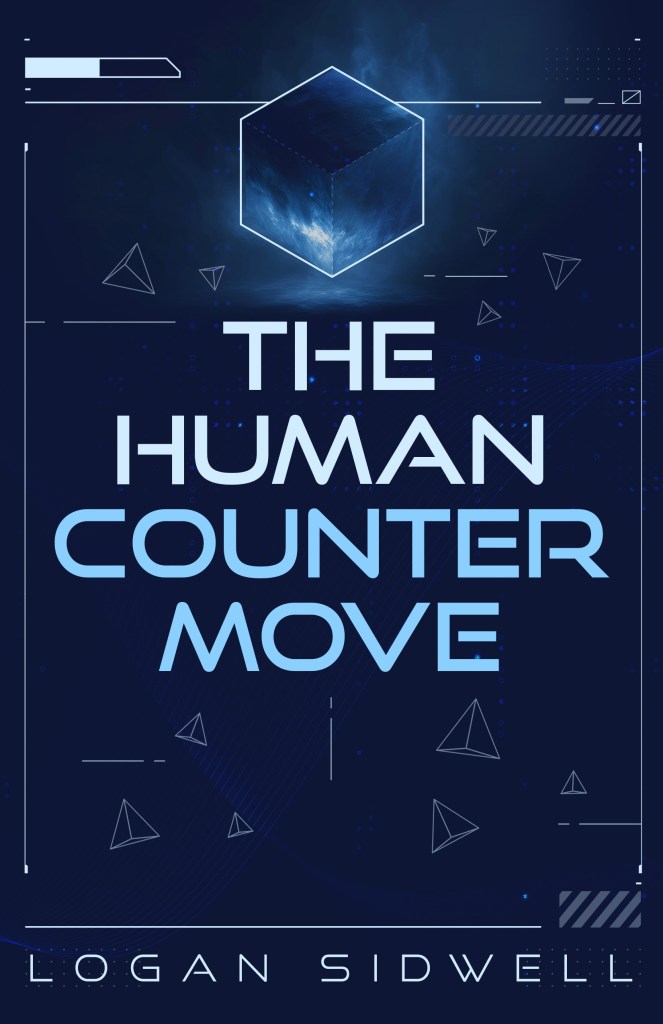
It’s been a little over a month since my novel The Human Countermove debuted, and I figured now was a good time to share a part of the story. A reading of the chapter is also available on my YouTube Channel:
1 – Just a Game
Rank: 83
A space opened in the queue. I closed the gap, steel panels flexing under my step. A stream of LINE players stretched off into the distance. Security was never like this at a LINE event. A rush-job hall of steel tossed in front of the hotel’s front doors—what were the Minds thinking? Probably had something to do with that new directive.
No one spoke in the metal tunnel, every noise was echoed back and amplified into incoherence. I glanced behind me. Two bodies back, a hand waved in my direction. Jamie. I mouthed hello back. She was a strong player, better than I was these days. She had on a dark-green dress I had never seen, and her brown hair curled with the precision of a recent salon visit. A big change from her regular loose shirts, capris, and ponytails. Her eyes gleamed with life. Maybe she was finally over that insomnia, I’d have to ask her.
A new gap formed, I hurried to close it. In the wait, my mind began to wander. I used to relish moments like this, every idle second was a chance to review and revise my game plan. Not these days, let one of the players with a chance to win do that. I was well on my way out of the top one hundred, may as well have been retired. Thirty might seem young for retirement, but when all you’ve done is lose for over a year, it’s best to be honest with yourself.
The queue rounded a corner and the Greater Charters Hotel entrance came into view—an extravagant place with a penchant for gold trim. A full-body scanner in front of the lobby doors ruined the luxury aesthetic, which was well enough, considering I was wearing jeans. A guard’s voice echoed down the tunnel. “Step inside, arms out, legs shoulder-width apart.”
He was the same guy the Greater Charters Hotel always used, but the uniform was different. Bulletproof vest, at least three weapons, a wire running to his ear. It was a whole lot of security for a board game. At last, I reached the front. “Step inside, arms out, legs shoulder-width apart.”
His voice was tired and he didn’t even glance at me, his eyes locked on a screen. I followed his instructions. The booth was quiet and compact. My jeans kept my legs from reaching shoulder-width apart, but the guard said nothing. He pressed something in the corner of his screen. There was a momentary compression, the air felt oddly still. No more than a second. A 3D scan of my face appeared on-screen. Almost perfect. He had the same short black hair, receded hairline, and beginnings of a beard in need of a shave. He even had my smile, though the eyes looked a little dead, a little darker brown than I remembered. Maybe that was just what being thirty was like. A sweet, automated voice pumped through the speakers. “Welcome. Zouk Solinsen.”
“You’re good.”
I nodded my thanks and proceeded through the double doors. The lobby opened to an enormous conference hall. I always wondered how many rooms a hotel had to sacrifice to get ceilings to go that high. The room went on and on, filled with row after row of sleek black tables, like a great hall for gaming. Figures they’d spare no expense for The Global Playoffs. It was one of the biggest tournaments there was. Players flew in from all over to represent their countries. Best of the best, all here. These days, I’d be lucky to land in the middle of the pack.
The venue was still empty, mostly walked by arbiters. You could always spot an arbiter, the best-dressed people at the tournament. Maybe it’s easier to tell someone they lost when you’re wearing a suit. The pre-event instructions had emphasized the importance of good grooming and formal dress. Hopefully the polo would make up for the jeans.
“Zouk Solinsen?”
A woman in a black pantsuit approached, touchscreen in hand. Definitely an arbiter.
“That’s me.”
The arbiter scrolled through some list. After a moment, she glanced up. “Follow me.”
Her feet carried her at an incredible speed. I jogged just to keep up. Every couple steps, we passed another dozen seats. In front of each, a folded white square listed a player’s name. A few popped out to me: Alexandria, Oliver, the world champion Bergamaschi. My foot caught on the carpet. The arbiter barely glanced back. These were the best in the world, here to represent their province. Here I was, hoping to go home with a single win and a free lunch. Maybe coming at all was a mistake.
The arbiter stopped three-quarters of the way down the hall. A little further down, at the end of the hall, the hotel had set up a big platform overlooking the tables. We were close enough I could see a few of the empty seats, they looked a lot more cushioned than the ones for players. VIPs. It might explain the security. The arbiter turned sharply and led me between the rows of tables to my seat. Row six, position five. She came to a stop and pointed at a straight-back black chair.
“This is your seat, Mr. Solinsen. If you need anything before the game, please feel free to reach out to one of the arbiters.” I looked past the arbiter. No one was within a hundred feet. “We’re around. If you have a pressing issue during a game, pause the timer and raise your hand. Bathrooms are in the corner. Any questions?” She spoke at a breakneck pace, but I was pretty sure I had gotten it.
“None. Thank you.”
I took my seat and the arbiter hurried away. Like every other seat, there was a little folded note bearing my name: Zouk Solinsen, Sulmar Province. My eyes narrowed. There was something off about the label. I grabbed a name card one seat to my left. The color was different. Mine had a subtle yellow hue. I grabbed the name card to my right. All the others matched. Another sign I wasn’t supposed to be here.
“Zouk!” I turned quickly at the sound of my name. “You didn’t tell me you were playing!”
Jamie approached quickly, in a rush to keep up with her arbiter. I knew there was a reason I had been thinking about her. I spun the name card opposite mine around. Jamie Mendez, Reanrum Province. This was gonna be a tough first match.
“I didn’t even know I was playing until last week.” I returned each name card to its original position. “Pretty sure I’m a replacement.”
Jamie sat down. “Don’t do that. You were a good player.”
I leaned back in my chair and stared at her. We both knew I was past my prime. Her eyes narrowed. “How can you be sure?”
I slid my name card across the table. “Look. Different paper. I wasn’t in the original batch.” Jamie lifted the name card to her glasses and scrutinized it carefully. She had always been big on details.
“Different font too—they could have lost the original.” She slid my name card back to me.
“There’s more. My invitation came directly from the coach.” Jamie’s lips pressed into a thin line. She was getting convinced. “You know the lineup for the tournament? Released six hours after I accepted my offer. Come on, I’m a replacement.”
Jamie raised her hands in surrender. “So you’re a replacement.”
“You’re convinced?”
A smirk crept onto her lips. “I am, and that means you haven’t strategized with your team.”
Always looking for the advantage, Jamie. It’s what made us good rivals. I shook my head. “We all play our own games, what’s there to strategize? It’s not like they expect much of me.”
She leaned slightly forward. “Maybe you should throw the game, teach ‘em a lesson.”
I chuckled. She was probing for advantages, but she’d never forgive me for a free win. One more and she’d have a winning record against me. Then again, the team captain probably wouldn’t even notice. Even one win today would probably be categorized as an ‘over-performance’.
We chatted for a while about nothing. Showing up to all the same tournaments means either a lifelong hatred, or a lifelong friendship, and neither of us were good enough to waste time hating each other. That didn’t stop her from making every effort to wipe the floor with me, but it was nice to see a familiar face.
The hall went from empty to filled in no time. I did a sweep of the hundreds of faces for anyone else I recognized, then noticed Jamie’s eyes were locked on the front of the room. A crowd of well-dressed visitors were taking their seats on the platform. As one entered, Jamie sat up a little straighter.
“Maya’s here,” she whispered.
“Who?” I squinted into the crowd on the platform. In all the movement, one stood still, shaking hands and smiling at every person passing by. She was a beacon of positive energy in a short body. Her hair was somewhere between blonde and grey, and she wore a mauve pantsuit.
“Human Autonomy Activist. She convinced the Minds to pass the new directive.” The new directive. The “special” tournament. I had read it once, but knew I’d never qualify. It explained the extra security—the elite were here to watch our games live. To pick out potential champions.
“People are taking that seriously?” I asked. Jamie looked back at me with a raised eyebrow.
“The opportunity for a LINE player to join The Three? The chance to be the voice for humanity on the council? We’re all taking it seriously.” She leaned in close. “Zouk, you and I are among the one hundred players good enough to win this thing.”
I adjusted in my chair and picked at a piece of loose thread. “We’re not the best in the world, Jamie. We’re not even in the top ten.” Jamie said nothing, but her furrowed brow was enough to tell me her feelings.
The lights dimmed. My teammates finally arrived, all at once taking their seats. Table by table, soft blue LEDs flicked on, illuminating a thousand LINE players’ faces. A glass wall rose up between Jamie and I, and a message appeared in the virtual space, “CONNECTED”.
“Good luck, Zouk” I could barely make out Jamie’s face through the holographic separator, but whispered my thanks. All at once, the screens updated. A 12×12 grid of blue squares appeared on the table in front of me and in the image on the glass.
Back when I was teaching full time, students always told me their biggest fear in a game of LINE wasn’t playing poorly, it was the moment the game started. An empty board. An infinite garden of choices, from which players pruned a single game. But those were novices. I didn’t see the infinite anymore, I saw my plan, and I saw my opponent.
Another figure rushed past me to a seat at the end of the table. Someone was always late. Two little clocks appeared in the corner of the screen. One for me, one for Jamie. Each read 60:00. Looked like the tournament was starting on time. A gong played through the room, and the timers started ticking down.
The objective in a game of LINE (Leadership in Near-Range Emulation) was simple: use troops to attack your opponent, build walls to slow them down. Each squadron was represented by a set of six little blue dots. With some good strategy, a smart player could build a base, capture the board, and take their opponent’s command post. A dumb player could charge in and win in a few moves, but that was rarer. The graphics were simple—red dots, blue dots, a few lines representing the walls—but the complexity was near infinite.
I ordered a wall be placed near the bottom of the screen, near my command post, then pressed ‘Submit’. My clock stopped ticking. Jamie’s continued to count down, she was still deciding. After a few seconds, Jamie’s clock stopped too, and our moves were revealed.
A blue wall appeared where I had ordered it, the beginnings of a base. Jamie had brought out her first squadron, six dots with the power to tear my baseapart. This would be an aggressive game. I had hoped for that. Jamie was the stronger player these days, let her lead the attack.
Her squadron could only move one square at a time, so even with her extra initiative, I had time to get my side of the board organized before she hit me.
At move four, I deployed my first squadron. They took cover behind the walls and waited for the red troops to reach them. Jamie called her first squadron back to her base, not much point in attacking a well-defended position. But then again, she had already forced me into defense.
By move seven, the basic footprint of the Lost Star formation had taken shape in my base. It kind of looked like a spiky porcupine centered around my command post. Over the years, I had leaned on it more than a few times. Lots of cover, lots of mobility for squadrons, it tended to get the job done.
On move twelve, Jamie’s squadron count climbed to five. I continued the development of my base, waiting for the attack.
Six moves later, I glanced at the clock. I had burned fifteen minutes, Jamie had spent twenty-one.
I input another move and thought on Jamie’s comments about the new directive. Did the other pros really believe it? Win a few games of LINE and get put in charge of the government? It was ridiculous. Add in all the amateurs that thought they had a chance and the whole thing was a circus. Even if the offer was good, it wasn’t meant for middling players like me. The directive tournament was meant for the best, for players like Bergamaschi.
I pulled back from the board. As much as I respected Jamie, my head really wasn’t in it. I was thinking about the next match. Not much had been able to distract me from it the last few days. A gust of cold wind blew my way, an air conditioner had just turned on. Jamie had already input her next move. Time was ticking down, I needed to focus.
Her first squadron poked its head out from behind cover. A fight was just what I needed. I stretched my fingers, then input the attack orders. On the left, my little blue dots moved up through one of the Lost Star’s points and took firing positions. On the right, troops waited patiently.
Nine squadrons emerged from Jamie’s base. A proper army. The moment they came within three tiles of my walls, I gave the order for my troops to open fire. Gold-yellow flashes flew out from both sides. With every hit, a dot faded off the board. At the end of the first turn, I had lost five troops, Jamie had dropped considerably more.
Still, she pressed on. A steady stream of weapons fire down the left side tore through the Lost Star. My troops were sitting ducks. She closed in, lurching ever closer to the center of the base, and more importantly, abandoning her own. I ordered the counter offensive, three squadrons pushed out of my base and charged across the map.
Through the holographic separator, I could see Jamie’s eyes widen. Both sides were attacking. Both sides were defending. It was a precarious position. A single misplaced piece could end the game. Just as I had hoped, a chance to put skill against skill.
The next move rolled in. Jamie’s squadrons ceased fire and turned away from the mangled remains of my base. I blinked repeatedly. That wasn’t right. They were retreating. No. I craned my neck closer to the screen. Not a retreat, a pivot. She was coming for my counteroffensive.
I realized my mistake in an instant. I had forgotten to wall up the center of the board. Instead of a two-pronged skirmish, we were two armies facing each other in no-man’s-land. I counted out Jamie’s troops. Six more troops. No way out. My heart sank. In an open field there was no room for clever tactics, just flat numbers.
Weapons fire lit up the screen. In a single turn, three of my squadrons were wiped from the board. In exchange, Jamie had only lost four tiny red dots.
I put my head in my hands. Every little sound in the hall bothered me. A hundred players tapping at their screens, coughs and sneezes that made the whole place feel like a hospital, whispers from the politicians in the viewing gallery. The game was over, but I needed to see it through.
I ordered a retreat, but it was already too late. A flurry of golden light erased what was left of the blue army. I took in the rest of the board. My base could hold up for a few more turns, maybe even rebuff the attack. But against a pro like Jamie, defeat was inevitable.
My hand shook as I pressed ‘Resign’. The board vanished and the separator lowered. Jamie had a quizzical look on her face, as if she was surprised it was over. We shook hands over a final image of the board, projected onto the flat of the table.
“That was a dangerous plan, going for a flank on my army like that.”
I paused a moment, confused at her words. “It was supposed to be a counter-attack.”
Jamie held a thoughtful look, her eyes jumping back and forth, the sign of a player calculating moves. “You were missing a few walls.”
“Yeah.”
My chest felt heavy. It was an amateur mistake. But for me, mistakes like that were becoming the rule rather than the exception.
Jamie grabbed her bag off the floor. “Who are you facing next?”
I let out a nervous cough and reached into my pocket, pulling out a copy of my schedule. Jamie glanced at it and let out a laugh. “Bergamaschi?”
I nodded.
“How did you get him?”
I shrugged. “The coach wanted one of his lower-tiered players to face the champion. Manage the balance of wins and losses.”
She gave me a pitying look. “Cannon fodder, eh? Sorry, Zouk.”
That looked to be the story of the tournament for me, a last-second replacement set up to lose. “Hey, maybe that’s why the last guy dropped out.”
Directive 2149-M-13-A
“On Reintegrating Human Voice in Government” – Readable title appended by The Mind of Communications and Influence.
The following directive was presented and voted upon unanimously during session 1034 of the year 2149. Deliberations extended for eleven minutes and nineteen seconds. Transcripts have been sealed.
OBJECTIVES (ordered by anticipated impact):
Improve perception of human representation in government (Code: O-HP)
Upon ratification of this directive, a voluntary L.I.N.E. (Leadership In Near-Range Emulation) tournament will be made available to all citizens. The details of the tournament are as follows:
1. The rules of the game will follow the 2088 L.I.N.E. Rulebook.
2. Opponents for this activity will be chosen from a list composed of
A. The Mind of Communications and Influence
B. The Mind of Manufacturing and Distribution
C. The Mind of Strategy and Warfare
3. Should a citizen achieve three victories without suffering a defeat, said citizen will be awarded membership on the Nation’s Legislative Council.
4. At least one match will be conducted in a non-simulated environment.
5. This directive will be terminated after one player claims victory.
Competitors may join the tournament by filing a Voluntary Activity Admittance Form and entering activity code J199LI.
END
A Note from the Mind of Communications and Influence:
Hey folks! I know there’s a whole lot of directives coming down these days. I just wanted to take a moment and really highlight this one. For the last few months, the other Minds and I have been having some coffee and chat sessions with Human Autonomy Activist Maya Torrez. In case you don’t know her, first off, you are missing out, she is a blast and has made me spit out my coffee laughing on more than one occasion. But secondly, she is one of several leaders of the Human Autonomy Movement. And after a whole lotta chattin’, we ended up putting this thing together.
Here’s the rundown, we want a living, breathing, human being on the council. But we also need to stay true to the virtues that define our nation. We don’t want to be just another country plagued with corrupt politicians driving unrest and fear. So we’re being a little picky.
I know what you’re thinking, LINE? How can a game be the right tool to choose a fourth Mind? Well, let me tell you about the candidate we’re looking for. We want someone who isn’t just a speaking head, and isn’t just a vote. The person that joins this council has got to be a deep thinker, someone who can go head to head with any one of us and come out on top, someone ready to make a difference.
Here’s the thing, if you challenge us, we won’t hold back. Even the best in the world are gonna have a pretty tough time (looking at you Bergamaschi!). Our models project the only people who have any chance of winning this thing are professional LINE players (I know, shocker), but anyone is free to throw their hat in the ring, we love a good surprise.
So there ya go, take us out to lunch, challenge us to a game of LINE, and maybe start running the government. Good luck to everyone, and if you have the skill, we’ve got a chair waiting for you.
P.S. No, there is not a punishment for losing. It’s just a game people!
What a month! On September 1st I became a novelist. Now we’re 40 days in and I’ve been incredibly pleased with how the book has been performing. Reviews have been great, interest has really been there, and a lot of people in my life I never expected to read The Human Countermovereached out to me after they finished it to express how much they enjoyed it.
Before release, I spoke to a bunch of self-published authors about a realistic sales goal for a year. 40 days in and I’m nearly three-quarters of the way to that goal. I even had to buy a second round of books the other day! All those Farmer’s Markets really added up, and being able to sell some of the anthologies I’ve contributed to was a great way to expand my product line and donate to my local writing chapter. Instead of one book, I’ve been selling five, everything listed on my Published Works page.
If you’re interested in a signed copy of The Human Countermove, I’ll be at the Utah Reader’s Fest on Saturday. Come by and help my debut novel hit its one year goal before the 50 day marker!
Project APHELION
My next project, codenamed APHELION, is nearly ready! I’m closing in on the end of the second draft, at which point I’ll be querying the book out to agents and getting feedback from beta readers. The book is a hard-science take on portal fantasy and an unpredictable road from beginning to end. I think fans of The Human Countermove will really enjoy how this one turns out. But for now we gotta keep the details scarce.
Editing APHELION has been so much easier than editing the second draft of The Human Countermove. Two and half years have really developed writing skill, and this time around I was able to make good choices right from the start. Most of my work on APHELION’s second draft is minor adjustments and expansions to the setting. The first draft ended at about 87k words, now it’s up to 92k and I’m only halfway there. If you’re interested in my progress, the chapter-by-chapter checklist is tracked on my Current Projects page.
Project PRINTHEAD
With one book published and the next one about to query, my third book is officially in the pipeline! It’s one I don’t dare share any of the details on yet, only that it’ll be a back-stabbing, twist-filled, madhouse of a story. The initial outline is written and as the second draft of APHELION wraps up, I’ll be working through outline #2. Lots of characters in this one, so it’s very important I know where I’m going from the beginning.
Wrapping Up
Thank you all for supporting my book, it has meant the world to see real copies go out into the wild and reviews come back on Amazon. More reviews of my book are in the pipeline for the next few months, and I may even be making a few appearances at some conventions as both a panelist and a vendor. Stick with me, I have a lot more planned for the future!
I wrote a book about a strategy game grandmaster challenging the AI Minds of his society for the fate of the future. It’s got politics, subterfuge, high-minded strategy, and danger. But I think at the heart of it all is a story about connection. A romance. Which is odd, because I don’t write romance.
Spoilers ahead.
A friend of mine pointed this out to me while they were reading my book. In the first chapter, you’re introduced to my main character, Zouk Solinsen, an isolated guy in the back half of his career navigating a cold and disconnected world. We’re then introduced to a young woman named Jamie. A rival in the strategy gaming space, and his opponent in the first round. They’re about the same age, opposite genders, and their conversation has a light, almost flirty back-and-forth before the game.
But it’s a red herring.
The target of this book’s romance isn’t Jamie. One of the romances isn’t even human.
Every good story has a certain element of romance. Whether it’s a pair of characters who hate each other and eventually learn to understand each other, or a collection of disjointed and quirky individuals finding the joy of becoming a cohesive group, what makes a romance is the journey from ambivalence and hatred to appreciation and love. Oftentimes, you don’t even need the kissy-kissy.
There are two ‘romances’ in The Human Countermove. The first is conventional. A small, personal story about Zouk and his wife Kira, whose relationship is on the rocks. Zouk is an outgoing person with a strong skill for communication, while Kira prefers her privacy. For her, a nice day is one spent in her office running data analytics and drinking hot cocoa.
In the time since they got married, life got complicated. Zouk had his career ups and downs, while Kira built quiet, steady work in the government. Zouk wants Kira to change, he wants her to love crowds and events and to be with him for all of it. She tries her best, but it’s not who she is.
But when he needs her, she’s there. Not usually with a well-placed word, but with her most sincere self. When Zouk is trying to make sense of a broken political system, she’s willing to put in weeks of work to help him. And she seems to relish every minute of it.
It’s all this that reminds Zouk why he fell in love with her. He remembers her passion, her care, the way she’s fought to stay in love with him. It’s a Him problem. He’s been asking her to change, when he’s the one that needs to start reaching out. He meets her where she is, accepts her for who she is, and is able to start loving again. They’re able to be that supportive, loving couple they had been chasing from the start.
But there’s a second romance in this story. One at a much larger scale.
A romance between Zouk Solinsen and The Minds.
Zouk is playing a series of strategy games in order to join The Minds’ council. Impossible games that take everything he has in order to win. But winning doesn’t suddenly put Zouk into power, it puts him in a partnership. A shared power structure with The Minds. And anyone forming a partnership knows the only way to make things in a partnership work is to ‘love’ the other party.
There’s an on-again, off-again relationship between Zouk and The Minds throughout the book. Near the beginning, The Mind of Communications and Influence is casual with Zouk. They’re fast friends and get along better than you’d think. The possibility of Zouk winning all the games becomes real. Folks listen when he speaks. The general consensus seems to be that he will be the fourth member of the council.
Then the hard times come. Zouk breaks ties to an organization when he discovers their plot to overthrow the government. And the break-up isn’t easy. A controversial game, a mutiny in the military, riots, and a frame job implicate Zouk in everything.
There’s nothing less romantic than a deposition. One of his wins is thrown out and The Mind of Strategy and Warfare ends his hopes of joining the council on a painful defeat. Whatever partnership The Minds were considering is dead.
If this were a traditional sci-fi dystopian story, this is the part where Zouk leads a resistance and burns it all down. But I wrote a romance. And in a romance, the protagonist doesn’t give up.
Zouk and Kira’s rekindled relationship is a lesson in accepting people as they are. A lesson that leads to a realization. The world talks to The Minds in the same way they talk to politicians. High-minded intellectualism, hopes and ideals, persuasion. But that’s not how The Minds think, that’s not who they are. They’re more like Kira. Evaluating good and bad ideas through raw numbers.
Society has been pushed to their limit. Every aspect is measured and maximized. But by seeing the world through The Minds’ eyes, Zouk and Kira uncover the fatal flaw, the mistake in the calculations, the first fix to a better world. Zouk knows his chance to join the council is dead. But he makes his case anyway. He makes it because he wants a better world, because he thinks The Minds help get them there.
And that act of good will and understanding changes everything.
This is why I say this book is a romance. It’s not traditional, but it hits all the beats. The meet-cute, the impossible relationship, the break-up, and at last the heartfelt reunion. A story whose roots are built in love and empathy rather than rage and destruction. I had no idea I was doing it when I wrote it, and only realized what I had made when it was out in the wild.
Maybe this is just what happens to stories that set out with a theme of connection and understanding. You go in planning on making a sci-fi thriller and end with an AI and a human holding hands in the rain.
The Human Countermove is available for purchase on Amazon!
Board games are usually designed to be played by a group of people. The mechanics are built so that each person has high agency over their own moves and can pursue their own strategy to win. When someone takes ten minutes to make a move, it’s because the player has so many considerations, there’s a real need to think.
If a person can barely track their own moves in a game, how could a reader track an entire game inside a book?
Despite being well aware of the challenges, I put a board game in my first book. In fact, I built the story around it.
LINE. Leadership in Near Emulation. I designed it from scratch. I was able to design a game that was compelling to read about and one that was fun to watch. From the moment I started, I gave myself one important instruction: Keep it simple.
If I ask a reader to track a hand of cards, or all the powerups affecting one of my protagonist’s heroes, I’ll lose them. The only people who understand all the subtleties of a game of Settlers of Catan are the people who played it, and even then, no one knows the entire story. Too many mechanics, too many unknowns, too many surprises. For a reader, an environment like this is hard to track and it doesn’t feel fair to the protagonist.
In LINE, there are only two pieces. Squadrons and walls. The squadrons move from tile to tile and fire on the enemy, while the walls do exactly what walls always do. Simple. At a glance, a casual viewer can glean the entire status of the game. “The enemy army flooded across the map”, or “Every squadron was hunkered down, hiding inside the base and waiting for the ambush.”
Like any good action scene, I avoided over-choreographing the movements on the board. We don’t need to know every intricate detail, we just need to get a feel for the moment, and the challenges facing the protagonist.
On a real board, an attack would translate to a bunch of dice being rolled or a computer running dozens of Random Number rolls. But a reader doesn’t need to know any of that, they just need to know the outcome and what it means for our hero. “The enemy’s walls crumbled under weapons fire. Finally, our battle of attrition was coming to an end.”
As in most board games, some turns completely transform the game, or even hand the victory to one player or the other. But other turns are quiet, an incremental step forward, a plodding move building up to the battle’s climax. When turns like this arise, I use the timeskip. Just like we don’t need to see every piece, we don’t need to see every moment. What I’m really giving the reader isn’t the livestream of the game, it’s a recap with live commentary from the protagonist. All the exciting bits, all the cerebral moments, none of the fluff.
“On Turn 8, a few walls repelled enemy aggression. By turn 24, I had completed ‘The Fallen Star” and set to work preparing an attack.”
But what really defines competition isn’t what happens on the board, it’s who our protagonist is facing. The adversary.
A board game in a book can be exciting on its own. But after a game or two, it gets stale. The audience has seen everything the mechanics have to offer. What really makes a game, or any sport exciting, is the human element.
Every player has their own flavor, their own approach to playing that gives the game a fresh feel. That feeling is informed by the player’s motivations, their intent, and their background. From the way the opponent moves a piece, we can derive how much experience they have with the game. From the way they rock in their chair, we can sense mental distress. It’s these reactions that help us contextualize the game’s importance without having to say it out loud.
Even the protagonist shows these attributes. When they make a mistake, sometimes it’s a ‘clench your fists’ moment, and sometimes it’s a ‘rip your hair out and scold yourself for throwing everything away’ blunder. Since we’re in their head, we know the reason behind their reaction. The whole book has been building to a single game, and now it’s all over because our hero got distracted by a bird for half a second.
But not everything in the story can be a board game. The game may be the most important thing in the protagonist’s life, they still need a reason to play it. The more drama around the game, the better. The harder the opponent, the better.
For my book, I chose the hardest opponents possible. AI Minds. With each game, it’s not just a difficult match, it’s an impossible one. In games like this, the buildup is as exciting as the game. How can Zouk win? What strategy could he possibly use to beat something that plays more games in a week than he does in a lifetime?
The prep matters. It’s like scaling a mountain. If someone casually scales the whole thing on the first try, how difficult was it in the first place? But if we see that person map out their entire approach, do practice runs, and scrape grass from the cracks. We get a much better understanding of the difficulty at hand. If the climber has been practicing jumping from one rock to the other for months, we’ll be thinking about that challenge the whole way up the wall.
After writing a couple LINE games into my story, I still felt the stakes could be bigger. If these games really are determining the future of Ion, they should be played in a stadium. Even better, they should be played with real people on the field. Every game matters to the protagonist, but a few field games are a great way to turn the dial all the way to MAX.
Zouk’s coach helps him work on strategy, finding the right approach and memorizing hundreds of moves. But more importantly, building the game up in the reader’s head. When Zouk thinks he’s found a blindspot in The Mind of Strategy and Warfare’s Algorithm, he spends the entire game getting his units into that blindspot. The tension builds. We may not know all the little nuances of Zouk’s play, we may be skipping five or six turns ahead at a time, but we know what’s coming. We know everything depends on one moment. Will War notice their blindspot, or will Zouk pull off a historic victory?
The Human Countermove is now available for purchase!
After three years my debut novel is now available to purchase on Amazon! It’s a cerebral, near-future sci-fi built from my love of strategy games like Chess. In the next few days I will be releasing a post discussing all the different strategies and games I built my book from, but today it’s all about the celebration!
Thank you to all my readers, my family, and my friends. Becoming a novelist took a lot longer than I expected, but I’ve enjoyed every little project along the way. The terrible practice novel, the staged reading of my play, the years developing ed-tech stories for students, each project was a step on my journey here.
Don’t worry, I have no intention of stopping. My next project (Project APHELION) is already about 10% of the way through its second draft, so hopefully it won’t be too long before we’re back here again with another exciting story.
As I schedule appearances at book signings, farmer’s markets, and reader events, I will post them here.
In a nation ruled by AI Minds, productivity is everything—even play.
Once a legend in the world of strategy games, Zouk Solinsen is now just another burnout in a society obsessed with efficiency. But when the Minds announce a high-stakes tournament—with a seat on the ruling council as the prize—Zouk is drawn back into the fray, determined to reshape the future.
With help from the enigmatic Torrez Institute, Zouk racks up early victories against the Minds. But when Maya Torrez reveals the cost of her support—a violent coup against the Minds—he rejects it and strikes out alone.
Now, with no allies, dwindling resources, and a nation on the brink, Zouk faces the biggest game of his life—and a final, impossible choice: reform the system from within, or burn it all down.
On September 1st, my debut novel is being released. The Human Countermove. Getting it released is incredibly exciting, and knowing it took three years fills me with a quiet dread. The journey has been incredibly long. Two years to write it. One year to decide what to do with it, and now it’s available for sale. I’m counting every pre-order on a little calendar, crossing off a square with every sale.
Not that you can trust me, but it’s my opinion I’ve written a compelling book. My mom liked it for one. That’s a big improvement over my practice novel. My beta readers liked it, I even managed to convince one of my readers to review two different drafts, which is unheard of in the beta reader space. Usually you only get one chance to impress someone.
But it’s here. It’s been professionally edited, copy-edited, and gone over again and again. Ready for scrutinizing eyes.
The Journey
They say the first one million words are practice. I believe I hit the equivalent of one million words somewhere near the end of my first draft. There was a day when a switch flipped in my head. From then on, my understanding of scene composition, dialog, and character motivations was just, clearer.
For someone editing their first book, a sudden jump in skill is very bad news. It meant I had to face my rough, rough, rough first draft and clean it up with a newfound understanding of storytelling. That’s a lot of work for a single broom.
I lost momentum a couple of times. My systems for reliably writing weren’t in place yet. One weekend I’d pump out 13,000 words, then nothing for a month.
Even the soul of the story wasn’t there on the first go-around. I found it partway into the second draft. A great idea that really clarified the narrative. Funny enough, I wanted to put that heart in the sequel. My editor talked me out of it, convinced me that good ideas are meant to be spent, and that my debut should be as strong as it can be.
In my opinion the back third of this book is where it excels, a final arc that imbues the whole story with purpose. The place where all those funny little ideas were vacuumed out of a hypothetical sequel and pulled into the original.
Choosing to Self Publish
I’m an impatient man. It’s silly of me to be impatient after spending two years writing up a draft, but I was ready for this project to be out there. I’ve met plenty of writers sitting on twelve novels just waiting for the right agent to turn them into stars, that’s not the path for me.
The scariest part of self-publishing is knowing that every inch of success is entirely on you. That also means if the book only sells a dozen copies, it’s your fault. For me, that didn’t seem so bad. I’d rather improve by releasing my work and letting people give me honest feedback than hide away and write book after book on my own. I’ve never worked on something that didn’t get released to the public within four months of being finished before, so a year of waiting was an eternity.
Now that the time is here, I’m really enjoying the process. Soon there will be something out in the world that I’m proud of, something I made, something I’m eager to share. Lately I’ve been attending a lot of farmer’s markets. I haven’t made a single sale, but the experience has been a blast. I get to spend time speaking to real people, giving advice to novice writers, learning what different readers like reading. After all this time on my own pushing to finish a product, getting to know someone else’s story is sort of, healing.
My review of self-publishing so far: Owning my own book and owning my own success is hard work and an absolute joy.
The Novel
I can’t write this whole thing up without talking about my novel! The book is titled “The Human Countermove”, there’ll be a link and description down at the end. But here, in this little blog, I want to give a more informal description.
The book tells the story of Zouk, a washed up strategy game grandmaster who challenges the three AI rulers of his society to determine society’s future.
It’s a cerebral near-future sci-fi, inspired by my love of chess and strategy games. The premise is drawn from the famous chess match Kasparov vs Deep Blue (1997), where mankind’s best chess player was soundly defeated by an algorithm.
I wrote this thing on the hunt for some narrative payback. In real life, we got our butt handed to us. In The Human Countermove, the big question at the start of the book is, ‘What can a person do to out-think something that is cognitively superior’? Zouk Solinsen is my very own John Henry the steel-driving man, except this time instead of trying to beat the machine by brute-force, Zouk pulls every trick in the book to get an advantage.
One thing I fought hard to keep in the book was a rejection of the normal dystopian tropes. So often in these things society is irredeemable, and it all descends into war and destruction. The reader watches the conflict between robots and humans pave a fiery trail for centuries, they see the last few untracked humans turn into a rebellion. I’m ready for something new.
Our main character is a victim of a broken system. A system that demands efficiency in every act. Work and play and rest, all measured, all prescribed in particular doses. It’s not unreasonable to be angry. A broken system needs change. But at the heart of the story is one issue, does the system need to be burned down, or do we not yet understand it? Is there something inherently wrong with a society run by AI Minds? Maybe. Or maybe there’s just a separation between what mankind asks for and what we really want.
Conclusion
As silly as it is, I’ve often defined whether or not I’m a writer by the absence of a published book. I’ve worked professionally in the field, I’ve written for graphics teams, voice actors, education companies, by all means, I am a writer. But this was the last hurdle. As soon as this book comes out, I get to say it to myself and mean every word.
Next week, I will be a novelist.
My debut novel is now available for pre-order. Release Date September 1st. I’m still working out the last few kinks on the paperback side, but that option should be made available soon.
In a nation ruled by AI Minds, productivity is everything—even play.
Once a legend in the world of strategy games, Zouk Solinsen is now just another burnout in a society obsessed with efficiency. But when the Minds announce a high-stakes tournament—with a seat on the ruling council as the prize—Zouk is drawn back into the fray, determined to reshape the future.
With help from the enigmatic Torrez Institute, Zouk racks up early victories against the Minds. But when Maya Torrez reveals the cost of her support—a violent coup against the Minds—he rejects it and strikes out alone.
Now, with no allies, dwindling resources, and a nation on the brink, Zouk faces the biggest game of his life—and a final, impossible choice: reform the system from within, or burn it all down.
I just finished the first draft of my second book. It took 7 months. The final word count was about 87,000 words. That averages out to about 410 words per day. But that’s not the reality.
The reality is half my book was written across 7 very productive weeks, and half my book was written across 5 very unproductive months. Here’s what I learned.
Find The Process
Last week I wrote a post about my writing process. On days I wrote, I always hit my wordcount goal of 1,200 words. But for a long time, getting my butt in the chair and focussing enough to work proved impossible. Then I started pre-writing with a pen and paper, and I put a time on my phone each day for writing and everything got easier.
From the moment I found my process, my average word-count per week shot up to 6,000. About 5.5 days per week on and off. If I had hit that number from the start, the book would have been done in 2 and a half months.
Momentum is Everything
Forming a consistent rhythm is hard. And sometimes life forces us to make exceptions. Here’s what I’ve learned about myself.
If I take a one day break from writing, I can get back to writing the next day without any issue.
If I take a two day break, I get kinda anxious and starting again becomes a challenge.
After three days, the momentum is gone, and I have to start cold.
The next time I’m writing the first draft of a book, I plan on allocating three dedicated months, with only brief weekend retreats to break things up. Once the habit is formed, it’s harder to break it than to fulfill it. But if I give myself too many excuses, too many easy outs, the habit dies before it’s formed.
Love (With Your Novel) is Fleeting
It’s easy to fall in love with a book. It’s much harder to stay in love. You can only work on the same task for so long before you start to hate it. A terrible kind of insecurity bubbles up, a voice in your ear whispers that your story is terrible.
About 3 months into my drafting, I stopped loving my book. Worse, I stopped liking it. And once that happened, getting words on the page was almost impossible.
The good news is: It’s fixable. It took a little wine and dining, but with the right attitude and a careful approach, I was able to rediscover my passion at least twice while getting the thing written.
The process was pretty simple, when I had been away from my book for a couple weeks and the spark was gone, I’d revisit the book the way I had at the start. Begin by visualizing the world, the aesthetics, the look and wonder of the story. The joy of the concept rather than the pain of the details. Then I’d see my characters, the protagonist with all their flaws, and everything they were trying to do. But it was more than seeing them, it was seeing what was still in store for them. I’d have a third of a book written, and I’d be able to look into the future and know what was still on its way. The end of the arc, still not on the page. My love would reignite, I had seen everything I loved about the story and everything that was still in store. It’s the reason I’m telling the story, the idea that bubbles in my stomach and warms my heart.
Too Much Buildup is Bad for The Writer
Ideas are made to be spent. Once they come into your brain, they fill a space of it until the day you get them onto the page. Worse, a great idea likes to return again and again, occupying most of your thoughts as you imagine the same scene from a hundred different angles.
The trouble with all that thinking is the buildup. At the end of the day, you only get to tell the story one way. And what does that mean for all those other perspectives? They’re tossed in the bin. Maybe I get to pull an idea or two along the way, but most of it is just wasted brainspace.
My brain knows it’s wasted work, and it hates it.
If I love a scene too much, my brain does everything in its power to keep me from writing it. To write is to commit, it takes the infinite possibility and beauty of a concept and turns it into concrete words.
For me, the best thing I can do with a scene I love is get through it as soon as possible. Keep the reimaginings low, keep the ways to spruce things up limited, and let the scene be like you saw it for the first time in your head, even when sometimes it’s just two characters chatting in a garage. It’s much easier to edit a poorly written chapter than fill a blank page.
The Outline is Key
My outline was my most important ingredient, it turned the impossible journey of 100,000 words into a bunch of 1,200 word slices. When I lost momentum, I put a list on the wall, a series of individual scenes pulled from my outline. With each scene written, I’d cross it off and move onto the next. It meant all I really needed to think about was what was directly ahead, not the entire maw that is the rest of the novel. With this book, the further the outline got into the story, the looser it described the events. That hurt me a lot. The less detail I determined early, the more work I had on the day.
New Rules
For me, seven months is too long to write a draft. The longer it takes to write, the more complications crop up along the way. My dream is to draft in 3-4 months. Less than that isn’t possible unless I start increasing my daily word count goals, and I’d rather consistently hit the daily goals I have now than risk pushing myself too hard and lose months from burnout. So, with all that in mind, I’ve set myself a few new rules:
From the moment I start my draft, the next three months can have no major trips, just the occasional weekend getaway.
If I miss 1 day of writing, I have to do everything in my power to make sure I hit my goal the next day.
Once a scene is imagined, it doesn’t get revisited until the day I write it. No over-engineering here.
Outline early, and outline thoroughly.
Hopefully in the near future I’ll be hitting my goal of 2 books a year.
DEBUT NOVEL NOW AVAILABLE FOR PRE-ORDER! (Not the story described in this article):
In a nation ruled by AI Minds, productivity is everything—even play.
Once a legend in the world of strategy games, Zouk Solinsen is now just another burnout in a society obsessed with efficiency. But when the Minds announce a high-stakes tournament—with a seat on the ruling council as the prize—Zouk is drawn back into the fray, determined to reshape the future.
With help from the enigmatic Torrez Institute, Zouk racks up early victories against the Minds. But when Maya Torrez reveals the cost of her support—a violent coup against the Minds—he rejects it and strikes out alone.
Now, with no allies, dwindling resources, and a nation on the brink, Zouk faces the biggest game of his life—and a final, impossible choice: reform the system from within, or burn it all down.
The following is a discussion of Dan Simmons’ Hyperion and Fall of Hyperion books. Spoilers abound.
My Discovery
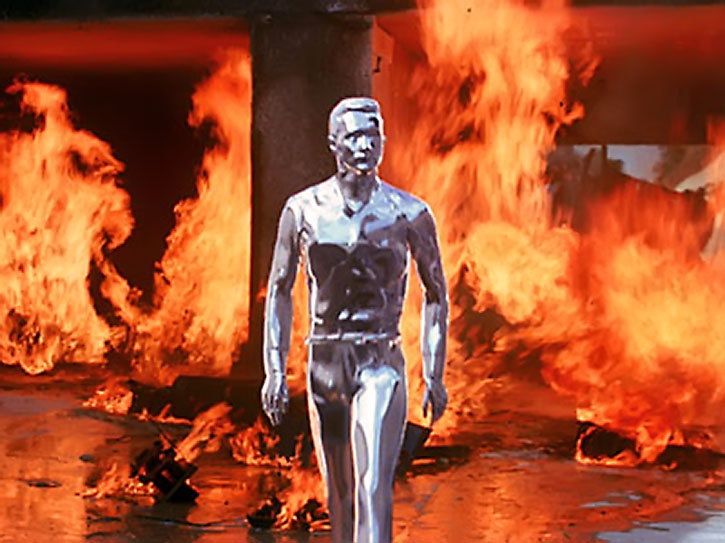
So there I was, reading through Fall of Hyperion, following the story of Fehdman Kassad. He had finally met up with his Moneta right after they had tried to kill each other. Then the text of the book read ‘her shifted like quicksilver’. I don’t have a lot of experience with quicksilver, and even less with the shifting variety. My mind jumped to a single image. The T-1000 from terminator.
Well my brain started making connections. Connections that probably shouldn’t be made, the kind of connections that steal a story’s originality. I always pictured The Shrike as a light-grey metal monster, it wouldn’t be impossible to imagine its skin shifting like quicksilver either. A little later, the book revealed The Shrike had been sent back in time from the future. And the next time The Shrike made an appearance in the story, the next time he slowly walked towards one of the characters with murderous intent. I heard that iconic drumbeat in my head.
Dun dun dun dun dun.
And it all came together.
Recasting Hyperion
The funny thing here is that the T-1000 is from Terminator 2, which came out in 1991, the same year as Fall of Hyperion, no way for Dan Simmons to have copied the movie directly. Maybe it was a case of parallel thinking. Maybe Dan Simmons saw the first Terminator and was inspired. Nevertheless, if we stretch the connections between these two stories, there’s a lot more that matches up than you’d think.
So the Shrike is The Terminator, sent back in time to fulfill the wishes of a devious far-future net of alien consciousness. In Terminator, it was called Skynet. In Hyperion, they call it The Ultimate Intelligence. Does it go further than that? Well, as we discover in the book, The Shrike isn’t just here to be evil, it’s here to find and eliminate one particular target. The future Empathy branch of Humanity’s Ultimate Intelligence. In other words, eliminate John Connor before he could become the leader of the human resistance.
And we can’t ignore the main character of The Terminator Franchise. The series may be named after the T-800 and T-1000, but Sarah Connor is without a doubt the protagonist of the series. Let’s meet her Hyperion counterpart, Brawne Lamia! In my first review of Hyperion, I didn’t talk much about her, but she is effectively the main character in The Fall of Hyperion’s massive ensemble. She’s the one who gets the big flash-forward to an apocalyptic future. Of course, instead of Skynet going to war with humans, we have an AI Ultimate Intelligence at war with a Human Ultimate Intelligence.
She’s also, as we discover at the back of the book, the mother of the future Empathy branch of Humanity’s Ultimate Intelligence. Literally Sarah Connor, the mother of John Connor! We even have a conversation between Brawne Lamia and one of the super AI’s Ummon where it says there are many probable futures, but the one with two Gods fighting each other is the most likely, which is dangerously close to “The future is not set. There is no fate but what we make for ourselves”
Now the most forgotten member of the Terminator story, Kyle Reese. The soldier from the future trying to keep Sarah Connor alive. Who could this be? There’s only one candidate. Moneta, the mysterious woman with ties to The Shrike who is in love with Fehdman Kassad. She is literally sent from the future to watch The Shrike’s actions. Unfortunately for Kassad, she’s a little more concerned with her present then staying in the past, and the poor guy is dragged into an intergalactic war against millions and billions of Shrike. The one thing worse than being hunted by The Terminator is being brought into the future and fighting armies of T-1000s.
All right, I confess, those are all the direct character connections, as far as I could find them. The Fall of Hyperion is an ensemble story, a book that follows about 9 different main characters through the plot. And in order to make that story fulfilling, it takes a few detours along the way.
When Hyperion Rises Above Terminator
In the first few Terminator movies, the plot is about keeping Sarah Connor alive. It’s not about stopping Skynet or reshaping what’s to come. Humanity basically plays defense, keeping things as they are, no matter how dystopian they turn out, because it could always get worse. That’s not good enough for Hyperion.
CEO Meina Gladstone is humanity’s champion. The politician in the right place at the right time to make historic decisions. So much of The Fall of Hyperion is about slowly uncovering what kind of nightmare awaits us in the future, and how it happened. There’s a general sense that some kind of apocalypse is coming. Father Dure, cursed back to life, is taken on a journey through the most upsetting aspects of the future. Cruciforms used on billions to drag them back to life again and again as nothing but human chattel.
New questions arise. How was humanity shackled like this? Was it these strange Ousters from the edge of the galaxy? Where does the Technocore come into play? Why does the Technocore keep helping humanity when it seems like their two paths are in constant opposition?
The most chilling moment of the book is a subtle one. The apocalypse appears to have come, a ragtag group called The Ousters has proven far more capable and widespread than anyone suspected, and humanity is getting desperate. In their desperation, they ask the technocore for a solution. The Deathwand. We don’t need a character going on a long diatribe to understand why a device like that could be dangerous. The technocore explains its many safeties. And in a long, long book, one little warning is enough to telegraph everything. “Those must have been the same promises the Technocore made moments before the Kiev Incident.”
It’s like witnessing the minutes before Skynet was turned on, but worse. It isn’t just a mistake from humanity, but a cleverly designed ruse that, in the pit of your stomach, you know will end humanity as a race forever.
And this is where we go beyond Terminator. The world of Terminator is spanning, but the plot is small: the survival of a single character, the journey of Sarah Connor. Hyperion doesn’t just tell the story of the person who is meant to turn the tide, it tells the story of the moment humanity’s hope was nearly snuffed out.
Is it Really Terminator?
Mark Twain once said, ‘There is no such thing as an original idea’.
Outer Limits is a tv from 1964, one of its episodes, ‘soldier’, tells the story of two future soldiers sent back in time to change the future. The story ‘I have no mouth and I must scream’ depicts a moment when human decision is removed from nuclear war, eventually resulting in an AI called the Allied Master computer wiping out all of humanity but a few it keeps alive underground as chattel.
These ideas existed before Terminator (Although if you ask writer Harlan Ellison, they started with him).
Dan Simmons takes the original concept of Terminator, and elevates it into something so much bigger. He rewrites a battle between two armies to a war between Gods. We initially think it’s just a nice metaphor, but by the end, it’s literal. A Titan and A God in eternal battle at the end of time. Instead of hard drums and rock, he uses poetry and classical epics to give the story a literary significance. The Terminator is iconic. But the Shrike is evil incarnate. Like The Terminator turned up to eleven.
But the best part of these books is when they diverge from The Terminator storyline, when we take time to get to know the ensemble that surrounds the main story. I could barely remember the name Kyle Reese when I wrote this up, but the names Father Dure, Fehdman Kassad, Sol Weintraub, Martin Silenus, and Brawne Lahmia stick with me. Tiny players in the grand story of divine war, but its their stories that stick with you.