The Circle and The Allegorical Battle for Society’s Soul

The following post contains spoilers for the novel The Circle by Dave Eggers.

I used to work for a tech company, somewhere over 1000 employees. I did a bit of coding, a bit of problem-solving, but most importantly a whole lot of messaging other people. There were a million different channels for a million different things. Some niche, some broad, but every one of them had new posts each morning.

When I first started, I tried to keep up with everything. It made me a nervous wreck. Then I tried to ignore everything, and I’d miss key announcements. I’ve always disliked those big messaging systems, and I’m glad I’m free of them.

Reading The Circle by Dave Eggers was like being dumped right back into the worst of it.

The book tells the story of Mae Holland, an eager-to-please young woman hired into the biggest social media company in the country, The Circle. She starts her job by constantly monitoring and posting to every little channel in The Circle’s network. The chapters when she’s posting, reading, and responding to surveys stress me out. It highlights early The Circle’s attitude towards information. Any moment not gathering or generating information is a moment wasted.

But it’s not all posts and likes. The story’s true plot is a battle for Mae’s soul. 

At work, the executives and the employees make the argument for all the good social media is bringing to the world. No more secrets. No more backroom deals. All the world a friend.

At home, Mae’s parents and ex-boyfriend strive to protect their privacy. They don’t dare put down Mae’s achievements, but there’s a quiet reticence from her family to hop on board the information bandwagon.

But The Circle isn’t about Mae, and the fight for Mae’s soul is allegorical. The true fight is ours.

The Products of The Circle

We see a dozen different products from The Circle over the course of the book. Tiny cameras planted on every street corner, centralized identity systems to tie every post to a single person, complete catalogs of a person’s history. Each product helps build The Circle’s philosophy. Any information that isn’t recorded is information wasted. We even see 1984 style slogans like “All that happens must be known”.

But it comes from a good place. One of The Circle’s employees Francis Garaventa is out there inventing new ideas with the goal of protecting children. The kind of respectable, un-debatable goal that justifies putting chips in kids’ arms.

Later in the book, we see politicians wearing body cameras for their conversations. We see The Circle ask their users all kinds of questions and use those polls to push their political influence forward. The novel asks its readers hard questions. Is it so wrong to want to live in a transparent world? Is it so wrong to want to protect everyone? Aren’t you tired of the secrets and backroom deals of today?

Of course, with each product, we see both sides. All the good it could do, and all the privacy we’d have to surrender.

The Three Wise Men

In the back half of the book, we meet The Three Wise Men. These are the founders of The Circle. One a tech genius, one a product guy, and one a salesman.

Here, the book poses its second debate. If the products of The Circle didn’t send a shiver down your spine. If you find yourself drawn in by the products, happy to surrender a little privacy for a little more safety, Dave Eggers presents the flaw in making such an exchange.

The scene is presented as a meeting of three aquatic animals. A reclusive seahorse, an ever-stretching octopus, and a shark. The Three Wise Men. The meeting ends the way it always had to end. A shark is the only thing left in the tank.

A decade after the whole world joins The Circle, who will control the company? And how long do good intentions last?

Guided Into Their Arms

Mae’s journey into the inner sanctum of The Circle is one filled with tricks and manipulations. As she embraces the philosophy of The Circle. Her relationship with her family weakens with every visit. Her ex-boyfriend’s diatribes in favor of a less connected world feel more out of place with each speech. Mae’s embrace of the “Privacy is Theft” motto enables her to post his heartfelt hand-written letter online, a place where an echo chamber of commenters reinforce her every bias.

Then Mae makes a mistake. One with mild police involvement. The Circle is benevolent, it’s understanding, it helps Mae find freedom through confession of her mistakes.

A friend of mine pointed out The Circles tricks were exactly what a cult does to ensure its members stay with them forever. Cut off family and friends, take away Mae’s identity outside The Circle, let the social network fill her with all the love she’s losing without her family.

With Mae secure in The Circle, the evil plot is revealed. It’s not enough that all Circle users surrender their data. Everyone needs to be a part of it. A friendly invitation to be enforced on every citizen.

Tragedy and Hard Decisions

Major spoilers below.

Mae embraces it all of it, and The Circle’s influence is pushed to its limit, to tragic results. We see the cost of total transparency when one character’s historical ancestry is revealed to be a long line of monsters and criminals. We see the cost of enforced participation when Mae targets her ex-boyfriend to be brought into the fold.

This is the bucket of cold water, the moment of lucidity in Mae’s data-mining fever. She’s given a chance to change course. An opportunity to tear The Circle down before it’s drawn around the entire nation.

And she doesn’t.

Because it’s not really her choice to make. The book isn’t about Mae Holland saving the world from the dangers of social media. It’s about society’s enthusiastic surrender of our freedoms, about our call to lift every rock and shine a light down every alley, disregarding any notion of ‘privacy’.

So when Mae makes the wrong choice at the end of the book, she only does it because it’s what we’ve all been doing. Each time we make a new profile, refuse to delete an old one, dig up an old mistake to tear a person down, and offer a new picture for verification, we move one closer to closing The Circle.

The battle of The Circle is far from over. There have been some real victories for privacy in the last decade. Victories that probably looked impossible when this book was written. But if you want a clear picture of the sides and of what could be at stake, The Circle makes an extremely compelling case.

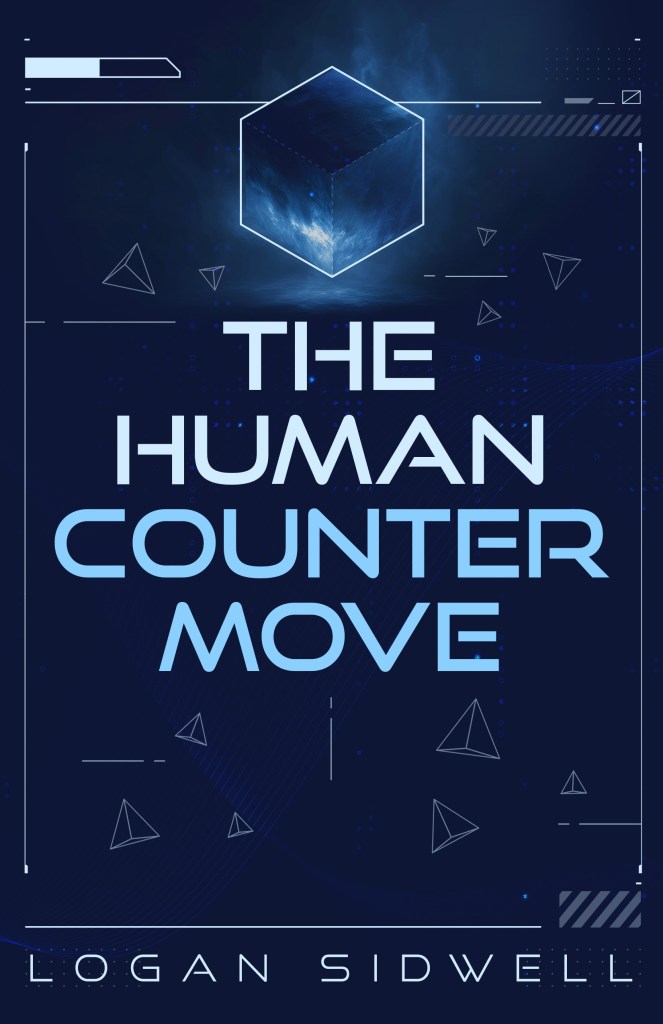
My debut novel, THE HUMAN COUNTERMOVE is now available for pre-order!

How The Three Body Problem Captures the Imagination

This is one of my archived reviews, it covers the content of Cixin Liu’s Three Body Problem. A review of its sequel can be found here

The Three-body Problem is on its way to its second season being released on Netflix. The book has glowing reviews “A War of the Worlds for the twenty-first century”, “Wildly imaginative”, “A breakthrough book”. So what did this book do that made it feel so fresh? What does any sci-fi book need to do in order to rise to the level of War of the Worlds?

I believe there are 3 key elements in which the novel excels. 3 scientific explorations floating through a narrative space, influencing and guiding one another. At the center is the story, pulled in every direction, with no way to predict its future. Let’s talk about the Three-Body Problem.

Pioneering Science

All speculative fiction explores pioneering science. But one thing Cixin Liu does that sets him apart is pick niche and rarely explored subjects to expand on. Space travel’s been done to death, we don’t need another explanation of Warp Drives and interplanetary jumps. Instead, the book explores Quantum Space and Dimensionality. These are some hefty topics, the kind that can scare people away if you get too in-depth on them. There’s no simple “And then a rocket engine ignites to carry us through space” in Quantum studies. A lot of folks will run screaming the second you try to explain why quantum entities are both a wave and a particle.

But Cixin Liu is smart. He knows that quantum mechanics kinda don’t make sense, so rather than diving deeper into the quagmire of quarks and spins and Higgs Bosons, he says, “In my book, there’s a reason things don’t make sense.” Messages in a person’s eye, science with inconsistent answers, physicists abandoning the field. Each of these questions is a mystery. And it resonates with anyone who’s ever tried to understand particle physics. Our brains want to understand the world as tiny marbles bouncing around at incomprehensibly small scales, so the book leans into the incongruity between our minds and microscopic reality.

In The Three Body Problem, physics is broken.

It makes sense in a twisted way. We don’t understand the results, so maybe the results are being tampered with. Of course! Quantum mechanics is unreliable because the trisolarans are interfering in all our experiments. Quantum mechanics is insane, but it isn’t in Cixin Liu’s world. Sabotage, that’s something any reader can wrap their head around.

And then there’s dimensionality. This is the realm of mathematics PhDs with fifteen colored markers and very large whiteboards. It’s a field so disconnected from our lived experience that any progress feels a century away. Perfect for an Alien Race with impossible and incomprehensible technologies.

Dimensionality is only given about a chapter and a half in this book. That’s probably a good idea. Think for a moment what ‘many dimensions’ mean to a regular reader. Either you’re doing a spiderman multiverse, or you’re dealing with non-euclidean physics. It’s impossible to visualize, it’s impossible to reason through. The human mind hasn’t trained itself to deal with it.

So Cixin Liu plays with the concept in its most broad terms. If a particle has 9 dimensions, and we can’t see 6, it’s probably bigger than we think it is. If we cut a dimension away, it starts to unfold. A single photon becomes large enough to cover a planet, the biggest unboxing in history. And once the circuitry of an AI is burned into its surface, sew the dimensions back together and it’s back to being tiny.

A simple, speculative exploration of the future of a field you don’t see that much in sci-fi. One standout moment for me is when the Trisolarans accidentally cut a photon down to a single dimension and pollute their planet forever with line segments.

The joy of sci-fi is seeing our weak scientific understanding turn into almost magical outcomes. From afar, quantum mechanics and dimensional manipulations are the perfect choice. No one but geniuses really have a clue what’s happening. And more importantly, we aren’t just told about all this. The book crosses out of sci-fi and into mystery, thirty impossible phenomena turn out to be directly related. All tied together in one brilliant invention.

Time as a Resource

It’s easy to forget how much we sacrifice to further science. In order to find the Higgs Boson, we had to build a 17-mile ring of superconducting magnets that costs a billion dollars a year to run. It took all of NASA to put three people on the moon. And these are the success stories. Discoveries don’t translate to inventions for another hundred years. Einstein figured out Relativity in the early 1900’s, it was another fifty years before we had anything that needed to include it in its calculations.

This is an absolutely essential element of The Three Body Problem. The books span centuries. We need to feel the cost of science. How do you do that? You remind the reader how far we’ve come.

For my money, the best part of the Three Body Problem takes place in a strange VR world. Players find themselves on the trisolaran world, attempting to decipher the impossible movement of the celestials bodies over their head. Historical scientists appear in the game and propose various elaborate models to predict the next planetary freezeover, or its next boil. And through the eyes of people like Archimedes and Copernicus, we see how hard it is to get things right. 

You don’t get the right answer on the first go-around, or even on the fifth. The journey involves cataclysmic ailures, we see citizens of the ‘theoretical’ planet frozen, or dragged off the surface by a powerful gravitational pull. And every ‘guess’ costs a hundred years.

Even when the problem is life or death, no single scientific leap solves everything. At one point the book makes use of a one-hundred thousand person computer just to predict the solar system’s next position. And even with an accurate model of the three-sun solar system, the solution is still out of their grasp.

All of this creates a context. Science is not easy, cheap, or fast. It costs the resources of an entire civilization, it takes centuries, and a complete understanding of a problem does not equate to a solution.

So when the book jumps to the Trisolaran planet and shows the reader how technologically advanced they are, it grounds the reader and helps them understand just how insurmountable the opposition is. There is no ‘catch up fast’ button. Victory is almost impossible.

Philosophy and Statesmanship

Science and civics are inextricably tied. To pretend someone can invent ‘the printing press’ without changing the world is naive. But leaders are rarely scientists. A dark cloud permeates this book’s society. Folks are tired of being humans on Earth. Themes of ‘betrayal of species’, ‘giving up on humanity’, and ‘embracing the advent’ all lay on its pages. When humanity doesn’t have an enemy, do we become our own worst enemy?

In HG Wells’ War of the Worlds, there is no domestic threat. It’s just an Alien Attack. And all of humanity are helpless against them. Not here. The biggest threat in The Three Body Problem are the people on Earth. The folks who’ve decided to help an alien species invade. 

One moment stands out to me here. A moment when a random trisolaran communicator receives Earth’s message and decides to warn them. A hero and a villain who betrays their own species out of a respect for all living things. There’s not much room in this book to explore trisolaran society as anything other than a species desperately trying to survive in impossible conditions, but this lone actor gives so much humanity to the alien threat. The angry and desperate drive the war. The angry and the desperate on Earth tear humanity apart.

Things change after the Trisolarans are revealed. It’s funny to say, but once there’s an enemy, humanity rights its own sinking ship. The society of the second book is strangely healthier than the first.

In a funny way, the ‘mystery’ of a broken society is solved in this book. All we needed was an enemy.

Conclusion

The book is about an alien invasion, but at its heart, it’s a mystery. Three mysteries. Two scientific, one social. For those who love the scientific process, there is no greater joy than witnessing a team of experts turn a hundred unknowns into fifty, then two-hundred, then finally explain it all with a single answer. That I think is the great accomplishment of Three-Body Problem. Turning scientific inquiry into a thriller sci-fi.

I’m of the opinion the entire point of the VR section of the book, other than building a picture of the trisolaran world, is to make a promise to reader. A promise that says, ‘through deeper understanding, we will unravel the mystery of the cosmos’.

And at the end of this prelude to a sci-fi epic, the book delivers.

Isaac Asimov’s Foundation Paints the Universe in Broad Strokes

This is one of my archived reviews, it covers the events of first Foundation book and serves as a prelude to my full trilogy review

What happens when you combine the fields of psychology, sociology, and history to predict the future? How do you play your part in saving the universe if you don’t know your lines? Bring these two concept together and you end up with Asimov’s one-of-a-kind sci-fi novel Foundation. The title is a big of a play on words, the subject of the book is a group called The Foundation, but not a normal foundation, their job is to lay the foundations of the future.


Plot

Foundation tells the story of a galaxy, an entire galaxy. The empire is decades from collapse, and a psychohistorian, Hari Seldon, has prepared a plan to ensure humanity bounces back.

The central conflict of the book is whether Dr. Seldon’s plan will succeed, but that’s not really the focus. The focus is on the random people who find themselves in positions of leadership at key historic moments. It’s sort of an anthology of short stories, all set in the same universe. In each story, a terrible crisis befalls society, an our hero has to ask themselves a very important question, but not the one you’d think. It’s not ‘How do we solve this crisis?’, it’s ‘what did Dr. Seldon intend?’.

No single character stays with us throughout the book. Dr. Seldon is present to a degree, but he’s not a changing character. He’s more like the god of a clockwork universe, the plan is in action, and every once in a while he checks in to make sure the clock’s still ticking.

World building:

There are a lot of really cool cultures in this book. The trouble is, the scale of the conflict is so large and so spanning that no single person can live through to the end, no culture can even survive all the way to the end. One chapter you’re learning about a techno-religion, the next you’re a hundred years in the future following a merchant who deals in nuclear energy.

Considering all the events jam-packed into this book, it isn’t particularly long. I haven’t seen the Apple-tv series, but my prediction would be that each ‘era’ in this book could be fleshed out into an entire season. You could realistically get four seasons of content out of this one book if you’re willing to fill in the details left out of the page.

Examples:
– There were a bunch of scientists working on a big encyclopedia at the start. Did they ever look around one day and realize the whole project was just make-up work?
– The life of a techno-priest on a hostile planet can’t be easy. They aren’t just influencing society or spreading nuclear power, they’re serving as spiritual guides. What kind of challenges do these sonic-screwdriver wielding, sermon givers face?

The point I’m making here is that every part of this story could be expanded into a separate novel. This book may as well be just the cliff notes.

Why I remember it

Foundation is the most zoomed out book I’ve ever read. I didn’t include a character section in this story, because most of the characters aren’t really characters, they’re object lessons. They exist to give a personal attachment to each of Dr. Seldon’s ‘solutions’. It’s not just a massive trade agreement, it’s fifty barbarian warlords forced to take the deal so their crew members don’t mutiny.

For me, the most memorable part of this book is Dr. Seldon’s solutions to the crises. Each solution is unique, and draws from a distinct period in human history. Diplomacy, military, religion, trade. All levers used to manipulate other kingdoms into becoming pawns for The Foundation.

Final thoughts

When a story captures something as large a scale as a galaxy at war, it’s hard to make that personal. Then you add in the fact that most of these ‘crises’ have already been solved by Dr. Seldon, and your characters start to lose their free-will. It really is a clockwork universe, and while individual characters may be conflicted, they all fall in line when push comes to shove. Either that, or Dr. Seldon’s plan proves to be so perfect even inaction does nothing to slow his machinations.

There are two more books in the series, I’m excited to read them. At a minimum, I think the other two will deliver more ‘civilization-sized’ concepts to solve crises. But if I’m being real, I hope we get to see some rebellion against the plan next time. I want characters to try to fix their own problems, to assert their free-will, and maybe to make things worse from time to time.

Mystery is the Engine of The Dark Forest

The following is a discussion of Liu Cixin’s novel The Dark Forest. Spoilers abound.

The end of The Three Body Problem novel poses a fundamental issue. If humanity can’t progress technologically, how do they defeat an alien race with a five-hundred year scientific lead that can see everything humans do? At the beginning of The Dark Forest, we get part of an answer. The Trisolarans have a weakness, they can’t lie, and thus have never engaged in the twisted logic of Humanity’s games of deception.

So the whole of The Dark Forest, although often told from different character’s points of view, is effectively told from the point of view of the Trisolarans. We see everything humanity does, but the intent is kept hidden. This is what makes The Dark Forest compelling, it’s not a traditionally fantastical or sociological sci-fi, it’s a mystery novel powered by reader speculation. Tension, twists, turns, all of it exists to mislead and trick the reader before the grand reveal. And not just one reveal, but five or six.

Walls, Facers, and Breakers

The Wallfacers are humanity’s answer to the Trisolaran weakness. Four individuals given wide-ranging authority and instructed to do whatever they’d like, with the intent of defeating the Trisolaran menace. During the novel we see each Wallfacer’s actions. We see how they speak to their troops, what they research, their personal relationships, but nothing inside their head.

Frederick Tyler is the first Wallfacer. His entire plan is basically to pretend to be friends with the Trisolarans, get close to them, then blow them up. The evidence is all in the pages black and white. Research on self-destructing swarms, water on Saturn, connections with human supporters of the Tri-solarans. It’s a 1-dimensional plan, and it teaches the reader how things work. Just as the reader think they might have a clue about Frederick Tyler’s plan, a man shows up out of nowhere and says “Frederick Tyler, I am your Wallbreaker”.

This is the equivalent of Sherlock Holmes gathering everyone in the library and revealing his theory. After Frederick Tyler, each time a wallbreaker appeared, I would close the book and craft in my own head the vision in my head of what the Wallfacer’s scheme involved. And that’s how this book is supposed to be experienced, you should be guessing, because with each wrong guess, you learn the rules a little better, and you get a little closer on the next one.

The second Wallfacer is Ray Diaz. His scheme rocks, and I think the book owed that man more respect than he got. He rises above simple tactics and ‘destroy the enemy’ thinking and instead goes down the path of mutually assured destruction. This reveal doesn’t just close the door on a part of The Wallfacer Project, it helps prime the reader for bigger mysteries down the road.

Our last regular Wallfacer is Bill Hines. This guy goes full old-school sci-fi mind-control. And his plot represents an entirely different camp, the camp that asks the question, “What if humanity can’t win?” The fun part about this guy’s work is that even when he’s discovered, there’s no way of knowing who he got to.

We’ll get to the protagonist soon. First, let’s talk a little more about the plot.

Great and Terrible Battles

In any mystery novel, the resolution of the book always revolves around one of its key mysteries. Despite being about the 400-year buildup to interplanetary war, most of the book takes place in the first one-hundred years. It’s a signal to readers that victory won’t come from scientific progress, it’ll come from unraveling a mystery.

In the back half of the book, a couple centuries down the road, our main character catches up with the future. He’s told the human starships are unbeatable, that victory is inevitable, and most importantly, that the mysteries of the cosmos don’t matter.

This runs in direct opposition to everything we’ve seen in the book so far. Instead of excitement for a great battle, the book leaves a pit in your stomach. A sense of terrible fear you already know the outcome. Either the book was about to break a fundamental rule of mystery writing, or humanity was about to take the biggest L in history.

And they do.

And without an army, without a means to defend itself, the only chance to victory is to solve the mystery.

The Mystery of The Universe

Luo Ji is an astrophysicist, the target of many assassination attempts, and a wallfacer without a plan. We are told again and again that this is the man the Trisolarans are afraid of. They use DNA targeted diseases, assassin viruses, and hacked cars to try to kill the guy. All this because he knows what no on else does. The thing is, as readers we’re allowed into Luo Ji’s mind, and inside it, we discover that this Wallfacer, this leader of humanity’s defense, has no plan at all.

It’s exciting. It’s compelling. Our protagonist only has one clue as to what makes him so formidable. He suspects that somewhere in his research, somewhere in his understanding of the universe, lies a terrible secret, and the answer to Trisolaran defeat. It’s the central mystery of the book, the murderer with the knife, the revelation that beats an unbeatable opponent.

We are only given one real clue. Luo Ji casts a spell on a nearby solar system, and a hundred years later, that solar system is completely annihilated.

The Dark Forest is almost twenty years old, and the downside of age and fame is spoilers. Before I read the book, I had heard “The Dark Forest Theory” explained to me on three separate occasions, so the great mystery of the novel was apparent to me by the one-third mark. I wouldn’t dare peel back the mask here, instead I’ll just say this. The novel follows the rules of mysteries, and by identifying the murderer, so to speak, we see a path to possible victory.

Additional Comments

There’s a lot more to this book than the mysteries, there’s whole stories of intrigue, conspiracy, and multi-century planning. But this is also a book set in war-time, there’s not much room for these characters to grow and change, it’s more about who they already are, and what actions they take. Our protagonist’s starts as something of a nihilist, finally finds happiness, then has it ripped away as a manipulation to force him to perform his role as Wallfacer.

My favorite section of the book is titled The Battle of Darkness. It has almost nothing to do with the overarching mystery, and more to do with the painful sacrifices and cruel realities of space travel during wartime. The best conversation is one that’s had without a single word, soldiers coming to terms with an unavoidable truth.

Most Sci-fi is built around wonder and adventure. Exploring the cosmos, extraordinary technologies, alien species. This book isn’t that. This is hard-science book that asks the reader to come along, to observe the evidence of the story as an impartial observer, and to unwind the mystery a page before the book reveals it.

An Interactive Adventure That Wants You To Be Silly

Every choice is ridiculous, zany, or crude. Every outcome is inspired by classic science fiction moments. The twist re-contextualizes the entire book. Trial of the Clone by Zach Weinersmith (mind behind the Saturday Morning Breakfast Cereal webcomic) is a parody of the Interactive Adventure Genre.

The back of the book reads “Make the right decisions and you’ll prove yourself a hero. Here’s a pro tip for you: Try to make the right decisions.” That advice is more prescient than it seems.

Trial of The Clone

Trial of the Clone is an interactive adventure, which means the book branches in a hundred different directions. To keep things structured, the story is split into 5 acts. At the end of each act, assuming you’re still alive, you’ll get something akin to a fresh start. Which is good, because wherever you go, things tend to only go from bad to worse.

The book tells the story of a perfectly ordinary clone. Your first choice in the game is your occupation. I decided to become a medic. As with any interactive adventure, the book then prompts you to flip a few pages forward to your choice. This is where the author does something clever. Between your choice and your destination, you will see 3-4 illustrations, a teaser for the rest of the book and an invitation to explore every nook and cranny.

The tone of the book is over the top zany. Within three choices, I became a terrible surgeon, fought an old woman, became the chosen one, and faked my way through surgery on the president. Bear in mind, I was trying to make the “right decisions” and based on the other branches I read, my journey was one of the tamer ones. The story doesn’t mind leaning on sci-fi tropes for many of the branched paths and it’s fun to see your character completely botch an off-brand Yoda’s training sequence.

My favorite joke comes in at the start of Act 4. You’re teleported to a secret base, and the book informs you that “if you philosophically believe that a duplicate of you, no matter how accurate, does not count as you, you die here”.

It’s a comedy book, don’t expect deep character development, just enjoy the ride. The book introduces several gameplay mechanics at the front. Inventory, combat, skills. There isn’t much to keep track of, and failure is rewarded just as much as success. Being defeated by ‘Nice man [Level 3]’ may send you somewhere much more fun than if you beat him to a pulp.

The Finale

From here on in this review, we have to talk about spoilers. Big ones.

At the start of act 5, a single conversation flips the book on its head. The loose plot and wacky adventures all take on a real meaning.

The vice president is the one to explain it. Turns out, all those weird, silly choices in the book were a part of a plan. The president needed your character to be silly. He ensured every smart choice you made blew up in your face, and every foolish decision was rewarded. Behind the scenes, unseen figures were working to ensure your every flight of whimsy turned into a spark of genius. A cultivation of the silliest person in the universe. On the back of the book was the clue. The author doesn’t say “Make the smart choice”, he says “Make the right choice”. The book was quietly training you to behave like a goofball.

And then they punish you for it. In the final act, our character must stop their silliness and save the universe. There’s real tension in the final scenes, when you have to choose between dancing a jig and stopping the big bad. The guardrails are gone, you can’t be silly forever. Your character puts up a fight too, a little too set in their silly ways. The final battle isn’t so much a battle against evil as it is an internal war between a clown and a normal, functioning adult. Can you overcome your intrusive thoughts?

Overall

If you’re looking for a quick, silly read, Trial of The Clone delivers. There’s plenty of illustrations to keep the book interesting and the scenarios are not only out of this world, they’re the most improbable sequence of events you’ve ever seen. The twist makes it all memorable, giving the story meaning beyond the jokes. If you want to lean into your ridiculous side, or maybe you’re a fan of the Saturday Morning Breakfast Cereal webcomics, give it a read.

But be warned: By the time it’s over, you will be sillier.

The Long Way to a Small Angry Planet is a Sit-Com

The great thing about a story set on a starship is that every person on board fulfills a different role, they all have their own personalities, skills, cultural background, and for long-voyage vessels, every person on that ship feels disconnected from their home.

I made a mistake when I read this book, I came in with the wrong expectations. At first glance, I believed this was a sci-fi epic, a gritty journey on a run-down starship to an impossible destination. Wrong. What this book really is, is a Cozy Sci-fi. It’s a season of a sit-com set in the stars. So settle down, wrap yourself in a weighted blanket, and enjoy the comforting sounds of the vacuum of space.

Plot

Rosemary Harper, in a bid to escape her past, joins the crew of the Wayfarer on its newest mission: Travel to a planet in a war-torn star system, and build diplomatic ties.

But the book isn’t about the mission, it’s about the characters on that mission. The Long Way to a Small Angry Planet is an ensemble piece. So although we start with Rosemary, she’s just one of many characters. Everyone on board eventually gets their time in the sun.

The flight takes more than a year, and across that extended journey, we take every opportunity we can to stop by a planet, meet some aliens, and have some fun. It really feels like a season of television. Each stop represents an episode of the tv show, conflicts are created, explored, and resolved inside that chapter. Sometimes there are lasting effects that extend to the rest of the book, other times they’re an opportunity for our characters to redefine their relationships with one another and understand themselves more.

All this adds up to a relaxing journey, the story is set to impulse speed and we’re taking the scenic route. The danger in your average chapter is gonna be lower. But emotionally, things are elevated.

Characters

Characters are the bread and butter of this book. Most everyone on-board is an alien or a robot or something else kinda strange. We have Rosemary, a human. Sizzix, the reptilian pilot, Dr. Chef the last of their kind, Lovey the AI with a heart of gold, Ohan the isolationist navigator, and a couple more humans. Together they form a classic sitcom cast with regular culture clashing, personality conflict, and comedic quirks. 

I’m not going to go into too much detail on the individual plotlines. All I’ll say is that this book achieves a really good chemistry between its characters. It doesn’t take the world too lightly, and it doesn’t take things too seriously either. The differences in culture, anatomy, personality, and background, all really add to the ‘found-family’ feel of the book.

World building

This book’s world is mostly your standard sci-fi affair. I’d say it leans more in the safer, cleaner direction of star trek than in the rough-shod universes of Star Wars or Firefly. Which lends itself to imagining every scene on a bright, multicam set. There’s a big focus on the friction between human and alien cultures. This book doesn’t lean into the idealistic, non-interventionist enlightenment direction of Star Trek. The crew of this ship are very comfortable sharing their opinions on other cultures, and even openly disagreeing with their fellow crew members.

From time to time, a decision one of the characters made rubbed me the wrong way morally. But this is a book about flawed people finding a home, it shouldn’t be a surprise that people make mistakes.

Conclusion

The book’s big landing is at the end. I won’t spoil it here, but there’s a reason season finales are the most memorable parts of tv shows. You spend the whole book getting to know the characters, building an understanding of their relationships, and growing to care for them. So when conflict forces those relationships to change, it hits hard.

Like any good sitcom, this book is only the first season. A strong start with a great cast and a long way to go.

If you’re looking for a different brand of sci-fi, if you want to travel through space, but feel the right way to do it is with a fireplace and a cup of tea, consider tuning in and seeing what it has to offer.