The game opens on a dreamlike scene. Ethereal mists float through the background. Scan lines run from left to right across the screen like an old CRT television. A dialog box gives you a simple instruction:
NAME YOUR VESSEL.
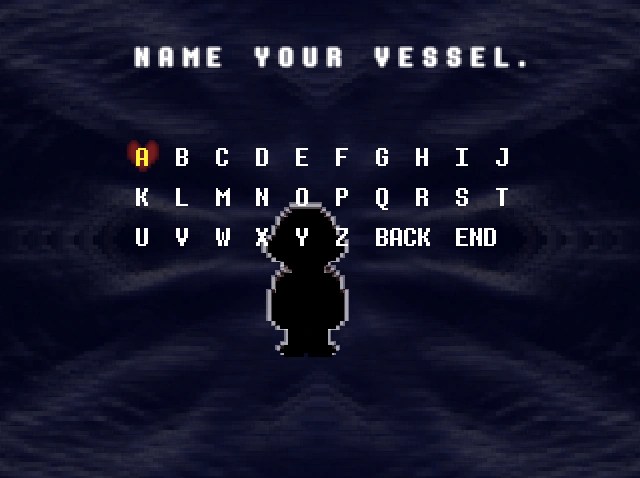
For a game inspired by Japanese RPGs from the 1990’s, this is normal. You give your character a silly name and press enter. The dialog box reopens and asks for a second piece of information.
YOUR OWN NAME.
When you see that question, you hesitate. You already gave the game your alias, you don’t have a second one. You consider, then type your real name into the console. The submit button has a weightiness to it. It feels personal, as if you broke off a piece of yourself and sent it in the game.
As far as Deltarune is concerned, you did.
An Homage to RPG Games of The Past
In the late 90’s, an RPG game referred to a very specific kind of product. The world was shown from the top-down, your team was composed of various heroes, they had small pixel forms and a higher-detail form for combat. Your party would fight monsters to gain experience and level up, eventually culminating in a big battle to save the world.
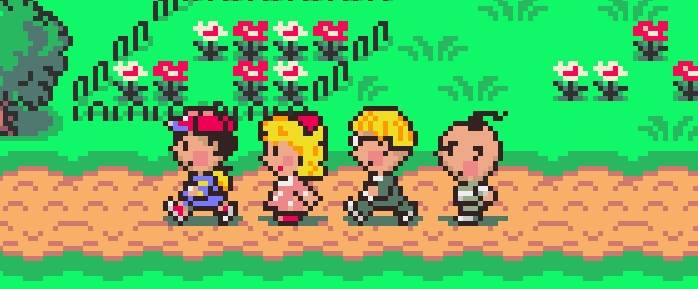
On its surface, Deltarune, created by Toby Fox, is a loving tribute to the genre. Underneath, it’s a meta-narrative commentary that forces the player to re-evaluate their relationship with games. But for a good piece of meta-commentary to work, there must be a fun game to build from.
Deltarune tells the story of Kris, a human in a town filled with friendly monsters. After getting into trouble at school, Kris and his bully Susie fall into a portal to a dark and frightening world. While there, they discover an ancient prophecy and a threat to the whole world. In chapter 1, Kris and Susie must learn to overcome their differences to save this world and find their way home.
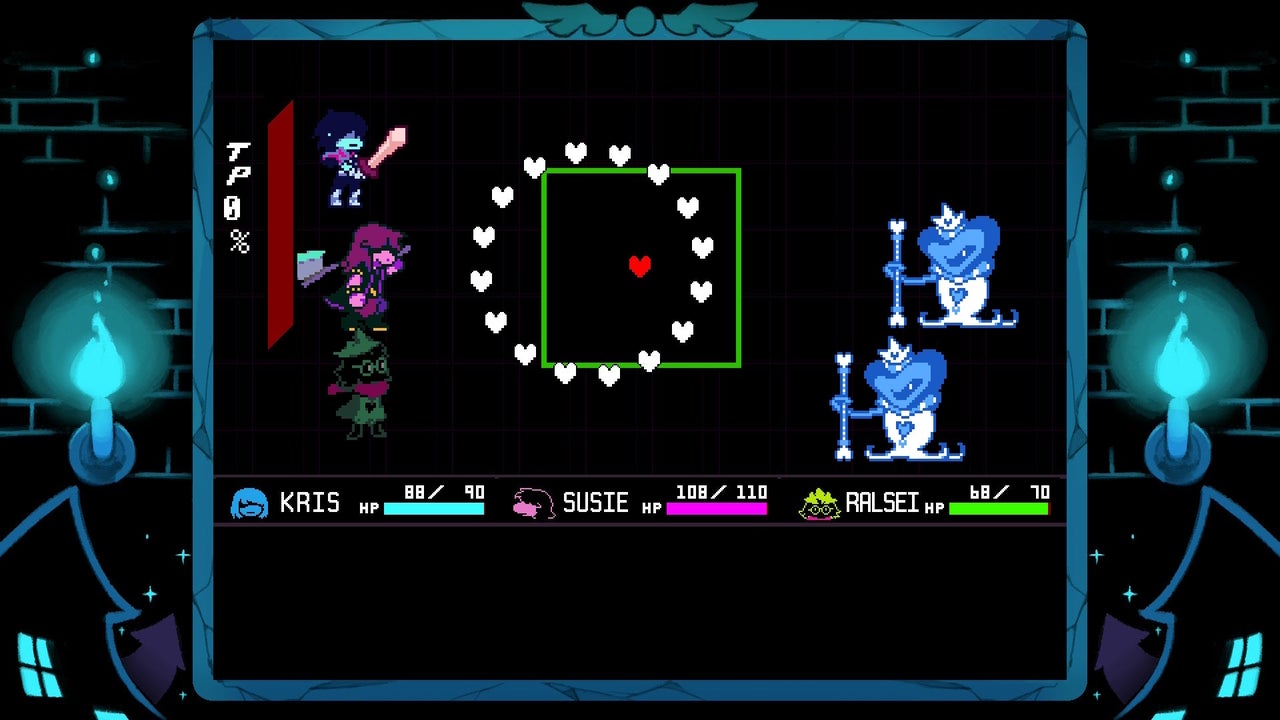
The power of friendship is key to the story of Deltarune. In combat, players are presented with two options for battle. FIGHT, and ACT. FIGHT does what you think it does. ACT provides players a non-violent way to disarm and befriend monsters instead of killing them. Early on, players must work around Susie’s instinct to kill enemies in order to give the world its best possible ending. The game often advertises itself as ‘The RPG where no one has to die’.
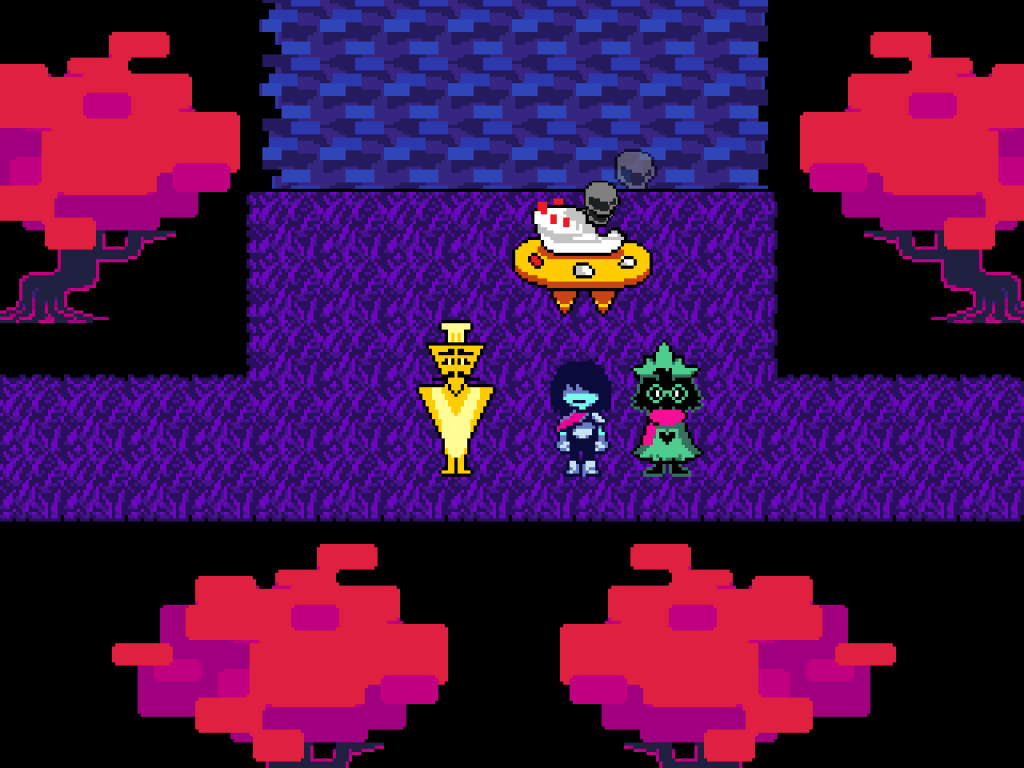
Deltarune is the stand-out example in the games industry of a passionate auteur artist making exactly what they want. In dialog, the creator Toby Fox is able to seamlessly jump from wacky, comedic scenes to emotional betrayals and high-stakes conversations about destiny. The low-cost of the graphics and relatively simple gameplay gives the team room to experiment in ways you wouldn’t usually see in games.
Toby Fox is deeply in-tune with both the RPG genre he is imitating, and with the online culture of his fans. He knows when he can break the rules of his world. In chapter 3, we are introduced to a villain with a television for a head named Tenna (as in anTenna). The introduction uses a crappy, early-days CGI aesthetic that technically violates the retro aesthetic of the world. But it’s surprising and fun and breaks the usual routine. A handsome chap in chapter 5 is, without warning, given a high-resolution anime style introduction. These kinds of strange and wacky moments are par for the course in Deltarune.
You Are a Character
If Deltarune were a normal game, I would tell you that you play as Kris, the human protagonist. But Deltarune isn’t a normal game, so I must rephrase. In Deltarune, you, the player, the person sitting in front of the monitor, control Kris. Technically speaking, you are a little pixelated heart sitting inside of Kris’ chest. Whenever there’s a decision to make, the heart makes the choice. Whenever there’s danger or combat, the heart has to dodge the damage. This is an arrangement Kris isn’t altogether happy about.
This differentiation might sound pedantic, but the situation is best understood by a scene at the end of Chapter 1. It’s almost midnight, there’s no one around. Kris climbs out of his bed, rips his heart from his chest, and tosses it in a bird cage. If it were up to Kris, he’d be rid of you forever.
Placing the player in the game has a strange effect on the narrative. When monsters are killed, it isn’t Kris that’s responsible, it’s you. During a high-stakes dialog with one of the more conflicted boss characters, you aren’t trying to make the choice that gets you the best gear, you’re trying to make the choice that best reflects your personal values. You can’t disassociate. The characters feel so much more real, as do the consequences of your actions.
This is where the second layer of Deltarune’s story reveals itself. Any good RPG doesn’t just have a single ending. Usually there’s two or three endings, with one being considered the ‘good’ ending. If you’re a good person in Deltarun, the game rewards you. The world becomes brighter and the monsters you befriended along the way end up helping you. But that’s just the good ending. A dedicated player wants to see every ending, and that means intentionally making bad decisions.
The Weird Route
Underneath the joyful storylines and fun characters of Deltarune is a darker and more personal story. They call it The Weird Route. It’s a route intended only for the overly-curious and naturally cruel. Players must be willing to kill their enemies. Players must be willing to manipulate NPCs, engage in coercive behaviors, and even push another character into losing their sense of self and doing whatever you say.
It speaks to the game design that I physically and emotionally cannot bring myself to go down The Weird Route. This isn’t the first time Toby Fox has done something like this. Deltarune is a spiritual sequel to a game called Undertale.
In Undertale, The Evil Route required the player to grind EXP by killing every monster in every area of the game. The more you kill, the emptier the world becomes. By the end of The Evil Route, you are the villain, and the rest of the world is doing everything it can to stop you. The Evil Route is a reflection of how players played RPGS. Kill monsters, grind EXP, crush the final boss.
But in Deltarune, Toby Fox appears to be making a different kind of point. He seems to be speaking directly to the player and saying: No, your curiosity and hunger for control over the outcome of the game does not justify the actions required to see all there is to see.
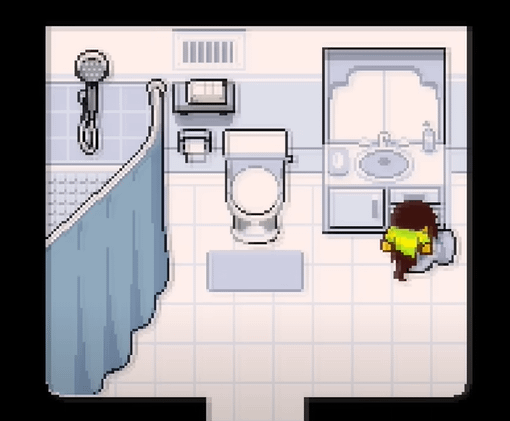
This is best exemplified in one of the most unforgettable moments of The Weird Route. After a particularly heinous scene of emotional manipulation, Kris walks into a private bathroom, rips you out of his chest, throws you in a trash can, and kicks the trash can into a dented mess. A metaphorical interpretation might be that Kris hates himself for the actions he finds himself taking. But I think the scene is more literal than that. There’s a reason the file is saved with your name. Toby doesn’t want you to disassociate from your actions, he wants you to take ownership of them.
An Unavoidably Personal Journey
When I look back on my playthroughs of Deltarune and Undertale, there are plenty of memories of silly characters and funny scenes, but none of that is what sticks with me. Instead, I remember the moments when the game gave me complete agency. I accidentally killed a character at the start of the game without realizing there was another way. I chose to benefit myself at the cost of another. Regret aches in my chest.
Deltarune and Undertale have an extraordinary ability to break through the fourth wall and emotionally drag you into the game without breaking your suspension of disbelief. They are an experience unlike any other. It’s the kind of bold, wacky, experimental thing that could have only been created by an auteur director with a particular vision and a taste for the zany.


La innovación en juegos puede cambiar la forma en que los jugadores interactúan con sus mundos ficticios.
LikeLiked by 1 person